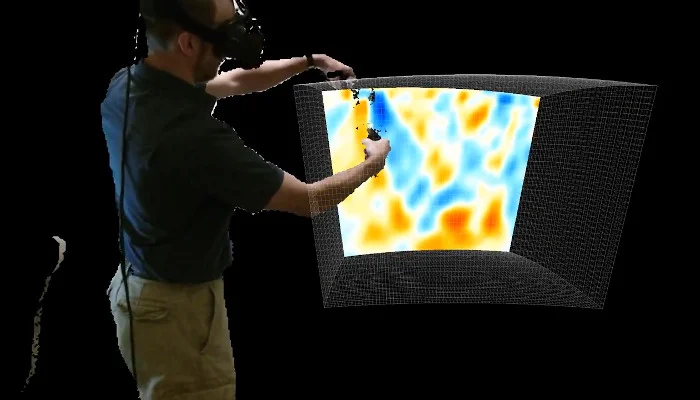
7 meters of sea-level rise – what you would get if the whole Greenland Ice Sheet melted. But the tricky question is: how much of this ice will be melted in the next decades, and how fast will it occur? This piece of information is critical in order to plan for present and future populations living in coastline areas, all around the world. How much and how fast can the Greenland Ice Sheet melt ? In ...[Read More]
If you didn't find what you was looking for try searching again.
Stratigraphy, Sedimentology and Palaeontology
County Clare, Ireland: A World-Class Geological Locality
By John Counts and Emma Morris. Europe has a wide variety of interesting sites for geologists, including areas with scientifically interesting formations, amazing scenery, and classic outcrops, many of which are recognized for their international geological significance and are designated as UNESCO Global Geoparks. Rarely, however, do all of these factors come together in such a spectacular way as ...[Read More]
Tectonics and Structural Geology
Beyond Tectonics: How mountain building shaped biodiversity
This edition of “Beyond Tectonics” is brought to you by Lydian Boschman. Lydian is a postdoctoral researcher at ETH Zürich. She has a background in geology and plate tectonic reconstructions, but now works with a group of biodiversity modelers of the Landscape Ecology group at ETH, bridging the gap between geology and biology. In her research, she focuses on the uplift history of the Andes, and ho ...[Read More]
Seismology
Hackathon in Vienna – IMGW Team
The whole idea of a Hackathon in Science came to me a couple of years ago, when I first read the AgileScientific blog written by Matt Hall. I figured that such an event is perhaps the most optimal way to generate and develop ideas in rapid time. Then, after I participated in the Ready2Order Hackathon in Vienna, my colleagues and I decided that the time has come and we need to make it happen ...[Read More]
GeoLog
GeoPolicy: My experience with the EGU’s science-policy pairing scheme
“Thanks for coming, but no time for celebratory drinks,” I told my colleagues. I arrived in Brussels right after defending my doctoral thesis to brief the Finnish Member of the European Parliament (MEP) Miapetra Kumpula-Natri and her team about the impact of sea-level rise and climate change on the coastal communities of the Baltic Sea. Climate science? Baltic Sea? EU Parliament? I was soon bombar ...[Read More]
GeoLog
GeoTalk: A biogeocaching scavenger hunt for Earth science outreach
Did you know that the EGU has a public engagement grant scheme? We’ll be awarding three EGU members with 1500€ to help them develop an outreach project that aims to raise awareness of geosciences outside the scientific community. The 2020 call for applications is currently open. In this GeoTalk interview, Olivia Trani talks to Astrid Harjung, Laura Coulson, Romana Hödl and Katrin Attermeyer, resea ...[Read More]
Geochemistry, Mineralogy, Petrology & Volcanology
#EGU 2020 Sessions in the Spotlight: Volcanic and Tectonic degassing
We are now just two days from the EGU 2020 abstract deadline! If you are still searching for the ideal session – here’s one for you! GMPV 2.2 – Volcanic and Tectonic desgassing – aims to cover a wide range of topics relating to degassing from magmatic, tectonic and volcanic settings. If you haven’t started writing your abstract yet… good luck! The convenors say: ...[Read More]
GeoLog
The Carbon Potential of Peat
2020 is being described by many as a tipping point: the year that humanity as a species must take concrete and measurable action to prevent catastrophic climate change. But even if we do manage to slow carbon emissions from 2020 onwards, how would the planet deal with all the carbon dioxide we have produced so far? How much capacity do the planet’s natural carbon sequestration reserves actually ha ...[Read More]
GeoLog
Being a mentor at the General Assembly 2020
With more than 16,000 participants, 5,000 oral presentations, 9,000 posters and 1,200 PICO presentations, the EGU General Assembly can be an overwhelming experience for any scientist, whether it’s your first time or 10th time attending. However, you can make conference networking a bit easier by signing up for the EGU 2020 Mentoring Programme! This mentoring scheme aims to facilitate new connectio ...[Read More]
Natural Hazards
Behind the scene: knowing the President of the EGU Natural Hazard Division – Ira Didenkulova!
In this last post of 2019, I have the pleasure to ask some questions to Ira Didenkulova, the President of the EGU Natural Hazards division who has been recently elected for a second mandate. Ira, can you introduce yourself and tell what led you the position of EGU Natural Hazard (NH) Division president? What are the main challenges you had and what’s next for the NH division? It seems this ...[Read More]