
Since we last posted about our programme in Ladakh (India) we have participated in a three-day international conference on sustainable resource development in the region, undertaken a 400 km round trip through the heart of the Himalayan mountains to visit and teach at two remote schools, and learn a lot in the process! We will …[Read More]
Latest posts
Imaggeo on Mondays: Fuelling the clouds with fire
Wildfires frequently break out in the Californian summer. The grass is dry, the ground parched and a small spark can start a raging fire, but burning can begin even when water is about. Gabriele Stiller sets the scene for a blaze beside Mono Lake, exploring the events that got it going and what it may …[Read More]
Moraines in Costa Rica? Really?
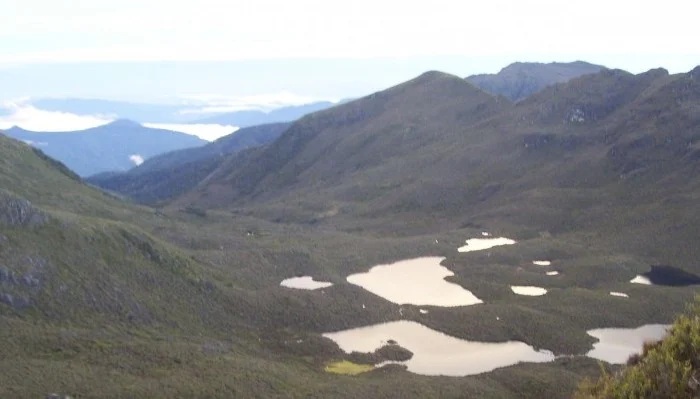
During a recent trip to Costa Rica in May, I had a conversation with some family and friends in which I uttered those words: “Moraines in Costa Rica? Really?” as they were describing a trek they’d undertaken earlier this year to the summit of Cerro Chirripó. This is the highest peak in the country (3819 …[Read More]
Geosciences column: Shelter island – building a barrier to protect the coast
The latest Geosciences Column features recent research into tsunami hazards and explains how island building out to sea can help protect buildings on the shore… Barrier reefs are well known for holding off the wrath of the ocean and sheltering the serene lagoons that stretch between them and the mainland. Barrier islands possess the same …[Read More]
Science Snap (#28): Brandberg Massif, Namibia
Brandberg Massif is Namibia’s highest mountain, but if you look from above, you’ll notice it’s no ordinary one. Brandberg is a single mass of granite that pierced its way through the Earth’s crust into the Namib Desert. Looking at the Landsat 7 image, Brandberg is a circular dark and steep-sided mountain, imposing itself over the …[Read More]
GeoEd: Get ‘em when they’re young
There’s a lot of emphasis on outreach to older students, i.e. those who are contemplating further education and may well wish to pursue a career in science, but shouldn’t we also target our efforts at the younger generation? Sam Illingworth highlights the importance of outreach to primary school kids – and of catching them at …[Read More]
GfGD in the Himalaya (7) – Conference
From today (Tuesday 24th June) until Thursday 26th June, a conference is being held in Leh on Sustainable Resource Development in the Himalaya. Delegates and participants are expected from across the Himalayan region –including India, Pakistan, Bangladesh, Nepal and Bhutan. Furthermore, international delegates will come from across the UK, USA and beyond. Topics will include …[Read More]
Imaggeo on Mondays: Shaken, not stirred – sediment shows signs of past earthquakes
Nore Praet, a PhD student from Ghent University in Belgium, brings us this week’s Imaggeo on Mondays. She sets the scene for an investigation into past earthquakes and explains how peering through a lake’s icy surface and its murky waters, and into the sediment below can help scientists find out more about the impact of …[Read More]
GfGD in the Himalaya (6) – Student Posters
As part of the geology education programme, run in Leh on 20-21st June, students were invited to produce a poster reflecting one of the core themes of the event (energy, natural resources, climate change, geohazards and disasters). The topics of climate change global warming were the most popular selected by students. Here is a small …[Read More]
GfGD in the Himalaya (5) – Students’ Programme Overview (Leh)
Over the past few days some of the GfGD team have been taking part in a geology education project in Leh (Ladakh, India). The project gathered students from a number of schools in the region – with participants from a wide variety of backgrounds. The programme introduced students to topics such as natural resources, climate …[Read More]