
The latest Geosciences Column is brought to you by Annabel Slater, who describes a time of dramatic change in the Mediterranean. Slater shares the results of a recently published Climate of the Past study and sheds light on how – in the context of global climate – a little salt can go a long way… Many of …[Read More]
Latest posts
Is it your duty to communicate your science?
Hello everyone! Gosh! It’s been a long time since I’ve blogged, I apologise! I am in the deepest, darkest hole that is called thesis writing. To make matters worse, the post today isn’t even my own! Having said that, it is a a fantastic guest post by Ekbal Hussain. on why scientist SHOULD communicate the …[Read More]
Finding funding: a rough guide to getting your research wishes granted
Finding funding to support your research is always a challenge, but never more so than when you’ve not done it before. During the EGU 2014 General Assembly, Grant Allen gave an excellent short course for early-career researchers on getting to grips with grant applications. His fantastically appropriate name aside, we couldn’t have asked for a …[Read More]
GfGD in the Himalaya (4) – Some Initial Photos!
The GfGD team are safely in Leh, having arrived yesterday morning. The flight from Delhi took us over some amazing landscapes and very visible geology. Upon arrival we were informed that the Dalai Lama would also be arriving soon – giving us a fascinating insight into some aspects of local culture. We’ll be starting our …[Read More]
Revised version of the New Manual of Seismological Observatory Practice
A revised edition of the New Manual of Seismological Observatory Practice (NMSOP) has been compiled and is now available online. This manual is a project of the International Association of Seismology and Physics of the Earth’s Interior (IASPEI). Over the years IASPEI introduced a manual to ensure that the data from the different seismology observatories around the world is …[Read More]
Two great science communication tools for conferences and teaching: smart screens and cell phones
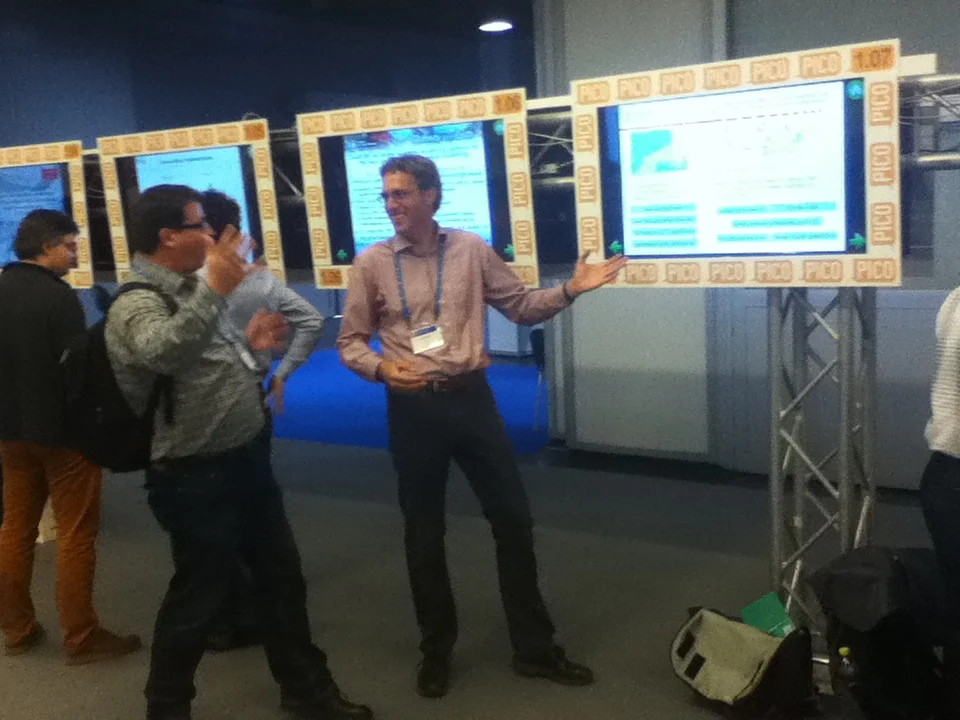
A few weeks ago at the European Geosciences Union in Vienna I learned about two dead-easy and great science communication tools for conferences. These are great for any conference hall or meeting, but could be just as easily be used in the classroom to make a more exciting in class research presentations. For better or …[Read More]
Guest Post: Dr. John W. Jamieson – Using seafloor mapping to find missing Malaysia Airlines flight MH 370
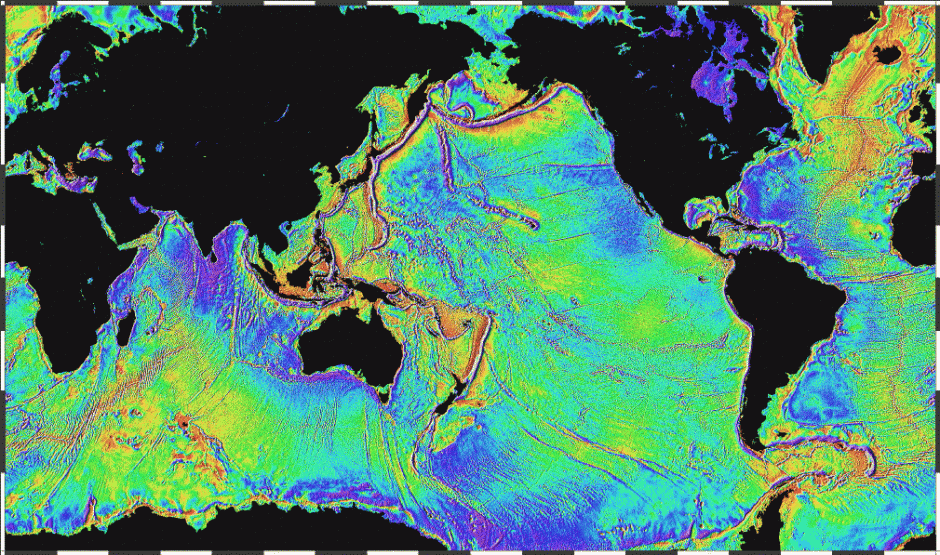
On March 8th, 2014, Malaysia Airlines flight MH370 disappeared while en route from Kuala Lumpur to Beijing. Evidence from satellite tracking suggests that the aircraft may have crashed into the Indian Ocean several 1,000 kms west of Australia and this is where the search is now focused. No debris or oil slick related to the …[Read More]
Imaggeo on Mondays: Plate it up – a recipe for sea ice errors
Last week, a team of cryospheric scientists published a paper in The Cryosphere that showed how tiny plates of ice can lead to spurious estimates of sea ice thickness. This week, we’re featuring their findings, as well as some spectacular sea ice images in the latest in our Imaggeo on Mondays series… Viewing the poles from above is …[Read More]
GfGD in the Himalaya (3) – Tweet your questions!
This weekend two of the GfGD National Team will be travelling out to India to take part in a major international event on sustainable resource development in the Himalaya region. Joining others from around the UK, India and beyond, our focus will be on hazards education. We’ve written earlier this week about the work we’ll …[Read More]
Geosciences Column: Meshing models with the small-scale ocean
The latest Geosciences Column is brought to you by Nikita Marwaha, who explains how a new generation of marine models is letting scientists open up the oceans. The new technique, described in Ocean Science, reveals what’s happening to ocean chemistry and biology at scales that are often hard to model… Diving into the depths of …[Read More]