
The ARCS (Advancing Research Communication and Scholarship) have launched a new ‘open scholarship’ competition. The aim is simple: describe your ‘open science story’, and you could win $1000! In particular, the competition is aimed at finding success stories – how has practicing any form of open science helped you advance or enhance your career in …[Read More]
Latest posts
Open call for submission: EGU Meetings Support and the launch of the Galileo Conferences
The EGU welcomes proposals of support for the Galileo Conferences: a newly established type of meeting which will be fully supported by EGU. The EGU Galileo conferences address well-focused cutting-edge topics at the frontier of geosciences research. A limited number, typically about one hundred internationally recognised scientists meet for 3-5 days to discuss and debate issues …[Read More]
Guest Blog: Micronutrients, Hidden Hunger and Geology
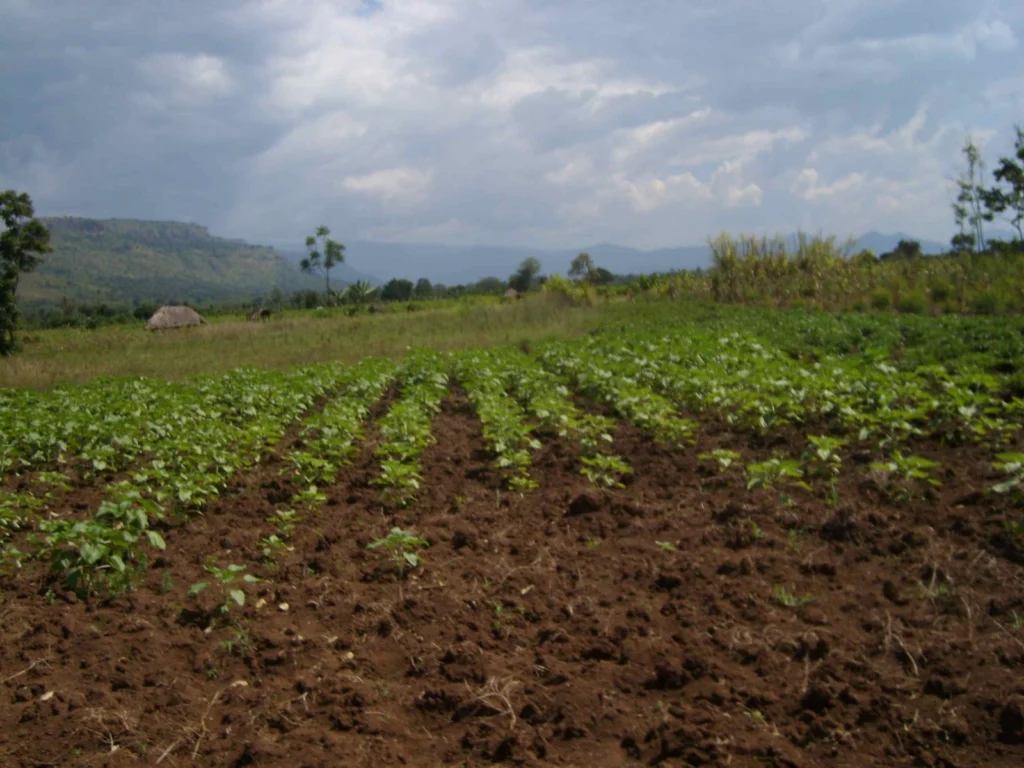
In January 2015, GfGD took a small group of members to a discussion event hosted by the British Geological Survey, on best practice in international development. Ben Clarke and Eleri Simpson, then final year undergraduates at the University of Leicester (UK) joined the event to share about their fantastic work in Vanuatu. Here they write a …[Read More]
Image of the Week: Greenland Ice Streams
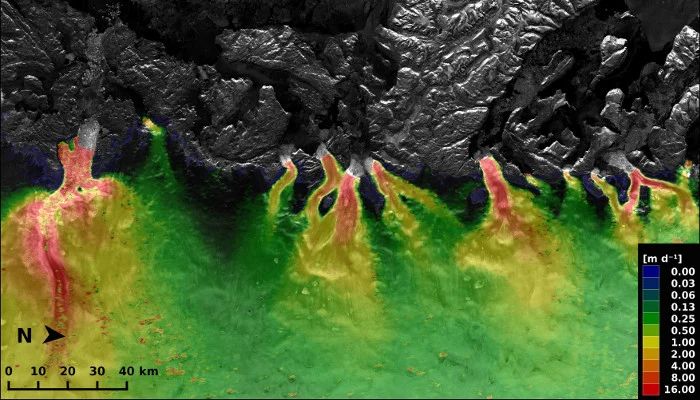
This image is from the west coast of Greenland and it shows several glaciers flowing towards the sea (upper part of the image), transporting ice into the ocean. The colours show the velocity of the ice. As the ice gets nearer to the coast it speeds up reaching speeds over 15m/day. The velocities were calculated using two …[Read More]
How easily does our understanding of ‘CRUSTAL PERMEABILITY’ flow ? A new Geofluids special edition…
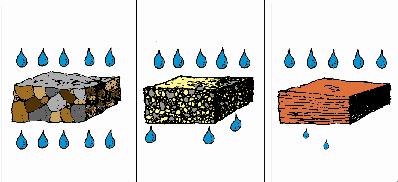
Permeability is a crazy parameter: heterogeneous on many spatial scales, highly variable over up to 20 orders of magnitude, and transient on many temporal scales. Yet, for better or for worse it is essential to our understanding of numerous earth processes, as well as how human impact and interact with the earth. I have had …[Read More]
Meet the EGU’s new Science Policy Fellow
I seem to have moved to Munich at the perfect time – glorious weather and three weeks before Oktoberfest! My name is Sarah and I’ve joined EGU as their Science Policy Fellow – a position created to implement science-policy related activities for EGU scientists. Before Munich, I studied a Masters in Chemistry at the University …[Read More]
Data4Sustain – a new webGIS renewable energy feasibility tool
Words on Wednesday aims at promoting interesting/fun/exciting publications on topics related to Energy, Resources and the Environment. If you would like to be featured on WoW, please send us a link of the paper, or your own post, at ERE.Matters@gmail.com. *** Blog by Darren Beriro, British Geological Survey British Geological Survey (BGS) and consortium members Land Quality …[Read More]
The rise of open research data
This was originally posted at: http://exchanges.wiley.com/blog/2015/08/26/the-rise-of-open-research-data/ As a junior researcher in the UK, it has given me great pleasure over the last few years to see the dramatic development of open access publishing. Most major research funders in the UK now require public access to published research articles in one form or another, and many other …[Read More]
Geosciences Column: The Oldest Eurypterid
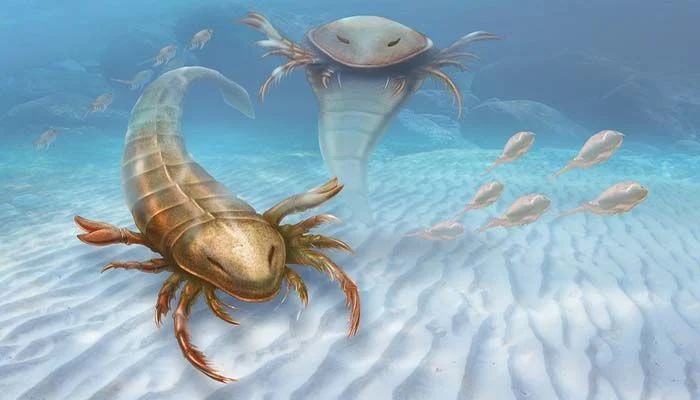
The name of a newly found fossil of sea scorpion draws inspiration from ancient Greece warships and is a unique example of exceptional preservation, shedding light on the rich life of this bygone sea critter, explains David Marshall of Palaeocast fame. To learn more about the importance of giving new fossils names and what Pentecopterus …[Read More]
New open access journal to publish entire research cycles
Say hello to Research Ideas & Outcomes (RIO), a new open access journal, formally open for business today! The new journal represents a useful addition to traditional publishing, in that it will publish research from all stages of the research cycle, across a broad suite of disciplines, from humanities to science. Traditionally, journals accept articles that are the final …[Read More]