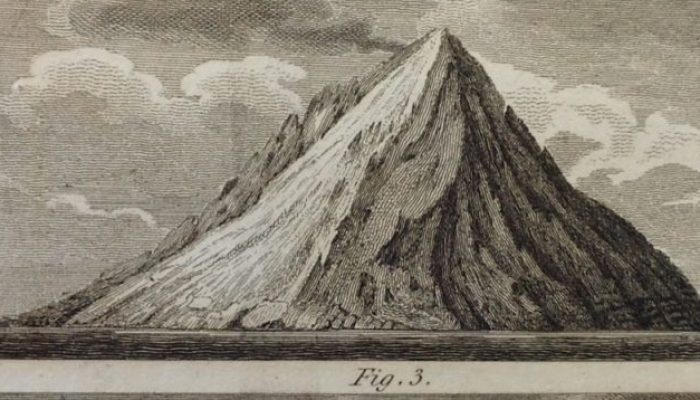
One of the delights of talking to children of primary school age is their disarming ability to ask really simple questions that demand straightforward answers, but leave you struggling to throw your academic caution to the wind. Even with the questions of the biggest, the smallest, the oldest and the youngest there are still different ways of (over)interpreting the question, that can leave you flo ...[Read More]
GeoLog
Geosciences Column: The World’s soils are under threat
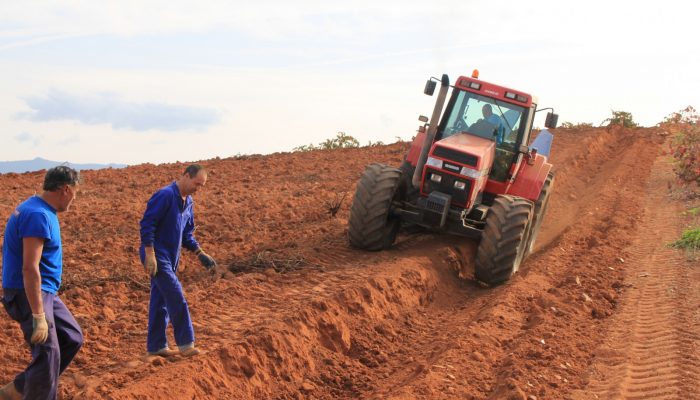
An increasing global population means that we are more dependant than ever on soils. Soils are crucial to securing our future supplies of water, food, as well as aiding adaptation to climate change and sustaining the planet’s biosphere; yet with the decrease in human labour dedicated to working the land, never have we been more out of touch with the vital importance of this natural resource. Now, ...[Read More]
Biogeosciences
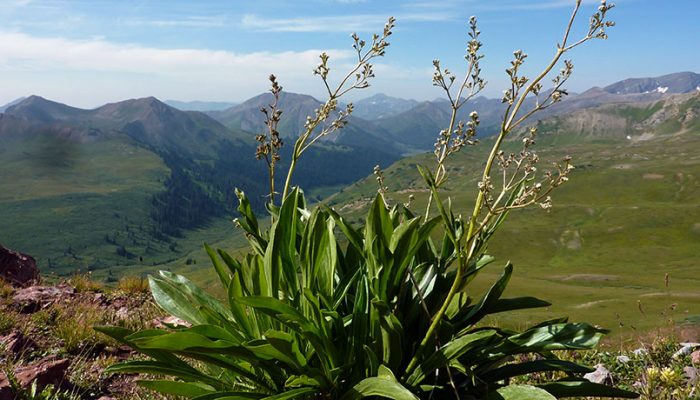
Coffee break biogeosciences – climate change affects mountain plant’s sex ratios
As climate change progresses, widespread changes in phenotypes in many plant populations are bing observed by scientists around the world. For instance in alpine areas, dominant plant species on lower altitude are shifting towards higher altitude as they adapt to increasing temperatures, thereby competing with high-altitude native plant species. In a recent study by Petry et al. (2016) it was show ...[Read More]
Cryospheric Sciences
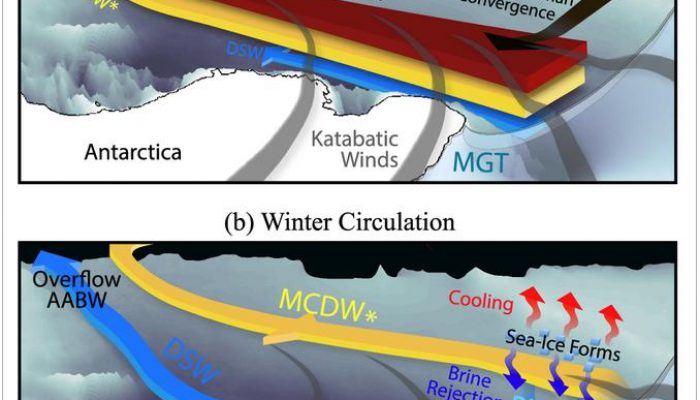
Image of the week – The winds of summer (and surface fluxes of winter)
Antarctica is separated from the deep Southern Ocean by a shallow continental shelf. Waters are exchanged between the deep ocean and the shallow shelf, forming the Antarctic cross-shelf circulation: Very dense waters leave the shelf as Antarctic Bottom Water (AABW) that will then flow at the bottom of all oceans. Meanwhile, relatively warm water from the Southern Ocean, Modified Circumpolar Deep W ...[Read More]
Seismology
First Earthquakes, past and future
What was your first experience of an earthquake? Was it scary? Weird? Confusing? The first earthquake I have consciously noticed was a magnitude 4.something on a small fault zone not far from my home town. The wave that shook our terraced house felt like a short burst of pressure, making me briefly worry, but then laugh as it prompted my mother to shout “Stop jumping off the wardrobe!” ...[Read More]
Soil System Sciences
Why your scientific paper was accepted?
As one of the executive editors of Solid Earth, one of my main duties is to keep up the journal’s reputation and a high quality of published articles. For a manuscript to be considered as a candidate for publication, it is necessary to fall within the scope of the journal. But, in my opinion, it also needs to show “new science”: innovation in the methods or approaches, sound resu ...[Read More]
GeoLog
Imaggeo on Mondays: an impressive testimony to the collision between Africa and Europe
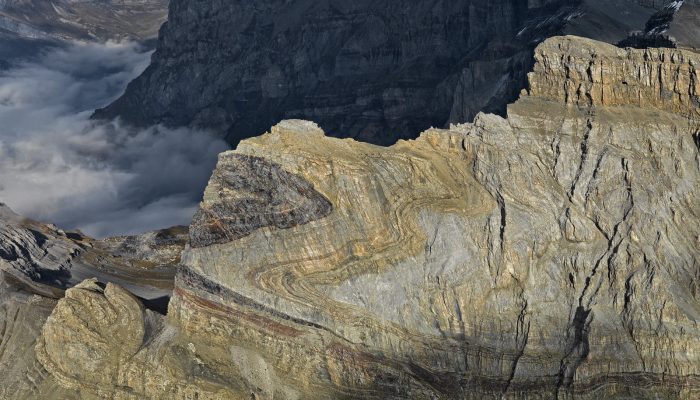
The huge fold in the flank of the 2969 m high Dent de Morcles (in Waadtland Alps, Switzerland) is an impressive testimony to the collision between Africa and Europe (which began some 65 million years ago). The layers, originally deposited on the sea floor in a horizontal position, were compressed and shifted. The darker parts developed during the Tertiary period (66 million years ago). They are yo ...[Read More]
Cryospheric Sciences
Image of the Week — Arctic porthole, Arctic portal
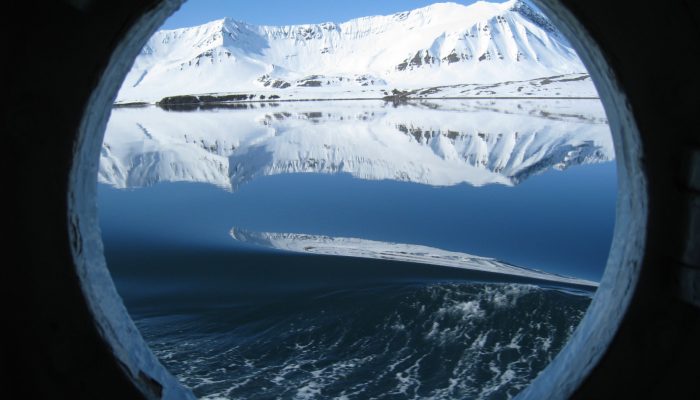
No need to be a superhero to momentarily escape your everyday life! For that you, can just rely on the EGU Cryosphere Blog, which cares for taking you on trips to all sorts of remote and cool places (OK, OK we have to admit that some of these places are indisputably cold :-)). The picture of this week was taken through the porthole of a boat in the middle of Isfjorden, one of the largest fjord in ...[Read More]
GeoLog
GeoTalk: Matt Taylor of ESA’s Rosetta mission
In November 2014, space exploration history was made. Millions of kilometres away, orbiting a piece of ice and rock, the European Space Agency’s (ESA) Rosetta mission sent its probe Philae to become the first spacecraft to soft-land on a comet. After the tense 7-hour wait that followed the separation from the main orbiter, a tweet confirmed that the little lander had successfully completed the fir ...[Read More]
Seismology
Paper of the Month – Self-healing slip pulses in earthquake rupture
The “Paper of the Month” (PoM) blog series, recently launched by the Early Careers Scientists (ECS) representatives of the Seismology Division at EGU, aims to present particularly interesting, important, or innovative research articles in all fields related to seismology. While peer-reviewed articles published in the last 12 months are the primary targets, also older “classical” papers can make it ...[Read More]