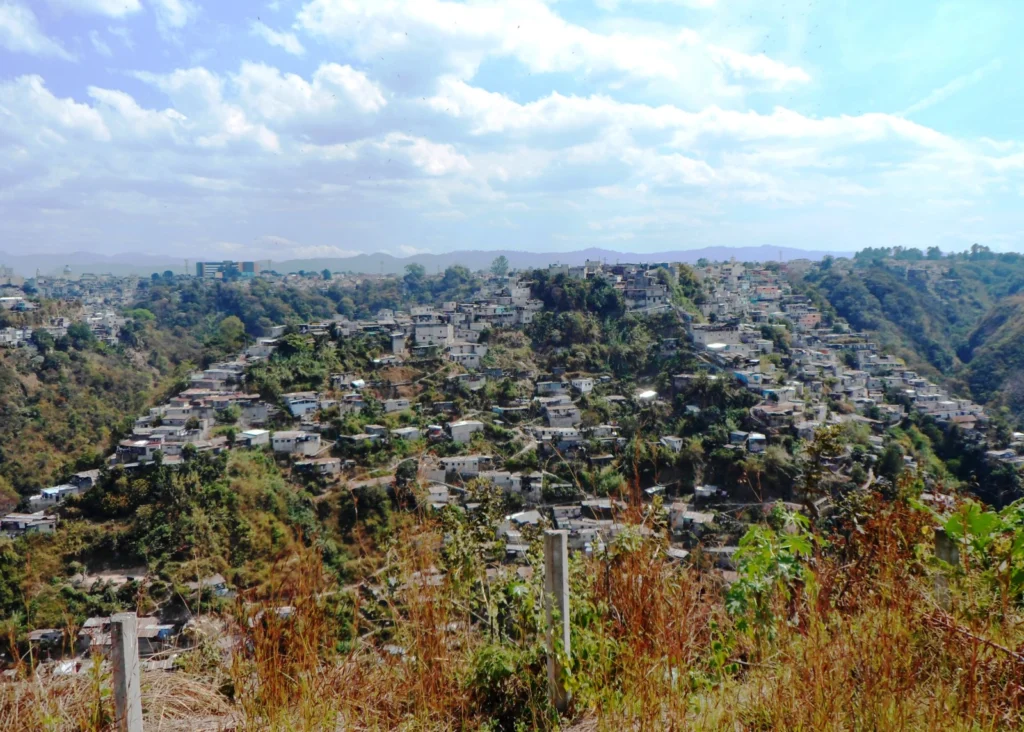
Earlier this year, the EGU Natural Hazards Division approved the addition of a new sub-division focused on the theme of ‘multi-hazards’. The Science Officers representing this sub-division, Joel Gill (British Geological Survey) and Marleen de Ruiter (IVM-VU Amsterdam), reflect on why this sub-division is necessary and how you can get involved. Many regions are affected …[Read More]
Latest posts
Urban water underground: How green infrastructure makes it visible
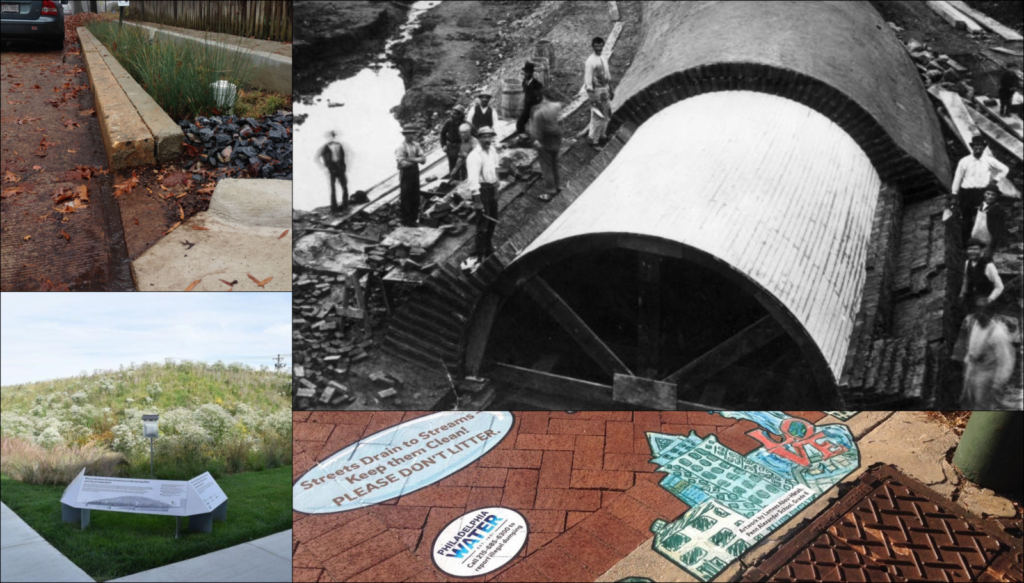
Post by Theodore Lim, assistant professor of Urban Affairs and Planning at Virginia Tech. He researches the socio-hydrology of green infrastructure planning and implementation. In order for people to care about something, to value it, they have to be able to see it and experience it. This point should not be taken lightly. So much …[Read More]
Surviving in cold environments: from microbes under glaciers to queer scientists in the current social context
On the 5th of July we will celebrate the International Day of LGBTQ+ (lesbian, gay, bisexual, transsexual, queer, and people that do not identify themselves as cis and/or straight) People in Science, Technology, Engineering, and Maths (STEM). Many people will ask: “Why is this day important?” Being a queer scientist in particular, and a queer …[Read More]
GeoPolicy: Preventing mercury leakage from a WWII submarine
I recently had the opportunity to interview Matthias Kaiser, a professor at Bergen University and, at the time of the interview, Director of the Centre for the Study of the Sciences and the Humanities. He is part of an expert team that has given scientific advice to Norwegian policymakers, highlighting the issues that should be …[Read More]
The Sassy Scientist – Jekyll: Mantle dynamics
Every week, The Sassy Scientist answers a question on geodynamics, related topics, academic life, the universe or anything in between with a healthy dose of sarcasm. Do you have a question for The Sassy Scientist? Submit your question here. Senna asks: I’m torn between mantle dynamics and lithosphere dynamics as a research topic. Which shall I …[Read More]
What I learned from chairing my first EGU session
By Emily Bamber (PhD Student, University of Manchester) At this year’s EGU meeting I was invited to co-convene the GMPV 5.7 session ‘Magma ascent, degassing and eruptive dynamics: linking experiments, models and observations’. At first, I felt nervous, as a PhD student who has so far only attended and presented at a few conferences. Afterwards …[Read More]
The link between development and resource use
This month the GfGD blog revolved around the theme of Resources. Blog author Heather Britton explores the link between the use of natural resources and development. How feasible are the various options available to us, to reach a use of resources aligned with sustainable development? From the ideology of a circular economy, a switch to …[Read More]
It doesn’t work! (Asking questions about scientific software)
Numerical modelling is not always a walk in the park. In fact, many of us occasionally encounter problems that we cannot directly solve ourselves, and thus rely on help from others. In this month’s Wit & Wisdom post, Patrick Sanan, postdoctoral researcher at the Geophysical Fluid Dynamics group at ETH Zurich, will talk about asking the …[Read More]
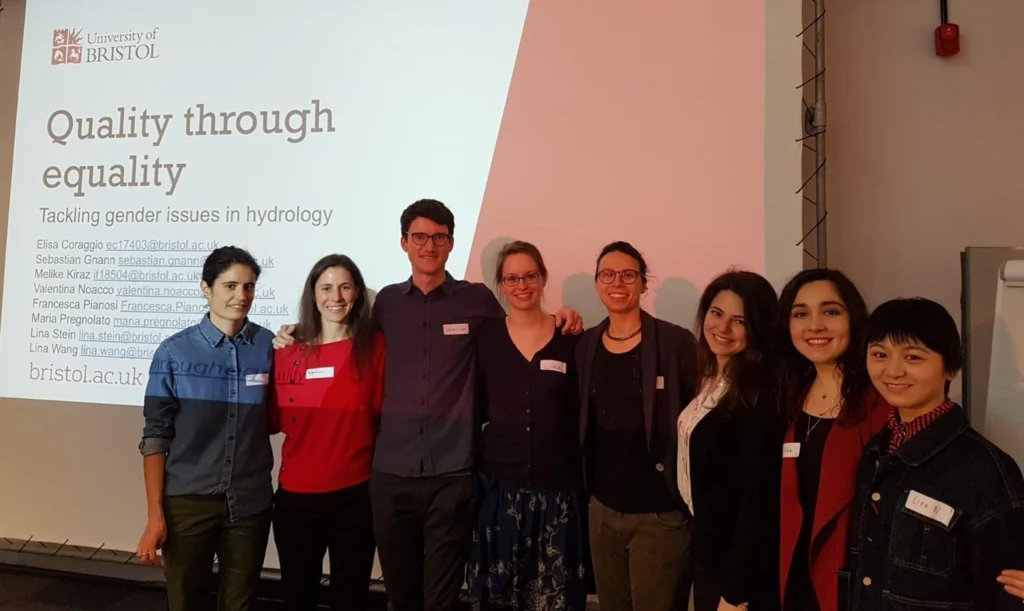
Quality through Equality – tackling gender issues in hydrology
Quality through Equality – tackling gender issues in hydrology Results of a 1-day workshop organised by the University of Bristol’s Water Engineering Group “Science has a diversity problem” (Nature, 2019), and hydrology and the water sciences are no exception. For example, overall only 36% of all EGU medal awardees are female. With 31% of all …[Read More]
Highlights of the EGU GA 2019
A brief review, highlighting the short course series Solid Earth 101, the Early Career Scientist strategy, and the impressions on the EGU General Assembly from your editorial staff. Over 16 000 scientists from 113 countries, more than 1000 different conference related events and a schedule overflowing with science, awards ceremonies, short courses, policy making, and – …[Read More]