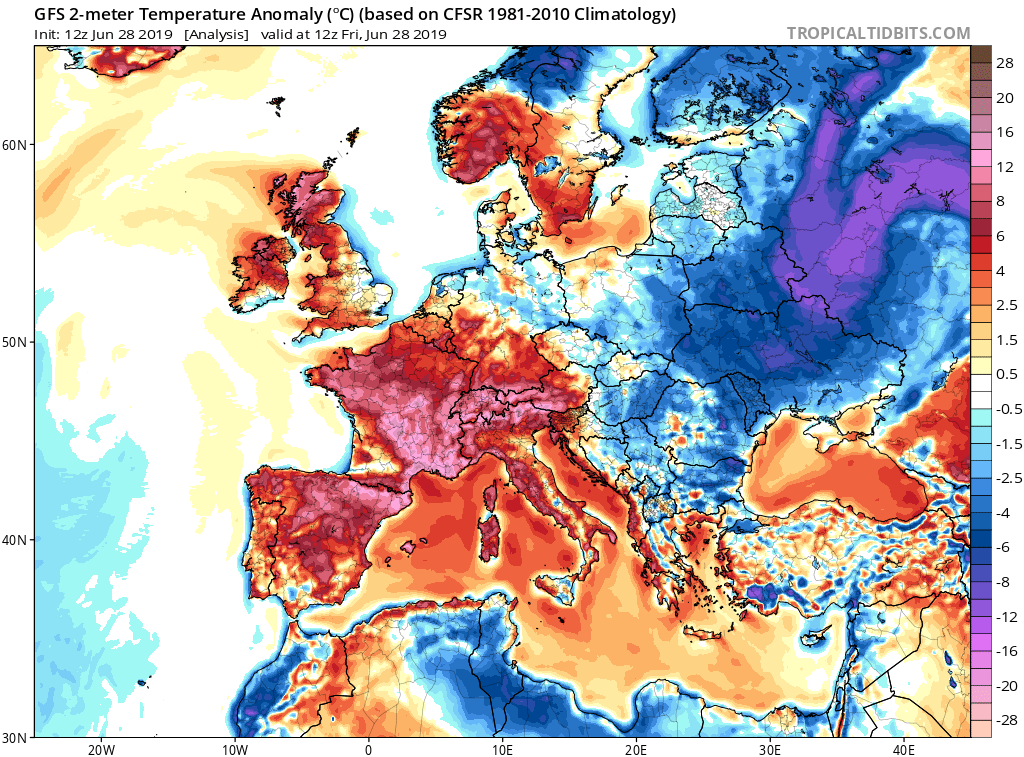
If August Rodin had lived nowadays, he would have placed his gates of hell (la Porte de l’Enfer) in Gallargues-le-Montueux, where the absolute French temperature record (45.9 °C) was set on June 28th this year. The last week of June has been very hot, not only in the south of France, but overall central Europe: …[Read More]
Latest posts
NP Interviews: the Division President Stéphane Vannitsem
Today’s NP Interviews hosts the Nonlinear Processes Division President Stéphane Vannitsem. Stéphane is the head of the Dynamical Meteorology and Climatology Unit of the Research division of the Royal Meteorological Institute of Belgium, and lecturer at the Free University of Brussels. He is currently president of the Nonlinear Processes division of the European Geosciences Union …[Read More]
Welcome to the Nonlinear Processes in Geosciences Blog!
We are happy to announce that the growing Nonlinear Processes in Geosciences (NP) community has a new unifying platform where newsworthy information on different topics will be published, with the main aim to reach many scientists at a time. Thus, this is the official launch of the Nonlinear Processes in Geosciences Blog! We hope this …[Read More]
A do-it-yourself Jupyter notebook to constrain sediment permeability
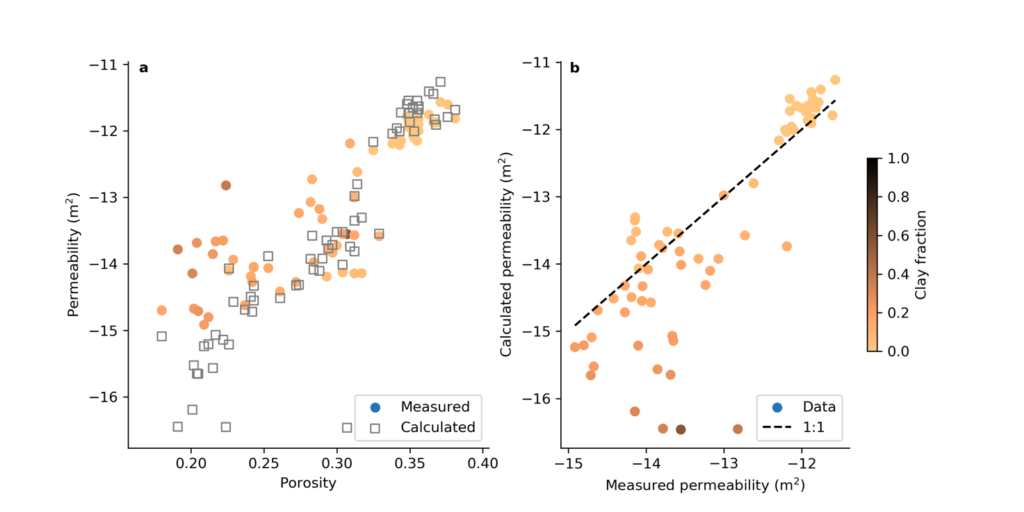
Post by Elco Luijendijk, Junior lecturer in the Department of Structural Geology and Geodynamics at Georg-August-Universität Göttingen and WaterUnderground founder Tom Gleeson (@water_undergrnd), Associate Professor in the Department of Civil Engineering at the University of Victoria. Most of the groundwater on our planet is located in sedimentary rocks. This is why it is important to …[Read More]
Tracking water consumption: how you can help fight climate-change-driven water stress
How much water do you think you’re using? When you eat 200 g of beef, you are using more than 3,000 liters of water. Regular blog author Bárbara Zambelli helps us understand how we can alleviate climate-change-related water stress in countries around the world, just through our choices of consumption. [Editor’s note: This post reflects Bárbara’s …[Read More]
Writing your own press release
Do you have an upcoming publication and would like to extend its reach through a press release? Maybe your university doesn’t have a media office able to help, you are short on time, and/or don’t know where to start. Don’t fret, this week Grace Shephard (Researcher at CEED, University of Oslo) shares some tips for …[Read More]
Minds over Methods: Virtual Microscopy for Geosciences
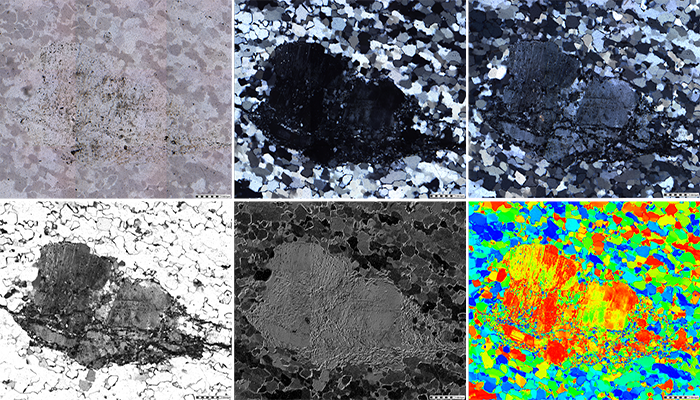
The next “Minds over Methods” blogpost is a group effort of Liene Spruženiece (left) – postdoctoral researcher at RWTH Aachen and her colleagues Joyce Schmatz, Simon Virgo and Janos L. Urai. The Virtual Microscope is a collaborative project between RWTH Aachen University and Fraunhofer Institute for Applied Information Technology (Schmatz et al., 2010; Virgo et …[Read More]
Imaggeo on Mondays: Loch Coruisk – home of the wild Kelpie
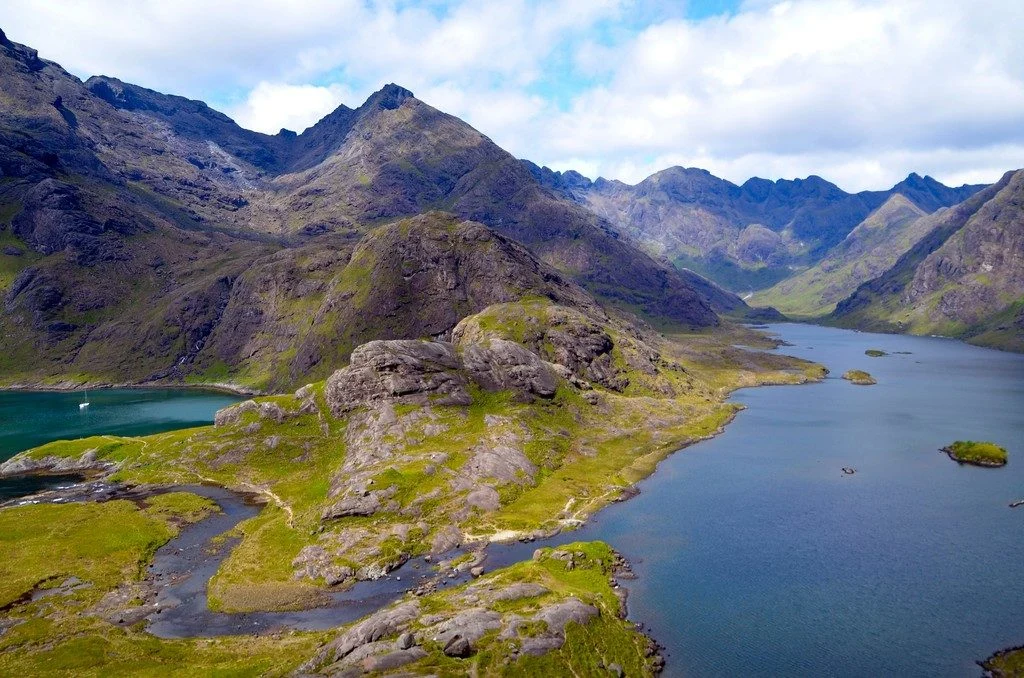
On the south-western coast of the Isle of Skye, Scotland, lies Loch Coruisk, supposedly home of a water horse. At the southern end of this freshwater Loch, the Scavaig River discharges into a sea Loch, Loch na Cuilce. Loch Coruisk snuggles close to the center of the Cuillin Hills complex, younger than both the northern …[Read More]
The proliferation of Cyanobacterial blooms: A toxic blue tide
Dr Assaf Sukenik is Senior Scientist at Kinneret Limnological Laboratory of the Israel Oceanographic and Limnological Research. His research interests concern the physiology and biochemistry of freshwater and marine algae, Cyanobacteria and algal toxins, the water quality of freshwater ecosystems. What are cyanobacteria and what is their natural habitat? Cyanobacteria (from the Greek word κυανοσ …[Read More]
Help shape the conference programme: Union Symposia and Great Debates at the 2020 General Assembly
Do you enjoy the EGU’s annual General Assembly but wish you could play a more active role in shaping the programme? This year, why not propose a Union Symposia or Great Debate? Each year at the General Assembly, the conference features a limited number of Union Symposia (US) and Great Debates (GDB), which can be …[Read More]