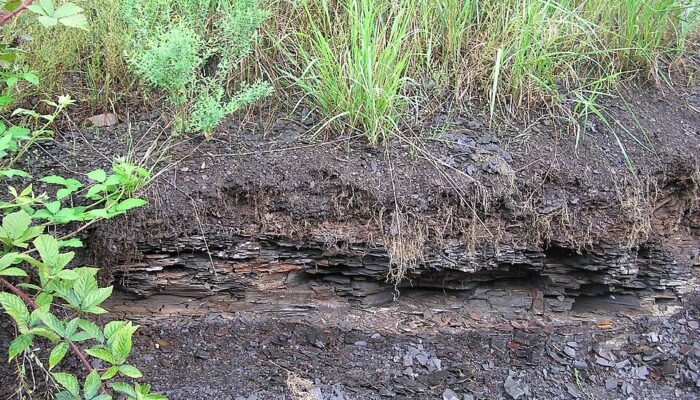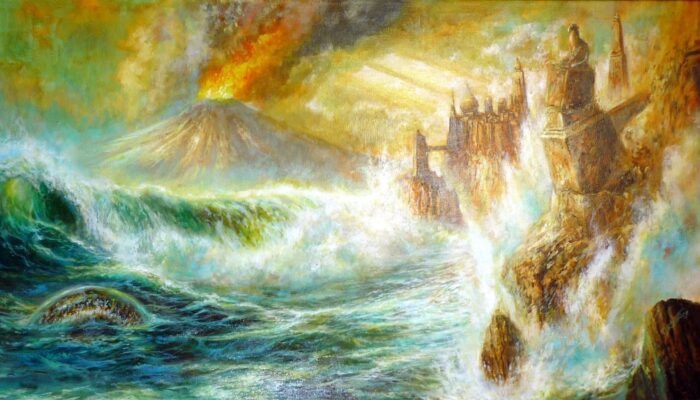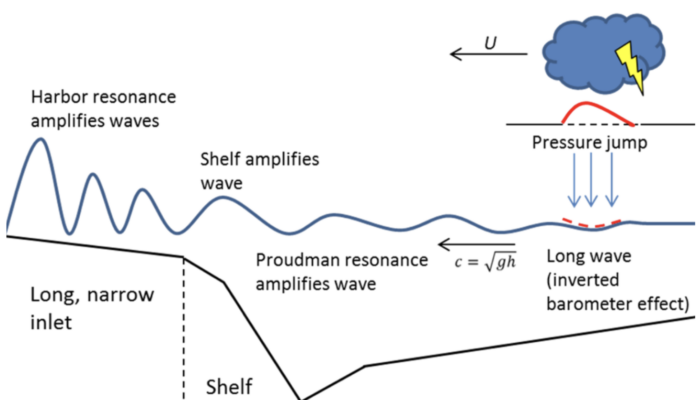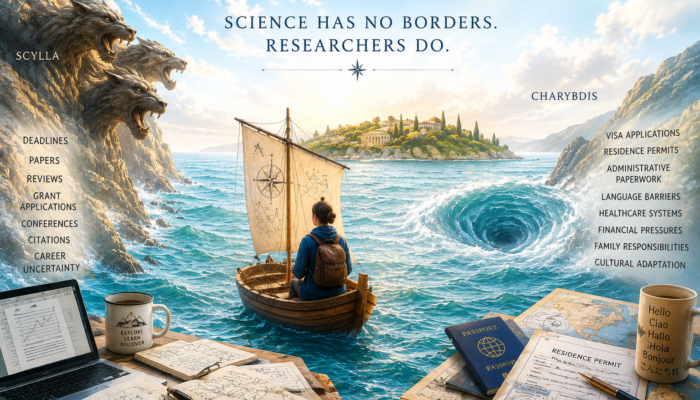
The contribution from Sergio León-Ríos, Associate Researcher at the Advanced Mining Technology Center (AMTC) at the University of Chile, where he does seismology research. Post edited by Adam Ciesielski prior to publication. Introduction Hydrogen sits at the heart of today’s energy transition. From policy documents to industry roadmaps, it is widely promoted as a clean alternative to fossil fuels. ...[Read More]
Geodesy
EGU Campfire Geodesy – Share Your Research – 21st Edition
We are excited to announce the 21st edition of Geodesy Campfire – Share Your Research in August. The Geodesy EGU Campfire Events “Share Your Research” give (early career) researchers the chance to talk about their work. We have two exciting talks by our guest speakers, Shrishail Raut and Michal Cuadrat-Grzybowski. Below, you can find the details of the topics awaiting us. We will have time to netw ...[Read More]
Hydrological Sciences
What machine learning can and cannot tell us about floods
Floods are shaped by complex and nonlinear interactions between weather patterns, rainfall, soil properties, topography, land cover, and how wet a catchment already is. This complexity is one reason machine learning (ML) is increasingly used in hydrology. ML models can learn patterns from large and complex datasets with many variables. Early in my PhD, while exploring machine learning models for ...[Read More]
Solar-Terrestrial Sciences
My First EGU Experience: EGU26
The journey to my first EGU General Assembly (GA) 2026 (EGU26) was memorable even before the conference began. What should have been a straightforward train ride to Vienna turned into an unexpected adventure when we were asked to get off at a small station and wait several hours for alternative transport. Surrounded by travellers, luggage, and a fair amount of confusion, it felt as though the EGU2 ...[Read More]
Geodynamics
From rifts to reefs: the geodynamic origins of shallow coral reef habitats at passive continental margins
Ocean Sciences
Fifty years of ocean chemistry in one place: GLODAPv3 is here!
Working with marine carbonate-system observations has taught me how much effort lies behind every row of an oceanographic dataset: long hours at sea, careful sampling, laboratory analyses, calibration and quality control. A single bottle of seawater may represent only one place, one depth and one moment, but when many such samples are brought together, they can reveal how the ocean is changing. On ...[Read More]
Climate: Past, Present & Future
Why the Same Soot Can Warm One City and Cool Another
Every time something burns incompletely —whether in a car engine, a factory furnace, a cooking fire, an agricultural field set alight after harvest, or a vast wildfire sweeping through savanna grasslands— tiny particles of black carbon are released into the atmosphere. You might know these more simply as soot. These particles are so small that thousands of them laid side by side would barely stret ...[Read More]
Geomorphology
When Mud Flows Behave Like Glaciers: Discovering the Secrets of Azerbaijan’s Mud Volcanoes
Introduction When people hear the word „volcano“, they usually think of a magmatic volcano with impressive pyroclastic eruptions or lava flows. However, mud volcanoes are different. Mud volcanoes erupt what we call mud breccias, a mixture of gas, water, and fine sediments. The eruptions generally occur due to deep generation of hydrocarbons and gravitational instability of rapidly buried, buoyant ...[Read More]
Geochemistry, Mineralogy, Petrology & Volcanology
Geology in Björk’s soundscapes – from tectonic metaphors to emotional terrains
Iceland is pure geology. When I travelled there in 2015, it felt like stepping into another world: surreal, raw, and unforgettable. Geology wasn’t just something to observe or study: in Iceland, it’s something you inhabit. The landscape doesn’t just sit there, it feels alive. It hums, it shifts, it speaks. And whether you’re a geologist or not, you can’t help but listen. To make the experience eve ...[Read More]
Geodynamics
The truth about The Odyssey: Geodynamics, lies, cries and the hunt for Ithaca
If you have ever tried to draw a geological cross-section under a fantasy map, Homer is surprisingly cooperative (and if you remember my Middle-earth geology post, you already know I live for this). The Odyssey is full of real places and real people—Troy, Mycenae, Sparta—stitched together with storms, monsters and divine interventions that would make any structural geologist reach for a stress ten ...[Read More]