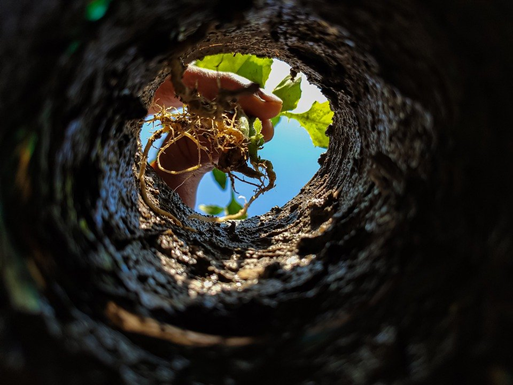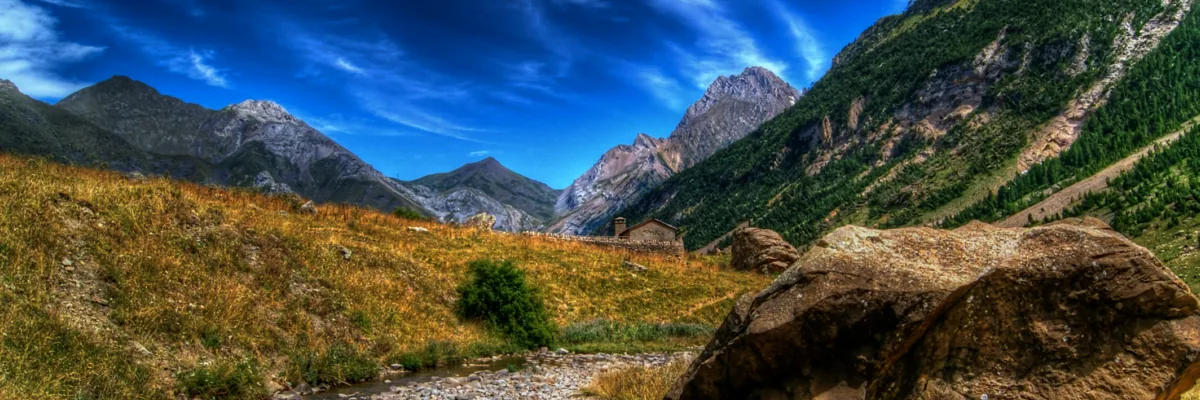
The soil market: plants spend some of their carbon on buying nutrients from mycorrhizae Similar to the way that we take up carbon (C) through the food we eat, plants absorb C in the form of CO2 from the atmosphere through photosynthesis, and use it to build sugars (Fig. 1). After having a good snack, …[Read More]
Latest posts
Geochemistry, Mineralogy, Petrology & Volcanology
Call for presentations: Early Career Scientist Webinar series
The EGU GMPV ECS** committee are pleased to invite you to contribute to a new series of webinars, highlighting new research by early career scientists. These webinars will be one hour long, made up of four talks (8-10 minutes each) from across the breadth of GMPV, with time for discussions. Whilst the exact timings are …[Read More]
Geodynamics
Starting to teach? Here are 3 tips!
Starting to teach a course at a university can be an exciting but daunting experience. In today’s post Menno Fraters shares his experiences of starting to teach a class of 100+ students during the challenging time of the COVID-19 pandemic. He provides three quick tips for when you start teaching, that may be useful for …[Read More]
Hydrological Sciences
Hydrological tipping points: Can we tip the bucket?
We live in a time of unprecedented pressure on water resources. The combination of drivers, such as human water use and land use, climate change by greenhouse gases and the human modification of other components of the Earth system coupled to the water cycle, may be pushing water resources beyond levels of sustainability at all …[Read More]
GeoLog
Imaggeo on Mondays: The Grid – A serpentine pseudomorph after carbonate
The structures in this photo might look three-dimensional, but they are completely flat. It is a photo of a polished thinsection of a rock, taken through a petrographic microscope under cross-polarized light. The width of the image is just 2 mm. The brownish mineral around the edges is carbonate, the white to grey mineral in …[Read More]
Seismology
Seismology Job Portal
On this page, we regularly update open positions in Seismology for early career scientists. Do you have a job on offer? Contact us at ecs-sm@egu.eu Please, note that other available research positions are displayed on the EGU Jobs Portal.
Soil System Sciences
Our team is growing … unprecedentedly!
It is my great pleasure to introduce you to our new SSS Early Career Scientist (ECS) & Outreach team. This year, apart from having a new ECS Representative – Layla San Emeterio – we realized that there’s just too much fun for one person! That’s why this year, our division has also elected two ECS …[Read More]
GeoLog
GeoTalk: Inaugural Katia and Maurice Krafft Award winner, Rhian Meara talks about the EGU award nominations.
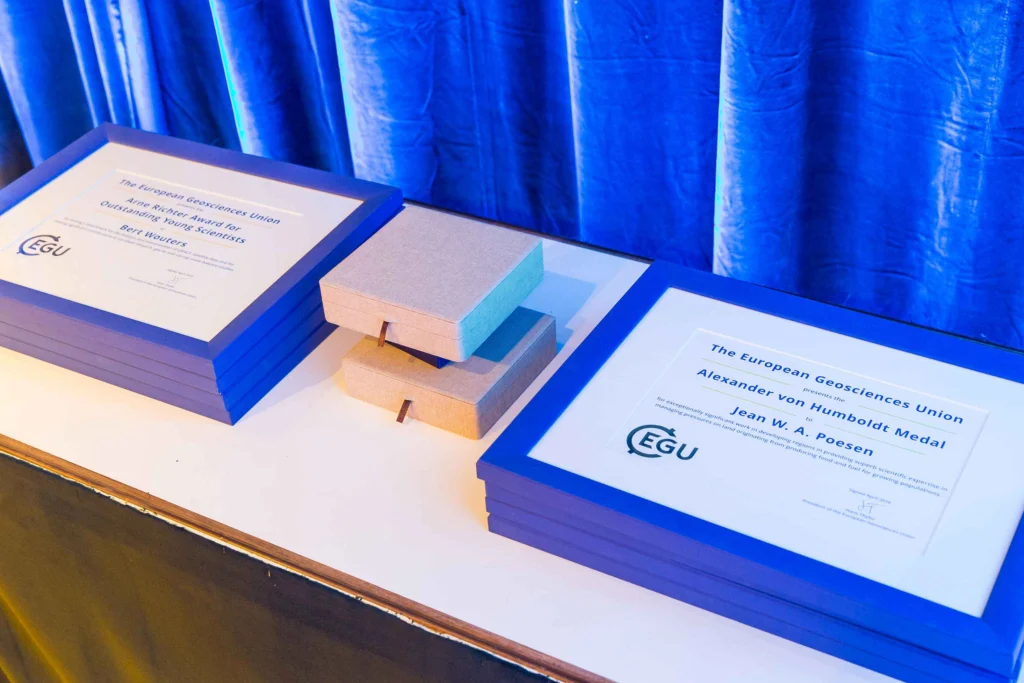
Hi Rhian, thanks for talking with us today about the EGU’s Award nominations, please start by introducing yourself! I’m a physical geography and geology lecturer at Swansea University, with a particular focus on teaching through the medium of Welsh. I have been awarded the Katia and Maurice Krafft Award for my work on the British …[Read More]
Cryospheric Sciences
Did you know… the surface of melting glaciers is one of the most radioactive places on Earth?
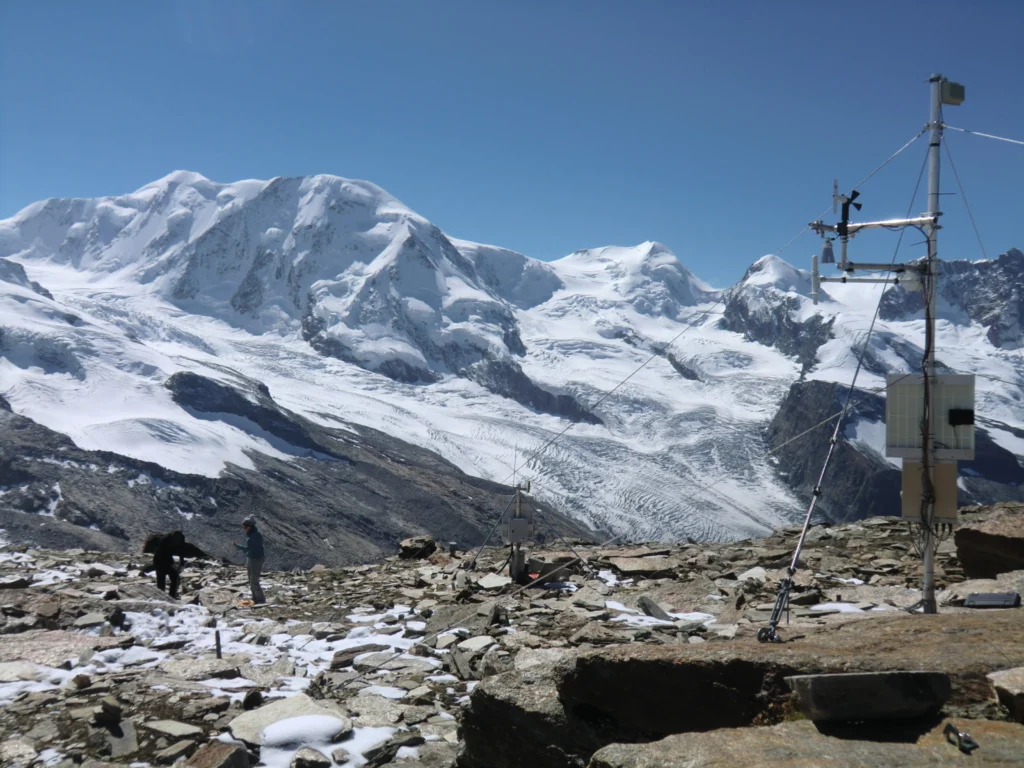
Recent studies show that glaciers are significantly affected by pollution, and in general by human activities, but few people would imagine that their surface contains traces of nuclear contamination and radioactivity. It has been recently claimed that high amounts of radioactivity have accumulated on glaciers, only beaten by the radioactivity levels of sites where nuclear …[Read More]
Nonlinear Processes in Geosciences
COVID-19-related drop in anthropogenic aerosol emissions in China and corresponding cloud and climate effects
While a previous blog entry dealt with the question whether we can use lessons from the nonlinear nature of climate for projections of the Covid-19 pandemic, there is now a first example of how the pandemic can teach us something on climate. The several weeks long lockdown of China made February 2020 an exceptional month …[Read More]