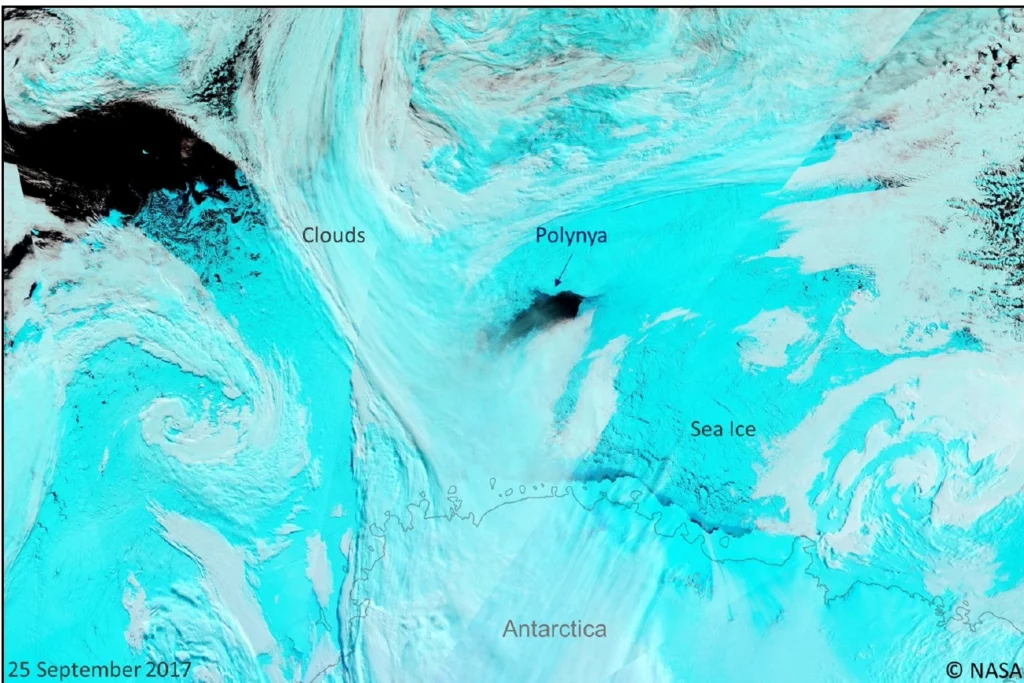
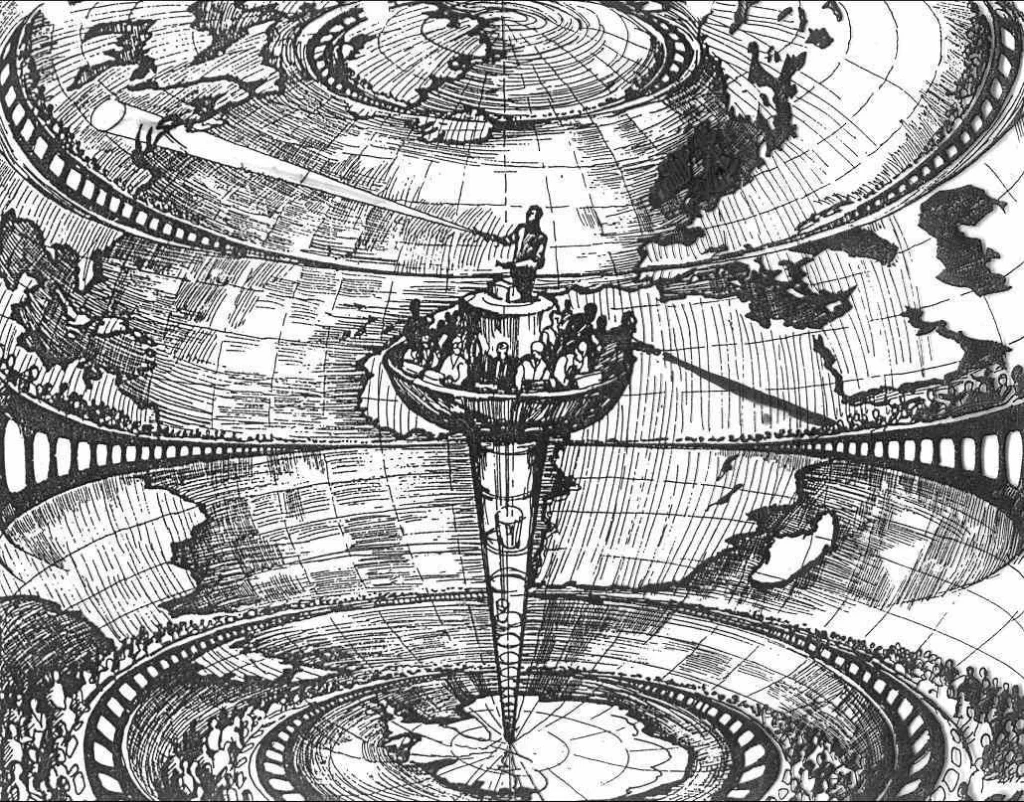
The mysterious appearance and disappearance of the Weddell Polynya, a giant hole in the sea ice cover, has long puzzled scientists. Recent work reveals that the polynya is initiated and maintained by gigantic and formidable atmospheric currents: atmospheric rivers! Read on to find out more… Each year, approximately 15 million square kilometers of ice forms …[Read More]
Latest posts
Geodynamics
The Sassy Scientist – Welcome to Hotel California
Congratulations Glenn! You survived your socially distanced PhD defence and after three months in your mum’s spare room you are raring to go, chomping at the bit, and approaching the start line for the next stage of your academic career. Having spent the last eight years in education, it’s time to start a new job! …[Read More]
Tectonics and Structural Geology
TS Must-Read – Ramsay (1980) Shear zone geometry: a review
Ramsay’s 1980 important contribution is a practical and theoretical handbook about shear zones, where the reader can find a detailed classification of shear zones, their description, and mathematical explanation. A definition of the concept of shear zones opens the article, followed by the shear zones classification into three types, namely brittle (e.g., Fig. 1a), brittle-ductile …[Read More]
Geodynamics
Rift linkage and rotating microplates
2020 left your head spinning? This week Derek Neuharth from GFZ Potsdam introduces us to the spinning microplates that can be found in extensional plate boundaries such as the East African Rift System and the East Pacific Rise. Divergent plate boundaries Microplates are enigmatic features that form in the boundaries between tectonic plates. Generally, plate …[Read More]
Climate: Past, Present & Future
Life of a Climate Scientist
Dear readers of the EGU Climate: Past, present and future blog. We hope you are having a good start to the New Year. Last year we faced a multitude of challenges due to the pandemic. Hopefully, by the end of 2021, the vaccination campaign will help combat the pandemic, and allow us to go back …[Read More]
Atmospheric Sciences
Community Effort to explore the Papers that shaped Tropospheric Chemistry
The genesis of the idea to explore the influence of certain papers on shaping the field of tropospheric chemistry came when editing a textbook chapter I had written a decade earlier. As I edited it I thought, what really is new; text-book worthy over the last 10 years? In some senses what is text-book worthy …[Read More]
Tectonics and Structural Geology
TS Must-Read – Brace and Kohlstedt (1980) Limits on Lithospheric Stress Imposed by Laboratory Experiments
In 1980 Brace and Kohlstedt published a short paper that constrains the strength of continental lithosphere by extrapolating laboratory measurements of rock strength to geological conditions. Their approach follows earlier work by Goetze and Evans (1979) and relies on two key considerations. First, the brittle strength is given by the frictional strength of rocks following …[Read More]
Nonlinear Processes in Geosciences
NP Campfire: “Perspectives on Climate Science: from historical developments to research frontiers”
Recently, the European Geosciences Union (EGU) started to support a new type of event called ‘Campfires’ that will give the Divisions the freedom to run online interactive events in a way that suits their needs. This allows the EGU Divisions to encourage interactions in their research communities through virtual informal meetings. In this framework, and …[Read More]
Soil System Sciences
The importance of our SSS (…Soil Support Staff!) #3
Happy New Year! It’s January, and time for us to continue our monthly series of blog posts dedicated to highlighting the great work carried out by technicians, laboratory assistants, and research support staff in soil science. This month, we sat down (virtually, of course) with Jonathan J. Gottlieb (J.J.), the Head of the Laboratory for …[Read More]
GeoLog
Imaggeo On Monday: “Smoking” peaks of the Patagonian batholith
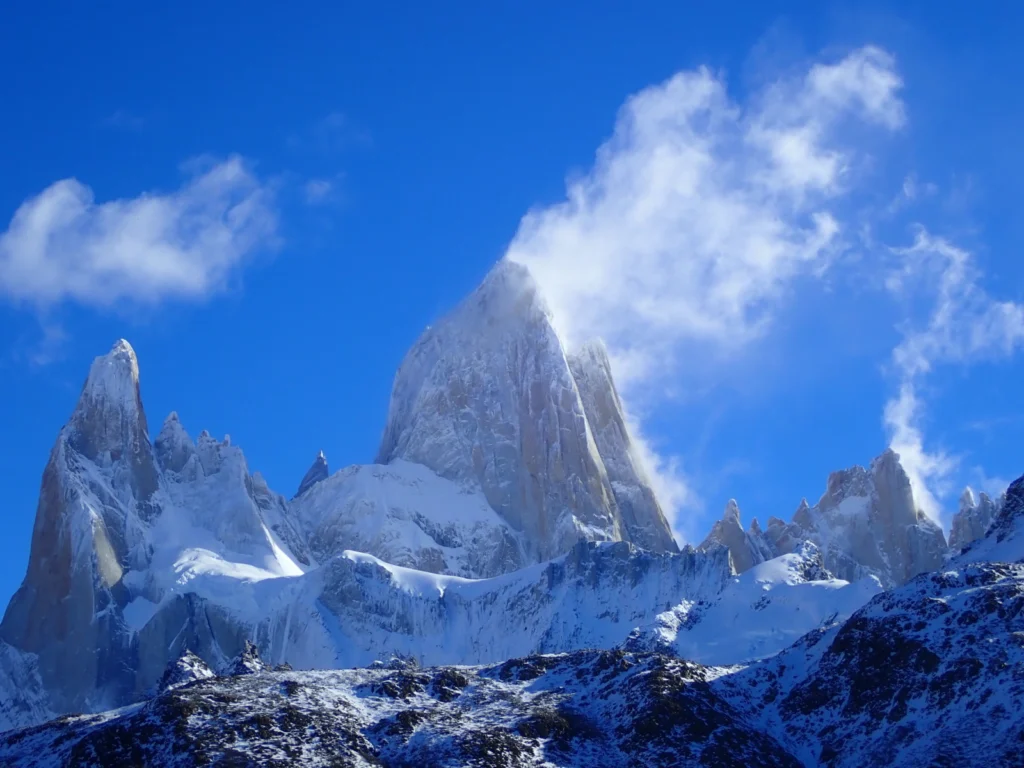
The indigenous name of the 3405 meter high Fitz Roy mountain in Patagonia, on the border between Argentina and Chile, is frequently translated as “smoking mountain”. This photo may visually explain an origin of this name. On the day the photo was taken, vortices downwind of the peak drew warmer, humid air from below, forming …[Read More]