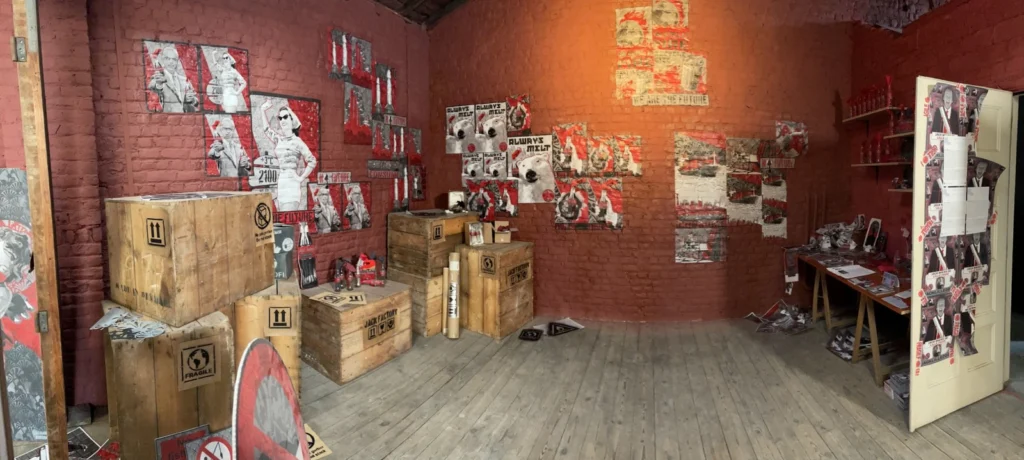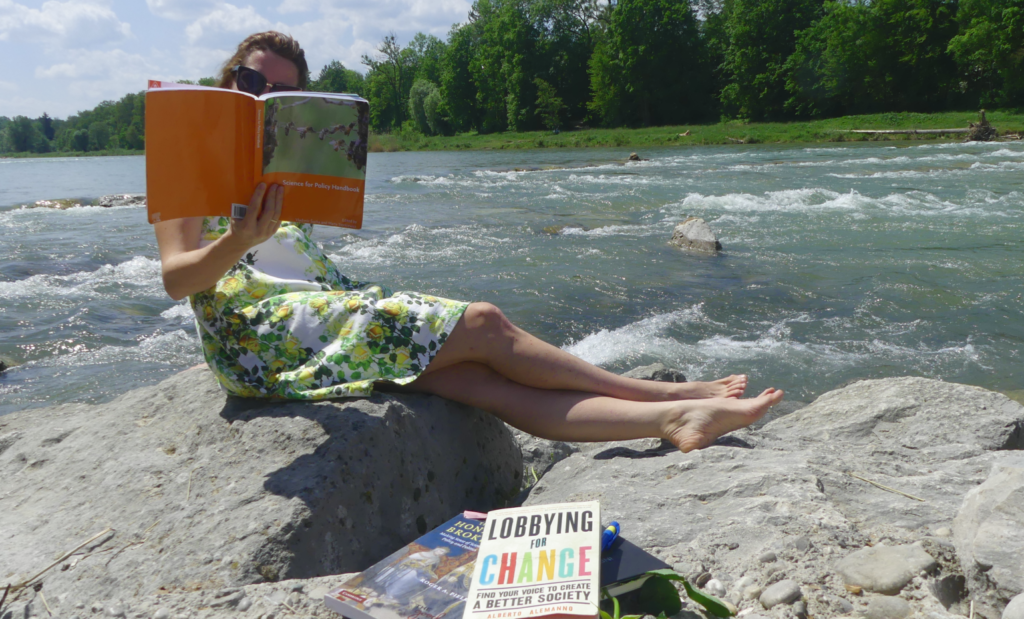
By Andrea L. Popp, Anouk Beniest, Anita Di Chiara, Derya Gürer, Elenora van Rijsingen, Mengze Li and Simone Pieber. The geoscience community has long been recognized as one of the least diverse scientific fields. However, the extent to which this homogeneity affects workplace climate, particularly for under-represented groups, remains unclear (Berhe et al., 2022; Popp et al., 2019). Documented ins ...[Read More]
Geodesy
What would we like to see from future gravity missions? Help us to define the scientific requirements!
Are you interested in water storage, sea level, ice sheets, crust-mantle dynamics, or any other mass change signals? Please complete the following user requirement survey and help shape future satellite gravity missions Mass changes on and below the Earth’s surface, such as from water storage variations to groundwater use, glacier melt, sea level change, and earthquakes, among many others, c ...[Read More]
Cryospheric Sciences
Did you know about Antarctic snow megadunes?
When we think of dunes our thoughts automatically go to deserts and sand. But on Earth, as well as on other celestial bodies of the solar system, dunes exist also in a completely different environment. I am talking about gigantic dunes consisting of snow. On Earth they are called megadunes and you can find them only in East Antarctica, where they extend for thousands of km. If you want to know mor ...[Read More]
GeoLog
Seaweed: an unlikely but promising food solution in nuclear winter?
A few weeks ago, at the European Geosciences Union General Assembly EGU23, a group of researchers from different disciplines briefed the media about the impact of war on the oceans, sands, and people. Among them, Florian Ulrich Jehn’s presentation stood out for its rather unlikely proposition: that seaweed appeared to be a promising candidate as a resilient food solution in nuclear winter. I ...[Read More]
Geodynamics
Why plate tectonic reference frames are important?
Have you ever pondered the significance of reference frames in the reconstruction of tectonic paleo positions? In this edition of News & Views, we feature Jonathon Leonard as he delves into this subject, aided by illustrations from Rachel O’Brien. In the 1600s, in an effort to show why we cannot feel the Earth orbiting the sun at speed, Galileo came up with a thought experiment. In his e ...[Read More]
Stratigraphy, Sedimentology and Palaeontology
Hacker attack led to spams on our SSP blog page
Dear Readers of the SSP Blog, Today, we detected suspicious and non-approved blog entries that were published in the name of one of our authors on the SSP blog webpage. We start from the premise that the release of these entries was a result of a hacking attack on the author’s computer/email post-box and immediately deleted the associated content from our webpage. Please apologise for any ...[Read More]
GeoLog
Imaggeo On Monday: Landmannalaugar – Iceland’s geoscience wonder
Landmannalaugar is a unique and beautiful area in Iceland, nestled in the highlands of the country. It is known for its stunning scenery, including green-covered mountains, vast lava fields, and natural hot springs. This area served as the end destination of my hiking adventure where I crossed Iceland from north to south, and it’s easy to see why. Aside from its natural beauty, Landma ...[Read More]
Nonlinear Processes in Geosciences
Socio-economic and security implications of global heating
This year, like in the last few years, we are experiencing the effects of global heating in increasingly personal ways. The summer of 2022 exposed us to ever more extreme heat waves in North America, Europe, and Asia. For instance, the heat wave in India and Pakistan reached temperatures of 49C in Nawabshah, Pakistan. North America too experienced devastating heat waves and wildfires. Los Angeles ...[Read More]
Geodesy
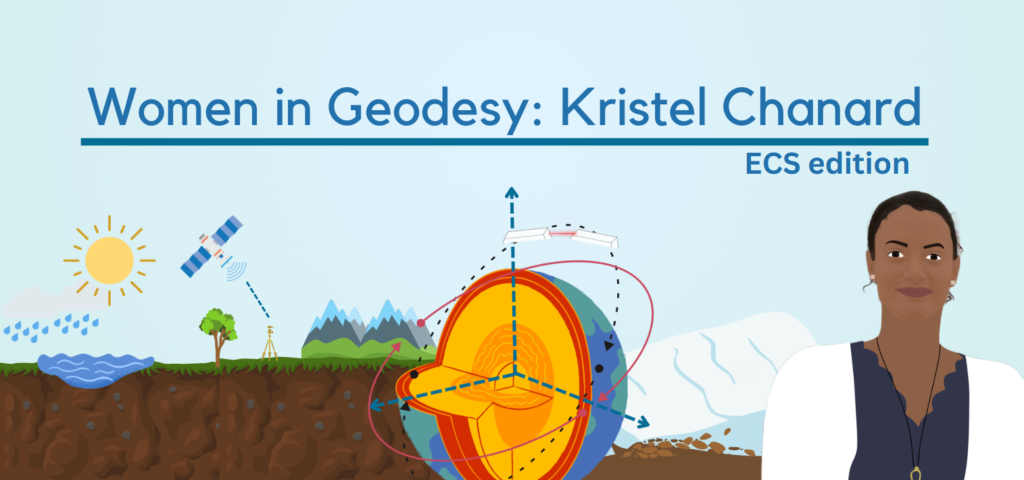
Women in Geodesy: Susanna Zerbini
In the past weeks and months, we have introduced you to famous female geodesists who won the Vening Meinesz medal of the EGU Geodesy division. This week we turn our eyes to Susanna Zerbini, who was awarded with the Vening Meinesz medal in 2009 for her important work at the interface of geodesy and geodynamics using space geodetic techniques. Having this in mind, we were curious to find out what sh ...[Read More]
GeoLog
The geological period that no one talks about: menstruation in the field
Try typing the phrase ‘period in geosciences’ into Google. You’ll get something like ‘divisions of geological time’, and how we divide ancient earth time into eras, periods and epochs. We learn about this in the first year and again in every subsequent year of geological training. We are both geochronologists, so this is a topic we are deeply familiar with. But we are also both women. To us, and e ...[Read More]