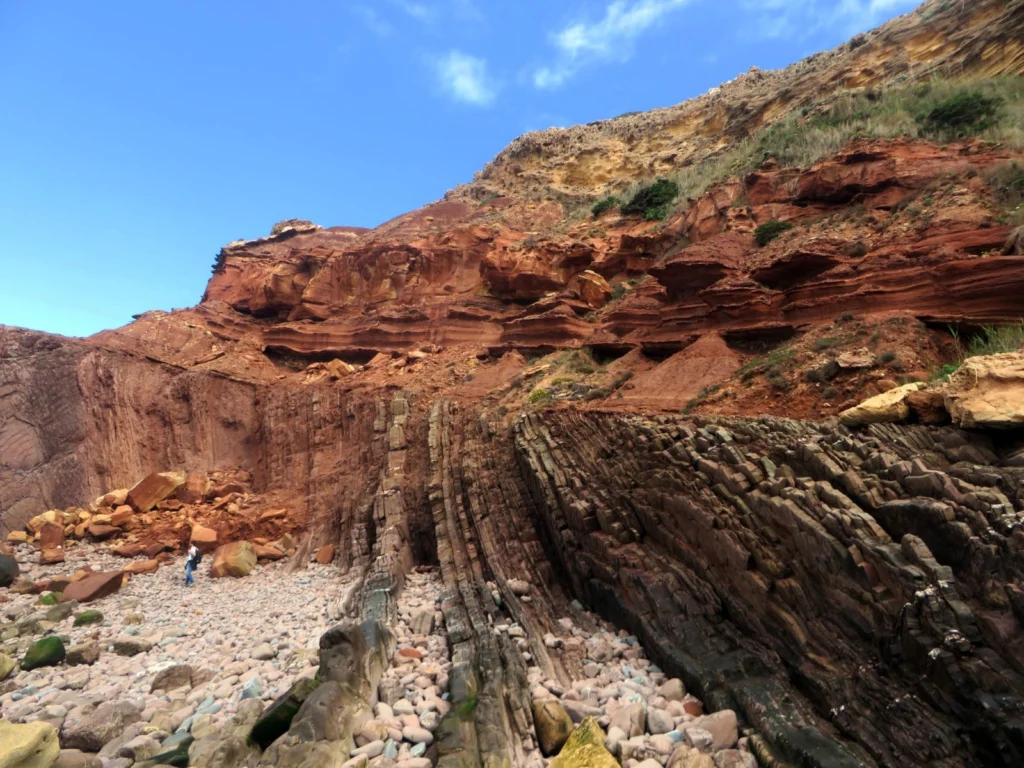
It is not unusual to observe abrupt contacts between two, seemingly, contiguous rock layers, such as the one featured in today’s featured image. This type of contact is called an unconformity and marks two very distinct times periods, where the rocks formed under very different conditions. Telheiro Beach is located at the western tip of the Algarve; Portugal’s southernmost mainland region and the ...[Read More]
structural geology
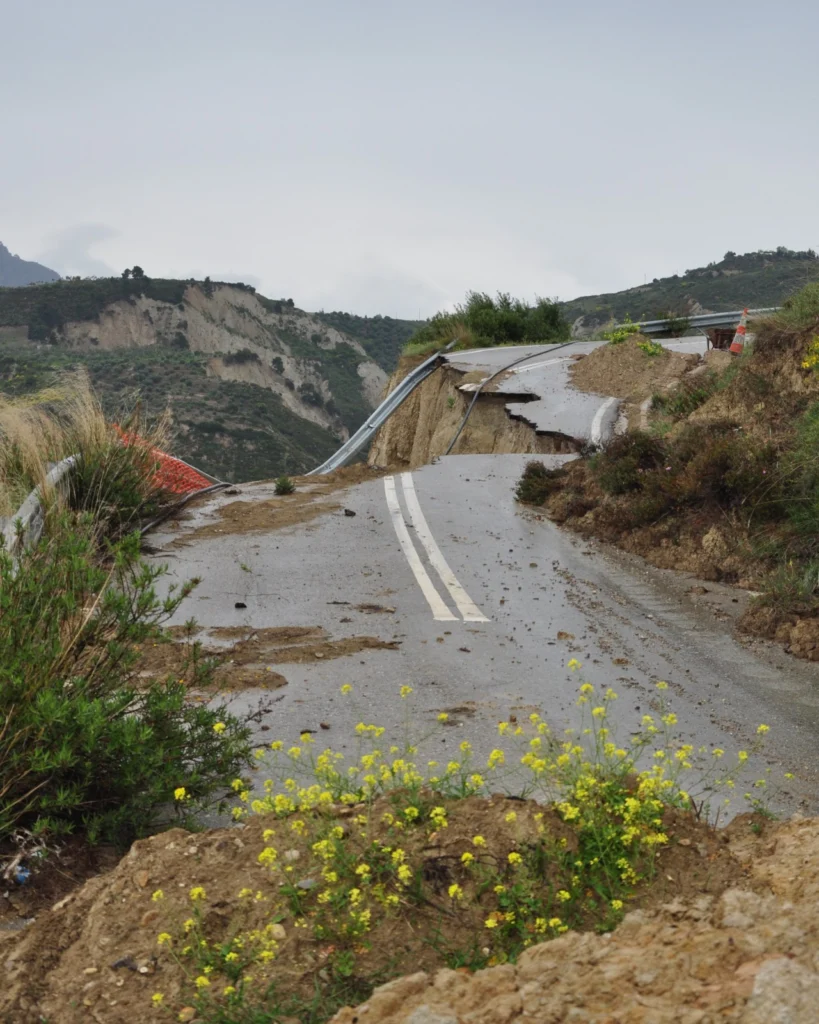
Imaggeo on Mondays: The road to nowhere – natural hazards in the Peloponnese
The Gulf of Corinth, in southern Greece, separates the Peloponnese peninsula from the continental mainland. The structural geology of the region is complex, largely defined by the subduction of the African Plate below the Eurasian Plate (a little to the south). The Gulf itself is an active extensional marine basin, i.e., one that is pulling open and where sediments accumulate. Sedimentary basins r ...[Read More]
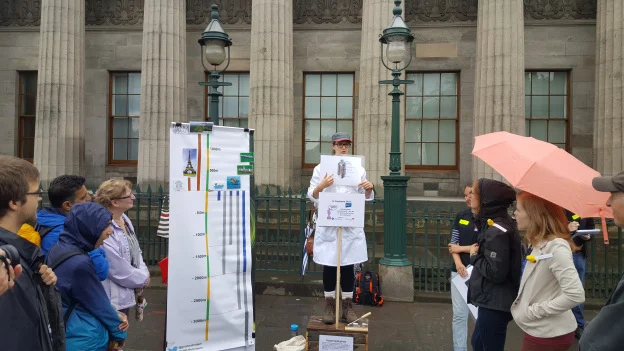
Going deeper underground – why do we want to know how rocks behave?
Imagine you find yourself standing atop a wooden box in the middle of your home town, on a rainy weekend day, with the sole aim of talking to passersby about your research work. It can be a rather daunting prospect! How do you decide what the take-home message of your work is: which single nugget of information do you want members of the public to take away after having spoken to you? Even more im ...[Read More]
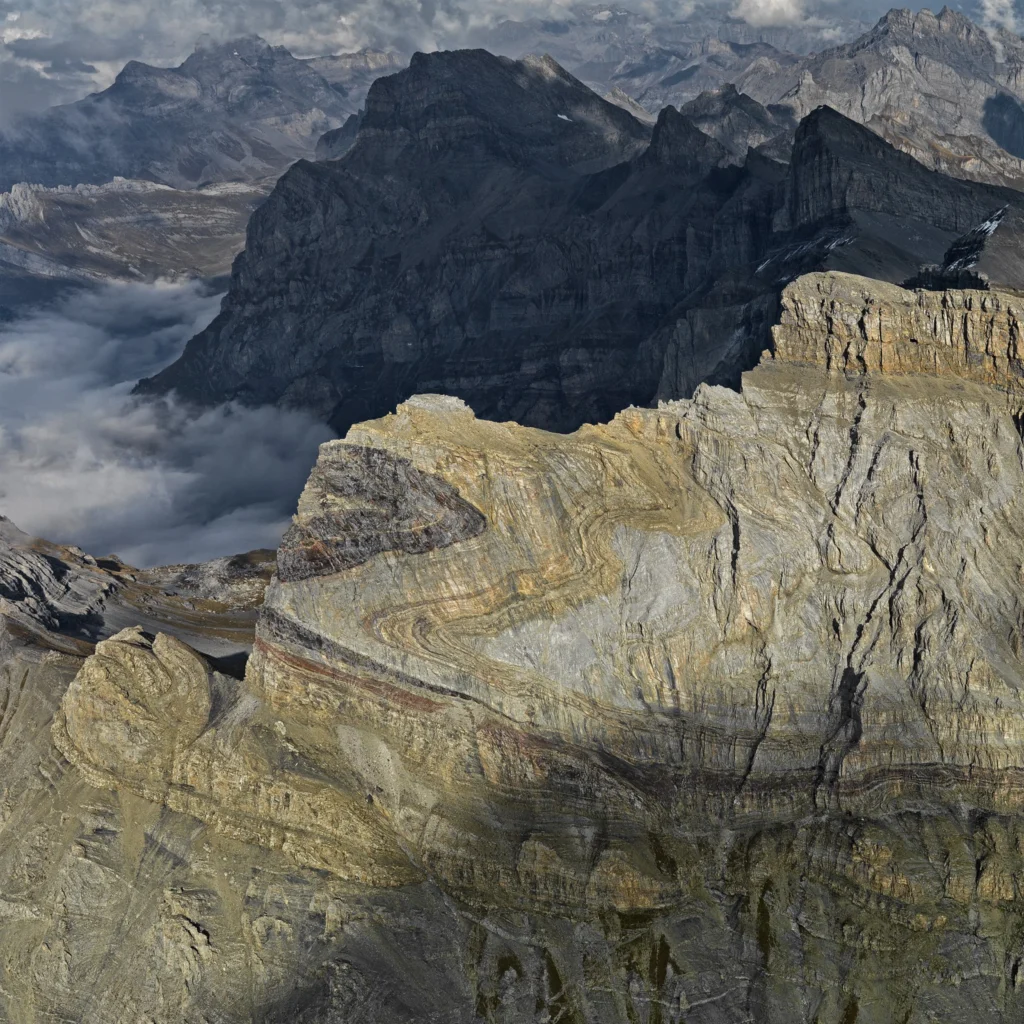
Imaggeo on Mondays: an impressive testimony to the collision between Africa and Europe
The huge fold in the flank of the 2969 m high Dent de Morcles (in Waadtland Alps, Switzerland) is an impressive testimony to the collision between Africa and Europe (which began some 65 million years ago). The layers, originally deposited on the sea floor in a horizontal position, were compressed and shifted. The darker parts developed during the Tertiary period (66 million years ago). They are yo ...[Read More]
Imaggeo on Mondays: Mola de Lord
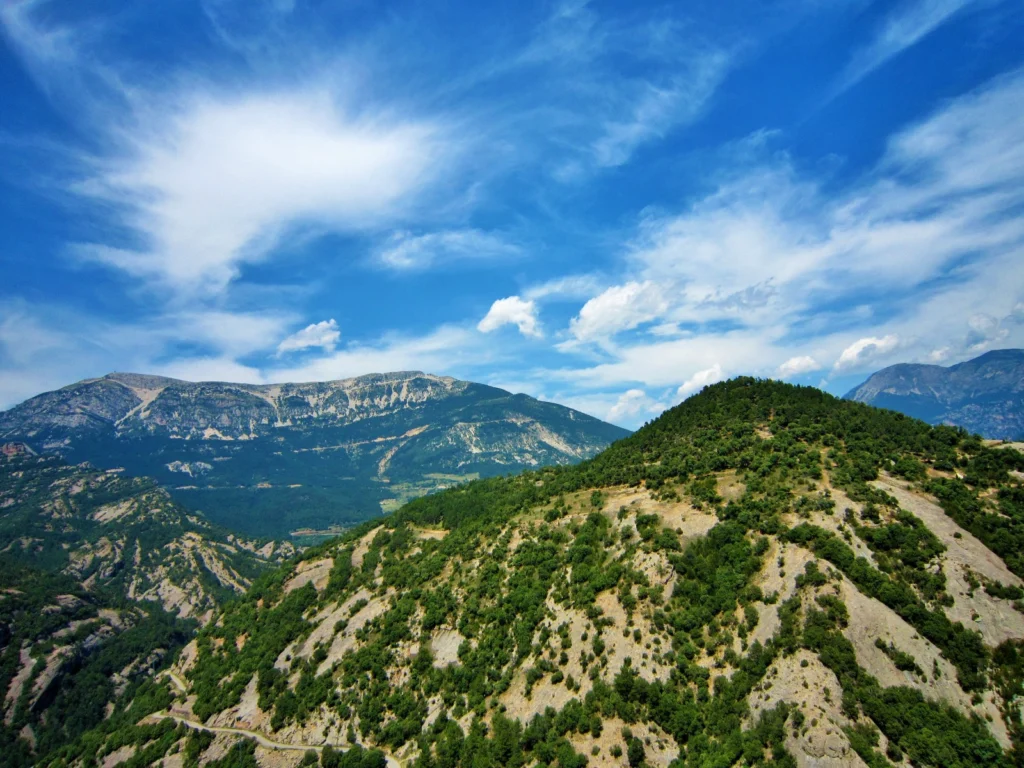
From the easterly Atlantic waters of the Bay of Biscay to the Catalan wild coast (Costa Brava) in the west, the Spanish Pyrenees stretch 430 km across the north of the country. At the foothills of the Catalan Pyrenees you’ll find the Pre-Pyrenees. Despite not reaching the soaring heights of the peaks of the Pyrenees, they nonetheless offer important insights into the geology of the range and stunn ...[Read More]
Imaggeo on Mondays: Velociraptor in the Zagros Mountains
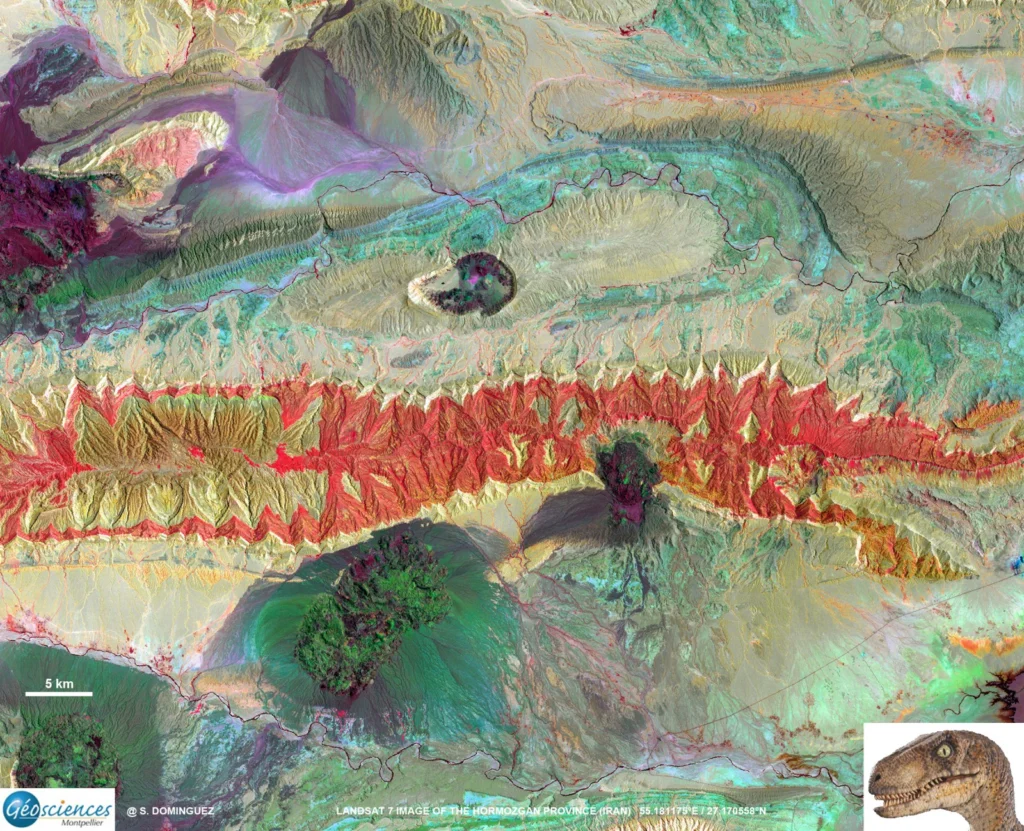
How many times have you turned your head up to the sky and spotted familiar shapes in the clouds? Viewing structures from afar can reveal interesting, common and, sometimes, funny patterns. Satellite images are often used to map geological terrains. They offer a bird’s eye view of the planet and the opportunity to see broad scale structures, the scale of which would be impossible to grasp from the ...[Read More]
Imaggeo on Mondays: A fold belt within a grain
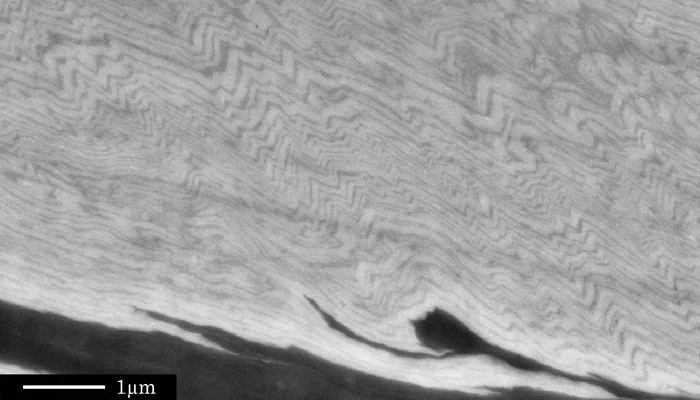
Tiny crinkly folds form the main basis of today’s Imaggeo on Mondays. Folding can occur on a number of scales; studying folds at all scales can reveal critical information about how rocks behave when they are squeeze and pinched, as described by Sina Marti, from the University of Basel. Although many geoscientists have seen such fold structures many times before, if you noticed the scale bar in th ...[Read More]