GeoLog

imaggeo on mondays

Imaggeo On Monday: Revealing the secrets of the Arctic sky
Imaggeo On Monday: Revealing the secrets of the Arctic sky
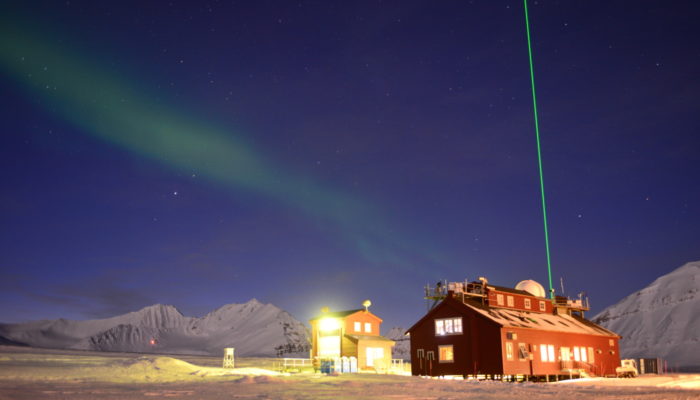
When it is dark over Ny Ålesund, Svalbard, a bright green laser beam can be seen quite often, shooting from the AWIPEV Arctic Research Base observatory towards the sky. This beam belongs to “KARLi” the Koldewey Aerosol Raman Lidar, run by the Alfred Wegener Institute for more than 25 years, which contributes to long-term, atmospheric aerosol measurement records.   With this system ...[Read More]

Imaggeo On Monday: Konsfjorden and Kronebreen glacier

Imaggeo On Monday: Konsfjorden and Kronebreen glacier

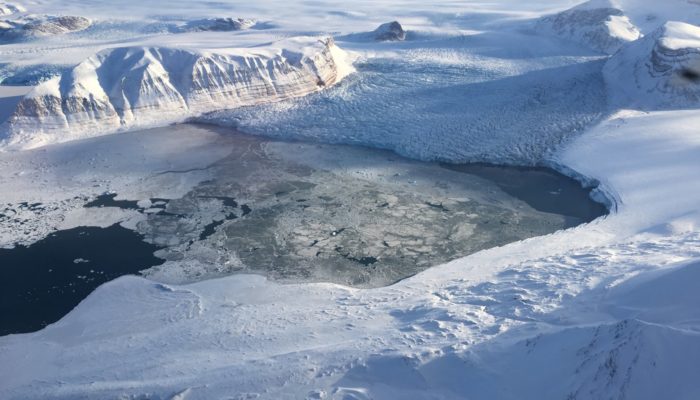
Taken shortly after our departure from Ny-Ålesund after our first “Lost Meteorites” field trial in Greenland testing new equipment that can be used to discover ‘missing’ iron meteorites in Antarctica, the return flight gave incredible views of the surrounding landscape. This photo was taken looking down to the icy waters of Kongsfjorden on the west coast of Svalbard and the ...[Read More]

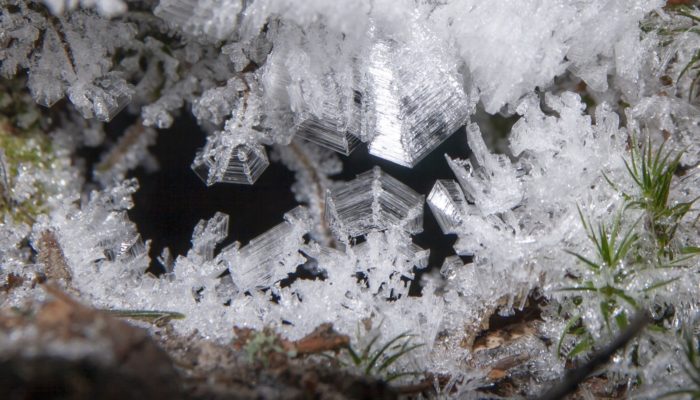
Imaggeo On Monday: Nature of ice crystals

Imaggeo On Monday: Nature of ice crystals

Moisture coming from the ground is freezing at the entrances of small ground pockets, shaping wonderful natural ice crystals, during a very cold and dry winter in Poland in 2019. Description by Katarzyna Walczak, after the description on imaggeo.egu.eu.   Imaggeo is the EGU’s online open access geosciences image repository. All geoscientists (and others) can submit their photographs and video ...[Read More]

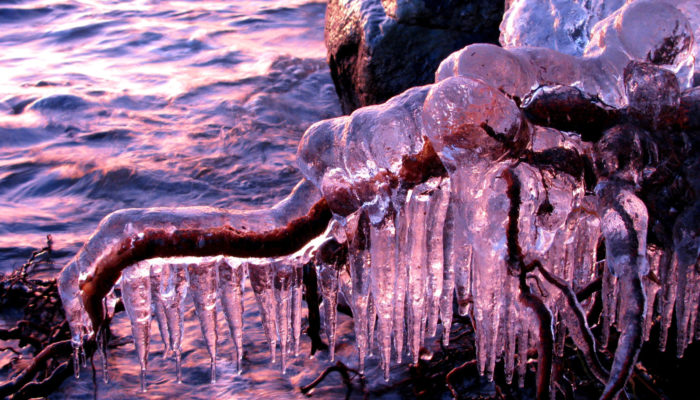
Imaggeo On Monday: Ice-coated roots at sunset

Imaggeo On Monday: Ice-coated roots at sunset

The coating by the ice and the icicles are created through the interplay of wave action and the simultaneous freezing of the water around the exposed tree roots. The reason for the exposed tree roots is increased bank erosion due to a rather unusual circumstance. The combination of the lake not yet being frozen in early winter, and strong winter storms, make it very easy for the waves to erode the ...[Read More]

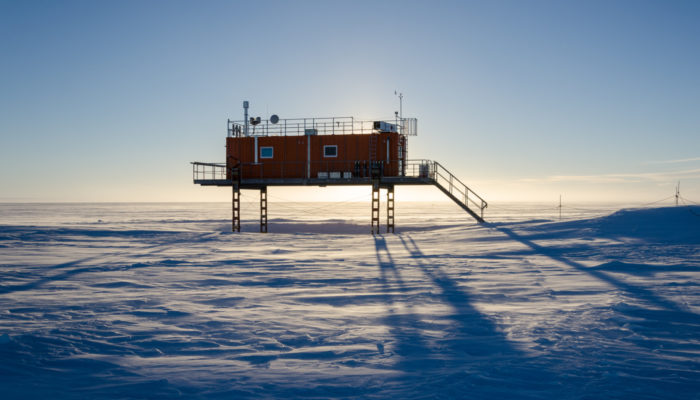
Imaggeo On Monday: A science outpost in midnight sun

Imaggeo On Monday: A science outpost in midnight sun

Photo of the air chemistry observatory of the German Neumayer III Antarctic station during Polar Day 2017. Located in a clean air sector south of the station, the observatory’s main purpose is to record continuous, year-round data records of relevant particulate and gaseous trace components of the troposphere. As one of only few stations located in the very clean troposphere of Antarctica, i ...[Read More]

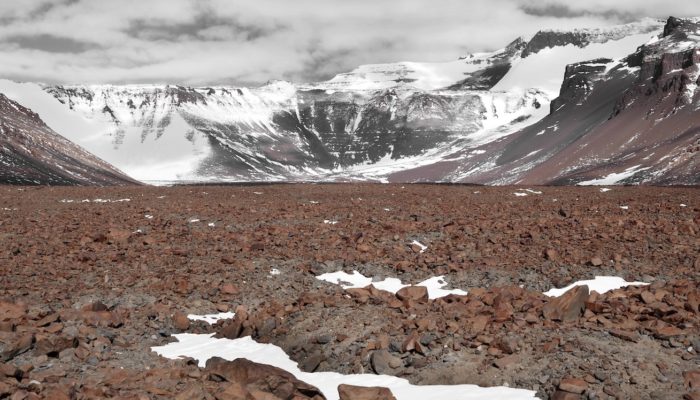
Imaggeo On Monday: Desert Varnish, Antarctica Style

Imaggeo On Monday: Desert Varnish, Antarctica Style

This photograph highlights the oxidized surface of diorite boulders, which fall from the ice at the base of the Mullins Glacier in Beacon Valley, Antarctica when the ice moves directly from a solid state into a gas state, without becoming a liquid in between (a process called sublimation). The particular features (morphology) of the varnish and the desert pavement of this unique environment are re ...[Read More]

Imaggeo On Monday: Great Sand Dunes Sunset

Imaggeo On Monday: Great Sand Dunes Sunset

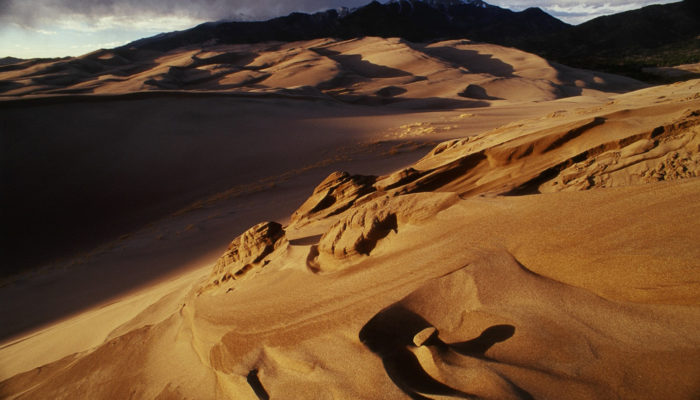
On a late afternoon in Colorado’s Great Sand Dunes, the sun came out from behind the clouds for a brief moment before it went behind the horizon, illuminating the stoss side of an eroding dune. Sand originated from lacustrine deposits in the San Luis Valley; the Sangre de Cristo mountains, which can be seen in the background, provided a source of some of the sand. This image therefore illust ...[Read More]

Imaggeo On Monday: Erosion and suspension

Imaggeo On Monday: Erosion and suspension

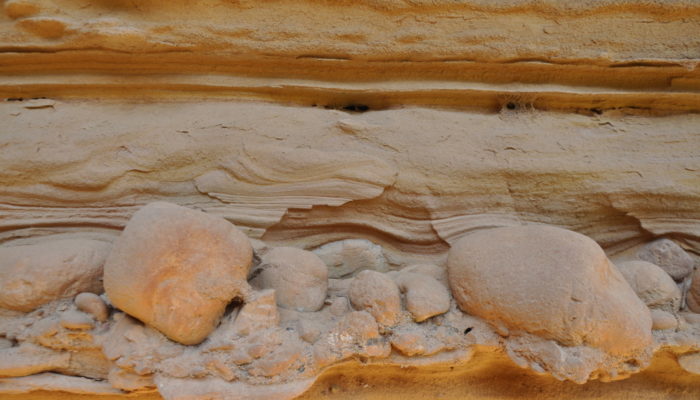
This image shows bottomset beds from the Kerinitis Gilbert-type delta. The Pleistocene delta uplifts along the active southern margin of the Corinth rift in Greece. A bottomset bed is one where layers of sedimentary material lying along the bottom of a body of water near the point of entry of a stream are subsequently covered by foreset and topset beds in the formation of a delta. Thus in this ima ...[Read More]

Imaggeo On Monday: Micro and Nano composition

Imaggeo On Monday: Micro and Nano composition

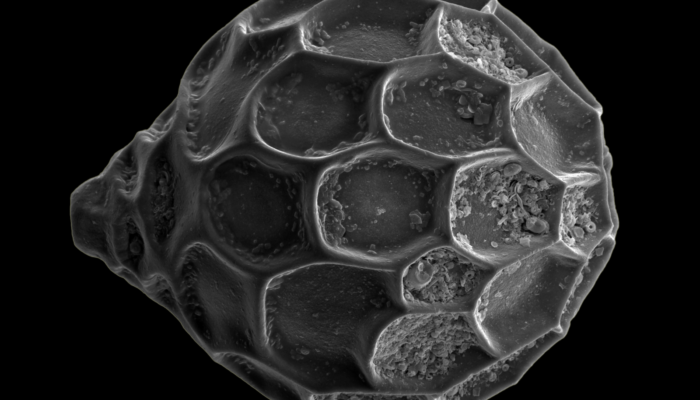
This image shows benthic foraminifera species of Favulina hexagona (Williamson, 1848) together with nanofossils enclosed inside the shell hexagons. This modern foraminifera species was found in the sediment core retrieved from the western slope of the Rio Grande Rise (western South Atlantic).   Description by Liubov Kuleshova, after the description on imaggeo.egu.eu.   Imaggeo is the EGU ...[Read More]

Imaggeo On Monday: Crete- Diplono Petris (Διπλόνο Πέτρις)

Imaggeo On Monday: Crete- Diplono Petris (Διπλόνο Πέτρις)

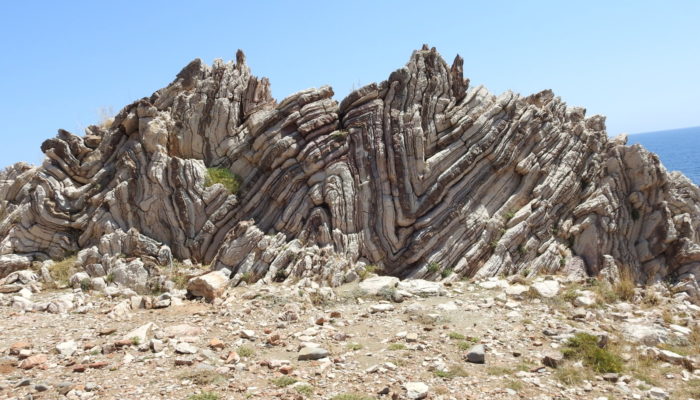
Diplono Petris near Agios Pavlos in the south of Crete island is one of Europe’s most impressive folded rock formations. The rock strata document an alternation of different limestone layers in the pindos top of the Cretan ceiling pile. These sediments, once deposited in a deeper ocean basin of the Pindos Ocean, were deformed in the course of Alpine fold tectonics, triggered by the Northern ...[Read More]