GeoLog

earthquake

Making earthquakes understandable: How “Near Me” search behavior can guide better risk communication
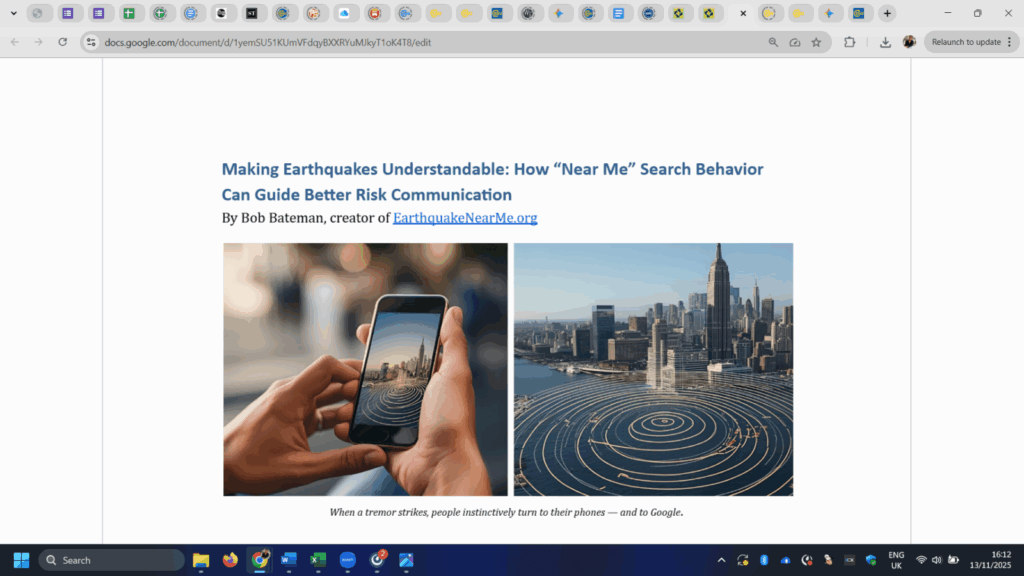
Making earthquakes understandable: How “Near Me” search behavior can guide better risk communication
When a tremor shakes the ground, the first thing many people do isn’t check a scientific database: they reach for their phone. Within seconds, searches like “earthquake near me” surge across Google. This simple phrase captures something profound: a universal need not to understand seismic mechanics, but to know “Am I safe?” Over the past few years, this “near me” framing has quietly reshaped how t ...[Read More]

The 1950 Assam-Tibet earthquake: A singular Himalayan earthquake on its 75th Anniversary

The 1950 Assam-Tibet earthquake: A singular Himalayan earthquake on its 75th Anniversary

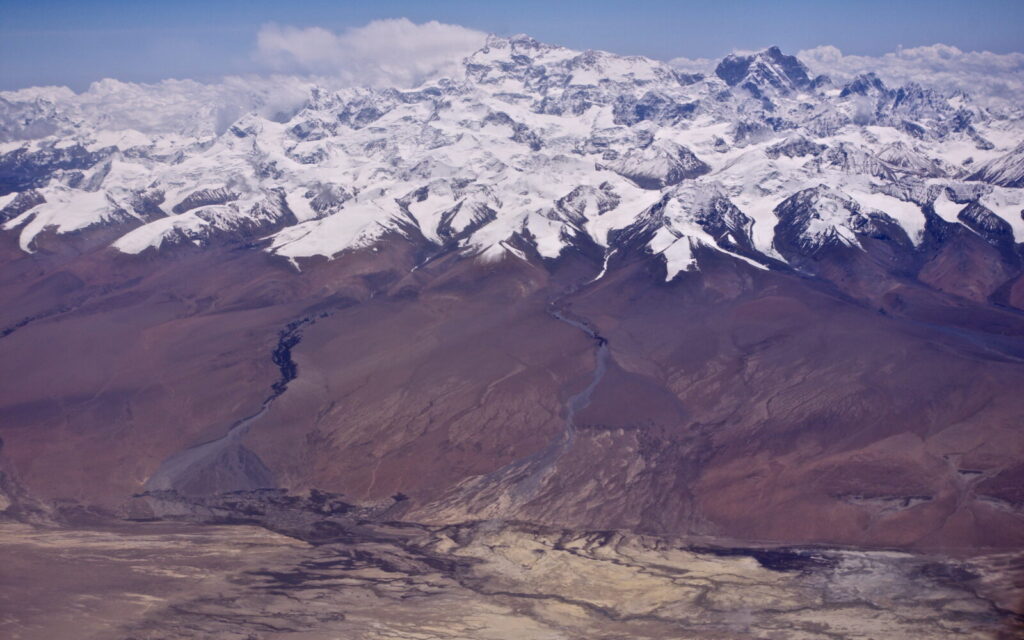
August 15, 1950, marked India’s fourth year of Independence. The young nation’s mood was optimistic. People all over India were celebrating the country’s newfound freedom. Known as the land of the rising Sun, the jubilant people of the northeastern part of the country were about to conclude the celebrations and retire for the day. In the northeast corner, surrounded by the Himalayan mountains, the ...[Read More]

Where to next? A Geotourism guide to some of the World’s most epic landscapes

Where to next? A Geotourism guide to some of the World’s most epic landscapes

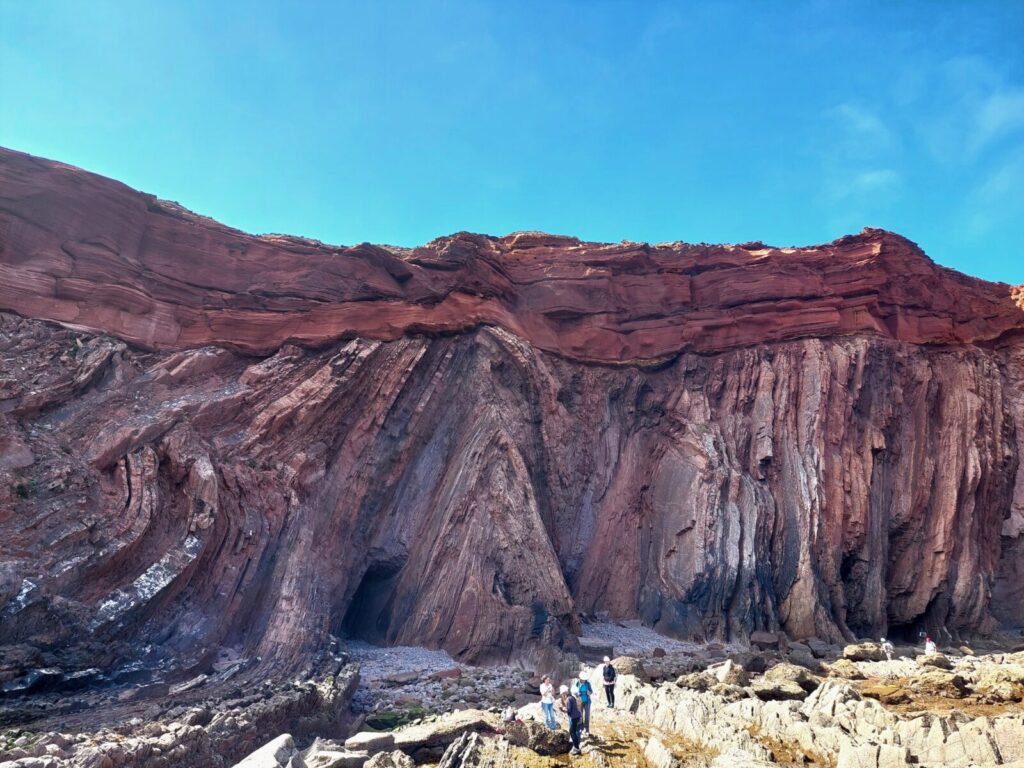
Geological tourism, or geotourism, offers a unique way to experience our planet’s incredible history and ongoing dynamic processes. Beyond simply admiring beautiful landscapes, geotourism invites us to understand the forces that shaped them, from ancient tectonic movements to the relentless power of erosion. Join us as we explore some remarkable geotourism destinations, each telling a compel ...[Read More]

Palaeoseismic crisis in the Galera Fault (southern Spain): consequences in Bronze Age settlements?

Palaeoseismic crisis in the Galera Fault (southern Spain): consequences in Bronze Age settlements?

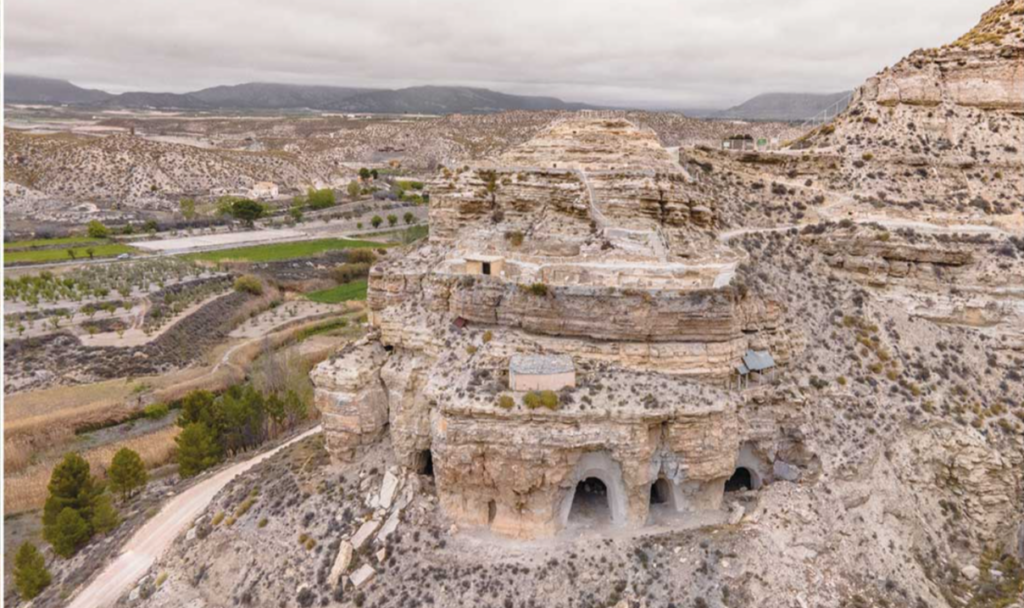
Alright, buckle up folks for this blog post, because we’re about to explore the wild ride of plate tectonics between the Iberian Peninsula (Eurasia plate) and North Africa (Nubia plate). These two plates are moving slowly at a moderate pace of 5-7 mm per year, which might not seem like much, but it’s enough to shake things up—literally! In a recent paper, published by our journal Solid Earth ...[Read More]

Imaggeo On Monday: Artificial peridotite takes its gold coat off

Imaggeo On Monday: Artificial peridotite takes its gold coat off

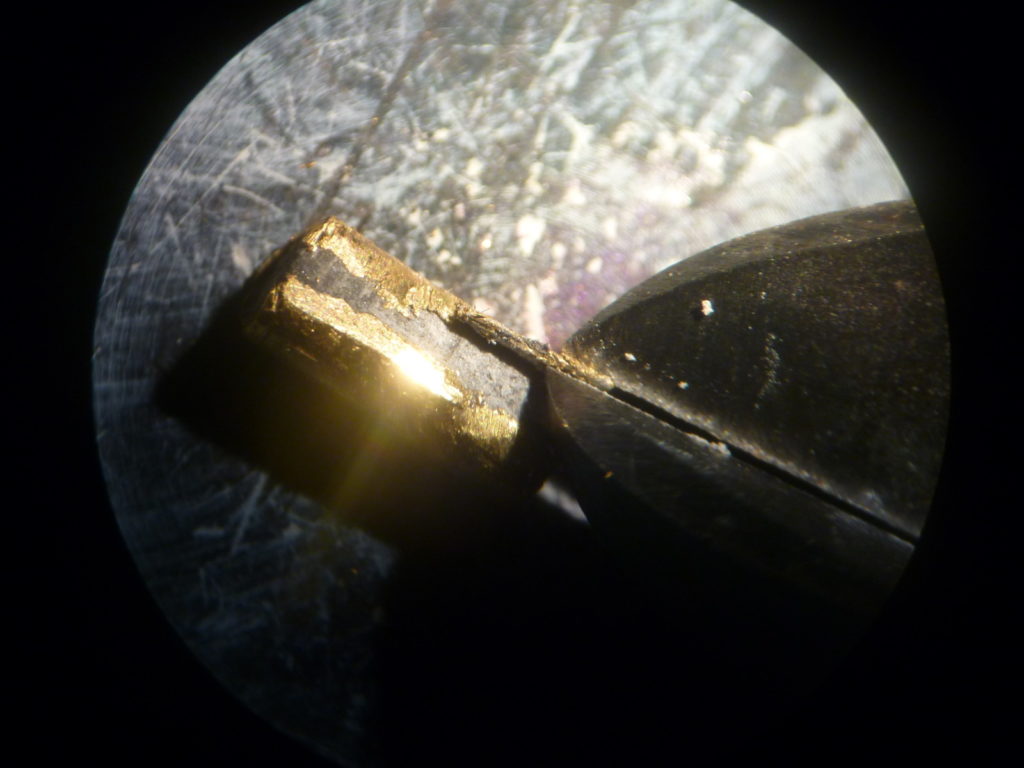
Sometimes in order to test a theory about how processes work below the surface of the Earth, scientists need to recreate minerals found in very specific circumstances. This photograph was taken through a binocular microscope during a critical step of the creation of artificial peridotite: extraction of the artificial peridotite from its gold capsule. The sample is a little cylinder, 3 mm long with ...[Read More]

Imaggeo On Monday: An ever evolving landscape – Orog Nuur, Mongolia

Imaggeo On Monday: An ever evolving landscape – Orog Nuur, Mongolia

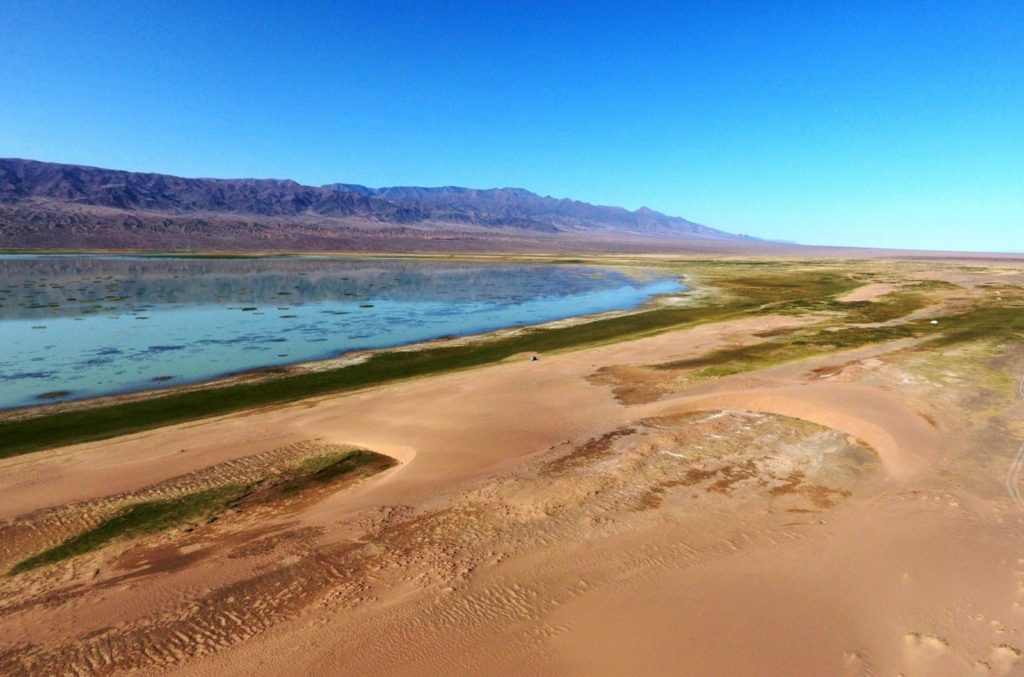
At the transition from the Gobi Altay ranges to the Valley of the Lakes in South West Mongolia, the Ikh Bogd mountain towers almost 3000 m above the aridifying endorheic Orog Nuur Basin. The actively deforming mountain front shows traces of multiple earthquakes, which in turn affect the alluvial sediments deposited in the basin. Simultaneously, strong south-eastward winds create beautiful barchan ...[Read More]

April GeoRoundUp: the best of the Earth sciences from the 2019 General Assembly

April GeoRoundUp: the best of the Earth sciences from the 2019 General Assembly

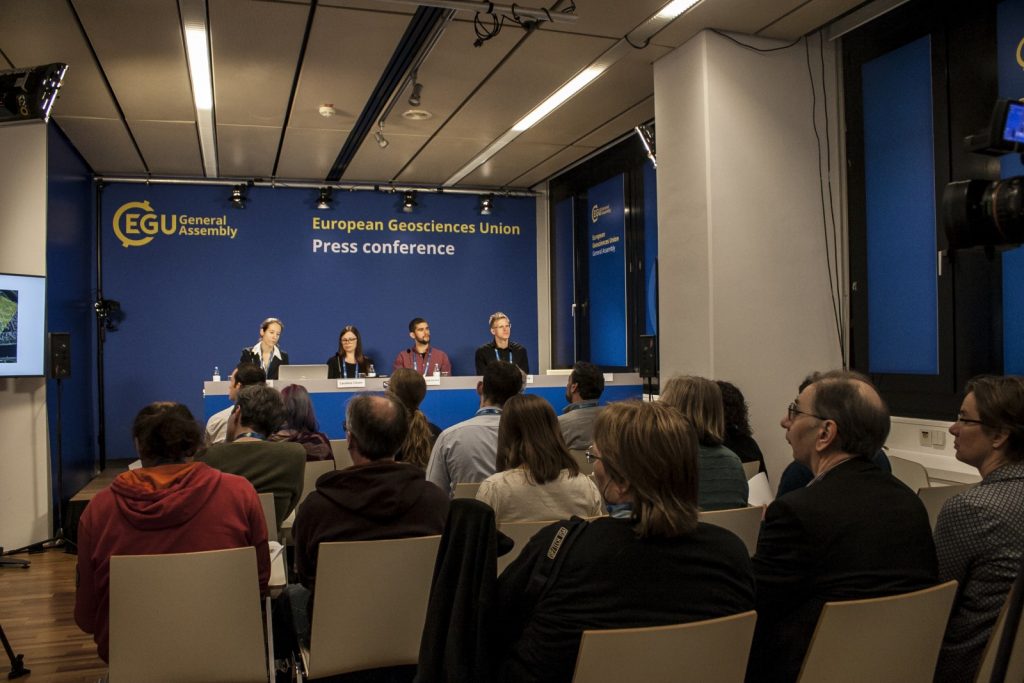
The EGU General Assembly 2019 took place in Vienna last month, drawing more than 16,000 participants from 113 countries. This month’s GeoRoundUp will focus on some of the unique and interesting stories that came out of research presented at the Assembly! Major Stories Glacial disappearing act in the European Alps New research from a team of scientists estimated the future of all glaciers within th ...[Read More]

A better framework for disasters

A better framework for disasters

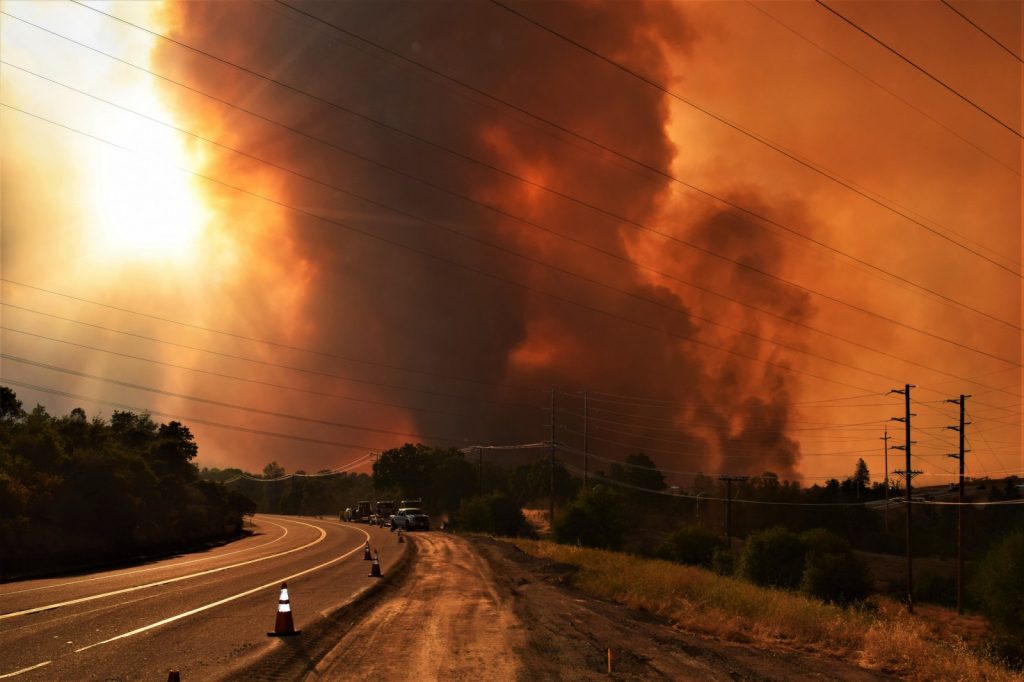
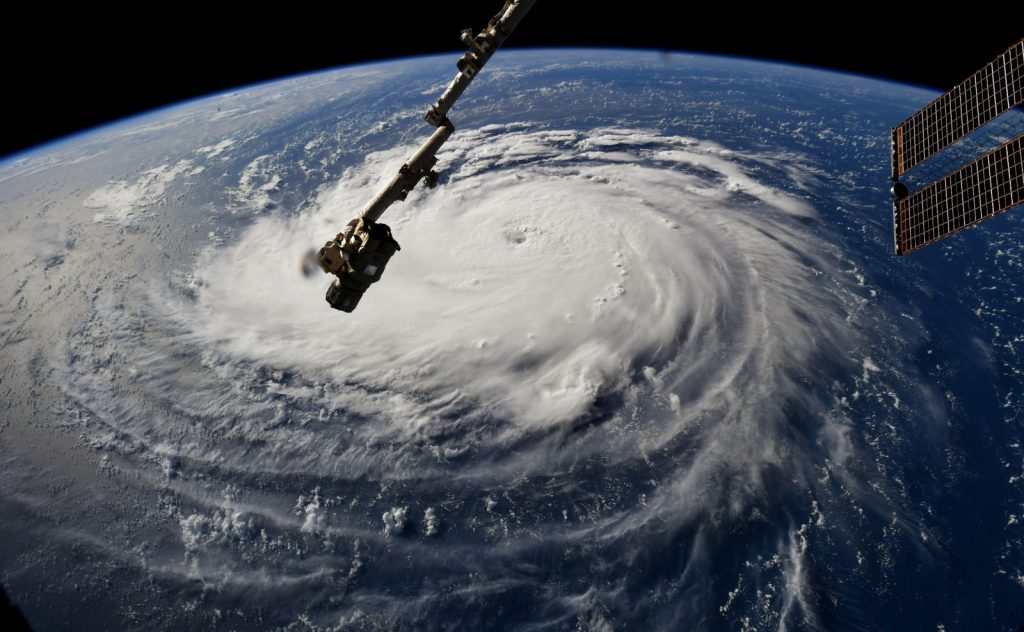
The end of the Northern hemisphere summer tends to be a good time to regroup from natural hazards, as the frequency and intensity of storms, as well as the incidence of wildfires, tends to trail off. At the time of writing, however, Hurricane Willa had just crashed into Mexico, while Typhoon Yutu has just hit the Northern Mariana Islands so hard that any equipment designed to record wind-speed had ...[Read More]

September GeoRoundUp: the best of the Earth sciences from around the web

September GeoRoundUp: the best of the Earth sciences from around the web

Drawing inspiration from popular stories on our social media channels, major geoscience headlines, as well as unique and quirky research, this monthly column aims to bring you the latest Earth and planetary science news from around the web. Major stories This month has been a whirlwind of Earth and space science news; the majority focusing on natural hazards. Powerful cyclones, earthquakes, and ts ...[Read More]

Geosciences Column: Extreme snowfall potentially worsened Nepal’s 2015 earthquake-triggered avalanche

Geosciences Column: Extreme snowfall potentially worsened Nepal’s 2015 earthquake-triggered avalanche

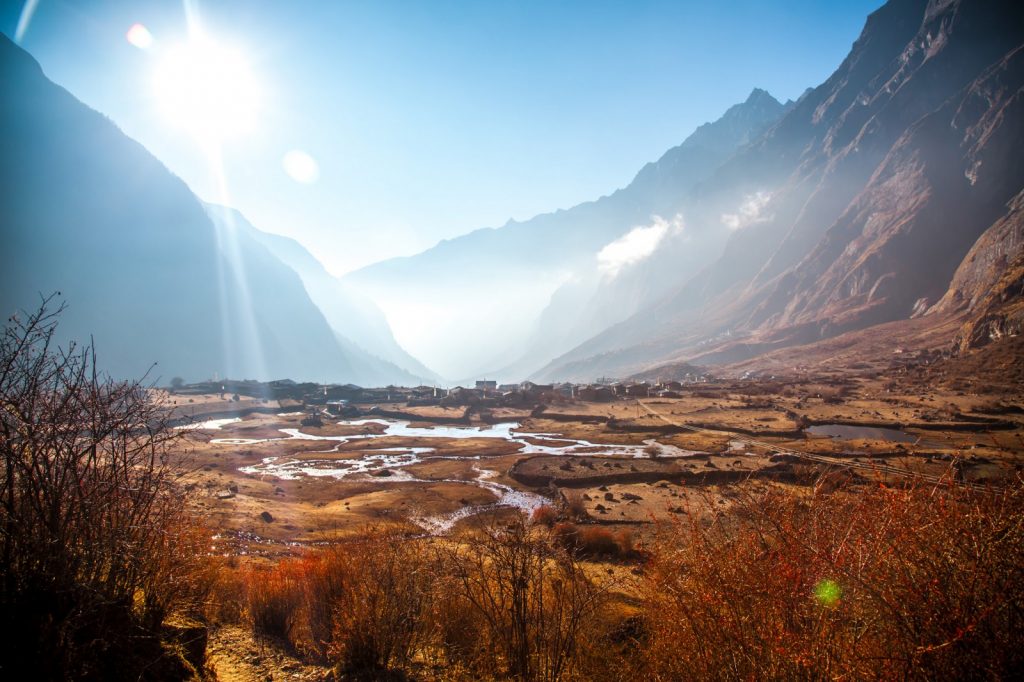
Three years ago, an earthquake-induced avalanche and rockfalls buried an entire Nepalese village in ice, stone, and snow. Researchers now think the region’s heavy snowfall from the preceding winter may have intensified the avalanche’s disastrous effect. The Langtang village, just 70 kilometres from Nepal’s capital Kathmandu, is nestled within a valley under the shadow of the Himalayas. The town wa ...[Read More]