GeoLog

earthquake

Counting the cost of natural disasters

Counting the cost of natural disasters
Often, in the news, we are used to seeing disaster statistics reported as isolated figures, placed into context by the tragic human cost of floods, earthquakes and drought. The recent Ecuadorian earthquake that occurred on Saturday the 16th April, for example, was described as having an estimated economic cost of $820 million, which could rise as the scale of the disaster is revealed. But beyond t ...[Read More]

The day the Earth trembled: A first-hand account of the 25 April Nepal earthquake

The day the Earth trembled: A first-hand account of the 25 April Nepal earthquake

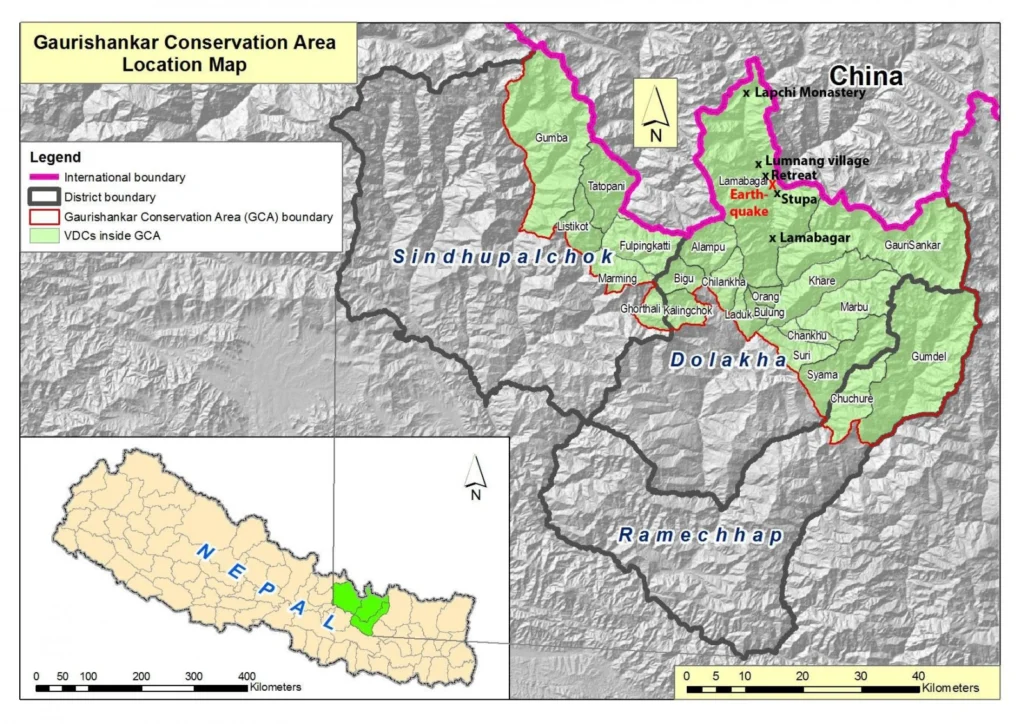
On the 25th April 2015, Viktor Bruckman, a researcher at the Austrian Academy of Sciences, and a team of his colleagues were a few hours into a hike between the settlements of Lamabagar, in a remote area of northeastern Nepal, and the Lapchi Monastery when a magnitude 7.8 earthquake struck Nepal. Their journey cut short by the trembling Earth, stranded in the heights of the Himalayas, this is thei ...[Read More]

GeoEd: A risky business

GeoEd: A risky business

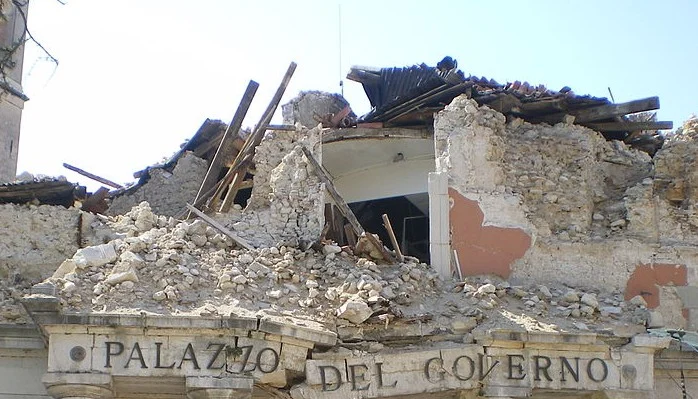
In this month’s GeoEd post, Sam Illingworth explores the pitfalls of being a scientist in the public eye. Following the recent acquittal of 6 geoscientists on manslaughter charges after ‘failing’ to predict the 2009 L’Aquila earthquake, is it time we thought about improving how risk is communicated to the wider public? At the beginning of November of this year, six Italian scientists were acquitte ...[Read More]

GeoTalk: Matthew Agius on how online communication can help identify earthquake impact

In this edition of GeoTalk, we’re talking to Matthew Agius, a seismologist from the University of Malta and the Young Scientist Representative for the EGU’s Seismology Division. Matthew gave an enlightening talk during the EGU General Assembly on how communication on online platforms such as Facebook can help scientists assess the effect of earthquakes. Here he shares his findings and what wonders ...[Read More]

It’s not my fault

A line on a map is important. In the Beverly Hills region of Los Angeles a series of mapped fault lines are now the cause of a major controversy. Communities have been alarmed, money has been lost and legal proceedings are ongoing. It started in 1992. James Dolan and Kerry Sieh, two earthquake geologists at the California Institute of Technology, published a map in a field trip guidebook about the ...[Read More]

GeoTalk: Steven Smith on fossil faults and fantastic faulting

This week in GeoTalk, we’re talking to Steven Smith, a Lecturer from the University of Otago. Steven takes us on an Earth-shaking journey, explaining how ancient faults reveal what’s happening under the Earth’s surface and delving into the future of fault zone research. First, could you introduce yourself and tell us a little about what you are currently working on? Last September I started as a L ...[Read More]

People power

Seismic monitoring is critical in earthquake-prone areas such as Nepal, but limited resources mean limited monitoring. EGU Science Journalism Fellowship awardee Kate Ravilious reports back on how scientists are using social media to fill the gap.  Data gathering needn’t always involve expensive instruments or exotic fieldtrips. Here in resource strapped Nepal, seismologists are tapping into the po ...[Read More]

Sniffing out signs of an earthquake

Last year Kate Ravilious was awarded an EGU Science Journalism Fellowship to follow scientists studying continental faults. Now she’s out in Nepal alongside researchers who are working out when the county’s next big quake will be… Sometimes the best rocks are found in the worst locations. Yesterday I was reminded of this as I watched Paul Tapponnier, from the Earth Observatory of Singapore, ...[Read More]

Using social networks to respond to earthquakes

Effective responses to natural disasters require the rapid acquisition of information about where has been affected, how many people are in the affected areas and what the magnitude of the damage is. This information is critical in both disaster and emergency rescue management. Indeed, the first three days after the onset of a disaster has been dubbed the “72-hour golden rescue period”, after whic ...[Read More]