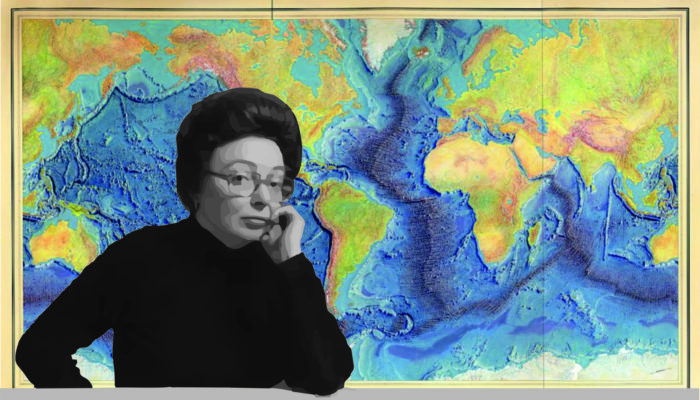
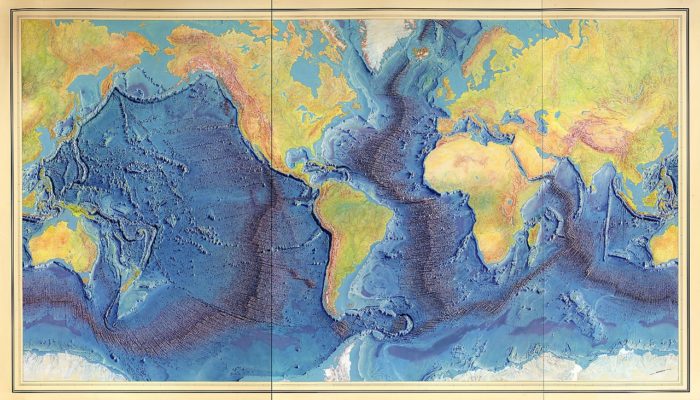
Today marks the centennial of the birth of Marie Tharp, the person responsible for creating the first map of our planet’s ocean floors. Though her work was underappreciated at the time of its publication – mainly because she faced many significant barriers due to her gender – her maps ended up being instrumental evidence in support of the theory of plate tectonics. Marie herself ...[Read More]
GeoRoundup: the highlights of EGU Journals published during July!
Each month we feature specific Divisions of EGU and during the monthly GeoRoundup we will be putting the journals that publish science from those Divisions at the top of the Highlights roundup. For July, the Divisions we are featuring are: Geodesy (G), Ocean Science (OS) and Tectonics and Structural Geology (TS). They are served by the journals: Geoscientific Model Development (GMD), Ocean Science ...[Read More]
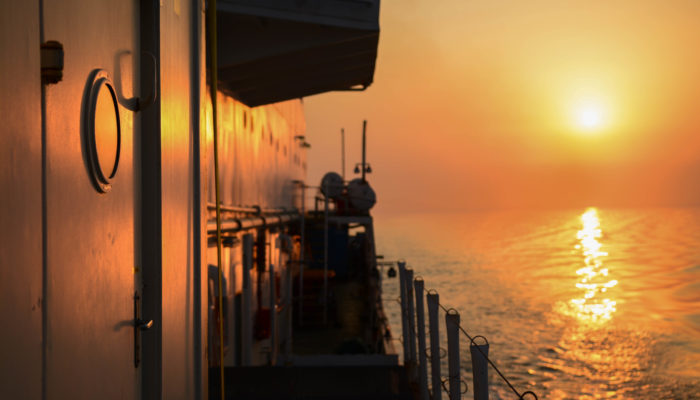
Imaggeo On Monday: Sunset in the Arabian basin
We know the topography of the moon better than the Earth’s seafloor, so we need to keep studying the ocean, and, for me, going to sea is the best way. Only twenty percent of the seafloor is already mapped (see the Seabed 2030 Project), leaving eighty percent of our ocean unmapped, unobserved, and unexplored. This is why ocean going research is fundamental, not only for seabed mapping, ...[Read More]
GeoTalk: Hali Felt, author of ‘Soundings: The Story of the Remarkable Woman Who Mapped the Ocean Floor’
This month for GeoTalk, as we approach the centennial of Marie Tharp’s birth next week, we were lucky enough to speak with the author of her biography ‘Soundings: The Story of the Remarkable Woman Who Mapped the Ocean Floor‘; Hali Felt. Hali has a Master of Fine Arts degree from the University of Iowa and has completed residencies at MacDowell, the Sitka Center for Art and Ecolog ...[Read More]
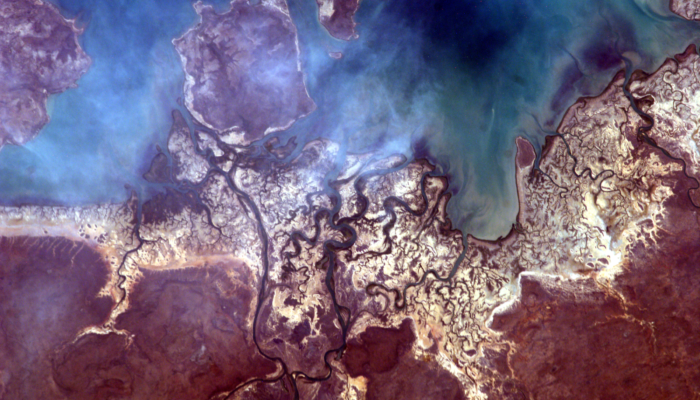
Imaggeo On Monday: Watercolors- Nature’s talent
The photo was taken from the International Space Station (ISS), approx. 400 km above the Earth, in the educational project administered by NASA: Sally Ride EarthKAM, Mission 59, November 2017. The image was requested by a team of students from my college, coordinated by me. Even though we weren’t there, on ISS, to trigger the camera, all the locations in which the photographs were taken are ...[Read More]
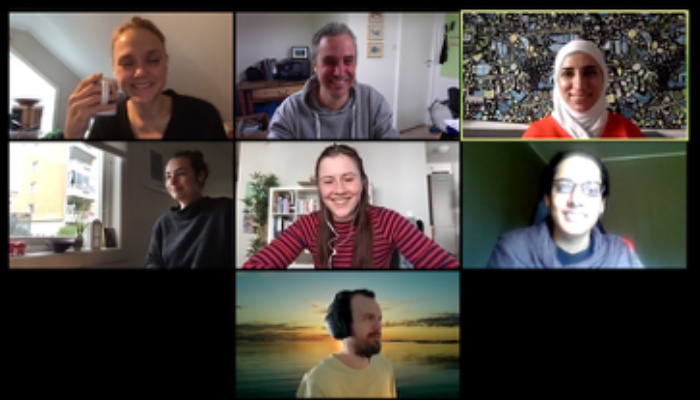
The benefits of online writing retreats in these weird times
The world shut down due to COVID-19, but PhDs did not. During these unfamiliar times, most PhD students have found themselves working from home trying more than ever to write as much as possible. Over the past few of months, I have led several online writing retreats in collaboration with doctoral research schools and universities in Norway. They seem to have been very successful to help PhD’s wi ...[Read More]
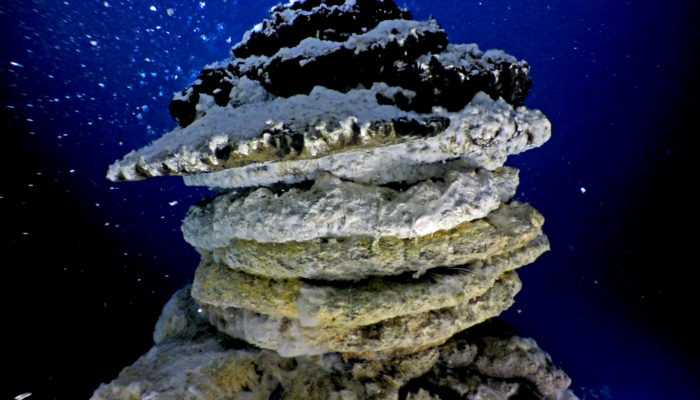
Imaggeo On Monday: Under the sea, in the deep, where fire meets water and life emerges III
650 metres below the chilly waves of the North Atlantic Arctic Ocean, equidistant between Norway, Iceland and Greenland, are the Jan Mayen Vent Fields. Home to a series of hydrothermal vents strung along a set of normal faults and fissures that run parallel to the seafloor ridge, this is a strange and fascinating place. Hydrothermal vents are places where tectonic activity provides a way for the h ...[Read More]
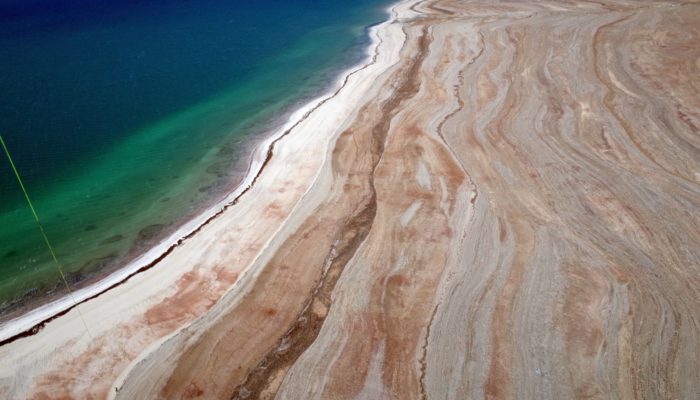
Imaggeo On Monday: Geoscientific selfie at the Dead Sea
This is an aerial image taken from a balloon at around 150m height, at the eastern shoreline of the Dead Sea. Such “selfies” are scientifically valuable, providing important data that help researchers to analyze the morphology of the retreating lake and investigate associated hazards like sinkholes, subsidence and landslides. The older shorelines, visible as lines on the shore stand fo ...[Read More]
GeoPolicy: How to use webinars to share your science with a wider audience!
Since the explosive spread of COVID19, the way most academics work has changed and it can sometimes feel like we’re all living on conference calls, Skype and online events. While this may not suit everyone’s preferred working style, it’s difficult to deny that people are now more willing to engage online and it’s worth thinking about how we can take full advantage of this new method of working! Ha ...[Read More]
New EGU webinar: Careers outside Academia
Last week EGU hosted the second of our official quarterly webinar series, on Careers outside Academia. Up to 70% of scientists will transition to careers outside of academia after their PhD. Transferable scientific skills and knowledge are becoming progressively valued in non-academic job sectors. However, navigating job opportunities and transitioning to different career paths can be difficult. T ...[Read More]