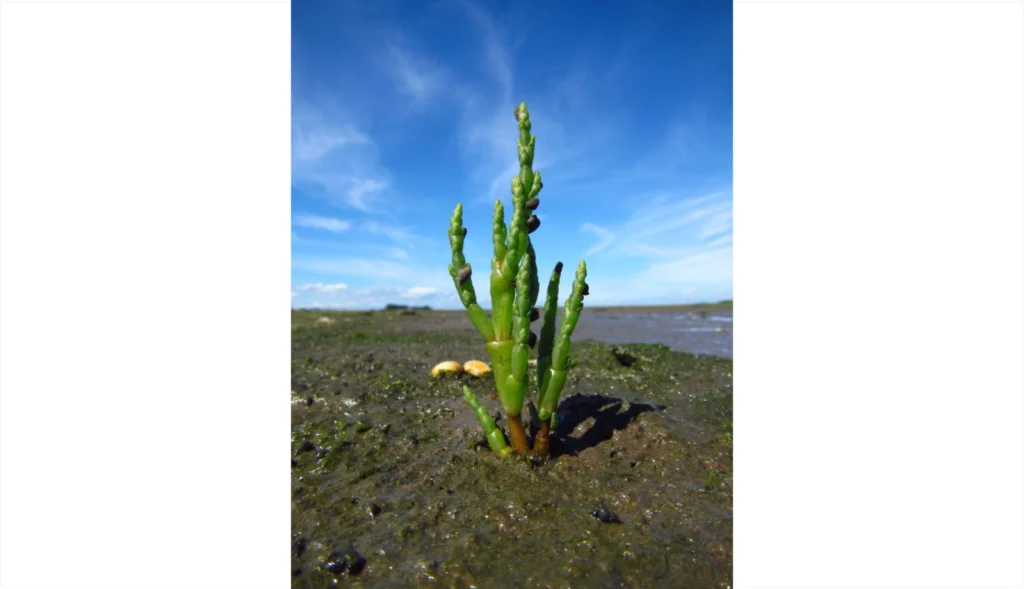
This 10 centimetre giant is a pioneer of marine conquest. All summer, glassworts (Salicornia europaea) will be rhythmically swept by the tide, gradually trapping seaborne sediment on the shores of Aberlady Bay in Scotland. The resulting elevation of the mudflat marks the start of a race of growth against waves, currents and sea level rise, eventually leading to the development of a salt marsh. How ...[Read More]
Winners of the EGU Best Blog Posts of 2020 Competition
2020 was a brilliant year for our blogging network here at EGU. Across the EGU’s official blog, GeoLog, as well as the network and division blogs there were so many interesting, educational and just downright entertaining posts this year it was hard to get the blog editors to choose their favourites! Nevertheless at the beginning of January, to celebrate the excellent display of science writing ac ...[Read More]
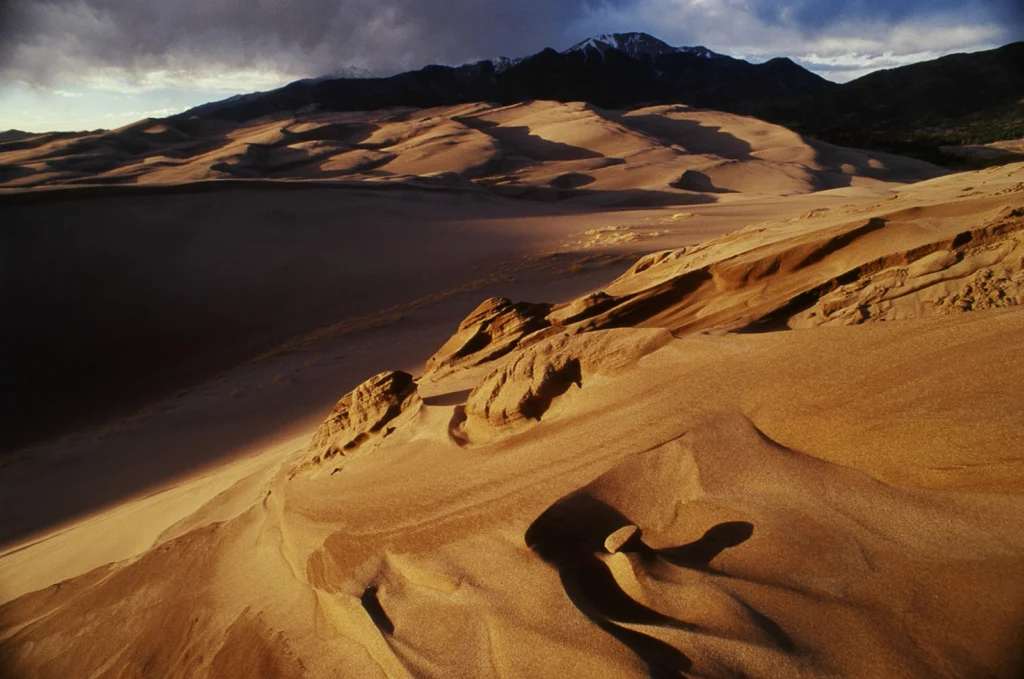
Imaggeo On Monday: Great Sand Dunes Sunset
On a late afternoon in Colorado’s Great Sand Dunes, the sun came out from behind the clouds for a brief moment before it went behind the horizon, illuminating the stoss side of an eroding dune. Sand originated from lacustrine deposits in the San Luis Valley; the Sangre de Cristo mountains, which can be seen in the background, provided a source of some of the sand. This image therefore illust ...[Read More]
Using Milankovitch Cycles to create high-resolution astrochronologies
This year marks the 100th anniversary of Milutin Milankovitch’s first paper about Earth’s climate. Milankovitch argued that the amount of solar radiation Earth receives, and hence its climate, varies cyclically as its orbit changes due to gravitational tugs from the other planets. His climate theory fell into disrepute during the 1950’s but was rehabilitated in the 1970’s. Today, many peopl ...[Read More]
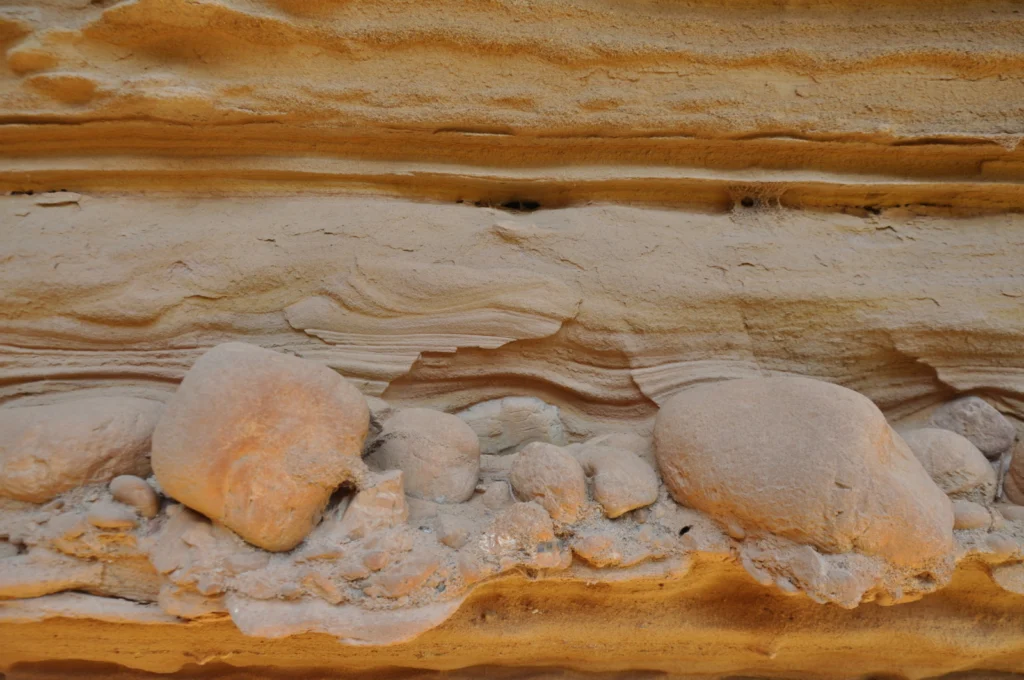
Imaggeo On Monday: Erosion and suspension
This image shows bottomset beds from the Kerinitis Gilbert-type delta. The Pleistocene delta uplifts along the active southern margin of the Corinth rift in Greece. A bottomset bed is one where layers of sedimentary material lying along the bottom of a body of water near the point of entry of a stream are subsequently covered by foreset and topset beds in the formation of a delta. Thus in this ima ...[Read More]
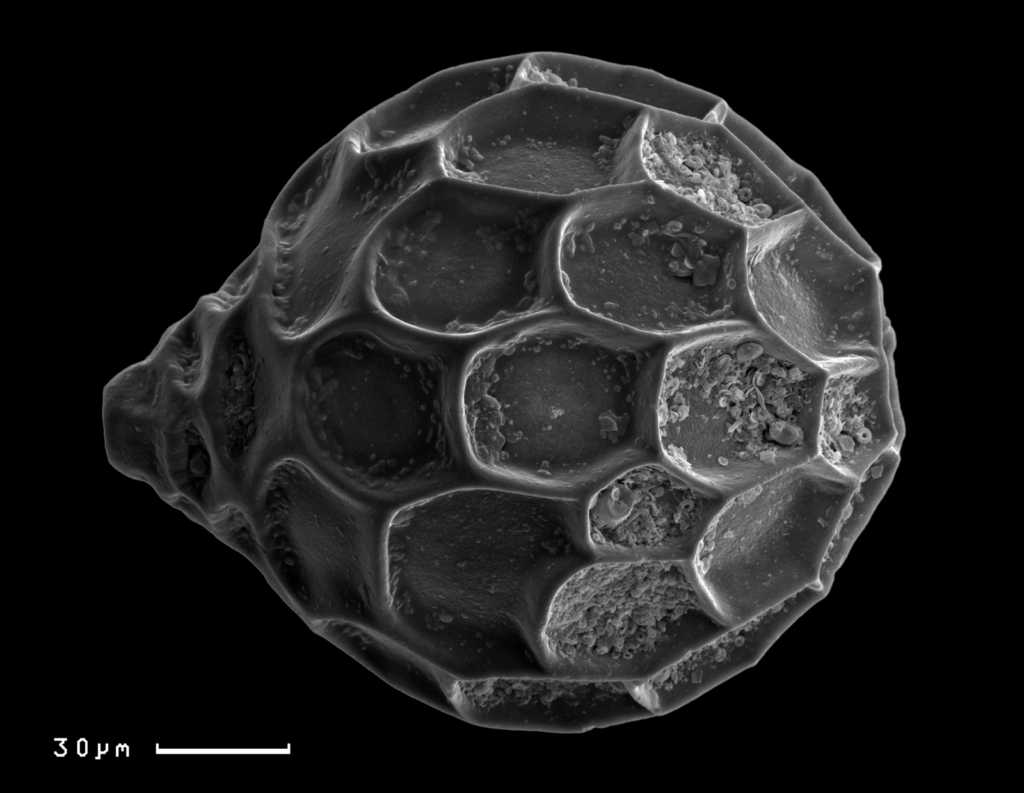
Imaggeo On Monday: Micro and Nano composition
This image shows benthic foraminifera species of Favulina hexagona (Williamson, 1848) together with nanofossils enclosed inside the shell hexagons. This modern foraminifera species was found in the sediment core retrieved from the western slope of the Rio Grande Rise (western South Atlantic). Description by Liubov Kuleshova, after the description on imaggeo.egu.eu. Imaggeo is the EGU ...[Read More]
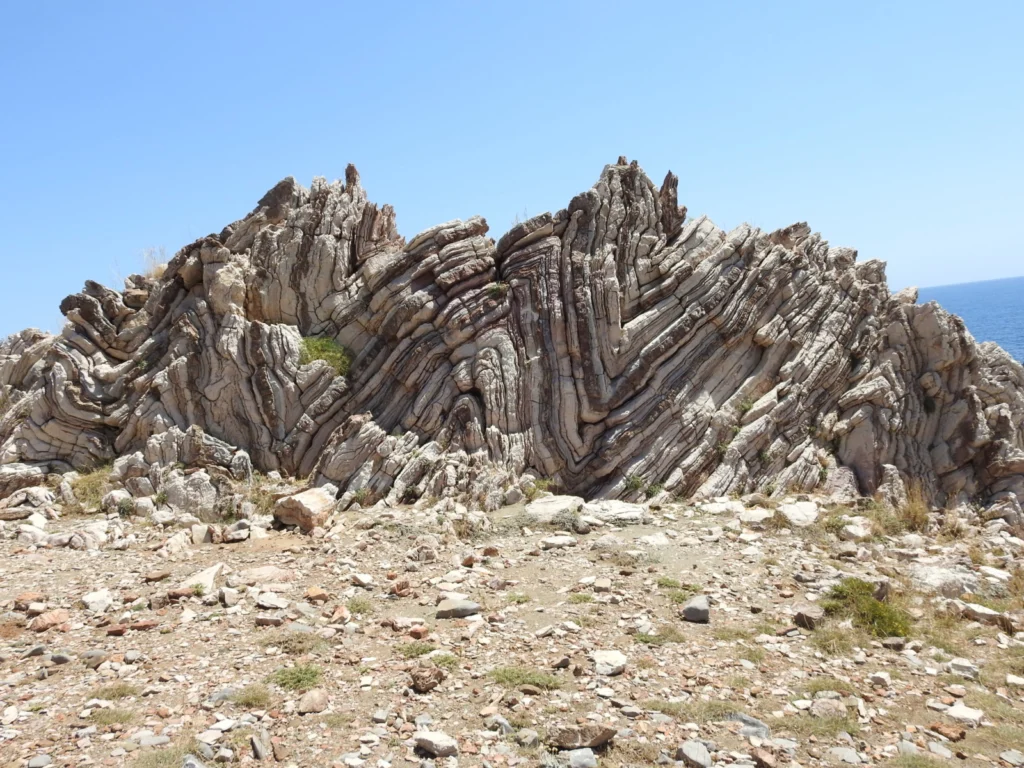
Imaggeo On Monday: Crete- Diplono Petris (Διπλόνο Πέτρις)
Diplono Petris near Agios Pavlos in the south of Crete island is one of Europe’s most impressive folded rock formations. The rock strata document an alternation of different limestone layers in the pindos top of the Cretan ceiling pile. These sediments, once deposited in a deeper ocean basin of the Pindos Ocean, were deformed in the course of Alpine fold tectonics, triggered by the Northern ...[Read More]
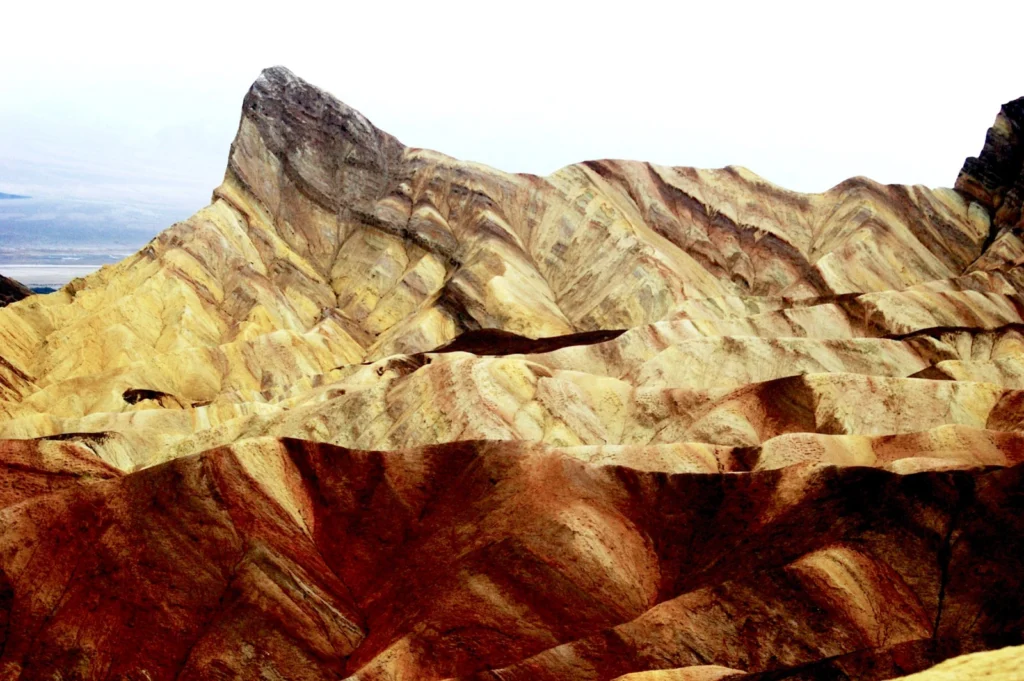
Imaggeo On Monday: Patterns in the landform
The badlands at the Zabriskie Point (Death Valley, California, USA) rest upon a mudstone foundation. In the prehistoric lakes of Death Valley, fine grained sediments were deposited to form soft rocks. The clay minerals in the mudstone are shaped like tiny plates, which helps create the layers. The combination of the almost impermeable mudstone and Death Valley’s low rainfall makes plant grow ...[Read More]
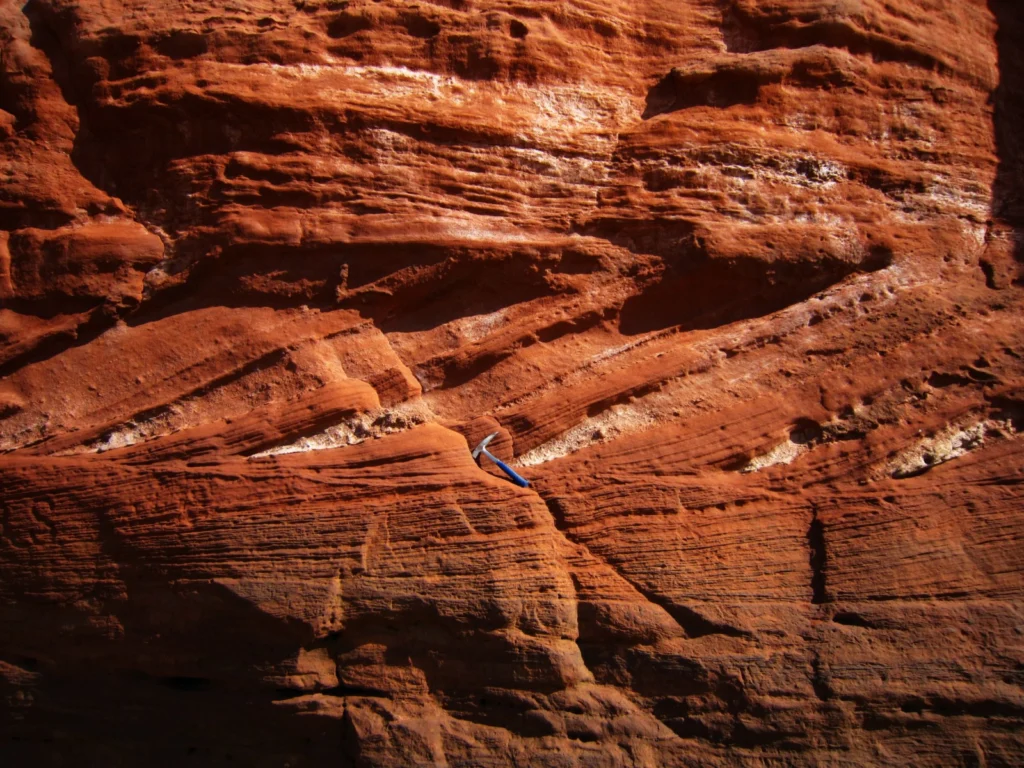
Imaggeo on Mondays: Red triassic sandstone
As child growing up on the south coast of Devon in the UK, I never really realised that our beaches were unusual. A glorious, glowing orange-red colour, the cliffs that you can see in this photograph by Sarah Weick produced similarly red sand beaches and warm ochre soils. The bright colour is the result of the sandstone and conglomerates of these rocks, collectively called the New Red Sandstones, ...[Read More]
Imaggeo On Mondays: Psychedelic Foraminifera
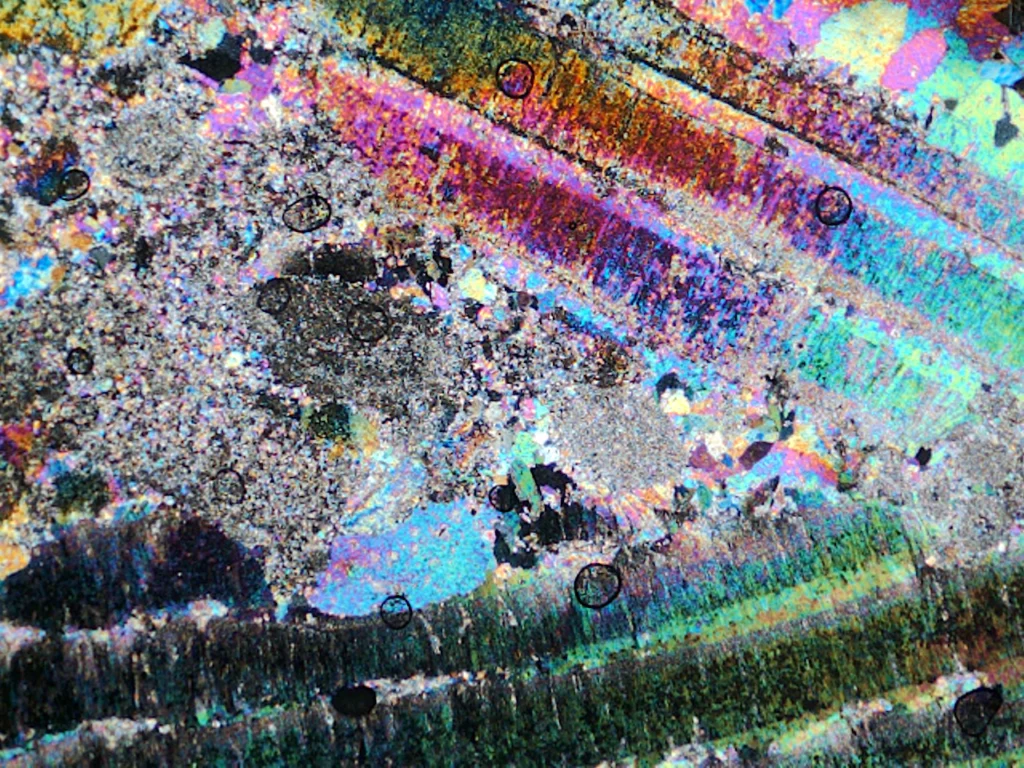
This is a transmitted light microscope image of a thin section – a 50-micron thick sliver of rock. This sample was collected from Jebel Hafit, a mountain which straddles the United Arab Emirates and Oman border. Jebel Hafit is approximately 900 m high and is made up of Eocene to Miocene age carbonate rocks which were mainly deposited in a shallow water, tropical setting. More specifically, this im ...[Read More]