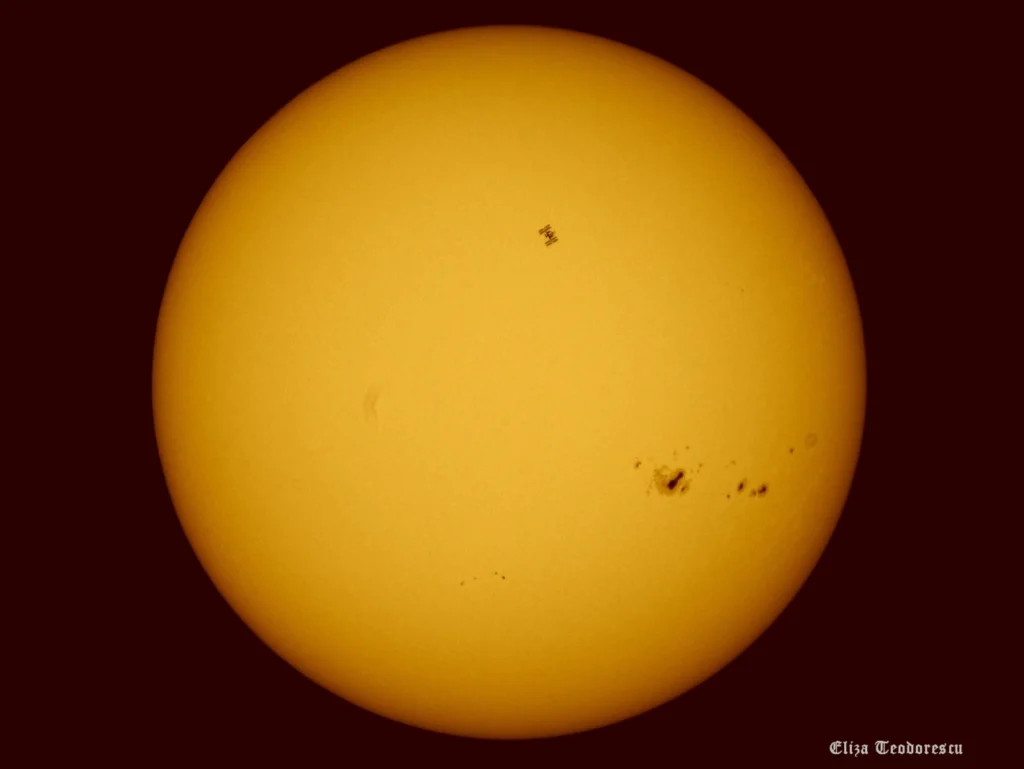
The International Space Station, a human-made, life-supporting habitat, and a most complex and unique scientific laboratory, orbits the Earth in only 90 minutes – that is 16 times a day! Even so, only occasionally, we earthlings have the privilege of seeing it’s dark outline against the much brighter surfaces of the Sun or Moon. Timing …[Read More]
Solar Terrestrial Sciences
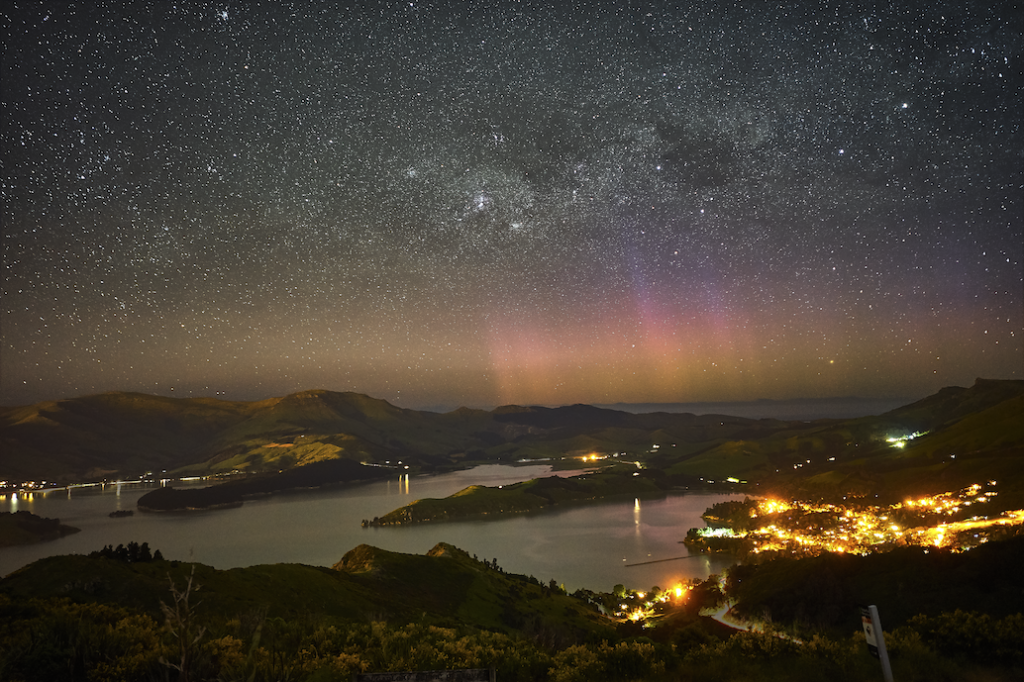
Imaggeo On Monday: Aurora Australis with Southern Cross and Pointer stars
This view from the Port Hills of Christchurch in New Zealand glances South over Governors Bay into the distance, where an Aurora Australis is visible near the horizon. Almost in the center of the starry sky the Southern Cross with its 2 Pointer stars are showing prominently. Description by Ulrich Schreiber, after the description …[Read More]
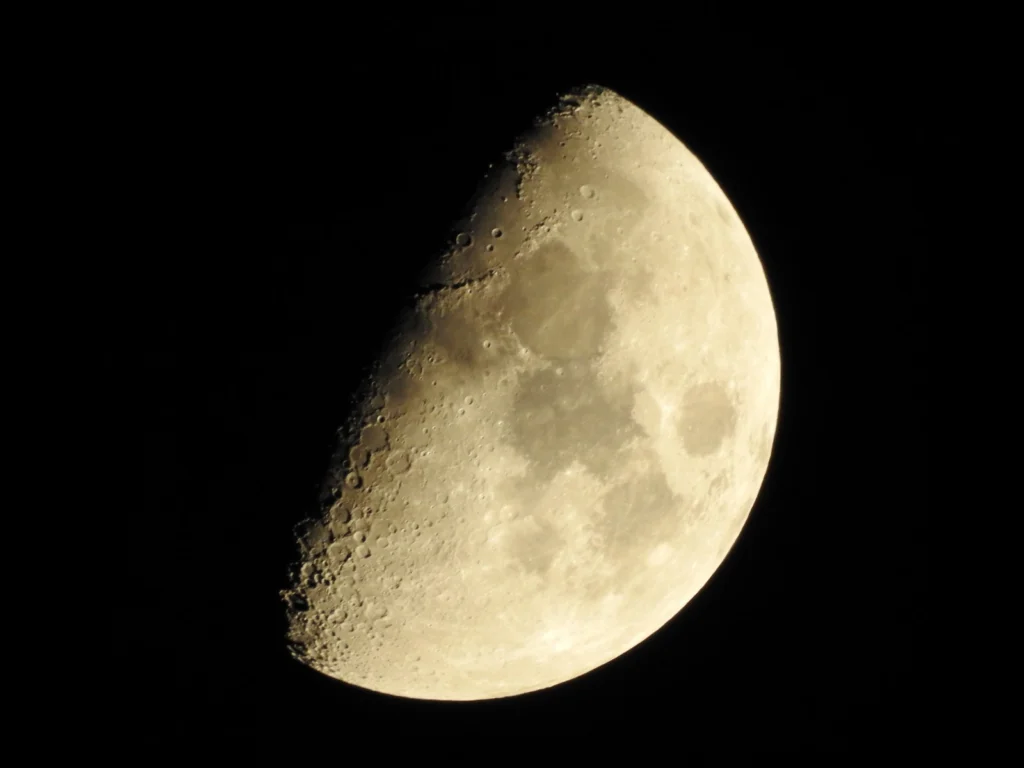
Imaggeo On Monday: Increasing Moon – seen from Hamburg
The image shows the increasing moon on March 16, 2016, seven days before the full moon. 53.3% of the lunar front are already illuminated. The moon does not glow on its own, but its surface reflects the sunlight. The sun always illuminates a complete half of the moon, which, in its orbit around the earth, …[Read More]
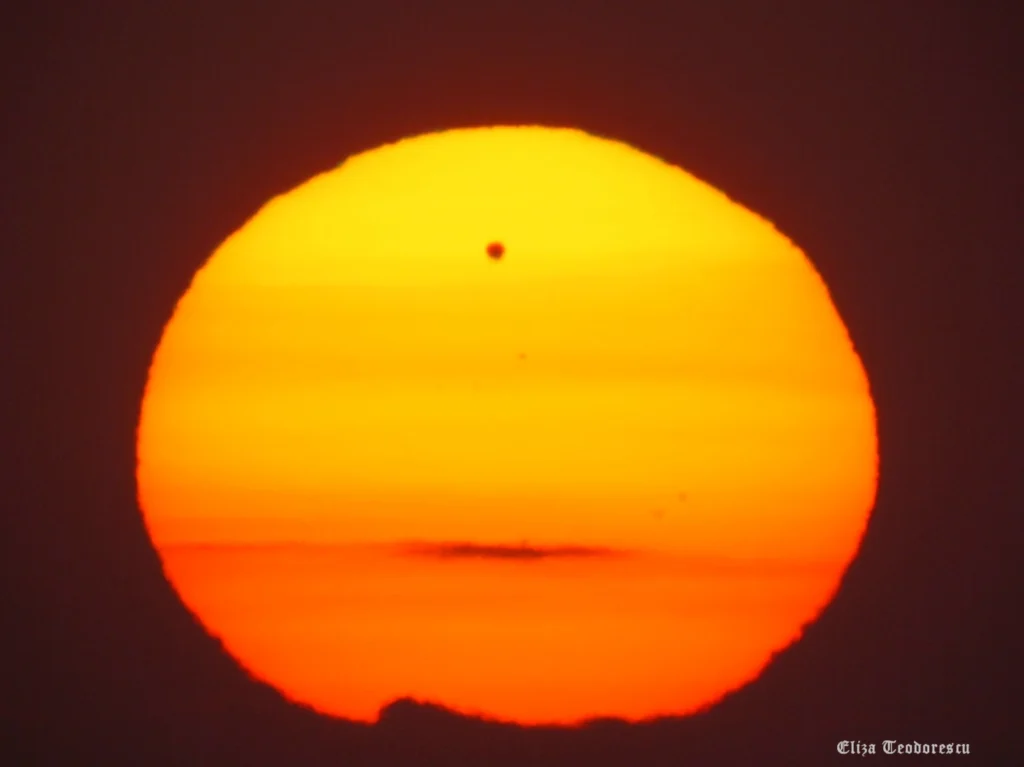
Imaggeo On Monday: Transit of Venus over the Sun
The object of this photo is the transit of planet Venus in front of the Sun which took place on June 6th 2012 and was the last event of this kind until 2117! This is a very rare event with respect to a human life span and the transit always happens in pairs, 8 years …[Read More]
Winners of the EGU Best Blog Posts of 2020 Competition
2020 was a brilliant year for our blogging network here at EGU. Across the EGU’s official blog, GeoLog, as well as the network and division blogs there were so many interesting, educational and just downright entertaining posts this year it was hard to get the blog editors to choose their favourites! Nevertheless at the beginning of January, to …[Read More]
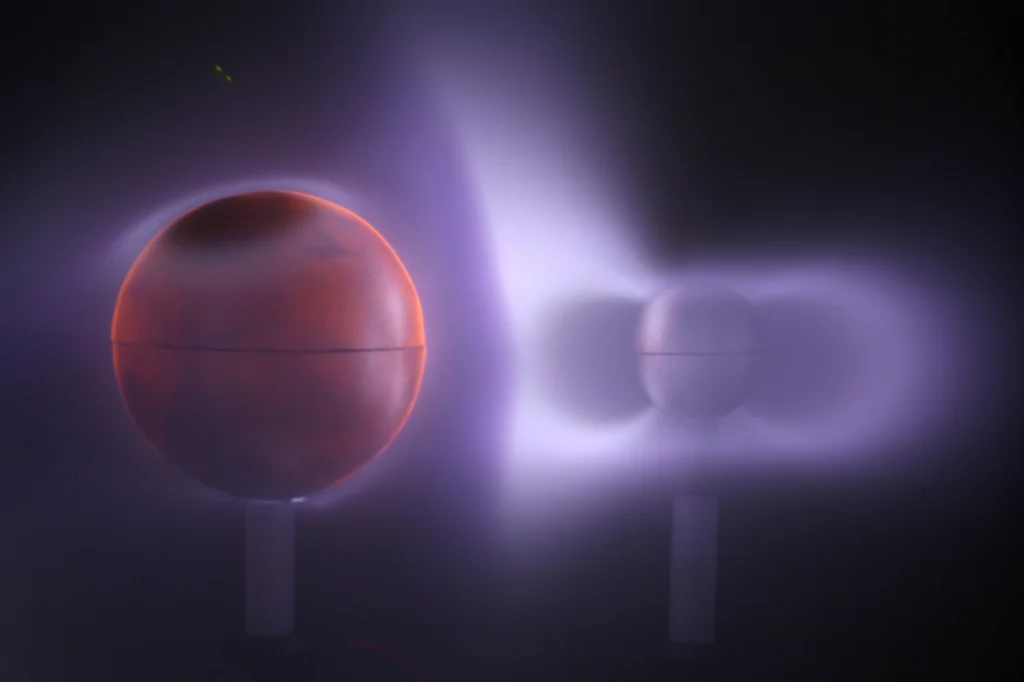
Imaggeo On Monday: Space plasma in a jar
Laboratory visualisation of solar wind interaction with Earth’s magnetic field. The Van Allen radiation belt, Earth’s magnetosphere, “bow shock” and a solar coronal hole can all be seen, and are emphasized with the ‘Planeterrella experiment‘, a vacuum chamber in the shape of a bell jar with the ‘Sun’ on the left (in the form of …[Read More]