GeoLog

Geochemistry, Mineralogy, Petrology & Volcanology

Imaggeo on Mondays: Artists’ Paint Pots
Imaggeo on Mondays: Artists’ Paint Pots
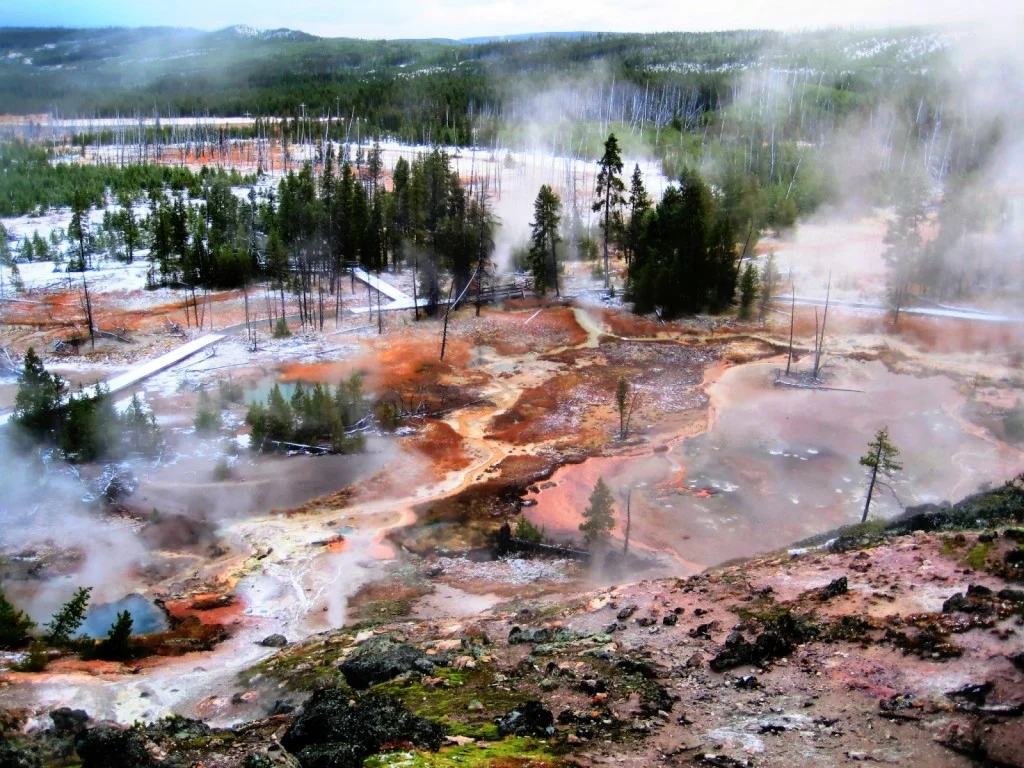
Many artists draw inspiration from nature and it’s not surprising when faced with landscapes which are as beautiful as the one featured in this week’s Imaggeo on Mondays post. Josep Miquel Ubalde Bauló writes about the origin of the colourful mud pots and bobby-socks trees! This picture corresponds to The Artist Paint Pots, found in in Yellowstone, the first National Park of the world. Yellowstone ...[Read More]

GeoTalk: Stacia Gordon

GeoTalk: Stacia Gordon

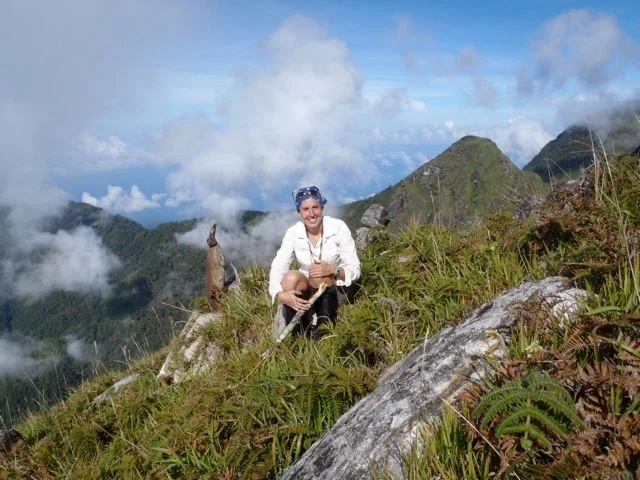
Geotalk is a regular feature highlighting early career researchers and their work. Following the EGU General Assembly, we spoke to Stacia Gordon, the winner of the Tectonics and Structural Geology Division Outstanding Young Scientist Award, 2014. First, could you introduce yourself and tell us a little more about your career path so far? My name is Stacia Gordon. I am an Assistant Professor at the ...[Read More]

Imaggeo on Mondays: Lusi from the sky with drones

Imaggeo on Mondays: Lusi from the sky with drones

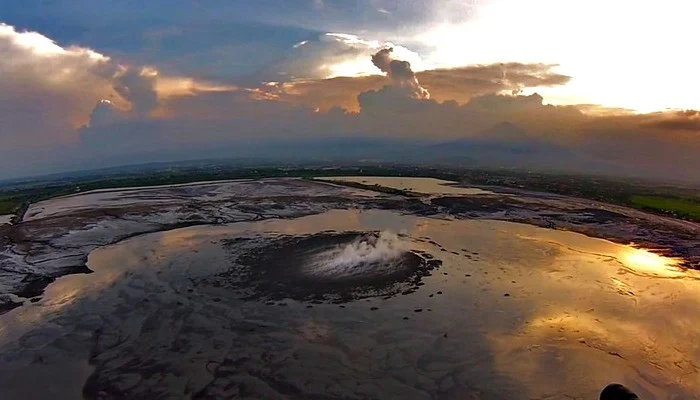
The picture shows a spectacular aerial view of a sunset over the Lusi mud eruption in East Java, Indonesia. Here thousands of cubic meters of mud, are spewed out every day from a 100 m sized central crater. Since the initial eruption of the volcano in 2006, following a 6.3 M earthquake, a surface of about 7 km2 has been covered by boiling mud, which has buried more than 12 villages and resulted in ...[Read More]

Imaggeo on Mondays: Painted Hills after the storm.

Imaggeo on Mondays: Painted Hills after the storm.

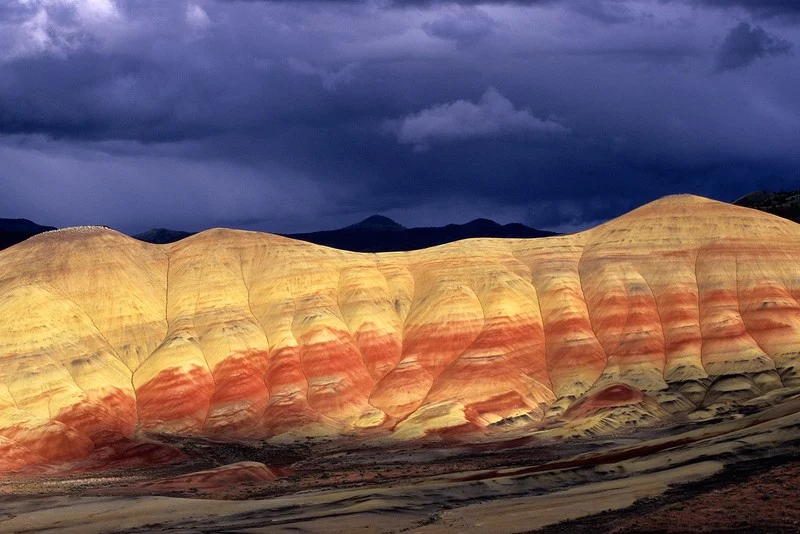
The geological record preserved at John Day Fossil beds, in Oregon, USA, is very special. Rarely can you study a continuous succession through changing climates quite like you can at this National Park in the USA. It is a treasure trove of some 60,000 plant and animal fossil specimens that were preserved over a period of 40 million years during the Cenozoic era (which began 66 million years ago). ...[Read More]

Imaggeo on Mondays: Fresh breakout in the lava fields

Kate Dobson was a volunteer at the Hawaii Volcano Observatory (HVO) in 2001/02 and revisited the stunning Big Island in 2006. During her holidays Kate ventured out to the coastal section of the Pu’uO’o lava flow field and captured this spectacular image of a fresh lava breakout. The Pu‘u ‘Ō‘ō vent is in the East Rift Zone of Kīlauea Volcano and began erupting on January 3, 1983, and has continued ...[Read More]

GeoCinema Online: What a difference technology can make.

Advances in technology mean research that was unthinkable some years ago is now possible. For instance, geographically remote areas which were once out of reach have become more accessible through better (not always easier) transportation, so what we understand by ‘remote areas’ has changed significantly over time. The films in this edition of GeoCinema online are fascinating because they showcase ...[Read More]

Imaggeo on Mondays: A mysterious shrinking lake

From this week’s Imaggeo on Mondays image it’s easy to see why Iceland is the setting of so many books, films and TV shows, inspiring and inciting writers and film crews alike. The picture was taken on the shores of Lake Kleifarvatn, in Reykjanes peninsula, approximately 30 km to the west of the country’s capital, Reykjavík. “The Reykjanes peninsula is unique because it marks theboundary between t ...[Read More]

The known unknowns – the outstanding 49 questions in Earth sciences (Part III)

We continue exploring the biggest conundrums in Earth sciences in this third post of the known unknowns. In the two previous instalments of the series we’ve discovered what the major questions still to be answered about the early days of planet Earth and its inner workings are. We now move onto the planet’s surface. The advent of plate tectonic theory, arguably one of the biggest advancements in t ...[Read More]

Imaggeo on Mondays: Marble outcrops

This week’s Imaggeo on Mondays image was taken by Prof. Konstantinos Kourtidis, in Alykes, along the southern coast of Thassos island, where he photographed the beautifully white marbles that outcrop along the coastline. The Greek Island of Thassos is located in northeastern Greece, close to the coast of Thrace in the Aegean Sea, although geographically it belongs to the Macedonia region. There is ...[Read More]

The known unknowns – the outstanding 49 questions in Earth Sciences (Part II)

Here is the second instalment in our series covering the biggest unknowns in the Geosciences. Last week we explored what it is about the Earth’s origin that still remains unclear and this week we probe the Earth’s deep interior. Unlike in Jules Verne’s Journey to the Centre of the Earth, there are no volcanic tubes we can climb down which will allow us to discover the inner workings of our Planet. ...[Read More]