GeoLog

Atmospheric Sciences

How long does an ecosystem remember the weather?
How long does an ecosystem remember the weather?
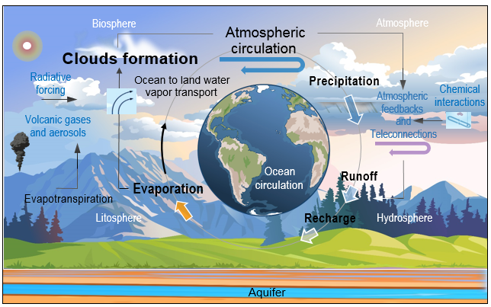
“Plants carry traces of past weather. Reading them may help us navigate a hotter, drier world.”  Wenli Zhao As global warming intensifies drought frequency, understanding how ecosystems store and deplete water is critical for anticipating vegetation stress. This blog walks us through a novel groundbreaking study published on EGU journal Hydrology and Earth System Sciences (HESS). Led b ...[Read More]

Under the Mediterranean sun: The thousand year tale of changing skies

Under the Mediterranean sun: The thousand year tale of changing skies

When you picture the western Mediterranean, you likely imagine sun-drenched beaches, terracotta roofs, and bright blue skies. But has it always been this sunny? A groundbreaking study published in the journal Research provides a definitive answer: it has not. By pulling back the curtain – or rather, the cloud cover – on a thousand years of climate history, scientists have developed the ...[Read More]

A geoscience reality check on World Biofuels Day

A geoscience reality check on World Biofuels Day

On a humid morning in Augsburg, Germany, on August 10, 1893, a ten-foot iron cylinder roared to life for the first time. The engine belonged to Sir Rudolf Diesel, and running through its veins was not the petroleum distillate we associate with his name today, but in fact, peanut oil! Diesel’s early experiment proved something revolutionary for the late Industrial Revolution: the engines driving hu ...[Read More]

Reflecting on fifty years of Mars through Viking 1’s lens

Reflecting on fifty years of Mars through Viking 1’s lens

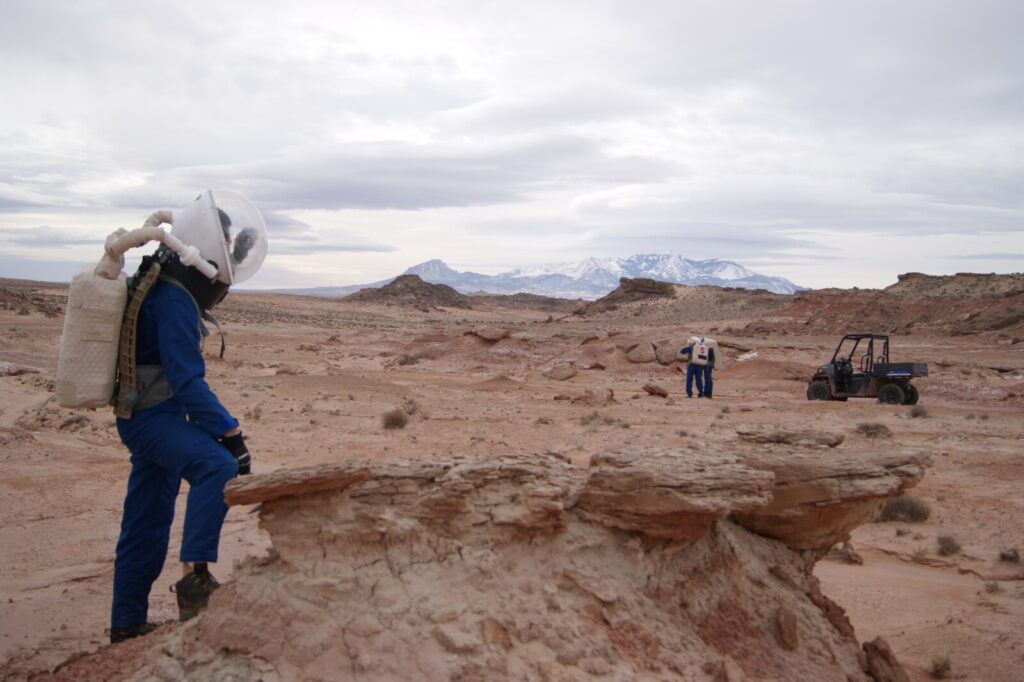
On July 20, 1976, a machine of steel and titanium dropped through a thin atmosphere and touched the dirt of Chryse Planitia. Scientists at NASA held their breath, since five years earlier, the Soviet Union’s Mars 3 probe had died less than two minutes after touchdown. To mitigate this nightmare, engineers programmed Viking 1 to scan its own footpad first. If the lander sank into oblivion, hu ...[Read More]

Interdisciplinary futures in geoscience: Cross-divisional insights from the Division Presidents – Atmospheric Sciences (AS)

Interdisciplinary futures in geoscience: Cross-divisional insights from the Division Presidents – Atmospheric Sciences (AS)

This interview is part of an ongoing series exploring the evolving role of interdisciplinarity across the geosciences. As environmental challenges grow more complex, addressing them requires not only disciplinary expertise but also meaningful collaboration and innovation across fields, methodologies, and communities. In each conversation, I ask Division Presidents to reflect on how cross-divisiona ...[Read More]

Discovery to recovery: how international collaboration solved the ozone crisis

Discovery to recovery: how international collaboration solved the ozone crisis

38 years ago, representatives from 46 countries around the globe came together to find a solution to the climate crisis. Alerted to an issue discovered by scientists 13 years previously, the representatives of these nations worked together swiftly and with purpose to create an international treaty to combat a major environmental issue. The treaty was signed by all 46 participant nations and would ...[Read More]

The spectral shadow of Samalas: When climate models conjure the Earth’s forgotten fury

The spectral shadow of Samalas: When climate models conjure the Earth’s forgotten fury

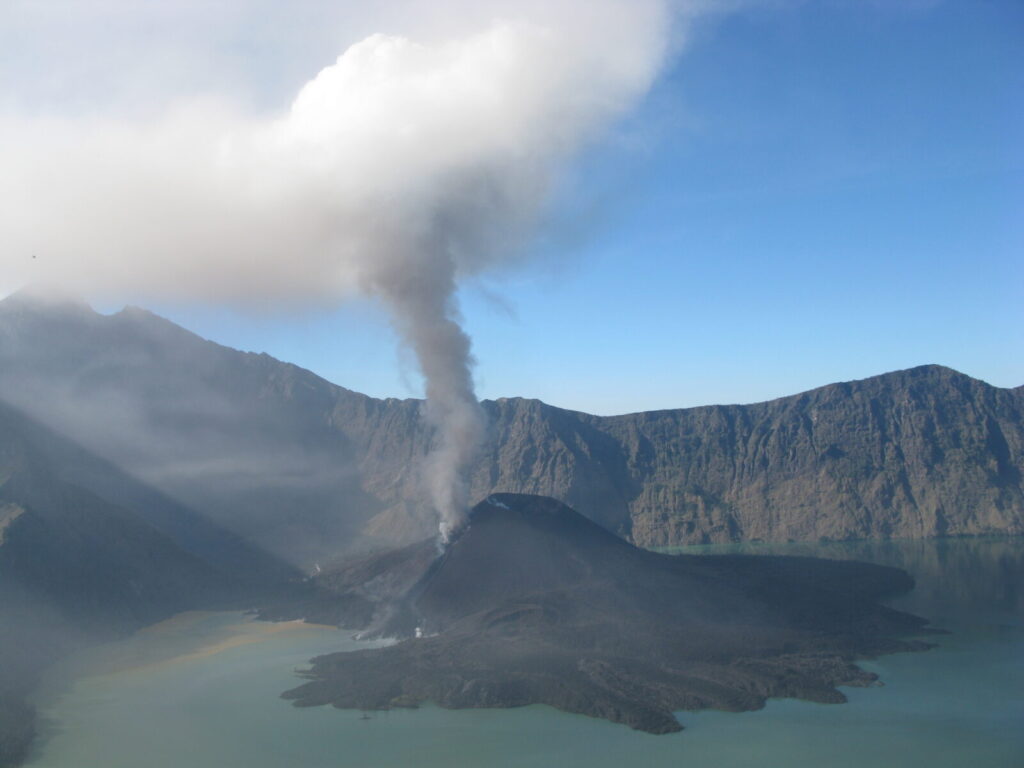
This Halloween, we turn our gaze from fictional haunts to the chilling, rigorous world of paleoclimatology. The paper by Hartmann et al. (2025), published on Climate of the Past, focuses on the implementation of external forcings in a regional climate model around the 1257 CE Samalas volcanic eruption. This paper can be quite the unsettling investigation, since it treats the Earth itself as a time ...[Read More]

Ozone 101: What you need to know as the Montreal Protocol turns 35

Ozone 101: What you need to know as the Montreal Protocol turns 35

As the world commemorates the 35th anniversary of the Montreal Protocol, it’s worth taking a moment to appreciate this landmark agreement’s monumental impact on our planet. Officially known as the “Montreal Protocol on Substances That Deplete the Ozone Layer,” this treaty stands as one of the most successful environmental accords in history, showcasing what humanity can achieve when it comes ...[Read More]

The varying composition of a single bolt of lightning

The varying composition of a single bolt of lightning

Until recently, scientists assumed lightning had a homogeneous distribution of energy inside its channel. But researchers like Damien Bestard, a PhD student with the Sorbonne Université have found that the composition of each bolt is quite variable. Bestard presented his findings at the European Geosciences Union General Assembly EGU23 on Monday (April 24). As part of his research, Bestard measure ...[Read More]

Winners announced: Here are the best EGU Blog Posts of 2022!

Winners announced: Here are the best EGU Blog Posts of 2022!

As future-focused as we like to be at EGU, we sometimes pause to look back at the year gone by – just a brief glimpse to appreciate all the good work of 2022! As always, we had so many inspiring and thought-provoking blog posts published this year across the EGU’s official blog GeoLog and division blogs. Thank you to each of you for your writing contribution! To continue our annual appreciation fo ...[Read More]