TS
Tectonics and Structural Geology

Tectonics

Our epic battle with ever-changing weather forecasts while deploying ocean bottom instruments
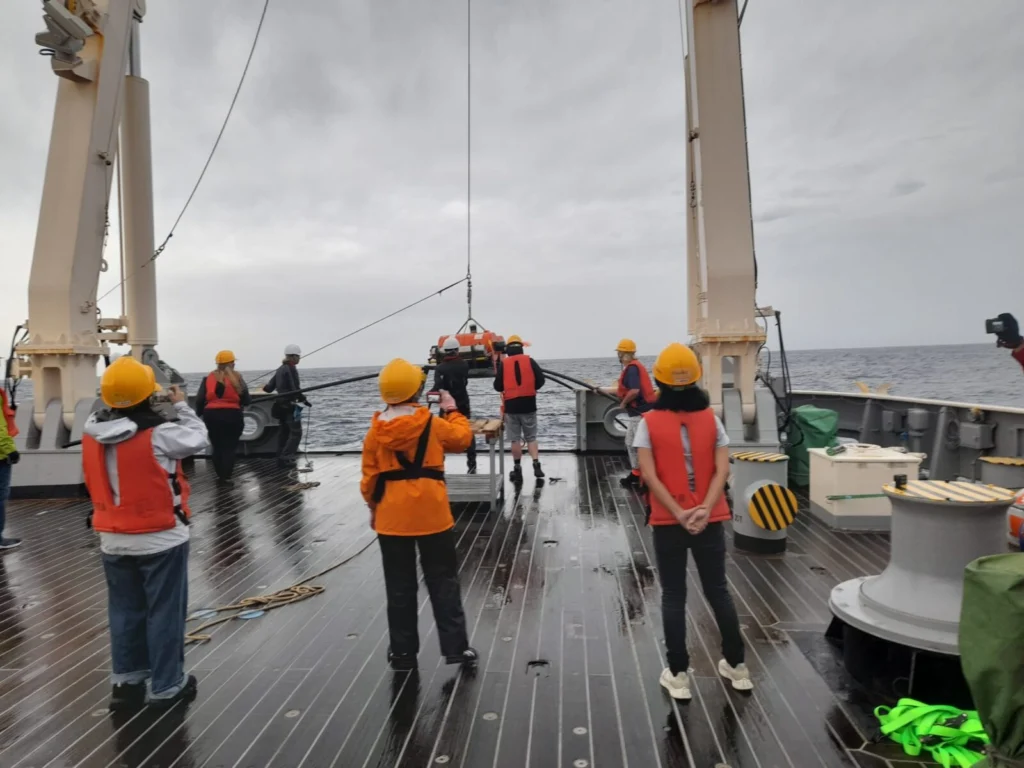
Our epic battle with ever-changing weather forecasts while deploying ocean bottom instruments
The question what drives tectonic plates has been around since plate tectonics was first developed. In principle, the fluid dynamics is well-known but what is not well known are the material properties, especially mantle viscosity structure which determines how much force is needed to pull a plate with a certain speed, but also how fast …[Read More]

Features from the Field: Dikes and Sills

dyke and sill in Dalradian quartzite

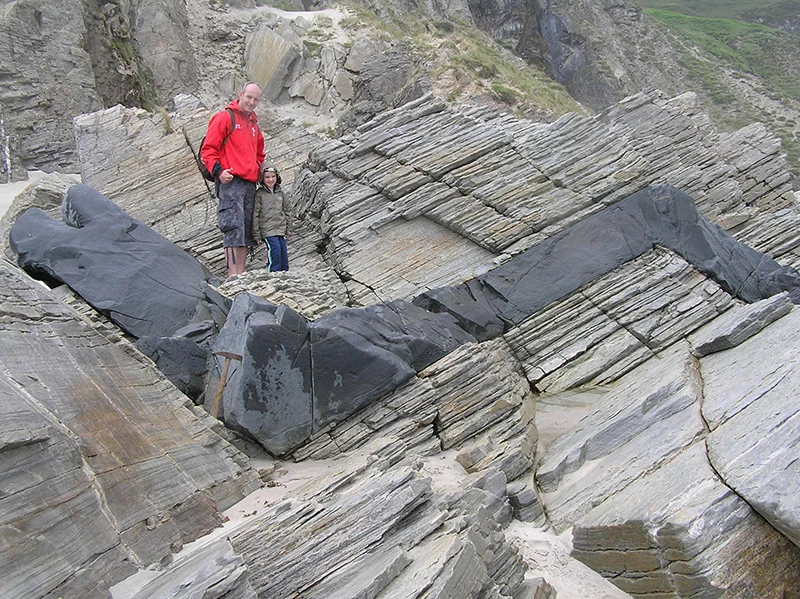
Volcanoes are everywhere along plate margins and on hot spots on the planet’s surface. Just in the past 2 years, we have witnessed enormous explosive eruptions such as that of the Hunga Tonga volcano which released an amount of energy equivalent to hundreds of atomic bombs, and massive lava flows, as at the Cumbre Vieja …[Read More]

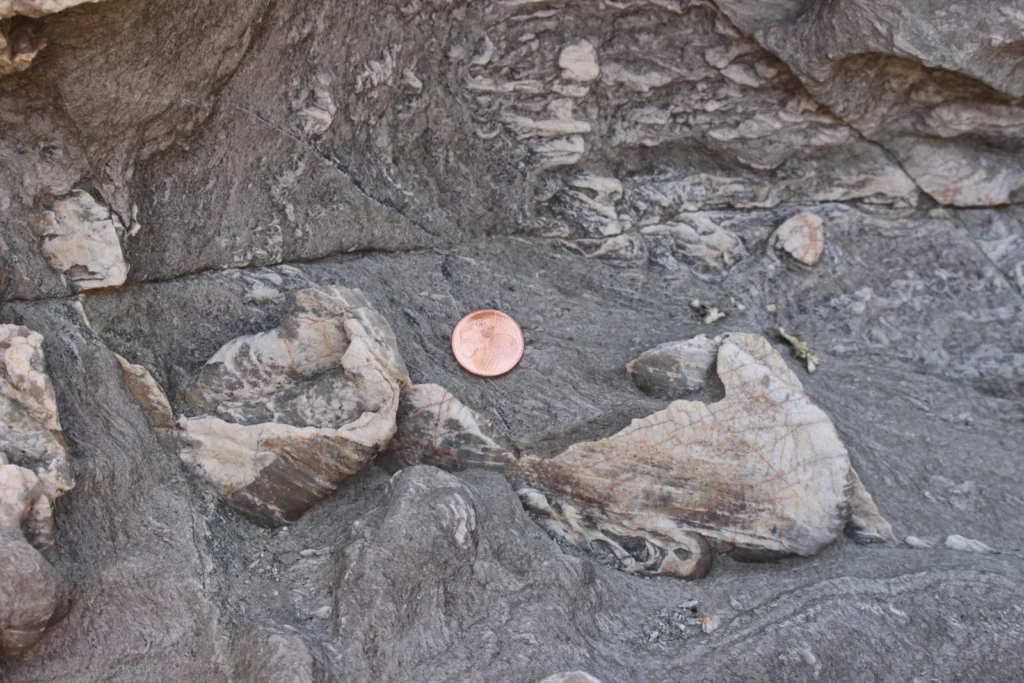
Features from the Field: Sheath Folds

Features from the Field: Sheath Folds

Shear zones are areas of intense deformation that localize the movement of one block of the crust with respect to another. In previous posts, we have seen that shear zones contain some very deformed rocks called mylonites, lineations that tell us the direction of movement, and useful kinematic indicators, such as S-C fabrics, that allow …[Read More]

Features from the Field: Stretching Lineations

Features from the Field: Stretching Lineations

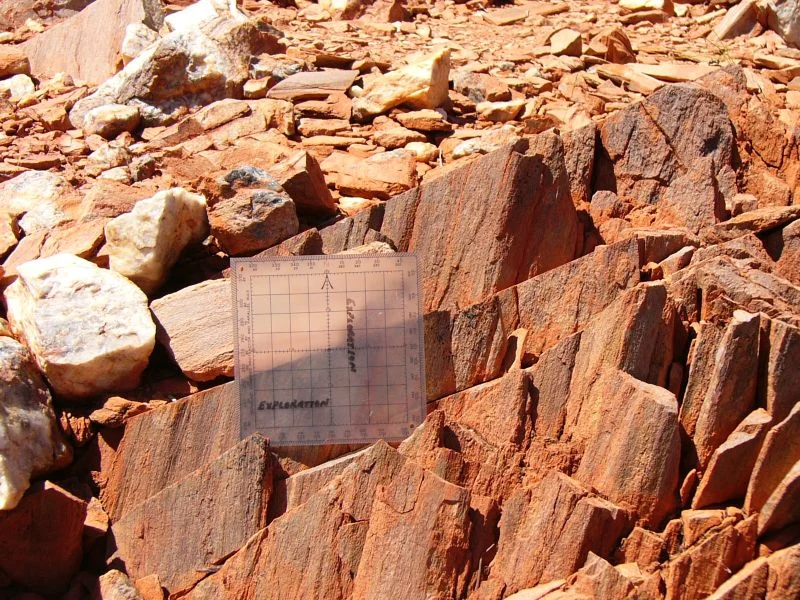
Deep beneath our feet, deformation of rocks at high temperature produces impressive structures such as shear zones, that localize the movement of two volumes of rock with respect to one another. Shear zones are strongly deformed bands with strongly foliated structures (i.e., with rocks that look like a pile of leaves) and kinematic indicators, such …[Read More]

San Francisco: Where the Plates Meet

San Francisco: Where the Plates Meet

San Francisco has been a natural gathering place for people across the millennia. It is not a coincidence that this city, situated at the entrance to the largest estuary on the U.S. West Coast, owes its dramatic setting to active geology on the North American plate margin. The first people of the San Francisco Peninsula, …[Read More]

Features from the Field: Angular Unconformities

Features from the Field: Angular Unconformities

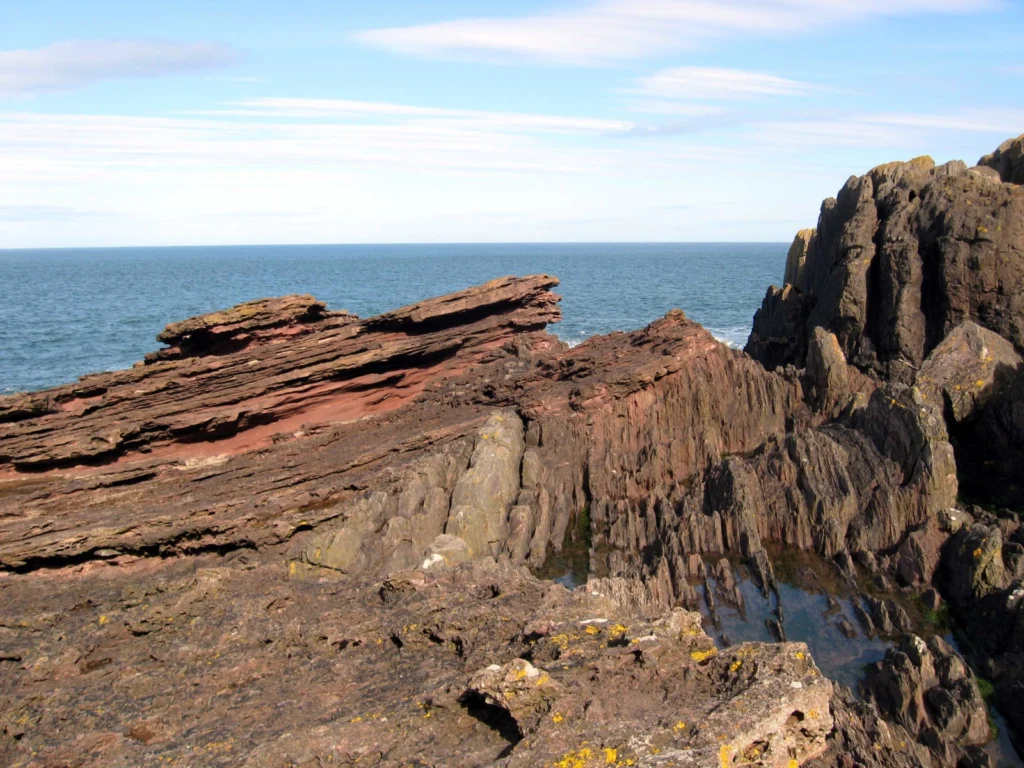
An angular unconformity is an erosional surface that truncates older, tilted sedimentary layers and that is overlain by younger layers, oriented parallel to the unconformity. The discovery and interpretation of angular unconformities, like the famous Hutton’s unconformity at Siccar Point, Scotland, marked a paradigm shift in the geological theories of the 18th century. At that …[Read More]

Features from the Field: Chevron Folds

Features from the Field: Chevron Folds

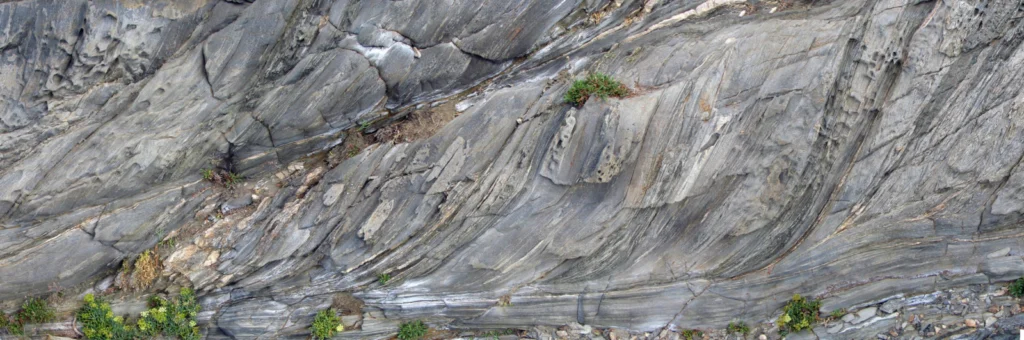
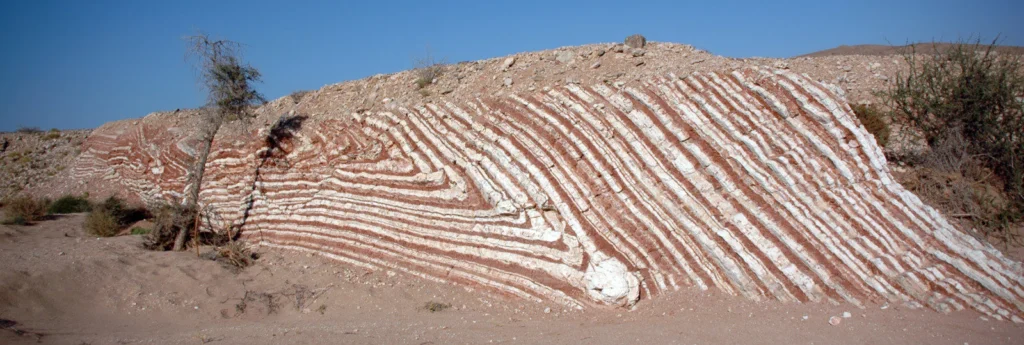
Folds are among the most strikingly beautiful structures we can observe in rocks. There are several ways folds may form in rocks. For instance, folds in sedimentary rocks may develop by liquefaction of soft sediments, but the most common way to produce folds – and also my favorite – is by deformation. When rocks are …[Read More]

Minds over Methods: Dating deformation with U-Pb carbonate geochronology

Minds over Methods: Dating deformation with U-Pb carbonate geochronology

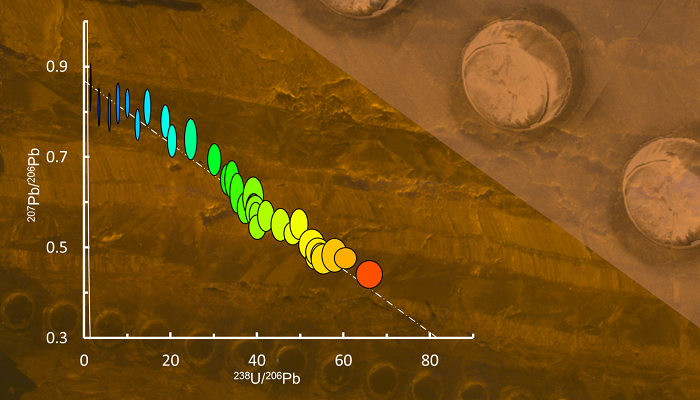
For this edition of Minds over Methods, we have invited Nick Roberts, a research scientist at the British Geological Survey, working within the Geochronology and Tracers Facility (GTF) running a LA-ICP-MS laboratory. Nick has a background in ‘hard-rock’ geology, incorporating geochemistry, geochronology, and magmatic and metamorphic petrology across a wide range of tectonic settings, and …[Read More]