TS
Tectonics and Structural Geology

Tectonics and Structural Geology

Geomythology. Craitbul journey through the Newer Volcanics in SE Australia

Geomythology. Craitbul journey through the Newer Volcanics in SE Australia

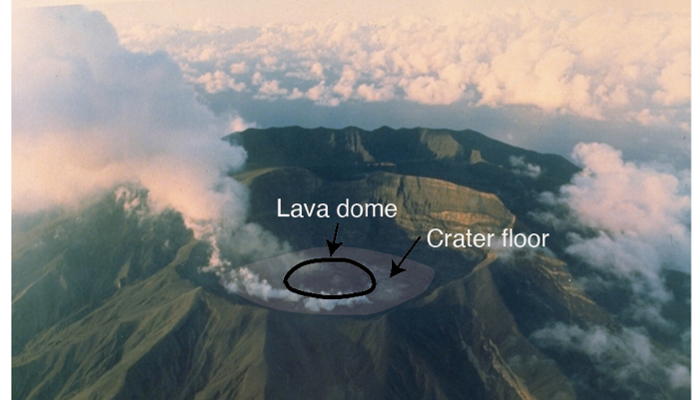
The Aboriginals Australians had and hopefully will continue to have an important oral tradition, especially related to impacts, tsunamis, earthquakes and volcanoes. This time, I would like to set our new narrative in southeast Australia, where the Booandik people tell a story suggesting how their ancestors witnessed and interpreted volcanic activity in the Mount Gambier area. The story, reported b ...[Read More]

Gifting geologist made easy – a guide to spoil your favorite persons

Gift image

The end of the year is around the corner. For many of us, it will be a time of celebration, gathering, party, and GIFTS! And if you think spoiling a geologist is hard, then I’ve got your back. In this post I gather diverse gift ideas, the classics of course and some really unique treasures to get to your favorite geologist (who can be yourself of course). You’ll find ideas whatever you ...[Read More]

Beyond Tectonics (and Beyond Earth): On the geological timescales of other rocky bodies in our solar system

Beyond Tectonics (and Beyond Earth): On the geological timescales of other rocky bodies in our solar system

Geological timescales Unless you regularly work in “deep” time or are very interested in Earth’s very ancient history you might not be too familiar with Earth’s geological timescale. What I am referring to is this:     From the very beginning of Earth’s formation ~4.5 billion years ago to today each period is defined and catalogued by events that occurred wi ...[Read More]

The role of structural geology in radioactive waste disposal

A photo of Dr. Isabel Ashman who's work has been featured in this blog

In this blog post, I have interviewed Dr. Isabel Ashman, who is part of the GeoSafe consortium at the University of Liverpool, looking into safe and long-term containment of radioactive waste in geological formations. Dr. Ashman, along with other project partners at the University of Liverpool, aim to better understand how small to large-scale (sub-mm to several km) structural variabilities in tar ...[Read More]

Faults vs. Fractures — How to Tell Them Apart ?

A futuristic Black geologist wearing AR glasses stands in a glowing cave surrounded by four holographic screens labeled Geological Aspect, Geometry, Topology, and Kinematics & Mechanism, each displaying geological diagrams and fracture models, symbolizing modern geoscience visualization.

Faults and fractures can sometimes be confusing, especially for students taking their first geology courses. When they go hiking in the mountains and see a crack in the rock, they often wonder — is this a fracture or a fault? Even scientists sometimes mix the two terms, so it’s good to understand the difference. Since faults and fractures are important in many fields such as tunnel engineering, hy ...[Read More]

Where earthquake faults reach the ground surface: insight from 2016 Kumamoto event

Where earthquake faults reach the ground surface: insight from 2016 Kumamoto event

What does a seismogenic fault look like? We can sometimes observe surface earthquake faults, which propagate ruptures from the hypocenter to the ground surface. In 2016, intense seismicity was observed during the Kumamoto earthquake sequence in Japan. This sequence consisted of many shallow earthquakes, including a strong foreshock and the subsequent mainshock with numerous aftershocks. The earthq ...[Read More]

Geomythology. True science and/or strong communication medium ?!

Geomythology. True science and/or strong communication medium ?!

Geomythology is a relatively recent term, coined by Dorothy B. Vitaliano in 1966. It represented the birth of what will become a new multidisciplinary approach, aimed not only at explaining the geological meaning of natural phenomenon behind long-told folklore (myths and legends), but also at bridging the communication gap between scientists and non-scientists (Vitaliano, 1973). Geomythology estab ...[Read More]

Throwback Summer – retracing student steps at the Pic Saint-Loup, France

picture pic Sant Loup

The region around the Pic Saint-Loup is a popular destination for many European universities to teach mapping field courses – and there is a reason for it, even besides the great landscape, good food and nice weather. Let’s take a tour to discover why! The Pic Saint-Loup itself is indeed so impressive that some former students return at later stages in life “dragging” along other geologists ...[Read More]

TS Must-Read – Fossen and Cavalcante (2017): Shear zones – A review

TS Must-Read – Fossen and Cavalcante (2017): Shear zones – A review

Haakon Fossen and Geane Carolina G. Cavalcante published their seminal review on the topic of shear zones in 2017 in the journal Earth-Science Reviews. The work summarizes the scientific findings on the development and quantification of ductile shear zones sincefrom the the 1960s up to recently. It describes the fundamental aspects of the initiation and growth of shear zones across scales. First, ...[Read More]

Introducing the blog team 2025-2026

Pictures portraits of the 12 editors of the TS blog

For many of you September means back to school, for us September means the return of the blog. Behind the scene this summer, the bright new editorial team prepared fresh blog posts to share with the community. We are very excited to welcome the new editors, happy to start their blog adventure. The 2025-2026 team is a group of early career scientists editors from diverse backgrounds, continents and ...[Read More]