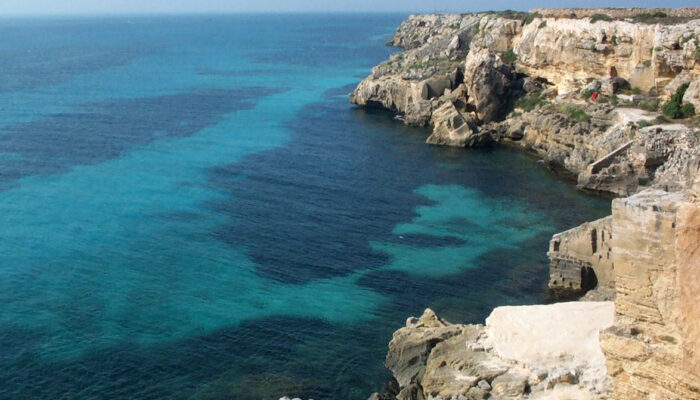
The Aegadian or Egadi islands (not to be confused with the Aegean islands situated between present day Greece and Türkiye) is a small archipelago of islands around 20 km off the Western coast of Sicily. These islands are most known for their historic industries, namely for a type of rock quarried from the largest island (Favignana) and the large tuna fishery around the island. In recent times this area has been made a marine protected area and the quarrying has stopped, and tourism now makes up a considerable portion of the island economy.
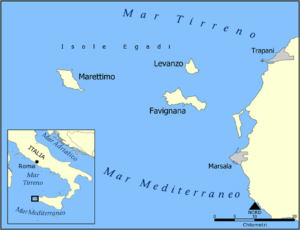
Fig.1) A map of the Aegadian islands, (credit: Di 92bari – Opera propria, CC BY-SA 3.0, https://commons.wikimedia.org/w/index.php?curid=18617126)
Favignana island
Favignana is the largest island in the archipelago and poetically known as the “butterfly” of the Egadi Islands due to its shape and a region of higher elevation (~300 m) (Mount Santa Caterina) running North-South through the centre of the island, which also stands out as the only considerable elevated region on the island. The whole island chain is the result of tilting of the Apenninic–Maghrebian Fold and Thrust Belt uplifting the region above sea-level (Pappalardo et al., 2020). Much of the rest of the island is tableland indicative of limestone rock and karst landforms. These rocks are made up of mostly young Pliocene rocks or younger or older carbonates from the mesozoic (Fig. 2). This geology has shaped the island and played its part in the history of Italy in several key ways.
Tufo
The quarries of Favignana produce a rock known locally as tufo which translates to tuff; but this is a misidentification. Tuff is a rock made up of compacted and cemented volcanic ash. For a rock to be considered tuff, it must be primarily composed of volcanic ash. The whole archipelago is carbonaceous rock and the nearest volcano is in Sicily itself all on the far east of the Island, hundreds of kilometers away. Tuff is also often confused with Tufa which is a form of limestone which precipitates from water directly either by biological action or by volcanic action.
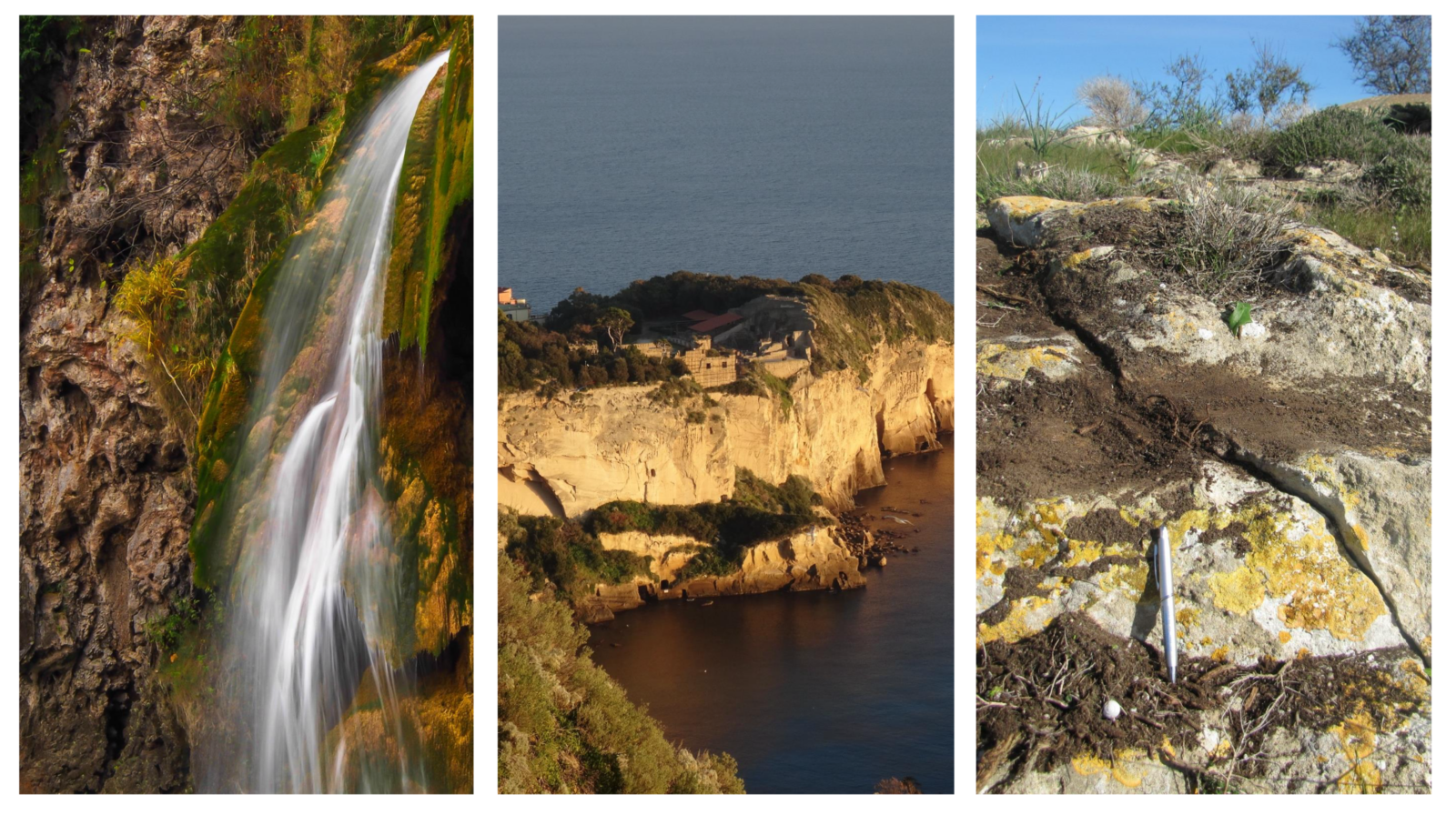
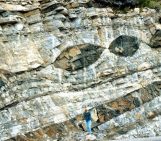
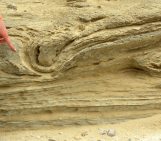
Fig. 2) Left: Tufa barriers at Plitvice Lakes National Park in Croatia. Center: A Tuff cliffline in Trentaremi, Southern Italy. Right: Pleistocene Calcarenites of Western Sicily, a neighbouring outcrop of the Favignana calcarenites. (Image credits Nino Krvavica, Giuseppe Esposito, Giovanni Barreca all distributed via imaggeo.egu.eu respectively)
Confusingly, the “Tufo” rock on Favignana is neither of these! The official term for the rock on Favignana is Calcarenite, which is a type of limestone, but it is not formed by volcanic or freshwater processes. Rather it is formed by the deposition of calcareous material, such as shells, corals, foramanifera, and abiotic carbonate material. It is essentially a carbonaceous sandstone and is therefore quite rich in marine fossils.
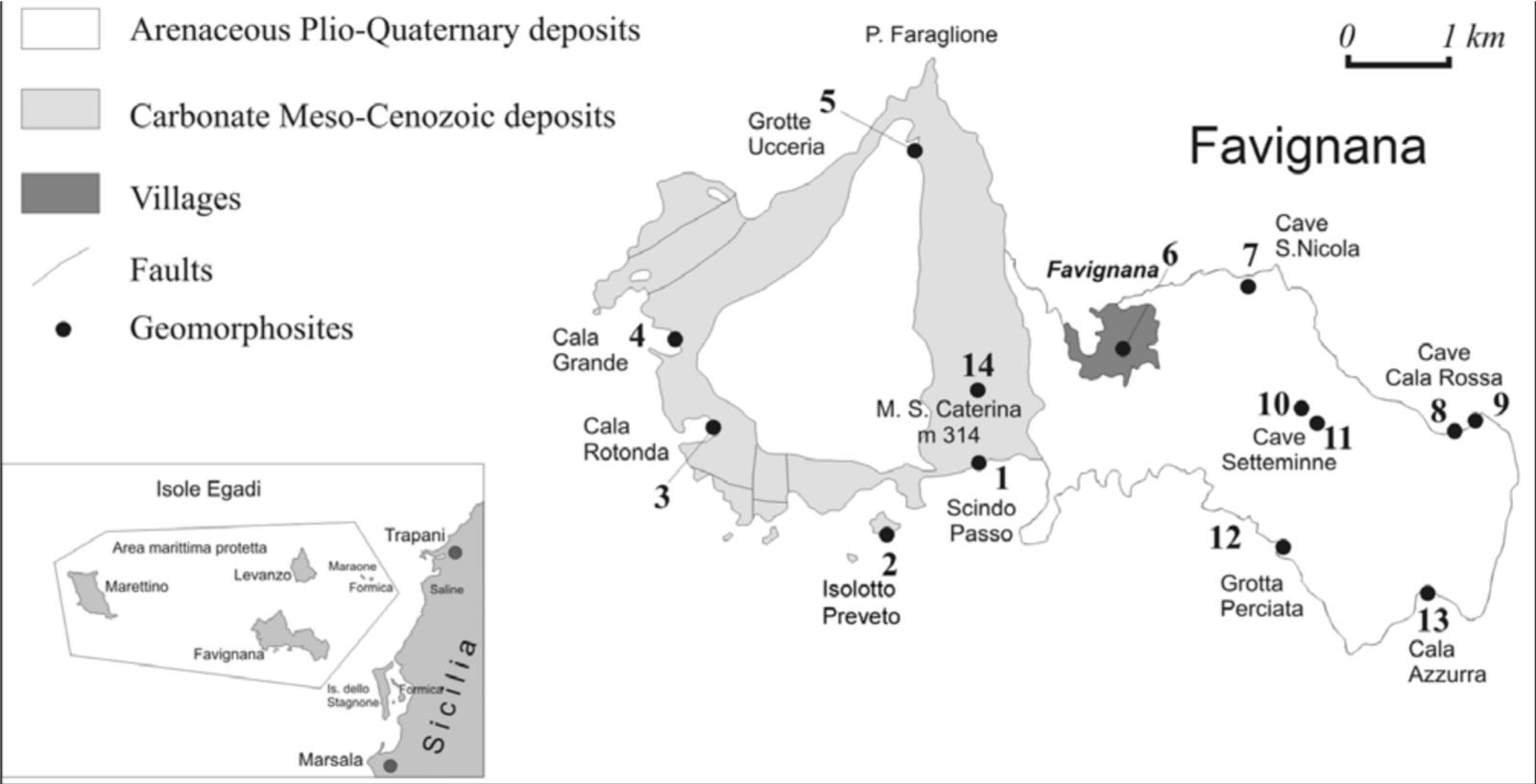
Fig. 3) Schematic geological map of the Egadi Islands, (Massoli-Novelli 2005)
The tufo quarries are located in the east of the island and exploit the Arenaceous deposits coloured white in Fig. (3). This rock has been quarried for over two millenia with the peak of extraction occurring in the 20th century due to gradual industrialisation of the process of cutting and transportation. The miners had two methods for extraction of the rock: Either by finding an outcrop and cutting down through the strata to produce an open pit like a traditional quarry or by beginning from the shoreline and cutting into the island from the side. Both means were widely used, however it appears the second method was more favourable where it was possible as it made export of the quarried stone much easier since the distance to cargo ships was far shorter on the coastal quarries. This has left a considerable mark on the landscape of the island as can be seen in Fig 4.
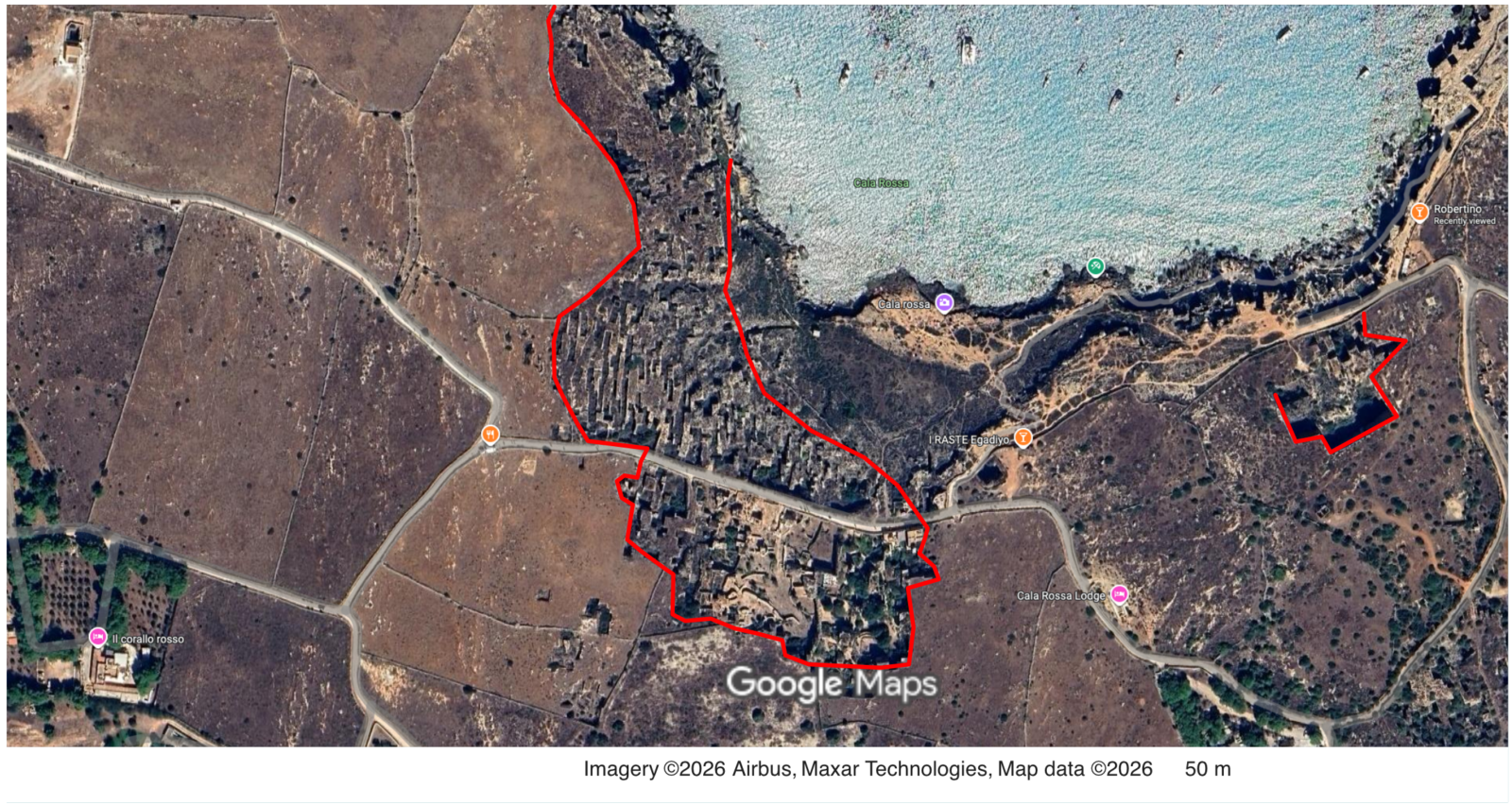
Fig. 4) A satellite image of a quarry in E. Favignana with a red highlight to show the rough extent of the quarrying activites there (credit, Imagery ©2026 Airbus, Maxar Technologies, Map data ©2026 50 m)
The rock was used for construction throughout the island and across the Mediterranean. It was relatively soft so easy to work and use, and was used to make one of the most iconic buildings on the island, the castle of Santa Caterina which was initially built in the 10th Century but regularly upgraded by various occupiers of the island. Built on one of the highest points on the archipelago the castle has an unbroken view of almost the entire island.
This ancient castle plays a role in the Risorgimento (Unification of Italy) and the formation of the Kingdom of Italy itself. It was used as a prison by the Bourbon’s during their rule over the Two Sicilies in the 19th century, holding sympathisers and allies of Giuseppe Mazzini’s growing Republicanism movement, which the famous general and revolutionary Guiseppe Garibaldi fought for also. In October 1960 Garibaldi and around 1000 men, launched an attack on Marsala in W. Sicily (Fig. 1). This was a key battle in the war of Italian unification and allowed Garibaldi to free fellow republican supporters from prison in Favignana and continue his campaign across Sicily, eventually removing the Spanish royalty from the leadership of the Two Sicilies.
Favignana Island, an island that was once an industrial and military stronghold of Southern Italy for many years, is now somewhat a bastion of ecology and environmental protection. The archipelago is now home to an extensive marine protected area (Pacifico et al., 2026) and one of the old quarries has been turned into a botanical garden the “Giardino dell’Impossibile“, named because many thought the attempt to convert a limestone quarry into a lush garden would be impossible.
References
Favignana Island, WIkipedia (https://it.wikipedia.org/wiki/Isola_di_Favignana), accessed on 6.3.2026