ST
Solar-Terrestrial Sciences

cosmic rays

On the correlation and interactions of space weather with biological indicators
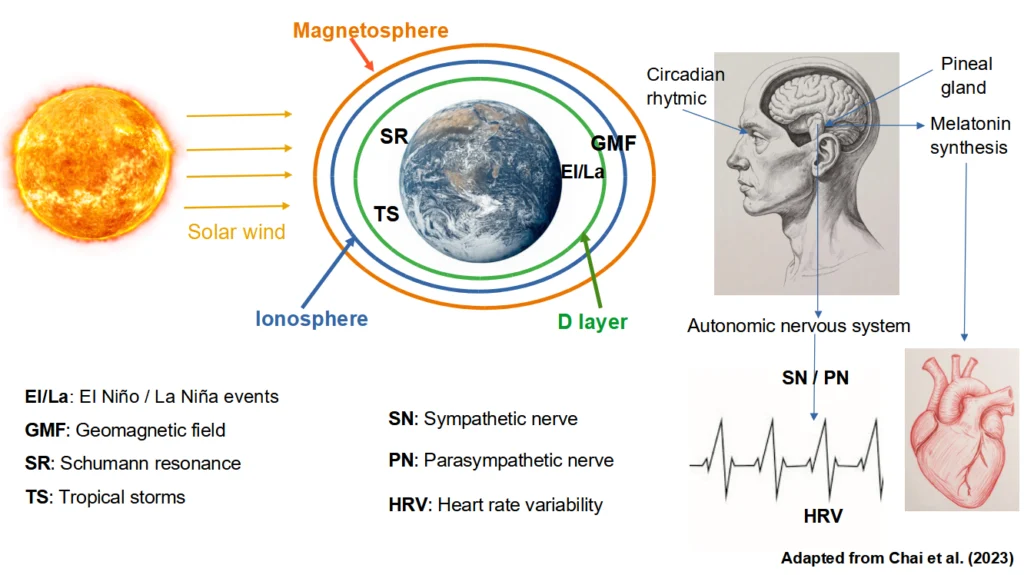
On the correlation and interactions of space weather with biological indicators
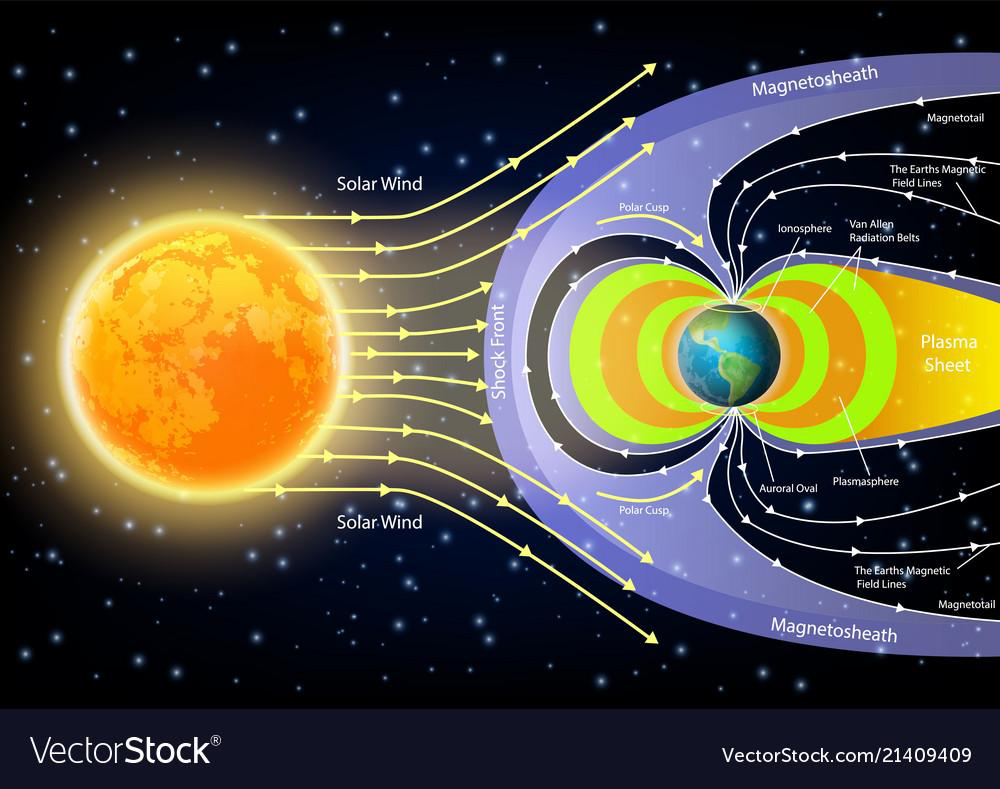
1. Introduction Space weather is significantly affected by geomagnetic disturbances (GMDs) that occur during or after intense solar events such as coronal mass ejections (CMEs), which expel substantial amounts of electromagnetic particles into interplanetary space. Most of these particles collide with the magnetosphere (the outermost region of the atmosphere) where the solar wind (continuous flow …[Read More]

Assessing the impact of chlorine ions on solar proton event induced ozone loss

Assessing the impact of chlorine ions on solar proton event induced ozone loss

  Particle Precipitation High energy particles (e.g. electrons and protons) that precipitate at high latitudes can alter the chemical composition of the atmosphere by different photochemical reactions. This mainly happens due to primary collision processes and subsequent ion and neutral-chemistry reactions. Such reactions ordered by increasing energy are, for example, excitation, photo-dissociation, photo-ionization and dissociative …[Read More]