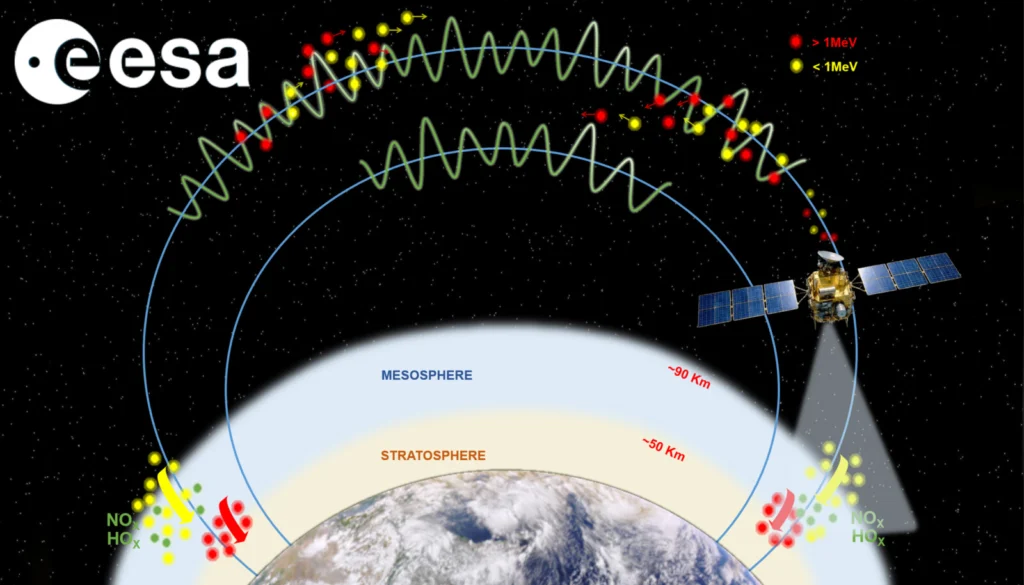
Are you working on the magnetosphere, ionosphere, atmosphere, or space weather? We invite members of the scientific, operational, and applied user communities to contribute to a community survey that will help shape a New Earth Observation Mission Idea (NEOMI) Study of Energetic Particle Precipitation (SEEP). Earth’s atmosphere is not isolated from space. Invisible streams of energetic particles c ...[Read More]
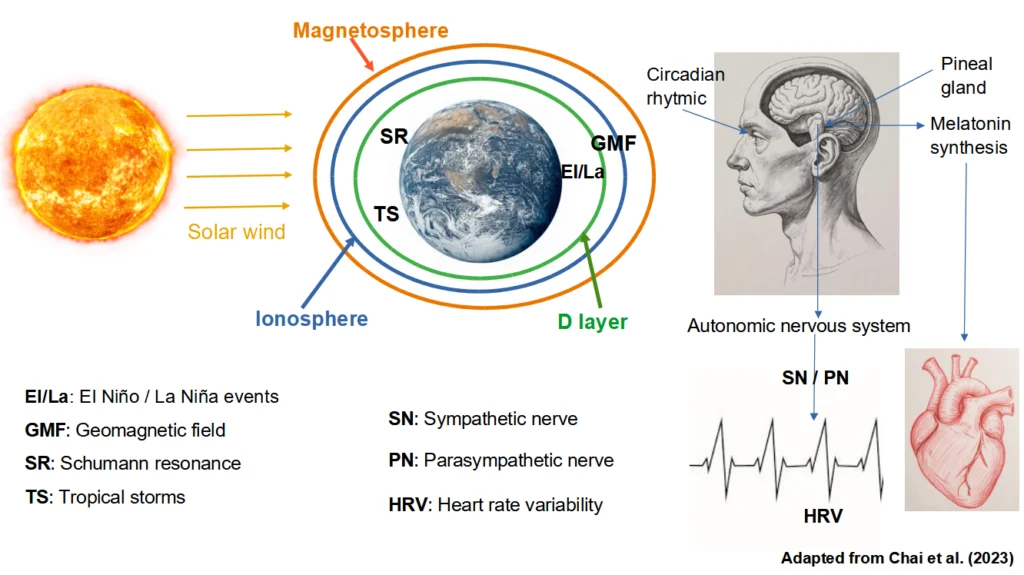
On the correlation and interactions of space weather with biological indicators
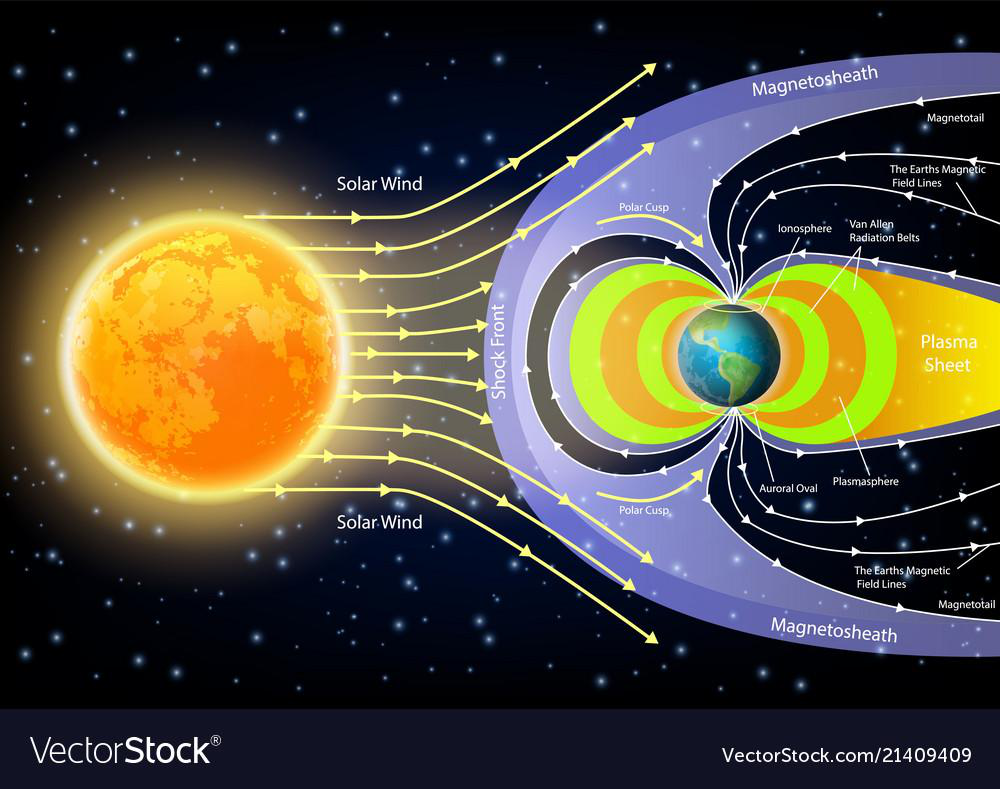
1. Introduction Space weather is significantly affected by geomagnetic disturbances (GMDs) that occur during or after intense solar events such as coronal mass ejections (CMEs), which expel substantial amounts of electromagnetic particles into interplanetary space. Most of these particles collide with the magnetosphere (the outermost region of the atmosphere) where the solar wind (continuous flow ...[Read More]
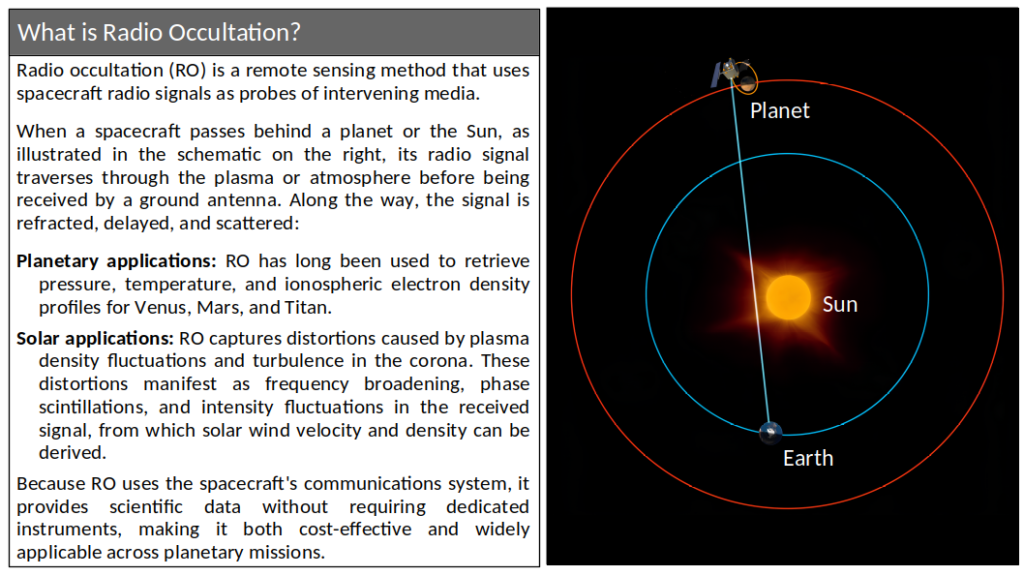
Probing the Solar Wind with Spacecraft Radio Occultation Signals: Chasing a Unified Method to Probe the Sun
Introduction The solar wind, a continuous outflow of charged particles from the solar corona, plays a fundamental role in shaping the heliosphere and driving space weather. Its interaction with planetary magnetospheres and atmospheres regulates magnetospheric dynamics, influences atmospheric escape, and governs space weather hazards that can affect both space- and ground-based technologies. Despit ...[Read More]
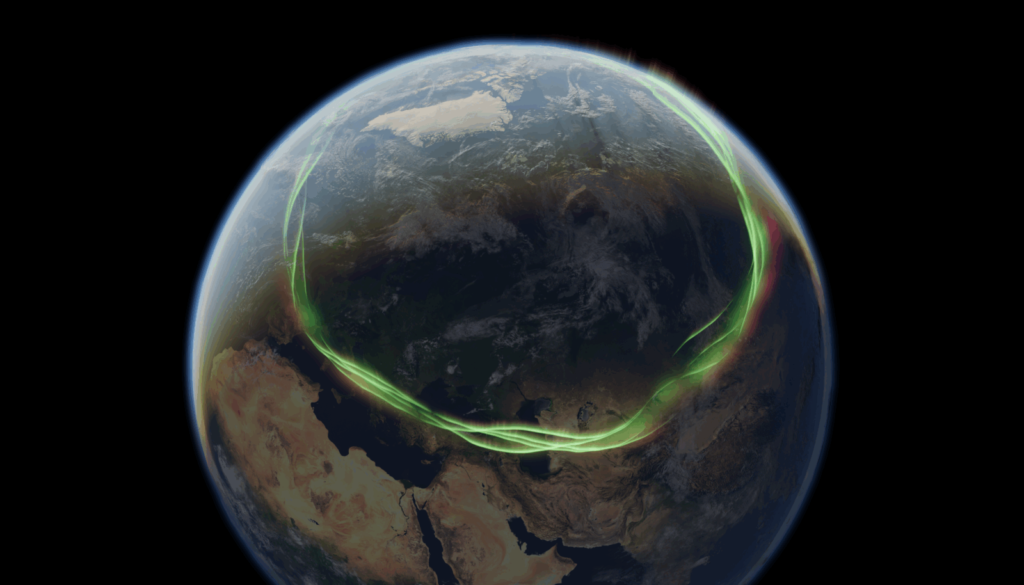
Chasing Auroras 41 Millennia Ago with Agnit Mukhopadhyay and Sanja Panovska
Approximately 41,000 years ago, during the Laschamps geomagnetic excursion, Earth’s magnetic field experienced a significant disturbance. The strength of the magnetic field decreased to only 10% of what it is today, the magnetic poles shifted considerably from the geographic poles, and the magnetosphere—the protective layer surrounding our planet—became smaller and distorted in previously unvisual ...[Read More]
AGATA: Advancing Polar Science through Multi-Instrument Integration and Collaboration
Scientific research has long recognized that solar-terrestrial interactions play a crucial role in shaping the polar atmosphere, impacting both climate dynamics and atmospheric coupling across different layers. Understanding these interactions is key to unraveling their far-reaching effects on Earth’s climate, space weather, and global atmospheric processes. The recognition of these critical proce ...[Read More]
Impact of upper atmosphere and ionosphere associated with an extremely explosive eruption of the Tonga volcano
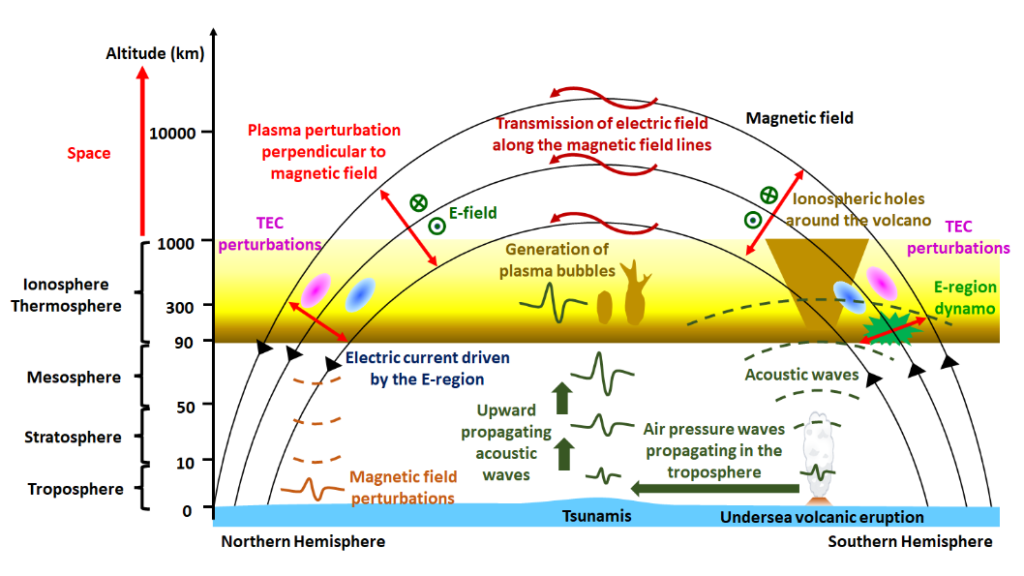
1. Introduction Severe natural phenomena of geophysical, hydrological, and meteorological origins cause natural hazards that negatively impact human activity or the environment. Many people living on the earth suffer from natural hazards every year. Although we can predict some natural hazards (e.g., typhoons) in near real-time, forecasts of the geophysical natural hazards such as large earthquake ...[Read More]
Assessing the impact of chlorine ions on solar proton event induced ozone loss
Particle Precipitation High energy particles (e.g. electrons and protons) that precipitate at high latitudes can alter the chemical composition of the atmosphere by different photochemical reactions. This mainly happens due to primary collision processes and subsequent ion and neutral-chemistry reactions. Such reactions ordered by increasing energy are, for example, excitation, photo-dissoc ...[Read More]
Exploring Magnetosheath Jets and their dependence on Solar Wind structures
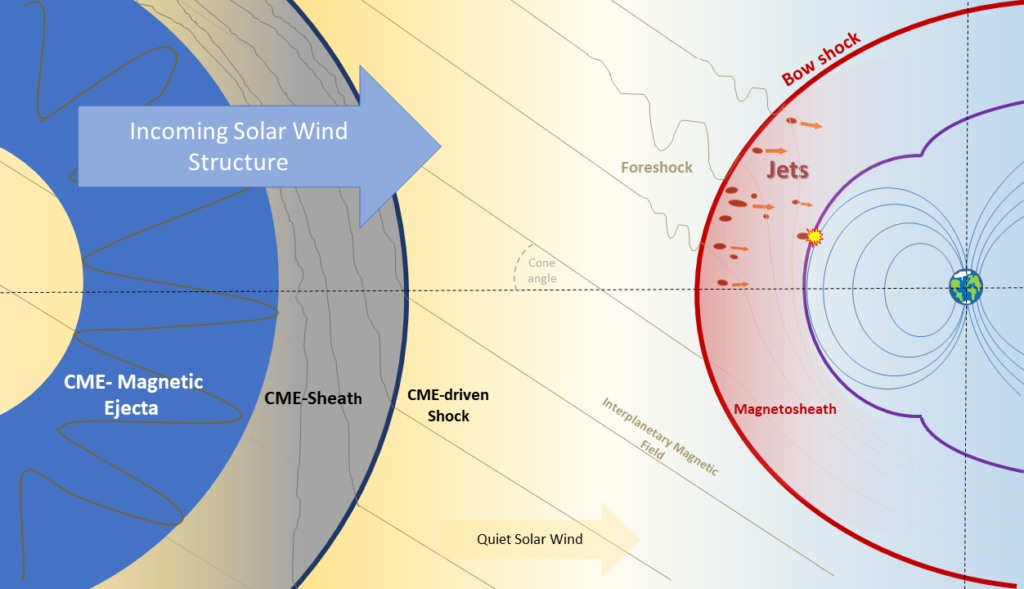
Dayside of the Earth’s magnetic field Our understanding of the relationship between Earth’s magnetic field and the particles from the Sun that constantly bombard it, known as the solar wind, has significantly advanced in recent decades. The availability of numerous spacecraft measurements has provided valuable insights into this interaction. The solar wind, composed of high-speed particles c ...[Read More]
Why faculae “vanish” on active Suns
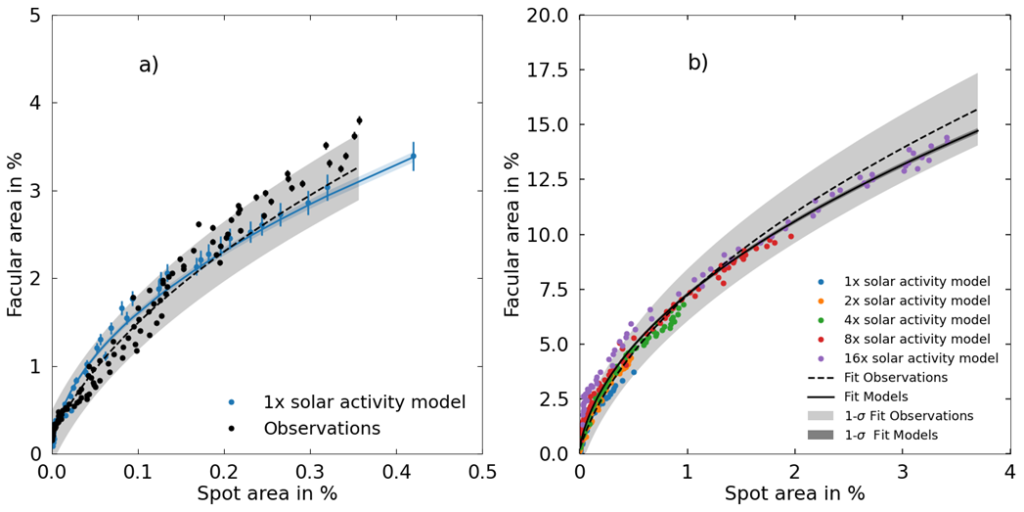
The Earth’s primary energy source is the radiative energy flux (i.e., the Total Solar Irradiance, TSI) from the Sun. Understanding the TSI or the solar irradiance output in particular wavelengths is important, as it is crucial for sustaining life of metabolisms on Earth and in answering the question of how life emerged on Earth. It has been shown that magnetic activity on the solar surface is one ...[Read More]
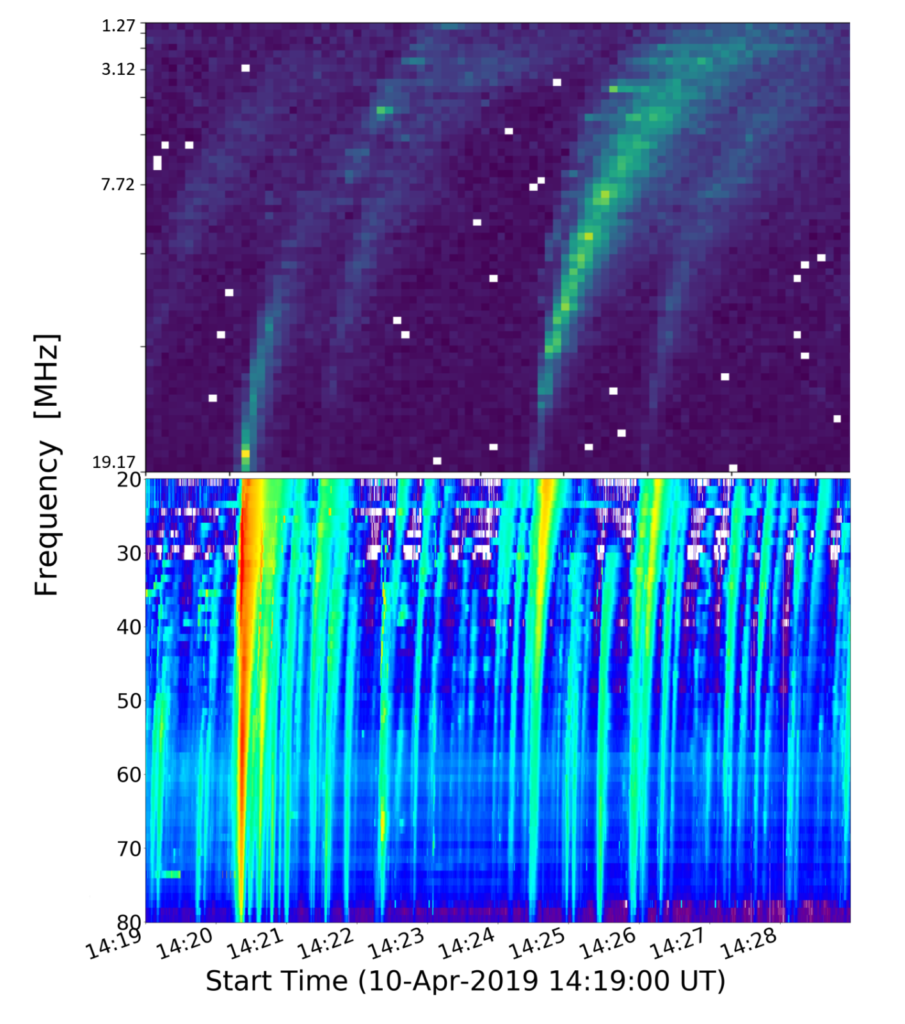
Employing J burst observations made by LOFAR to determine the properties of large coronal loops
Large coronal loops around one solar radius in altitude are an important connection between the solar wind and the low solar corona. However, their plasma properties are not well studied, as standard X-ray and UV techniques are not suited to these low-density environments. How does temperature, pressure, and magnetic field strength evolve along these loops? Observable structures in radio emission ...[Read More]