The 8th edition of the Geochemistry, Mineralogy, Petrology and Volcanology division’s early career scientists talks (a part of the EGU Campfires) will be on Wednesday 17th February 4pm CET! Our speakers are: Andres Sandoval (PhD Student @ University of Palermo) – The composition of fluids stored in the Central Mexican lithospheric mantle: inferences for …[Read More]
Division blogs
Should I… do a coding PhD when I don’t have much experience coding?
“The ideal applicant will have a strong background in coding.” I’m not sure if those were the exact words that advertised my PhD project, but a requirement of coding ability was certainly heavily implied. We’re used to hearing stories about job requirements in the professional world, but in my experience at least, we think much …[Read More]
TS Must-Read – Boyer & Elliot (1982) Thrust systems
The now-classic paper of Boyer & Elliott (1982) presented a novel and general geometric framework to study thrust systems. The framework describes thrust surfaces by lines of contact between thrusts, or branch lines, and lines of thrust termination, or tip lines, and examines how they join into imbricate fans or duplexes. The framework allows accurate …[Read More]
Did you know … that liquid water can be held within a glacier?
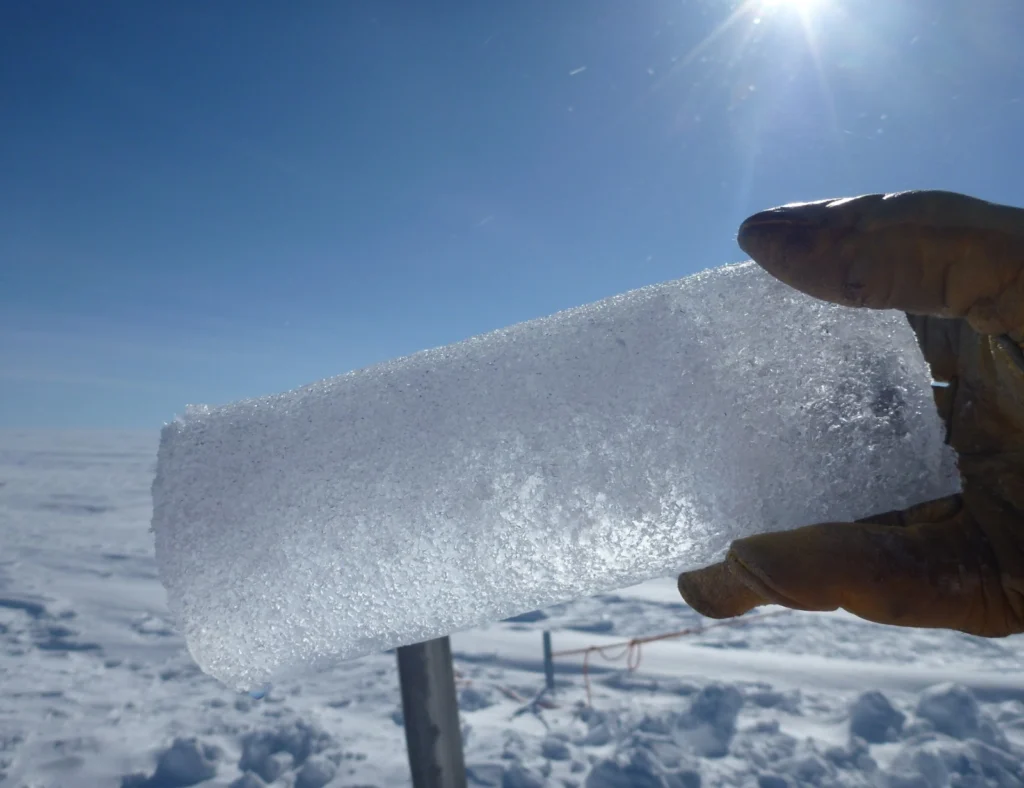
Hidden below the surface of some glaciers, liquid water can be found within what is called the firn layer – the upper layer of a glacier where snow compacts into glacier ice. Liquid water may persist there for up to many years, forming what scientists call “firn aquifers.” While observations of seasonal firn aquifers have …[Read More]
The most-read NPG 2020 paper: “Effects of upwelling duration and phytoplankton growth regime on dissolved-oxygen levels in an idealized Iberian Peninsula upwelling system”
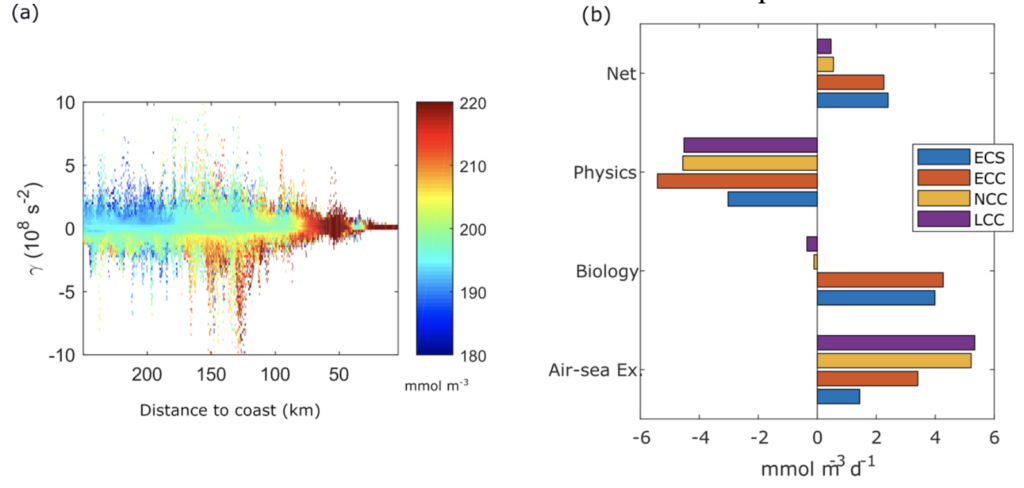
An emerging problem brought by climate change is the on-going deoxygenation of the world’s oceans. The fact that concentrations of dissolved oxygen have been/are declining in both open-ocean and coastal waters is becoming a major scientific and societal concern raised in the Kiel Declaration and in the IUCN (International Union for Conservation of Nature) 2019 …[Read More]
Geoscience for the Future with Dr Natasha Dowey
The Geosciences are at the forefront of the fight against climate change. It is Geoscientists who discovered it and explained it, and it is Geoscientists who work to understand it and its consequences. Geoscientists undoubtedly will be amongst those who will lead us to the solutions. However, it often seems that Geoscientists are solely associated …[Read More]
The Sassy Scientist – Sterling Subduction
Fausto is very much preoccupied with subduction zones. The omphalos of his working life, or better yet, his paltry existence, he lacklusterly focuses on a single subduction zone. A proclivity for narrow-mindedness, surely. Yet there are ever so many to rejoice in. He thus warbles: What is your favourite subduction zone? Dear Fausto, I can …[Read More]
Janet Vida Watson (1 September 1923 – 29 March 1985): The woman who could translate the story of Precambrian rocks into a crystal-clear message
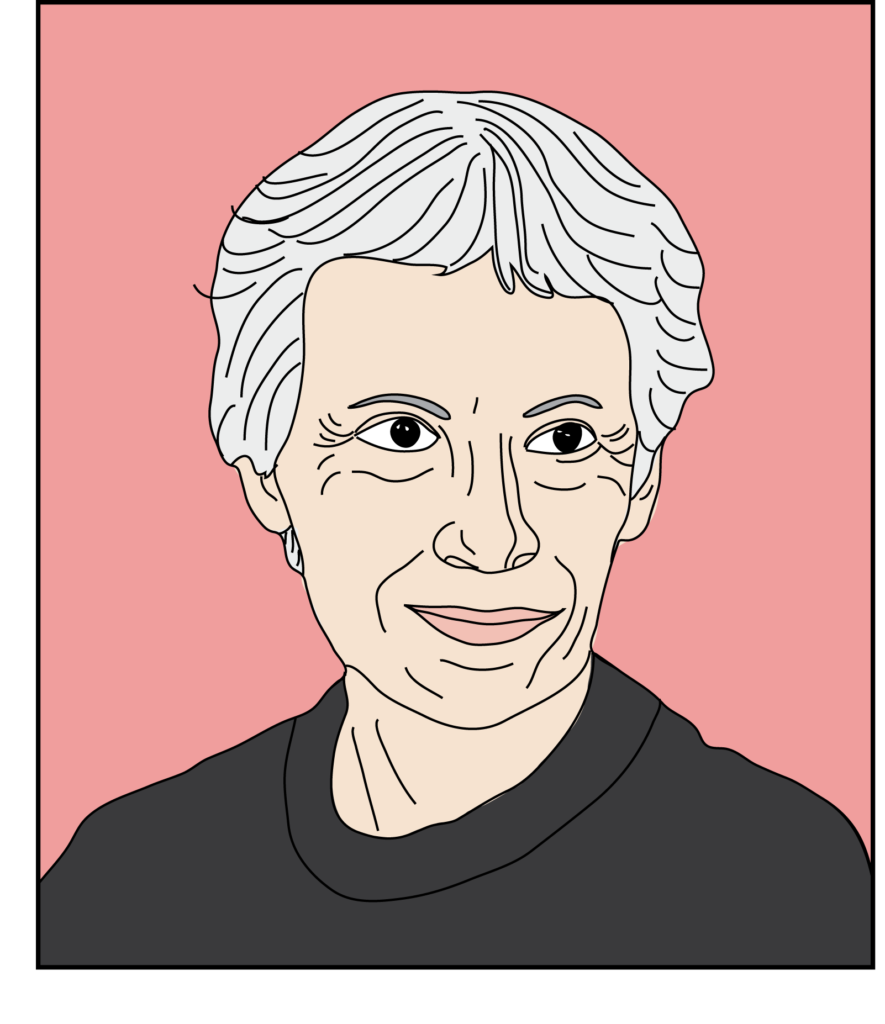
On a late summer day in September 1923, Janet Vida Watson was born. With a father working in palaeontology and a mother who did research in embryology until her marriage, Janet grew up with science all around her. She went to South Hampstead High School, known for its science teaching and continued her education in …[Read More]
The acidity of atmospheric particles and clouds
Many of us learned about acidity, or pH, in high school chemistry. We learned that acids like HCl could dissociate into H+ and Cl- and the activity of those H+ ions defined the acidity. In the atmosphere, the same basic definition of acidity, or pH on the molality scale, applies to aqueous phases like suspended …[Read More]
Thermodynamics and Geodynamics: The perfect couple?
In preparation for Valentines day, Bob Myhill explores the potential for close partnership (and even love?) between the geodynamics and thermodynamics communities. Much of Earth and planetary science relies in some way on thermodynamics. This is not a surprise; the elegance1 of its premises makes thermodynamics a robust starting point for many investigations, and the …[Read More]