We are happy to announce the GSA Penrose Conference on Climatic controls on continental erosion and sediment transport (CLAST2019), 4-10 August 2019, Juneau, Alaska (USA). Key challenges remain in recognizing and reconciling how climatic and earth surface process mediate erosion independently of solid earth forcing. The relationship amongst climatic, erosional, and transport processes are exceedin ...[Read More]
Solar-Terrestrial Sciences
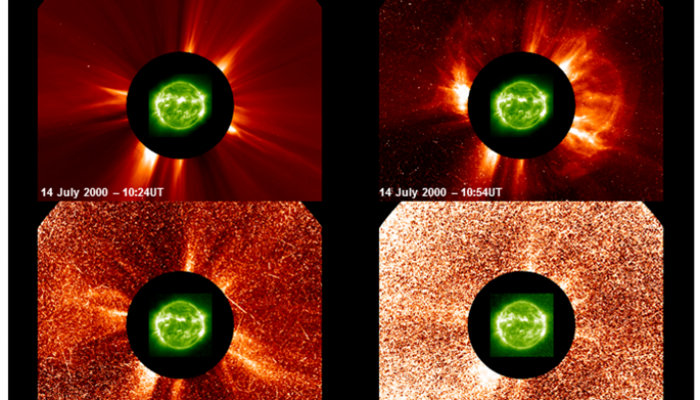
Web-based Tools for Forecasting Solar Particle Events and Flares
The presence of Solar Energetic Particles (SEPs) poses a serious health risk to humans in space, can result in increased radiation doses for high-latitude aircraft flights and constitutes a serious hazard for the micro-electronics and other hardware elements of satellites, aircraft and launchers. These groups of end users need reliable forecasts of possible enhancements in the radiation flux level ...[Read More]
Stratigraphy, Sedimentology and Palaeontology
Strati 2019
The abstract submission to the third edition of the International Congress on Stratigraphy (STRATI) is now open. The congress will be held in Milano (Italy) from the 2nd to the 5th of July 2019. STRATI 2019 follows the first edition held in Lisbon (Portugal) in 2013 and the second edition organized in Graz (Austria) in 2015. Several scientific sessions have been proposed covering a wide range of s ...[Read More]
Stratigraphy, Sedimentology and Palaeontology
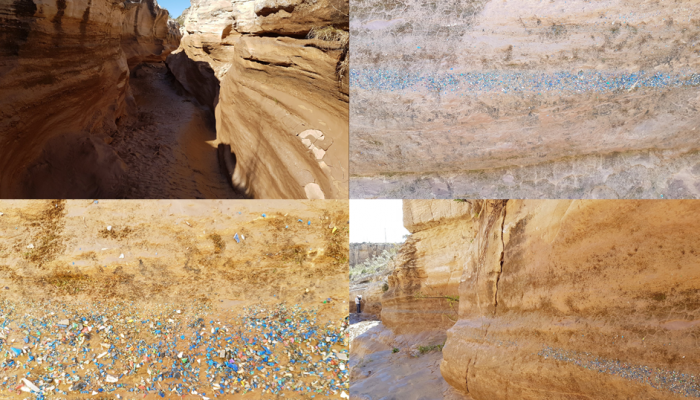
The Plastocene – Plastic in the sedimentary record
The University of Hull was privileged to host the annual British Science Festival in 2018. One of the key events was the Huxley Debate, which brings together world-leading experts to discuss a pressing issue facing society. The theme in Hull was “what do we do about ocean plastics?”. As part of the discussion, Professor Dan Parsons, Director of the Energy and Environment Institute, suggested that ...[Read More]
Climate: Past, Present & Future
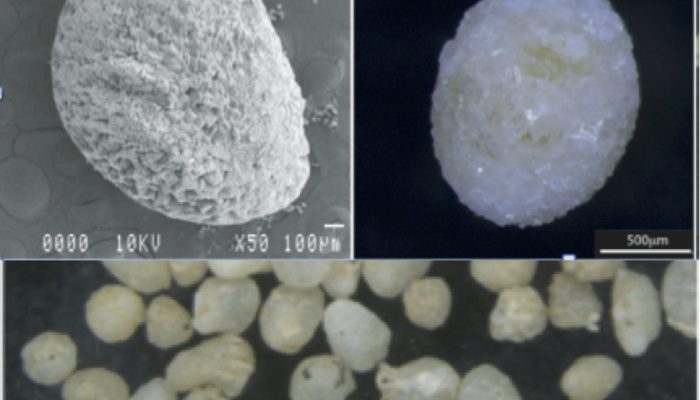
How earthworms can help us understand past climates?
Name of proxy Earthworm calcite granules (ECG) Type of record Paleotemperature and paleoprecipitation reconstruction; radiocarbon dating Paleoenvironment Continental environments – loess/paleosol sequences Period of time investigated Mostly Last full Glacial cycle – from 112,000-15,000 years Before Present (BP) (or older depending on the preservation of the granules). How does it work? Earth ...[Read More]
Solar-Terrestrial Sciences
FOXSI: The NASA mission that combines rockets, flares, and X-rays
For decades, high-energy aspects of the Sun have been studied using indirect imaging and spectroscopy in hard X-rays (HXR) by the pioneering RHESSI spacecraft. However, advanced understanding of small-scale energy releases and particle acceleration in the outermost layer of the Sun require better sensitivity and dynamic range, which can be achieved by using direct focusing X-ray optics. Almost six ...[Read More]
Stratigraphy, Sedimentology and Palaeontology
Mining the Carboniferous in the Ruhr area (Germany)
During the upper Carboniferous period (Namurian, Westfalian and Stephanian) large areas of central western Germany were covered by coastal swamp forests dominated by Lepidodendron und Sigillaria. Periodic marine and fluvial transgressions caused the swamps being regularly buried by siliciclastic material, resulting in up to 5500 m thick successions of alternating organic-rich and clastic-rich sed ...[Read More]
Climate: Past, Present & Future
God does not play DICE – but Bill Nordhaus does! What can models tell us about the economics of climate change?
Climate change has been described as “the biggest market failure in human history”[1]. Although fuel is costly, emitting the by-product CO2 is for free; yet it causes damages to society. In other words, those who benefit, by using the atmosphere as waste dump, do not pay the full costs, i.e. the adverse effects climate change has on societies on a global scale. Can this market failure be cured? Sh ...[Read More]
Solar-Terrestrial Sciences
EGU for Early Career Scientists
This months post is written by the ST Divisions Early Career Scientist representative, Theresa Rexer. Are you ready for the EGU general assembly 2019? Got your abstract ready and submitted? No, what? Too early you say? No funds? As your Early Career Scientist Representative, let me tell you why now is the perfect time to start planning your trip to Vienna in April next year. Especially if you are ...[Read More]
Stratigraphy, Sedimentology and Palaeontology
Brachiopods in a changing planet: from the past to the future
Between the 10thand 14th of September 2018, the 8thInternational Brachiopod Congress took place in the prestigious venue of the University of Milan, after the previous editions held in Melbourne (Australia) in 2010 and in Nanjing (China) in 2015. It was the first time, since its foundation over 35 years ago, that this important conference was hosted in Italy. The Congress was attended by 150 parti ...[Read More]