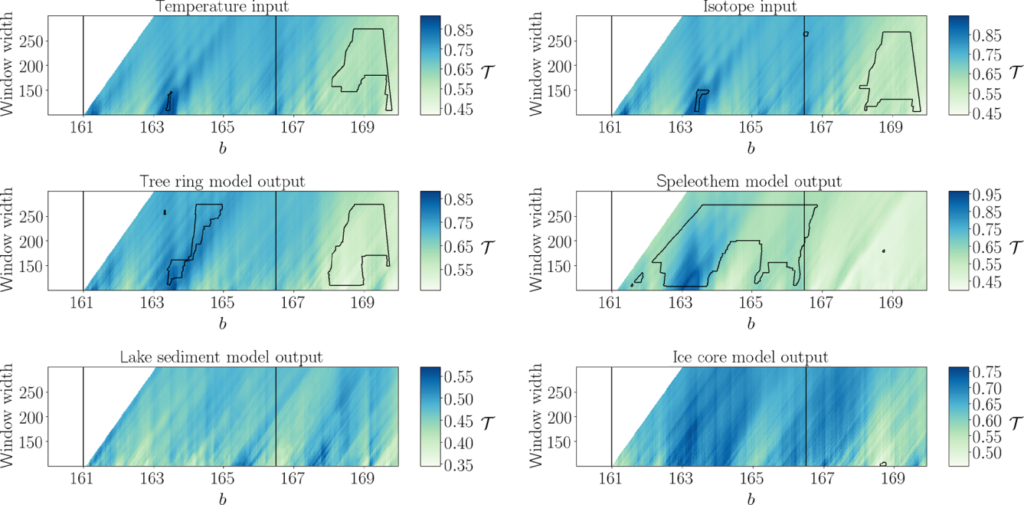
This month the NPG Paper of the Month award is achieved by Jaqueline Lekscha and Reik Donner for their paper “Detecting dynamical anomalies in time series from different palaeoclimate proxy archives using windowed recurrence network analysis” (https://npg.copernicus.org/articles/27/261/2020/). Jaqueline Lekscha did her PhD in physics at the Potsdam Institute for Climate Impact Research and Humbold ...[Read More]
Global warming
Is planting trees a feasible large-scale solution to mitigate climate change?
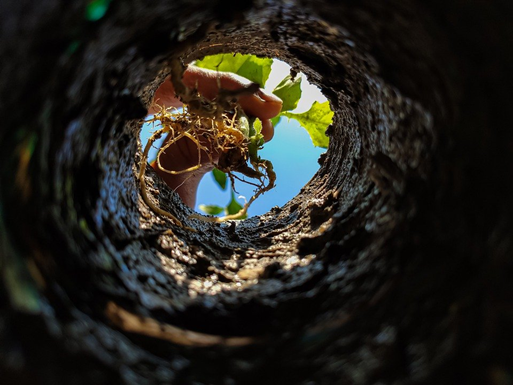
In the last few years it has become a common practice to compensate carbon dioxide (CO2) emissions by planting trees. This idea is simple and rooted on a very basic principle: trees get the energy of sunlight, and by photosynthesis they take water from the ground and CO2 from the air, releasing oxygen in the atmosphere. The CO2 is then stored in trees and surrounding soil. Tree planting efforts ar ...[Read More]
The 2020 extra-tropical monster cyclones and their (possible) relations with climate change
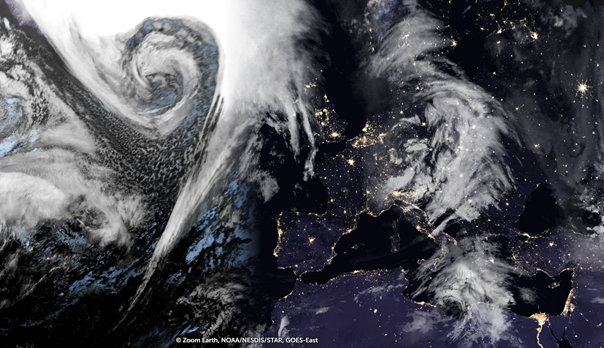
On February 9th, a British Airways Boeing 747 landed in London Heathrow airport just four hours and 56 minutes after its take-off in JFK, New York, setting the shortest flight-time for non-supersonic jets over this route. The jumbo jet took advantage of the fast upper-tropospheric winds associated with an exceptionally strong jet-stream which created tail winds of about 400km/h. Over the United Ki ...[Read More]
Why Bushfires raged out of control across Australia?
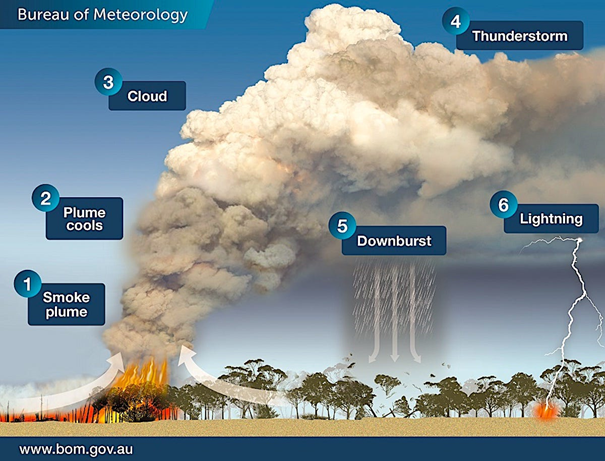
Australian wildfires have burned an impressively large surface and caused the death of at least 24 citizens as well as of numerous animals. This immense disaster raises questions about its linkage with climate change, the possibility of controlling these events and the future of Australian wildlife ecosystems. While the first question will be addressed by soon to come attribution studies, and the ...[Read More]
Medicanes, thunderstorms and Acqua Alta in Venice: what is the role of climate change?
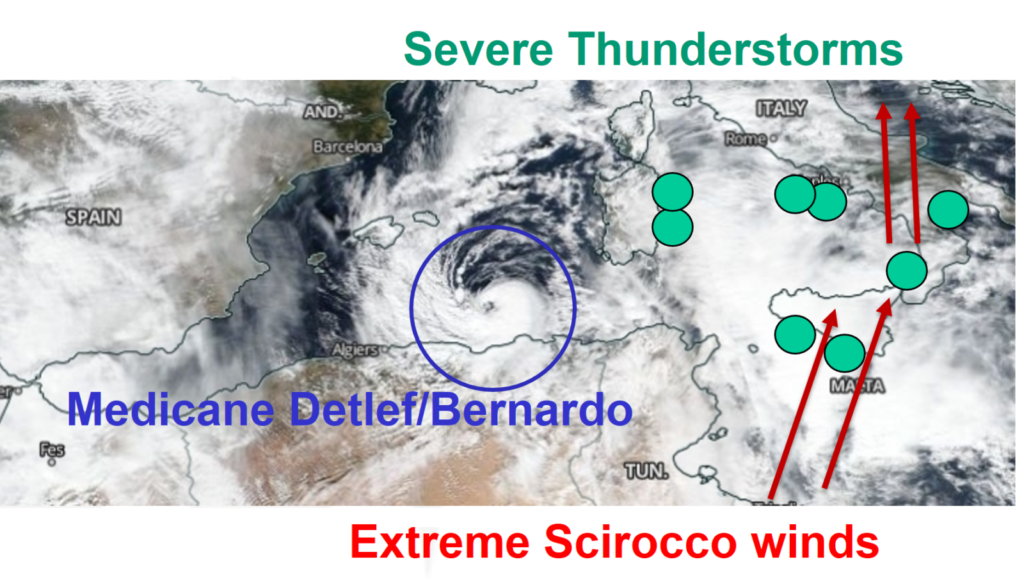
A Mediterranean cyclone, high tides and climate change: these three ingredients made the 12/11/2019 acqua alta event in Venice exceptional. This combination of causes determined what climate scientists define as a compound extreme event, a non-linear mix of factors which led to several and connected extreme weather phenomena in the Mediterranean area. Let us start by the analysis of the atmospheri ...[Read More]
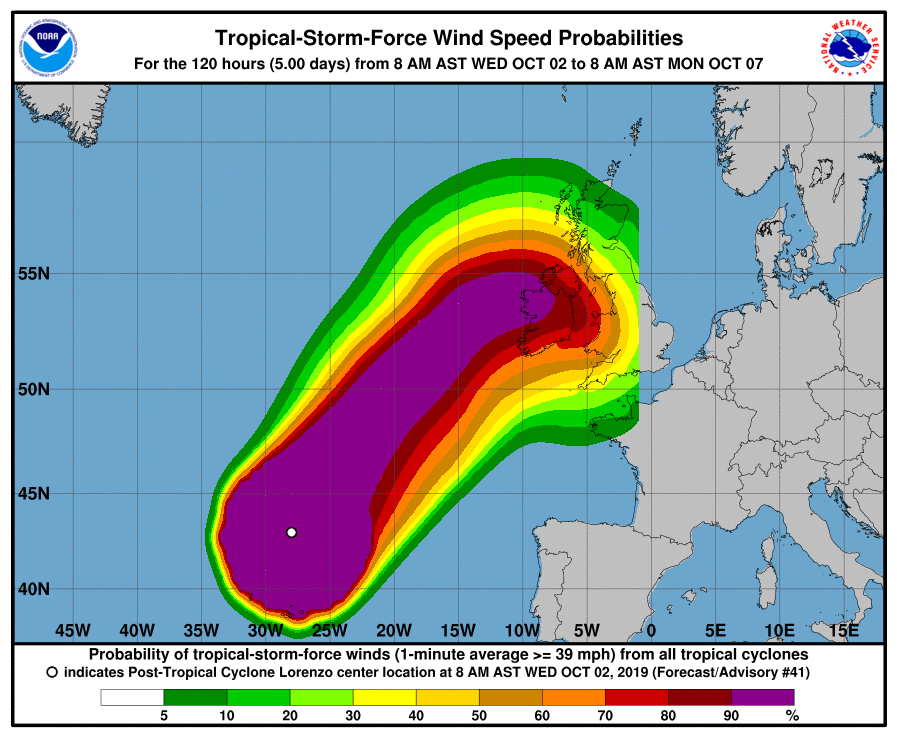
After Lorenzo and Ophelia, should we prepare European coasts for tropical storms and hurricanes?
Autumn is hurricane season in the north tropics and indeed 2019 does not make exception from this point of view. After Dorian hitting Bahamas and North Carolina, the American National Hurricane Center named Lorenzo a tropical depression originating near Capo Verde. On September 25th Lorenzo became a category 1 hurricane, according to the Saffir-Simpson scale. This scale categorizes the hurricanes ...[Read More]
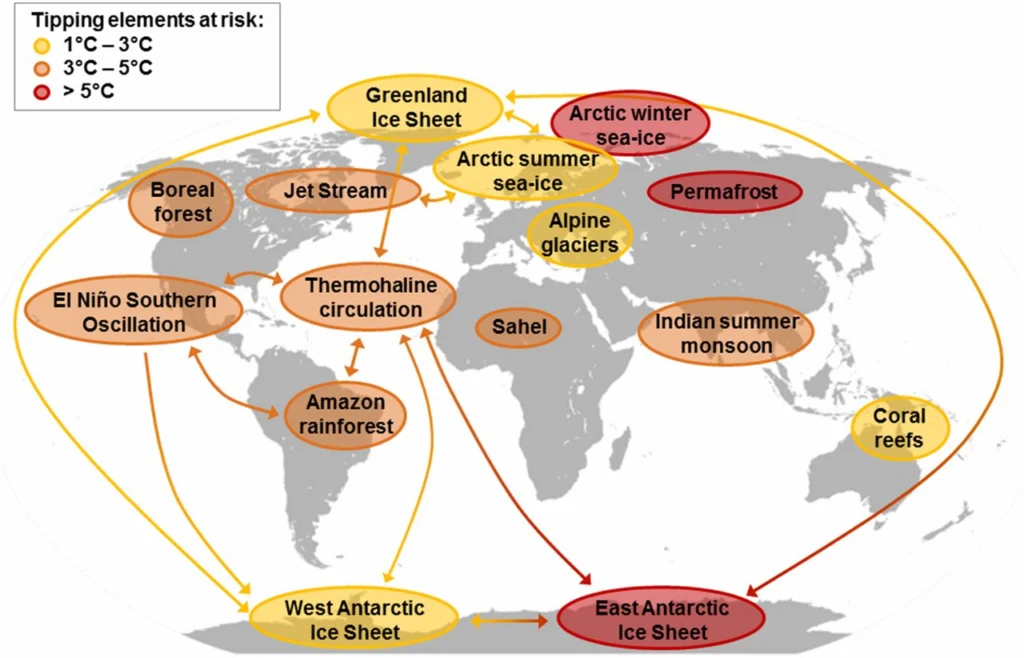
Abrupt Warming could bring our planet a “Hothouse Earth” with catastrophic consequences for our economy and society
Most of us have enjoyed swings in childhood. Some have even tried to swing faster and make a full 360 degrees’ loop. Those who succeeded had a very strange feeling of not being able to predict whether, increasing the energy of the swing, the transition from normal oscillations and 360 loops would happen. Indeed, there is an energy threshold such that the swing goes from oscillations to full loops ...[Read More]
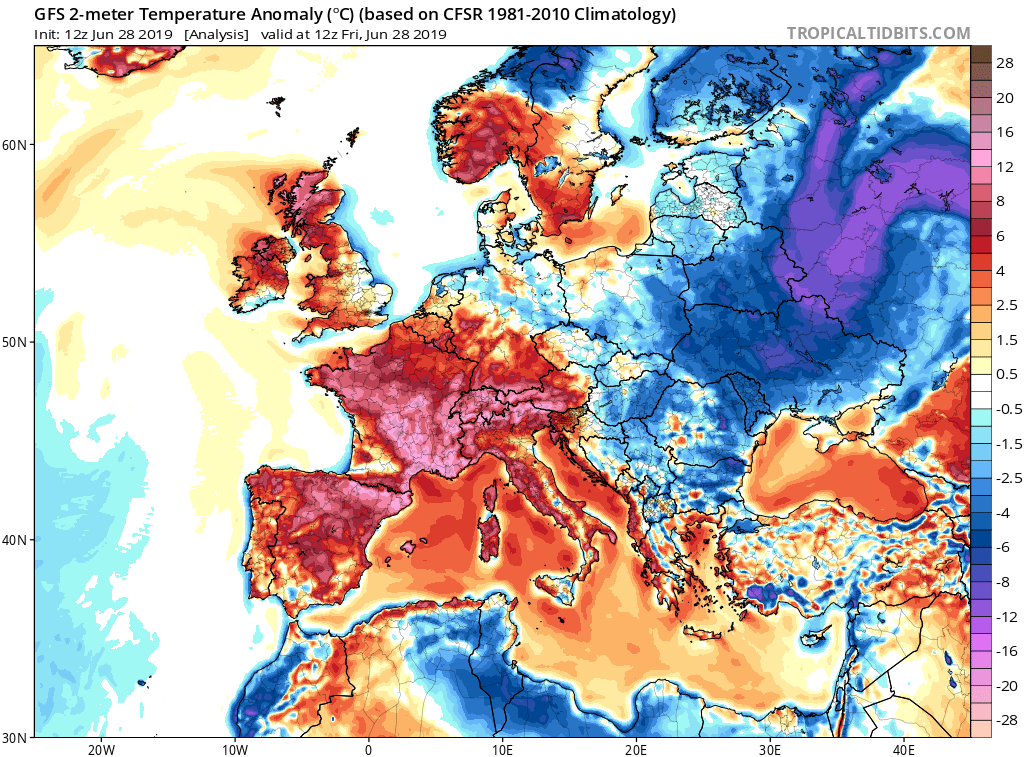
June Heatwave 2019: can we attribute the event to anthropogenic emission?
If August Rodin had lived nowadays, he would have placed his gates of hell (la Porte de l’Enfer) in Gallargues-le-Montueux, where the absolute French temperature record (45.9 °C) was set on June 28th this year. The last week of June has been very hot, not only in the south of France, but overall central Europe: in the Alps, some locations such as Chamonix (France) and Aosta (Italy) experienced tem ...[Read More]