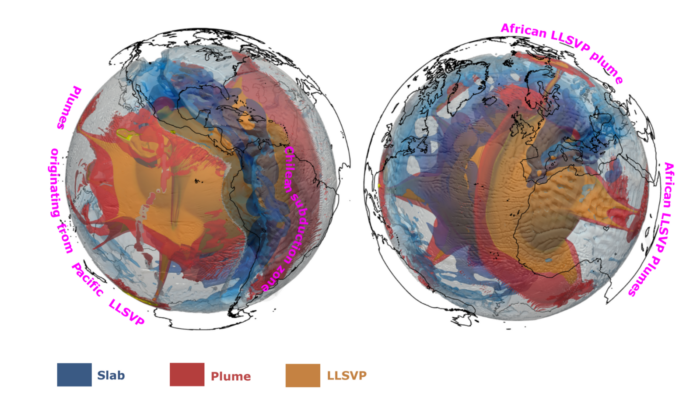
Seismic waves tell us that something unusual is happening in the lowermost few hundred kilometers of Earth’s mantle. Beneath Africa and the Pacific lie two enormous thermochemical structures known as Large Low-Shear-Velocity Provinces (LLSVPs). These “large blobs” are slower to transmit shear waves, but beyond that, their physical nature remains one of the biggest open questions in deep Earth geod ...[Read More]
The courage to be disliked: reflections on peer-review processes
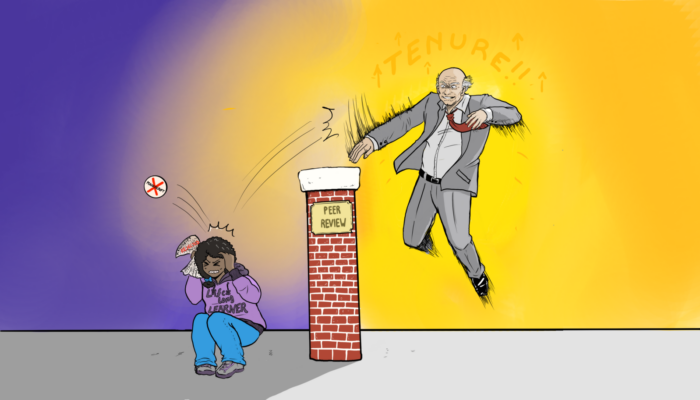
Although often daunting and discouraging, every academic must navigate the inevitable process of peer review. In this week’s post, Jean-Baptiste Koehl, postdoctoral researcher at the University of Oslo (Norway), reflects on what the future of peer review might be. Author disclaimer: The reflections presented here reflect my perspective grounded in my own experience. While peer review is a key mech ...[Read More]
Bored by the Lower Mantle? Think Again!
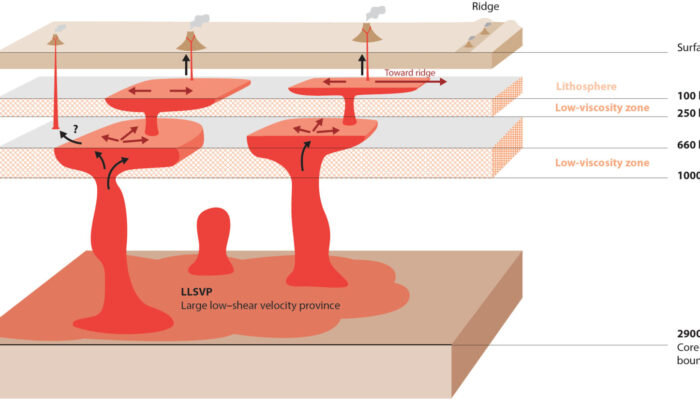
Is the lower mantle boring? For a long time, the lower mantle was thought to be relatively featureless and uniform compared to the more dynamic upper mantle. But recent seismic observations are challenging that idea, especially when we look near the base of the mantle. Recent studies from Maureen Long’s group (Creasy et al. 2017, Wolf et al. 2019, Reiss et al. 2019, Wolf & Long, 2023) and othe ...[Read More]
From Mountains to Oceans: How the memory of ancient orogens guides the rupture of continents
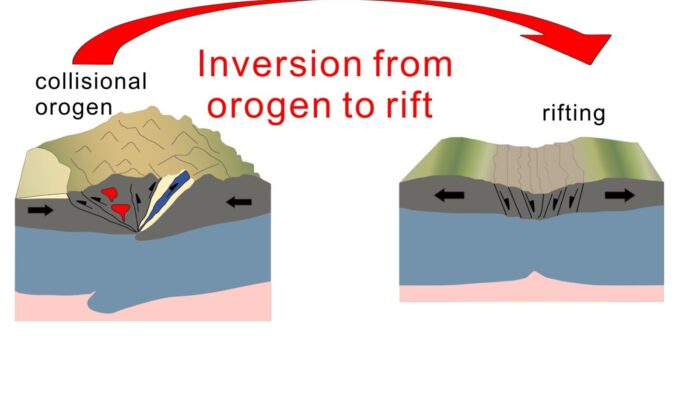
In this new blog, Dr. Kai Li (GFZ Potsdam) talk about his PhD work, where he used accordion numerical models to explore the tectonic history of the South China Sea. His PhD research focuses on the impact of orogenic inheritance on rifts and rifted margins, employing advanced geodynamic modeling techniques. Have you ever tried to fit the west coast of Africa and the east coast of South America toge ...[Read More]
From Rocks to Models: Reconciling Field Geology with Geodynamic Simulations
When reading a scientific paper or a text explaining the physical workings of the Earth, one of the most striking aspects is the methodological approach—sometimes involving numerical models, other times fieldwork and/or rock geochemistry. This diversity of approaches can initially cause some discomfort, a feeling that things are like square pegs in round holes. How can a computer model dialogue wi ...[Read More]
Resisting self-guilt as a PhD student
Self-guilt is a common feeling among PhD students. It often leads us to devalue ourselves more harshly than is fair and to form unrealistic expectations. It is important to understand how it shows up in our daily work, what fuels it, and how we can resist it — because over time, it can quietly undermine both our well-being and our work. The ideas below are the results of group discussions that hav ...[Read More]
What drives the extensional deformation in the central Apennines (Italy)?
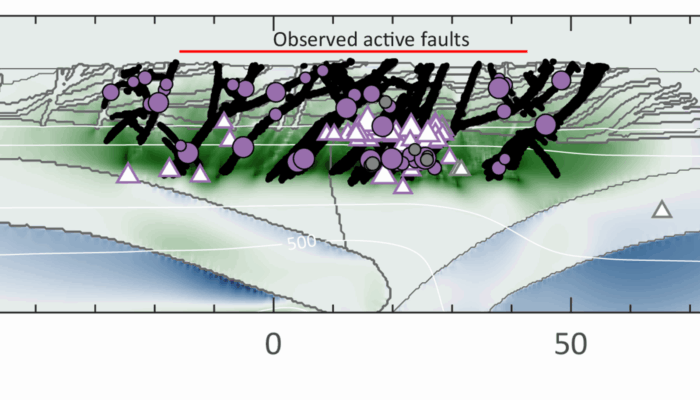
The central Mediterranean is a geodynamically complex region shaped by the interaction of multiple active subduction zones. In Italy, the central Apennines display a distinctive pattern of surface deformation that is proposed to be linked to a slab break-off beneath the area. In this week’s blog post, Maaike, a PhD student at ISTerre in Grenoble, France, explores the key processes driving surface ...[Read More]
The Geodynamics Division @ EGU25
With the EGU General Assembly (GA) less than a month away, attendees should start planning their schedules to get the most out of the week. In today’s blog, Geodynamics (GD) Division Early Career Scientist (ECS) representative Garima Shukla highlights the GD Division’s networking events and provides an overview of key events at the GA. Networking Events: Geodynamics Division What: ECS ...[Read More]
Queer Quarterly: Allyship in the LGBTQIA+ community – what it is, how you can help
Queer Quarterly is the blog series of the EGU pride group, a LGBTQIA+ team of geoscientists engaged to uphold and improve the rights of the community in the EGU organization. This week’s post is dedicated to allyship: how people outside of the community can support our efforts. The term LGBTQIA+ is the abbreviation for Lesbian, Gay, Bisexual, Transgender, Queer, Intersex, and Asexual. The addition ...[Read More]
The Sassy Scientist – Trick or Treat?
Seasons change, and so do our passions. My climate anxiety? Yeah, it’s on the rise, like the global average temperature. So, Mae asks: My research field feels stagnant (or even dying), with limited opportunities, and I have developed new interests. How hard is it to change fields/direction after your PhD? Dear Mae, I mean this is kind of perfect for the wasteful spooky season. What could be scarie ...[Read More]