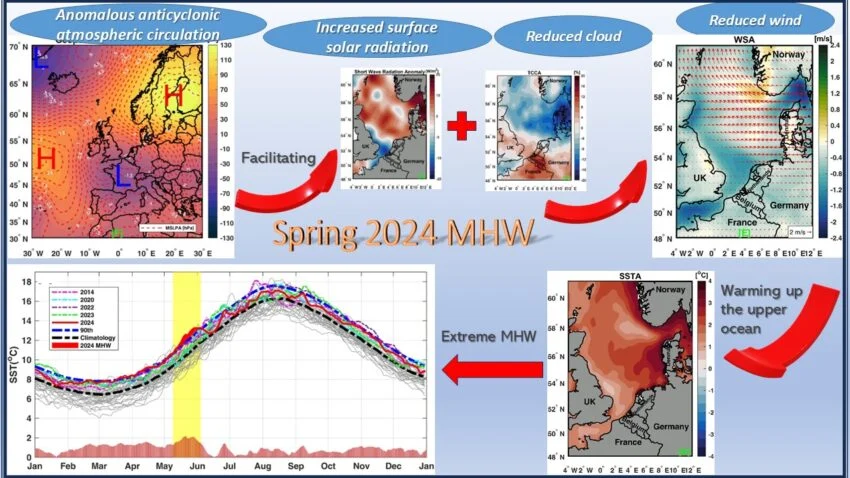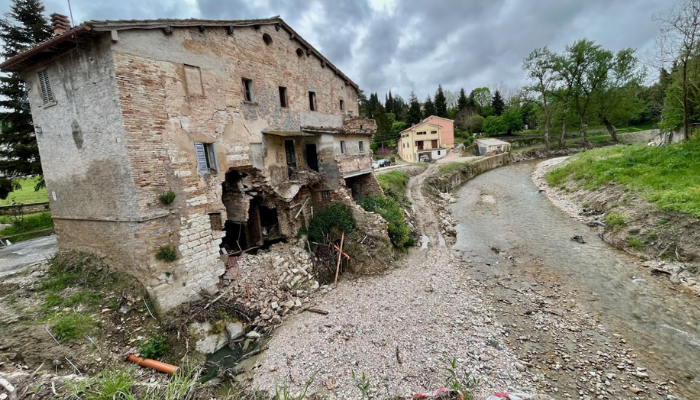
This Halloween, we turn our gaze from fictional haunts to the chilling, rigorous world of paleoclimatology. The paper by Hartmann et al. (2025), published on Climate of the Past, focuses on the implementation of external forcings in a regional climate model around the 1257 CE Samalas volcanic eruption. This paper can be quite the unsettling …[Read More]
Latest posts
Climate: Past, Present & Future
Writing Climate: a blog at the crossroads of Science, Art and Travel
It took me many travels, experiences, and an entire PhD on climate-related topics to realize that all these dots could be connected. How I Perceive Our Warming World is a blog at the intersection of my life passions: travel, art, and climate. It is not about travel, nor about art, nor about climate alone: it …[Read More]
Geodesy
EGU Campfire Geodesy – Share Your Research – 14th Edition
We are excited to announce the 14th edition of Geodesy Campfire – Share Your Research in November. The Geodesy EGU Campfire Events “Share Your Research” give (early career) researchers the chance to talk about their work. We have two exciting talks by our guest speakers, Betty Heller-Kaikov and Pingping Huan. Below, you can find the …[Read More]
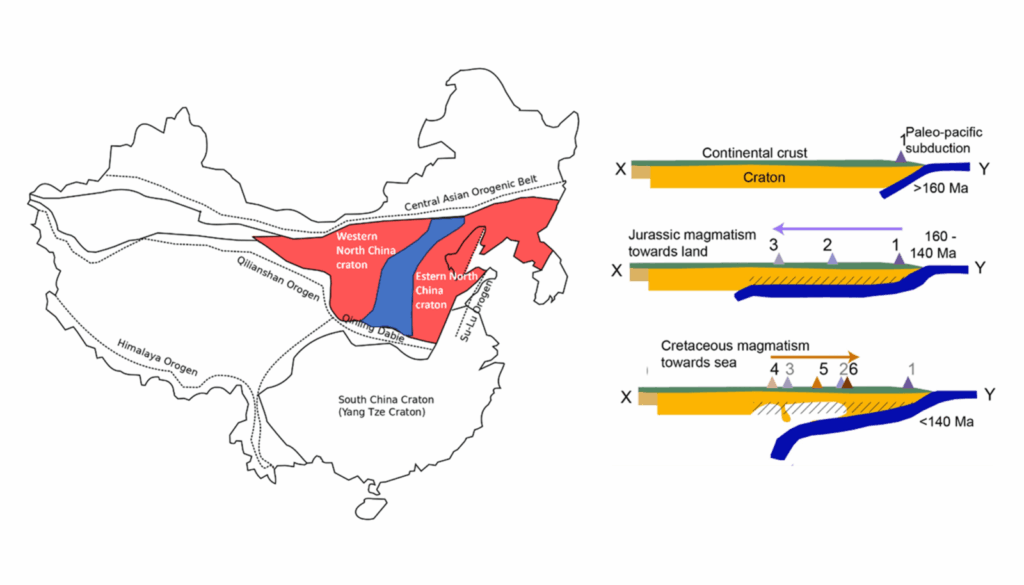
Tectonics and Structural Geology
The role of structural geology in radioactive waste disposal
In this blog post, I have interviewed Dr. Isabel Ashman, who is part of the GeoSafe consortium at the University of Liverpool, looking into safe and long-term containment of radioactive waste in geological formations. Dr. Ashman, along with other project partners at the University of Liverpool, aim to better understand how small to large-scale (sub-mm …[Read More]
Geodynamics
Bored by the Lower Mantle? Think Again!
Is the lower mantle boring? For a long time, the lower mantle was thought to be relatively featureless and uniform compared to the more dynamic upper mantle. But recent seismic observations are challenging that idea, especially when we look near the base of the mantle. Recent studies from Maureen Long’s group (Creasy et al. 2017, …[Read More]
GeoLog
GeoPolicy: The first case of rights of Nature in Europe: The Mar Menor Lagoon
The rights of Nature: A new paradigm Does Nature have inalienable rights just as humans do? This is what the rights of Nature paradigm stands for, marking a radical departure from the assumption that Nature is property under the law. The idea of rights for Nature stems from legal philosophy and political science. Partially, it …[Read More]
Cryospheric Sciences
Heard Island Glaciers Are Shrinking Faster Than Ever! Here’s what you need to know.
In this blog post Dr Levan Tielidze from Monash University and Securing Antarctica’s Environmental Future shares insights from a new glacier assessment of Heard Island. Although rarely visited and largely unknown, Heard Island plays an outsized role in understanding how the Southern Ocean cryosphere is responding to global warming. The island is one of the …[Read More]
Hydrological Sciences
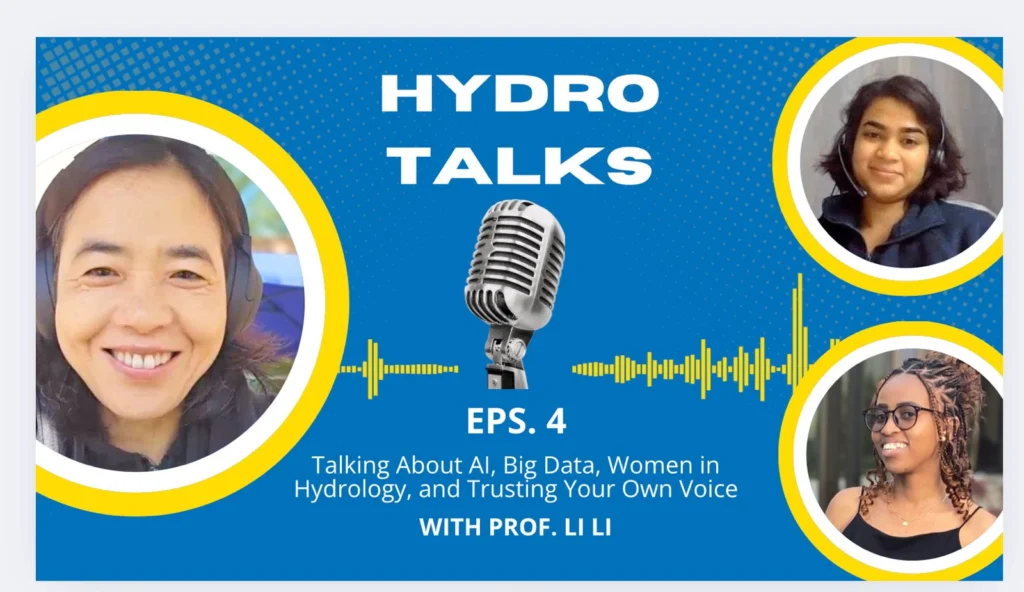
Looking Back at IAHS2025 in Roorkee: Hydrologists Assemble in India
Between October 5 – 10, 2025, the XIIth Scientific Assembly of the International Association of Hydrological Sciences (IAHS) took place in Roorkee, India. Overall, more than 600 hydrologists assembled on the campus of the Indian Institute of Technology (IIT) to share their latest progress, discuss with their colleagues, nurture connections, and celebrate hydrology as a …[Read More]
Tectonics and Structural Geology
Faults vs. Fractures — How to Tell Them Apart ?
Faults and fractures can sometimes be confusing, especially for students taking their first geology courses. When they go hiking in the mountains and see a crack in the rock, they often wonder — is this a fracture or a fault? Even scientists sometimes mix the two terms, so it’s good to understand the difference. Since …[Read More]
Nonlinear Processes in Geosciences
Where is climate science heading? Views from the community
At the recent UNDERPIN2 conference (Understanding rare events and their climatic impacts, in Erice, Sicily), we held a discussion on the future of climate science. To guide the conversation, I ran an interactive survey to capture how climate scientists see the current challenges, opportunities, and blind spots in climate research, communication, and the use of …[Read More]