Now that summer is over, policy events are back in full swing! With most events still being online, they are easily accessible and generally free of charge. The EGU has an External Science for Policy Events Calendar that lists upcoming policy-related events that are likely to be of interest to geoscientists. This can be a …[Read More]
Latest posts
Hydrological Sciences
Behind every robust result is a robust method: Perspectives from a hydrological case study
Scientific studies and mathematical models are increasingly used to guide the management and development of society. But while science and modelling can indeed provide a robust basis for decision making, we must be mindful of two related considerations. First, science is based not on trust but on skepticism, meticulous technique and careful verification. Second, science …[Read More]
Geodynamics
Simulating materials in the Earth’s interior using atoms
This week UCLA PhD student Leslie Insixiengmay takes us on a microscopic journey to the Earth’s interior and tells us all about the atomic forces that shape the deep Earth behaviour! A question I get asked a lot is: “How do we know what’s inside of the Earth?” It’s a good and valid question considering …[Read More]
Tectonics and Structural Geology
GeoMod 2021 in Utrecht: connecting on-site and online
After a year and a half in which all of us have had to become accustomed to meeting our colleagues and collaborators only in digital space, it was finally time for an in-person conference again. From 19-23 of September 2021, the ninth edition of GeoMod took place in a conference center outside sunny Utrecht (the …[Read More]
GeoLog
Imaggeo On Monday: After a long day in the field
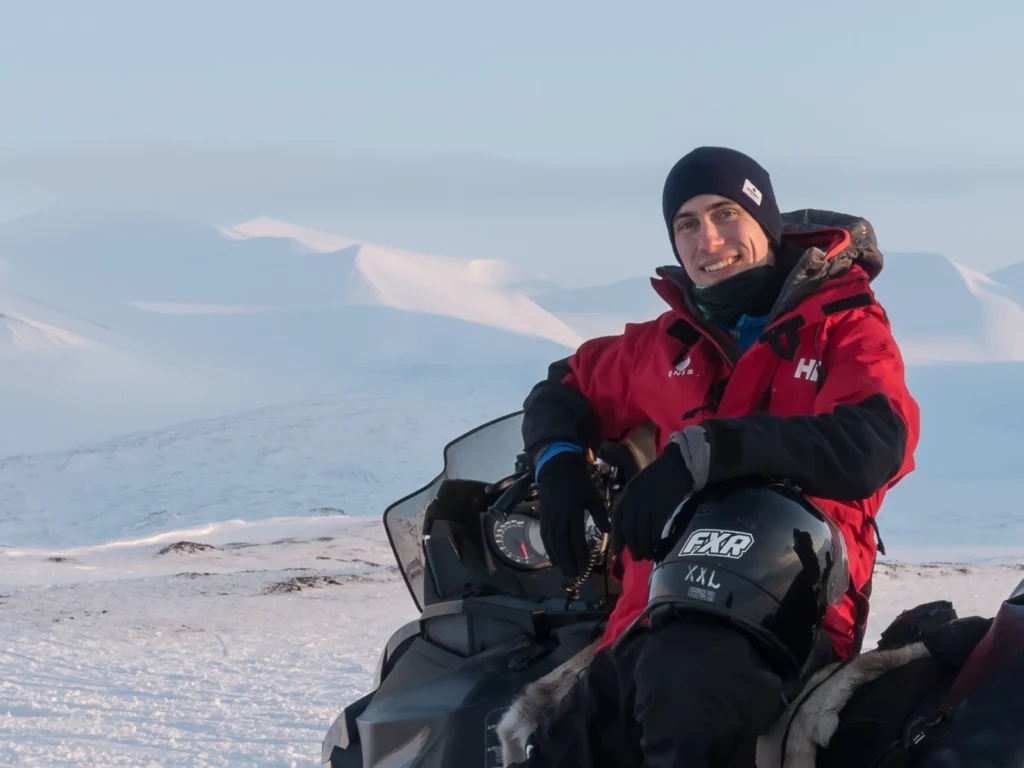
Working on the sea ice can be quite exhausting. Scientists face cold temperatures and wind, constantly scanning for polar bears, while trying to squeeze valuable data out of frozen instruments. At the end of the day you might have not found what you wanted, but every single bit of information brought back truly helps in …[Read More]
Geochemistry, Mineralogy, Petrology & Volcanology
EGU GMPV ECS Campfires – Special Edition on Subduction Zones! Wednesday 13th October 11am CEST
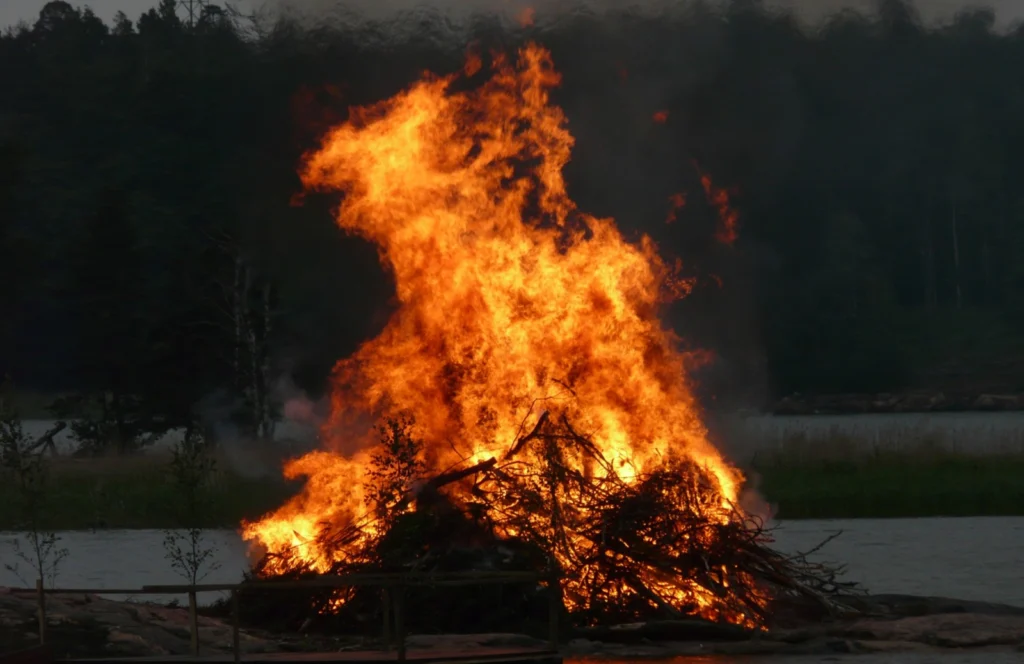
The 13th edition of the Geochemistry, Mineralogy, Petrology and Volcanology division’s early career scientists Campfires will be a special edition on Subduction Zones! The talks will be held on Wednesday 13th October at 11am CEST on Zoom. Our three ECS speakers are: 1. Lorraine Tual (Twitter: @_garnetite_) Post-Doc @ the University of British Columbia, Canada Title: …[Read More]
Geodynamics
The Sassy Scientist – It’s All In The Mix
Mare needs to secure some funding. Trotting through previous successful applications, she finds a common denominator. As a purebred scientist, she bellows: How important is interdisciplinary research for a research proposal? Dear Mare, Very important. Realistically, you’ll not get funded in case you’re a one-trick pony. Who will hand over their pouch of gold nuggets …[Read More]
Cryospheric Sciences
Let’s go to School of Sustainability!
Next generations will not only see impacts of climate change first-hand, but they will also deal with the associated societal implications. Implementing climate solutions and orienting themselves in a growing, green job market need cutting-edge knowledge, which is often hard to get through the ordinary, high-school syllabus. As early-career cryo-scientists (Federica is a PhD student …[Read More]
Stratigraphy, Sedimentology and Palaeontology
Alberta’s Geological Riches
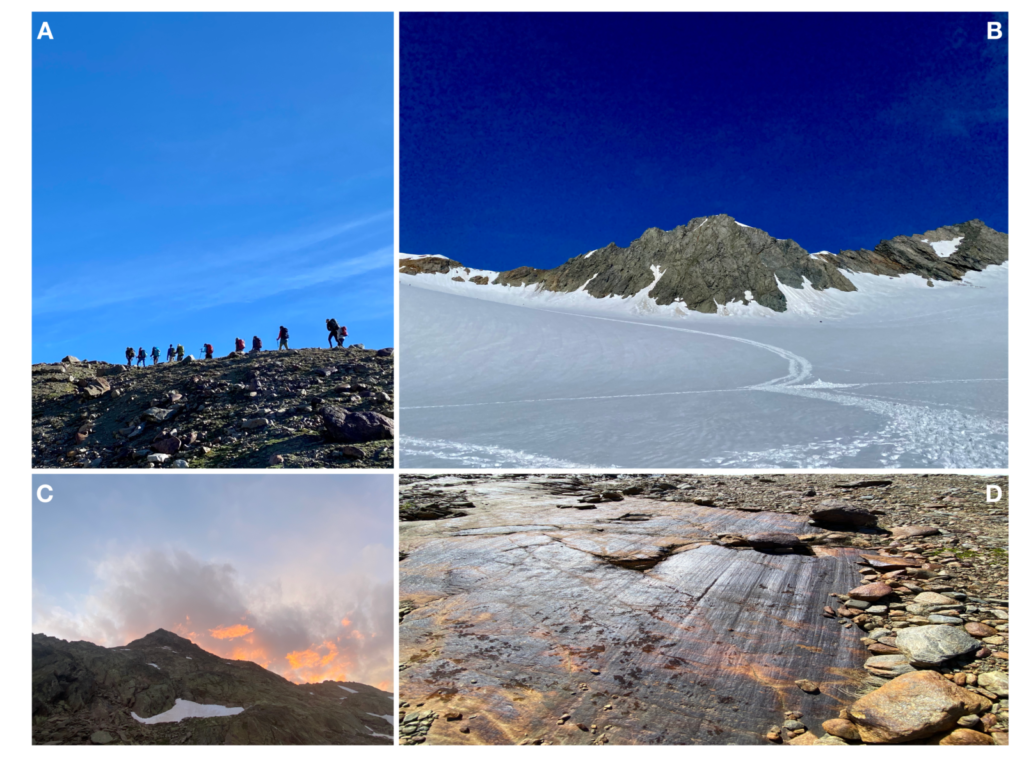
Smoky Summer It has been a difficult summer in Alberta, with smoke from forest fires in British Columbia blanketing much of the southern part of the Province. However, this has not stopped me getting out into the field on a variety of projects and hikes, including a virtual field trip looking at the Cardium Formation …[Read More]
Geodynamics
Curious case of convex upwards topography in accretionary wedges
Accretionary prisms are wedge-shaped bodies of crustal rocks that are commonly known to have formed by accommodating the component of convergence along subduction margins. These prisms, primarily wedge shaped with lateral variations in topographic height from hinterland to foreland are commonly characterised by a gentle and uniform slope towards the frontal margin (for instance, the …[Read More]