Why Early Career Scientist (ECS) representatives? The EGU SM division tackles cutting-edge research topics covering a large variety of basic and applied scientific fields in the context of both natural resources and natural hazards. The EGU SM division is a space where one can discuss a wide range of scientific questions and their societal impact. …[Read More]
1727 search results for "network"
If you didn't find what you were looking for, try searching again.
An interview with Jean Holloway on the importance of mental health in graduate school
Recent studies have shown that mental health conditions are far more common in graduate students than in the general public (e.g. Bolotnyy et al., 2020). Despite the prevalence, these issues are not something that are often openly discussed, and graduate students often don’t seek treatment. This week, we are interviewing Jean Holloway who aims to …[Read More]
How to reduce your carbon footprint when attending EGU’s General Assembly
In October 2019, an open letter was published, addressing both EGU and AGU regarding their policy to reduce the carbon footprint of their annual conferences. Almost 2000 scientists already signed this letter, asking for more ambitious measures to decline carbon emissions, in line with the goals of 50% reduction by 2030 and near-zero emissions by …[Read More]
post-AGU blues
Under the motto Better Late than Never, in today’s blog post we look back at the AGU 2019 Fall Meeting 2019. Last December (9-13th December) the AGU 2019 Fall Meeting took place during which Earth and Space scientists from all over the world gathered in San Francisco in the pursuit of high-quality science and a more sustainable …[Read More]
The Italian catalogue of earthquake-induced ground failures: saving the past for the future seismic hazard assessment #CEDIT
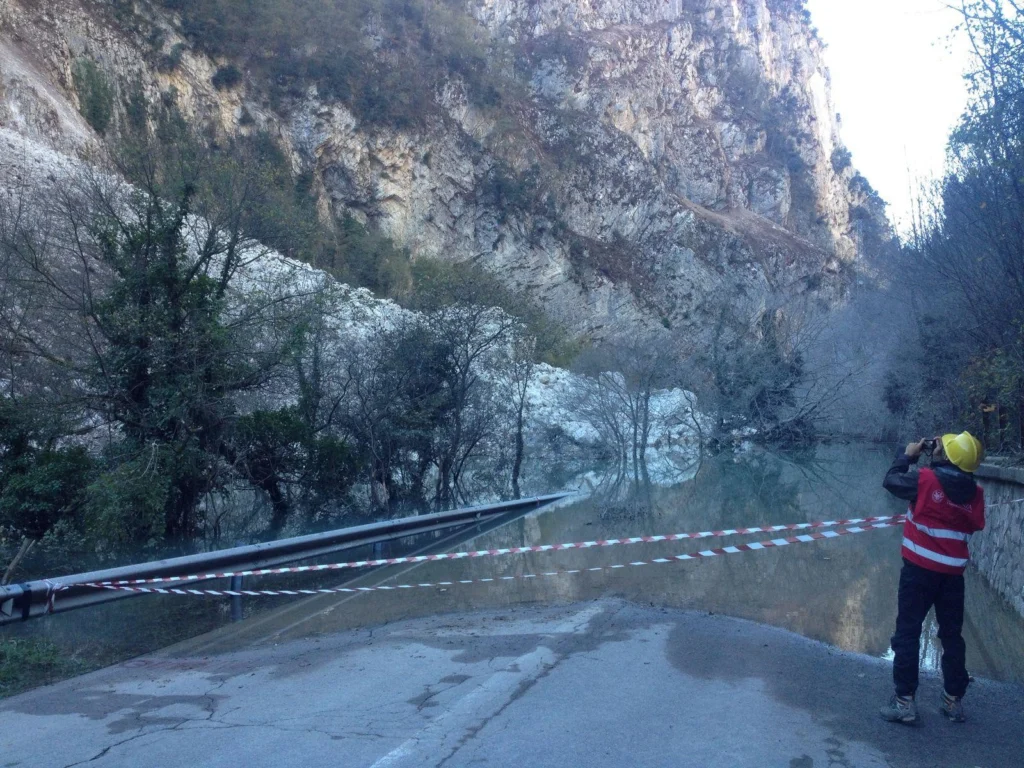
The Italian Catalogue of Earthquake-Induced Ground Failures (CEDIT) is a database available online since January 2013 that stores data about ground failures induced by strong earthquakes, which occurred on the Italian territory since 1000 AD up to now. CEDIT is freely available on a web-GIS portal (currently the access is granted using Firefox as …[Read More]
Hackathon in Zurich – ETH Team
A colleague, external partners and I organized a hackathon on permafrost which took place from 28/11/2019 to 01/12/2019. We tried not to follow the traditional competition-like hackathon approach, but wanted to foster interdisciplinary knowledge exchange and collaboration through working jointly on a predefined dataset. We targeted to bring together computer and environmental scientists. …[Read More]
Hackathon in Vienna – IMGW Team
The whole idea of a Hackathon in Science came to me a couple of years ago, when I first read the AgileScientific blog written by Matt Hall. I figured that such an event is perhaps the most optimal way to generate and develop ideas in rapid time. Then, after I participated in the Ready2Order …[Read More]
GeoPolicy: My experience with the EGU’s science-policy pairing scheme
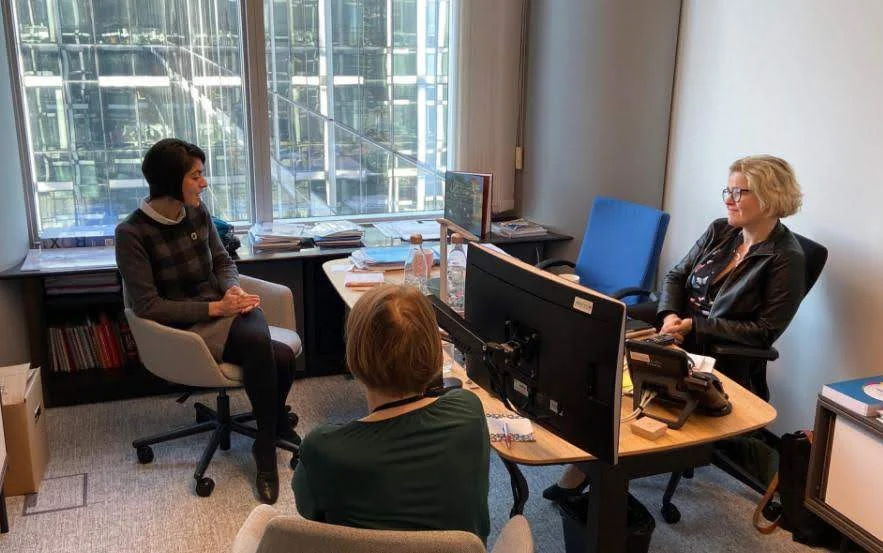
“Thanks for coming, but no time for celebratory drinks,” I told my colleagues. I arrived in Brussels right after defending my doctoral thesis to brief the Finnish Member of the European Parliament (MEP) Miapetra Kumpula-Natri and her team about the impact of sea-level rise and climate change on the coastal communities of the Baltic Sea. …[Read More]
The multitasking skillbox of researchers, direct experiences from Early Career Scientists.
Science is “the study of the nature and behaviour of natural things and the knowledge that we obtain about them” (Collins online dictionary). In other words, science is tightly linked to gaining knowledge. However, this definition and many others never mention that to gain knowledge through science, a vast amount of experience must be acquired …[Read More]
GeoTalk: A biogeocaching scavenger hunt for Earth science outreach
Did you know that the EGU has a public engagement grant scheme? We’ll be awarding three EGU members with 1500€ to help them develop an outreach project that aims to raise awareness of geosciences outside the scientific community. The 2020 call for applications is currently open. In this GeoTalk interview, Olivia Trani talks to Astrid …[Read More]