On this page, we regularly update open positions in Seismology for early-career scientists. Do you have a job on offer? Contact us at ecs-sm@egu.eu Please, note that other available research positions are displayed on the EGU Jobs Portal. Special Thanks to Eric Löberich for researching job postings for the ECS.
1075 search results for "early career scientists"
If you didn't find what you were looking for, try searching again.
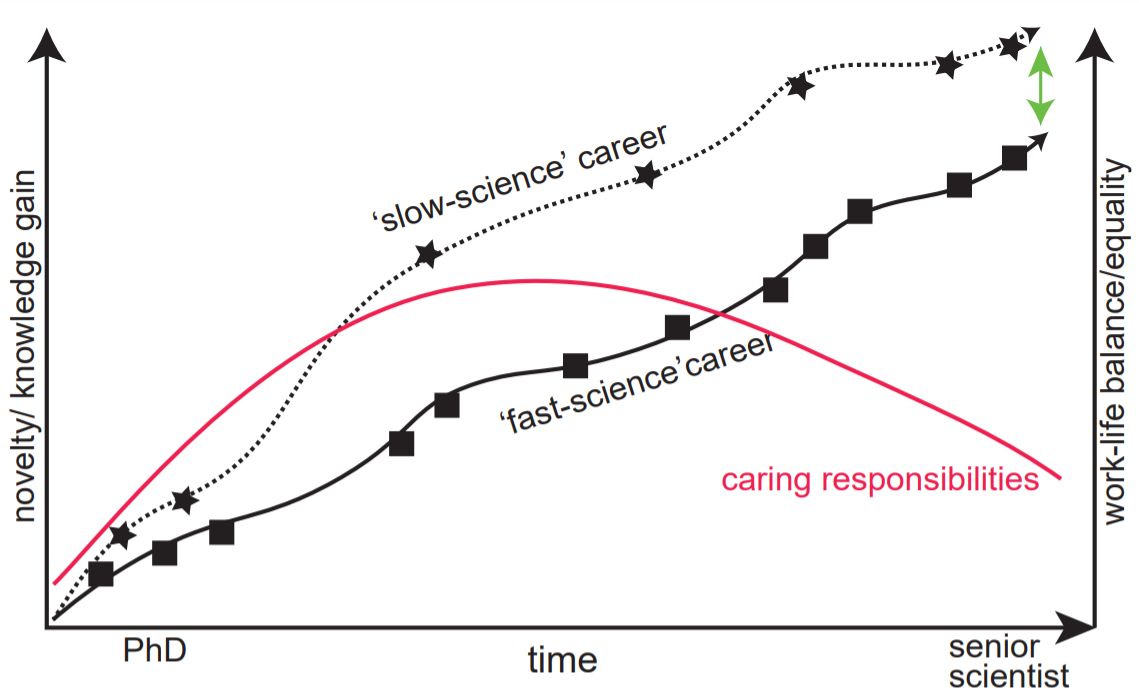
Slow versus fast science – summary and thoughts on the vEGU21 GM-ECS Great Debate
The Early career representatives of EGU’s Geomorphology Division (Andrea Madella (University of Tübingen), Annegret Larsen (Wageningen University), and Michael Dietze (GFZ – German Research Centre for Geosciences in Potsdam)) organized the ECS-Great Debate on “Slow science versus fast science” at this year’s vEGU21 – edited by Sabine Kraushaar. – GM Guest bloggers: Annegret Larsen (Wageningen …[Read More]
The Seismica Initiative: towards a community-driven, Diamond Open Access journal for seismological research
It all started with a tweet from @NatureNews (the news team of Springer Nature): In general, academics welcome Open Access (OA) initiatives; however, this particular tweet has been met with stiff criticism. Unethical profit-seeking, financial gatekeeping, academic elitism, and straining scientific budgets were commonly raised concerns among the many retweets and replies. Unfortunately, these concerns …[Read More]
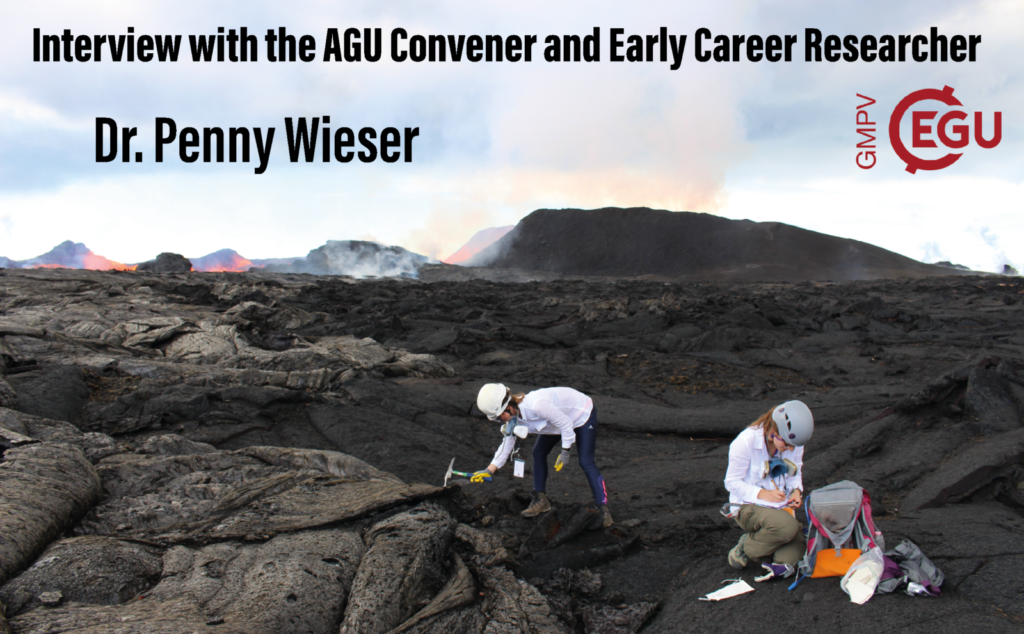
Interview with an ECR AGU2020 Convener – Dr. Penny Wieser
A few months ago, after AGU2020, I had the opportunity to interview Dr. Penny Wieser. Penny is an igneous petrologist and volcanologist with broad research interests and a substantial scientific record. Upon obtaining the undergraduate and masters degree in Earth Sciences at the University of Oxford, she pursued a PhD at the University of Cambridge, which was …[Read More]
The ECS TS team, or what happens between GAs
As the EGU Tectonics and Structural Geology (TS) Early Career Scientist (ECS) Representative, and with the outlook of a second virtual general assembly, I take the opportunity to: (i) provide in two following blogposts, some general guidelines and advice to EGU TS attendees, presenters, and conveners, as recently informed by several blog posts in the …[Read More]
PlanetGeo – a science podcast
Many geoscientists have a distinct moment when they fell in love with the discipline. Jesse Reimink and Chris Bolhuis are no exception; they both have very clear moments in their lives when they knew that studying the Earth was the path for them. For Jesse, Chris actually was that moment. Chris Bolhuis has been teaching …[Read More]
Floods in the Anthropocene: the good, the bad and the ugly
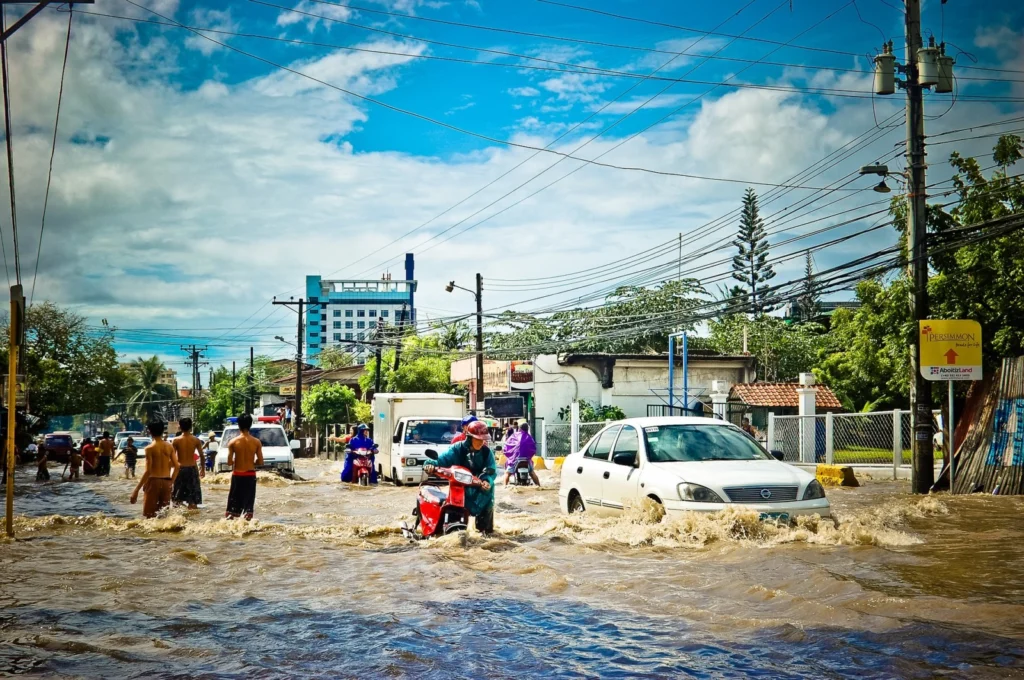
The interplay between human societies and floods dates back to Old World civilizations. Floodplains have provided the potential for prosperous agriculture and for the development of organised communities and urban cultures. Contextually, flood events have caused millions of fatalities and invaluable economic losses throughout history. Over the past decades, human activities have increasingly altered the …[Read More]
Open your heart, science and data – and welcome Res. 42 by WMO
Boundaries and limits. Everyone had a pleasant and rich (hopefully) taste of these concepts in 2020. Time-wise, workwise, and heart-wise among many others. Openness, tolerance and love. Everyone rightfully acknowledged the dearness of these feelings (probably) at the utmost level, again in 2020 – a year quite likely to be remembered as one of those …[Read More]
Life of a Climate scientist presents Holly Kyeore Han
About the blog series: Life of a Climate scientist Life of a Climate Scientist is a new blog series started by the EGU Climate Division. The main focus of this series is to provide a platform for climate scientists to tell their stories of life in research. We will be covering a wide-range of subjects, …[Read More]
#NominateHer – gender matters in awards and medals
Today is International Women’s Day around the world, a day where we celebrate the progress that women, and people across the gender spectrum, have made towards gaining equity, but also take a hard look at how we can do better to support these under-represented groups in our societal structures. For scientific organizations, one of the …[Read More]