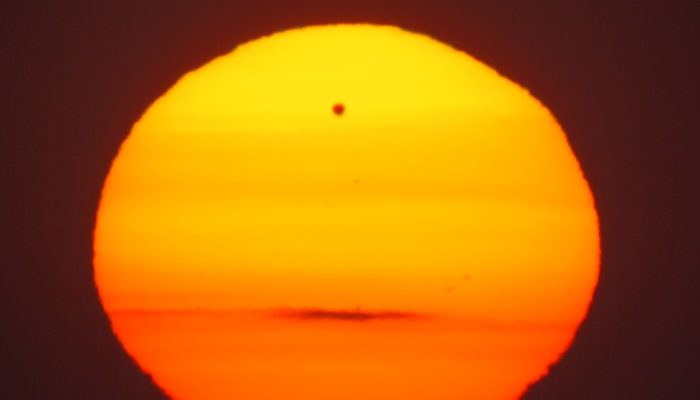
The object of this photo is the transit of planet Venus in front of the Sun which took place on June 6th 2012 and was the last event of this kind until 2117! This is a very rare event with respect to a human life span and the transit always happens in pairs, 8 years apart, with a repeatability of more than two centuries. The picture was captured on the shore of the Black Sea, in Vama Veche, Romani ...[Read More]
If you didn't find what you was looking for try searching again.
Seismology
“State of the ECS”: Lessons learned
Michaela here. I’m sure I’m not the only one around here who falls into a bit of a motivation pit from time to time. So, I put quite a lot of hope into January: start the new year with a bang and get right back at work. Of course, that didn’t really work as well as I made it out in my head. Do you know the feeling when you don’t really do much because you just can’t bring yourself to work o ...[Read More]
GeoLog
Winners of the EGU Best Blog Posts of 2020 Competition
2020 was a brilliant year for our blogging network here at EGU. Across the EGU’s official blog, GeoLog, as well as the network and division blogs there were so many interesting, educational and just downright entertaining posts this year it was hard to get the blog editors to choose their favourites! Nevertheless at the beginning of January, to celebrate the excellent display of science writing ac ...[Read More]
Cryospheric Sciences
Did you know there’s a place to Find, Discover, & Download Arctic Data? Meet The Arctic Data Center!
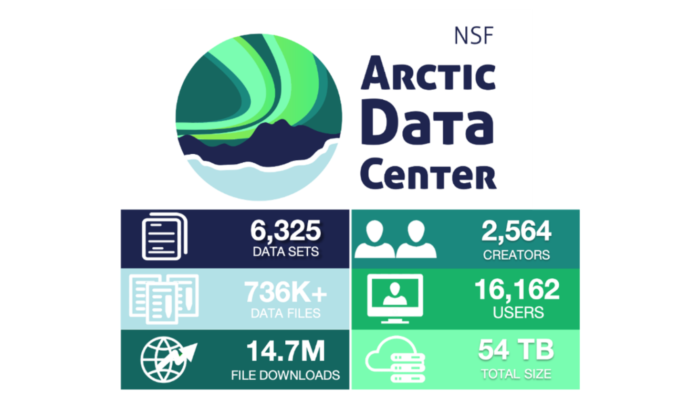
Getting data from the Arctic is often difficult and expensive – instead, stand on the shoulders of giants and investigate over 6000 datasets preserved for future download and reuse in the Arctic Data Center! Read on for more information about the Arctic Data Center and the data contained therein. The Arctic Data Center is the primary data repository for the Arctic section of the US National ...[Read More]
Geodynamics
The Sassy Scientist – Choose Your Mantle Game
Lockdown rumination resulted in new research ideas for Amélie. Her quests at the intersection of multiple subfields left her wondering: How to write an interdisciplinary proposal? Dear Amélie, I salute your efforts at bringing together multiple disciplines to tackle some of humanity’s most urgent questions regarding planetary interiors. I am myself an interdisciplinary scientist and a polyma ...[Read More]
Geochemistry, Mineralogy, Petrology & Volcanology
GMPV ECS online talks: Wednesday 17th February 4pm CET
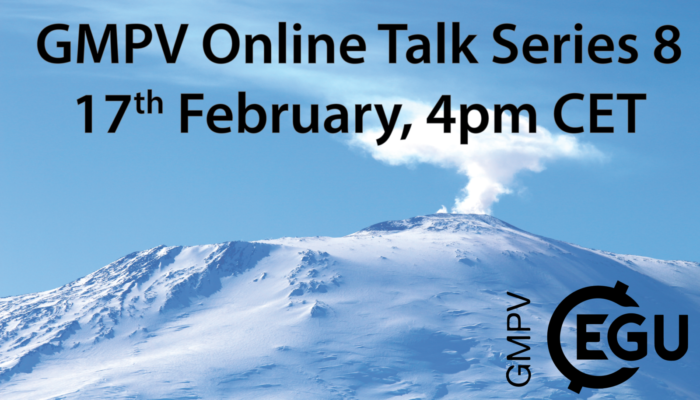
The 8th edition of the Geochemistry, Mineralogy, Petrology and Volcanology division’s early career scientists talks (a part of the EGU Campfires) will be on Wednesday 17th February 4pm CET! Our speakers are: Andres Sandoval (PhD Student @ University of Palermo) – The composition of fluids stored in the Central Mexican lithospheric mantle: inferences for noble gases and CO2 in mantle xenoli ...[Read More]
Geodynamics
Should I… do a coding PhD when I don’t have much experience coding?
“The ideal applicant will have a strong background in coding.” I’m not sure if those were the exact words that advertised my PhD project, but a requirement of coding ability was certainly heavily implied. We’re used to hearing stories about job requirements in the professional world, but in my experience at least, we think much less about this in the academic sphere. I nearly didn’t apply to ...[Read More]
Tectonics and Structural Geology
TS Must-Read – Boyer & Elliot (1982) Thrust systems
The now-classic paper of Boyer & Elliott (1982) presented a novel and general geometric framework to study thrust systems. The framework describes thrust surfaces by lines of contact between thrusts, or branch lines, and lines of thrust termination, or tip lines, and examines how they join into imbricate fans or duplexes. The framework allows accurate and succinct descriptions of the geometry ...[Read More]
GeoLog
GeoPolicy: Europe’s Waste Policy – using Incinerator Bottom Ash and reducing landfill
Although you may not realise it, waste and the circular economy is an important topic for many geoscientists. Our consumption drives the need for resources and sustainable resource extraction, while disposing and reducing this waste requires a wide range of expertise and impacts the environments in which many scientists undertake their research. On a more personal level, understanding what happens ...[Read More]
Cryospheric Sciences
Did you know … that liquid water can be held within a glacier?
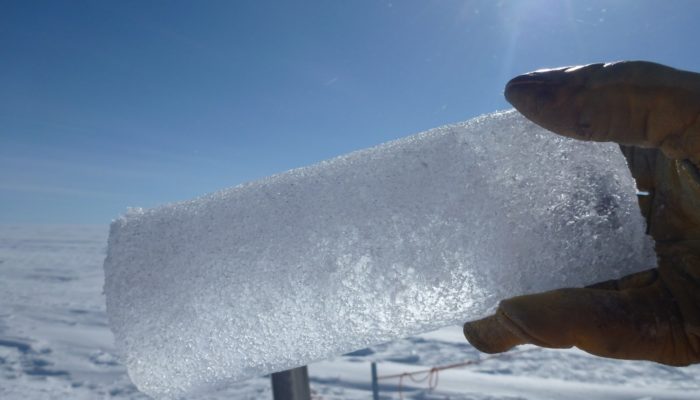
Hidden below the surface of some glaciers, liquid water can be found within what is called the firn layer – the upper layer of a glacier where snow compacts into glacier ice. Liquid water may persist there for up to many years, forming what scientists call “firn aquifers.” While observations of seasonal firn aquifers have existed since the mid to late 1900s in several mountain glaciers, recent stu ...[Read More]