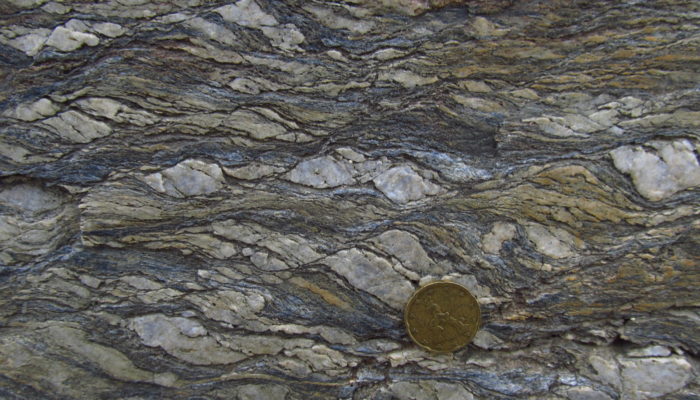
From sketches to first photos Knowledge of geology and, in particular of sedimentology, has successfully been transferred and shared for hundreds of years through sketches. Like a botanist or zoologist, a geologist is able to record data from the field with just a paper and a pencil in the form of drawings (see one of the earliest published sketches of an outcrop in Figure 1). Geological maps and ...[Read More]
If you didn't find what you was looking for try searching again.
Biogeosciences
Meet your BG team 2022/23
The Biogeosciences division is pleased to have substantially grown over the last year! In this blog post we’ll introduce you to our new representatives and detail how you can get involved in BG activities over the next year. President: Lisa Wingate (INRAE) Lisa (she/her) has been president of the BG division since 2020 and has been elected to serve until 2025. She works as a researche ...[Read More]
GeoLog
Interactive peer review: The foundation of EGU’s open access journals
Some 20 years ago, a group of young atmospheric scientists united to shake up the scientific publishing world. Their novel idea was to make the peer review process transparent and allow the scientific community to participate in the discourse – in the truest sense of the word: “reviewed by the peers.” From day one, this has been the foundation that EGU’s open access journals were built on. Today, ...[Read More]
Geodynamics
Meet the blog illustrators: Trud Antzée
Communicating research to a broad audience is always difficult for scientists. Because of their ability to translate ideas into visuals that can be used to communicate information to a wide range of audiences, scientific illustrators are critical to the communication of scientific information. In this week’s blog, we are introducing Trud Antzée, one of our blog illustrator. Trud Antzée is a former ...[Read More]
Climate: Past, Present & Future
Simple is good: How we understand climate using idealised models
Do you gravitate to science because of the subject’s ability to explain complicated behaviour in nature through experimentation? When we see things or get our hands dirty by conducting experiments, it helps us comprehend scientific theories which are harder to explain. Introducing a complicated scientific theory is often carried out initially by presenting a simplified version. For example, stude ...[Read More]
GeoLog
Who is an EGU Early Career Scientist Representative and what do they do?
Early Career Scientists (ECS) are students, PhD candidates and scientists who received their highest degree within the last seven years (with extensions for parenting, illness, disability and national service). We make up over 60% of the EGU membership and we are active in research, science communication, publishing, Equality Diversity and Inclusion (EDI) initiatives, networking, convening and mak ...[Read More]
Cryospheric Sciences
Why the 2022 Italian snow drought matters to you
June 2022: I was discussing the ongoing drought with my family over lunch, when my dad pointed to me and summarized things as follows: “You know, less snow in winter means less water in summer!” I almost choked … what? Not only was it the first time I realized my family had been listening to my scientific anecdotes for years, but I also had concrete evidence now that snow was entering public ...[Read More]
Geodynamics
The Sassy Scientist – The Free Dinner Solution
It may be not be known to the wider lectureship of this column, but every year, around May, the headquarters of EGU-blogs are up for some important (and crucially, self inflicted) bit of house-keeping: the confirmation of the members of the blog team for the incoming editorial year. Those of you with colleagues that are here with me behind the curtains, might know about it from the relentless recr ...[Read More]
Geochemistry, Mineralogy, Petrology & Volcanology
Machine Learning and Volcanic Crystals: a journey with Corin Jorgenson into Random Forest Thermobarometry
Thermobarometry: a bit of background Being able to understand the eruptive style of a volcano, how the eruptive behavior can evolve over time and managing to better interpret the signals that a volcanic system gives us before an eruption are of fundamental importance for mitigating the risk associated with eruptive activities. In this context, it is extremely important to understand trans-crustal ...[Read More]
Geodynamics
Focusing on doing research or worrying about paying expenses?
Scientists and inventors like Albert Einstein, Leonardo Da Vinci, and Nikola Tesla paved the road for generations of young people to pursue a career in STEM. Their curiosity underpinned their passion for science. Unfortunately, the bright side of something usually hides a dark side too. For example, Nikola Tesla struggled to find financial support for his experiments and inventions, often ending u ...[Read More]