
Tim Middleton, GfGD Advocacy Officer, interviews Dr. Andrew Longley, Director of the Nicaragua-based NGO Nuevas Esperanzas. It’s a warm June day, so I suggest that we sit outside. We take our coffees onto the rooftop terrace and admire the view across Oxford. Before long, however, Andrew is zipping up his fleece and starting to shiver; he’s …[Read More]
Latest posts
Spinning a yarn about perovksite
Magnesium silicate perovskite is the most abundant silicate in our planet. Never given a mineral name in its own right, it is unstable at Earth’s surface and has only been observed directly in the lab, rather than the field. So it fails to meet the criteria set down by the masters of mineral names, the …[Read More]
How to finish a PhD in three years*
Welcome to our blog! Between a Rock blog is a multi-author effort, comprising five (and counting) PhD students from the School of Earth Sciences at the University of Bristol. We’re pretty excited to be welcomed into the EGU network and look forward to sharing our PhD journeys and science stories with you. To get a …[Read More]
Welcome to G-Soil!
The G-Soil team would like to begin by welcoming you to G-Soil. G-Soil is the official blog of the Soil System Sciences Division of the EGU and is a means of communication for all those interested in soil science and related areas. We hope you enjoy the blog as much as we enjoy the soil under our …[Read More]
Four degrees: Discussions on climate change, policy, environmental geochemistry and sustainability
As we enter the 400ppm world for the first time in a good chunk of geological history, issues of environment, sustainability and climate change are, more than ever, a source of discussion – and often heated dispute – in the media. As these issues are debated by governments and policy-makers, hardly one day goes by without a series of …[Read More]
How to Find Ghosts in Sediment Cores
Hi! And welcome to Geology Jenga and our very first blog post :)! As this is our first post, we have picked a topic that integrates elements of both our research interests. In this initial post, we aim to give a flavour of the science that will be covered on our blog in the future, …[Read More]
If it wasn’t for those pesky aerosols…
Climate change is a subject that science knows a lot about; broadly, we can demonstrate that greenhouse gases have accumulated in the atmosphere over the past 200 years or so due to our burning of fossil fuels and that this has led to a rise in temperatures across the globe. However, our atmosphere is a …[Read More]
Santorini: a volcano in remission?
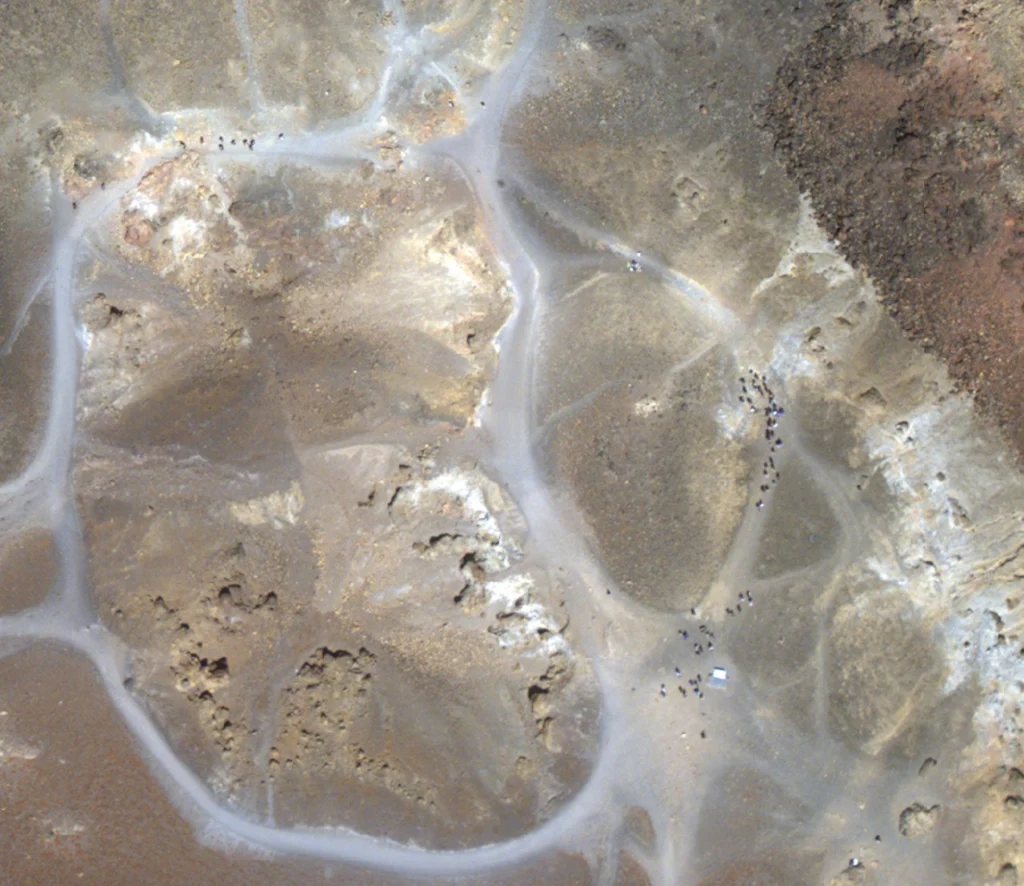
In January 2011, Santorini volcano in Greece began to show the first subtle signs of stirring after many decades of quiet – or at least many decades without detectable activity. This presented an exceptional opportunity to track the behaviour of a very well-studied volcano at the start of a phase of ‘unrest’. Although it may …[Read More]
GeoTalk: Veerle Vanacker on land use, degredation and the potential of revegitation
Today in GeoTalk, we’re talking to Veerle Vanacker, and eminent geomorphologist and winner of the EGU Division Outstanding Young Scientist Award last year. She tells us about her breakthroughs in modelling land use change and erosional processes… First, could you introduce yourself and tell us a little about what you are currently working on? I …[Read More]
Reminder: GfGD Blog Competition
The GfGD Blog Competition is a great opportunity to put science communication into practice. Clear communication, particularly of complex scientific problems, is a skill that is highly valued by many employers. Good science communication is also essential for people working within NGOs and in developing countries to access beneficial scientific ideas and progress. We are …[Read More]