
The EGU is seeking to appoint a Communications Officer to work with the EGU Media and Communications Manager in maintaining and further developing media- and science-related communications between the EGU and its membership, the working media, and the public at large. The Communications Officer will also work under the direction of the EGU Executive Secretary on activities …[Read More]
Latest posts
Seminar series: Applied Earth Observation Techniques for Archaeology and the Environment
These seminars aim to explore and promote the use of Earth Observation (EO) techniques for different aspects of archaeological and paleoenvironmental research, including prospection/detection, classification, mapping and modeling. The variety of EO-related topics that will be presented in these seminars reflects some of the current trends in remote sensing applications in archaeological contexts. Focusing on …[Read More]
Have you been drinking Guinness for St Patrick’s?
Yesterday was St Patrick’s day, celebrated world wide, probably with a pint of Guinness. Perhaps while sipping down a pint you may have wondered why do bubbles in Guinness sink? Here is one-of-a kind paper that discusses just this! They concluded that the flow in a glass of stout depends on the shape of the glass. …[Read More]
Growth of the Kameni Islands Volcano, Santorini, Greece
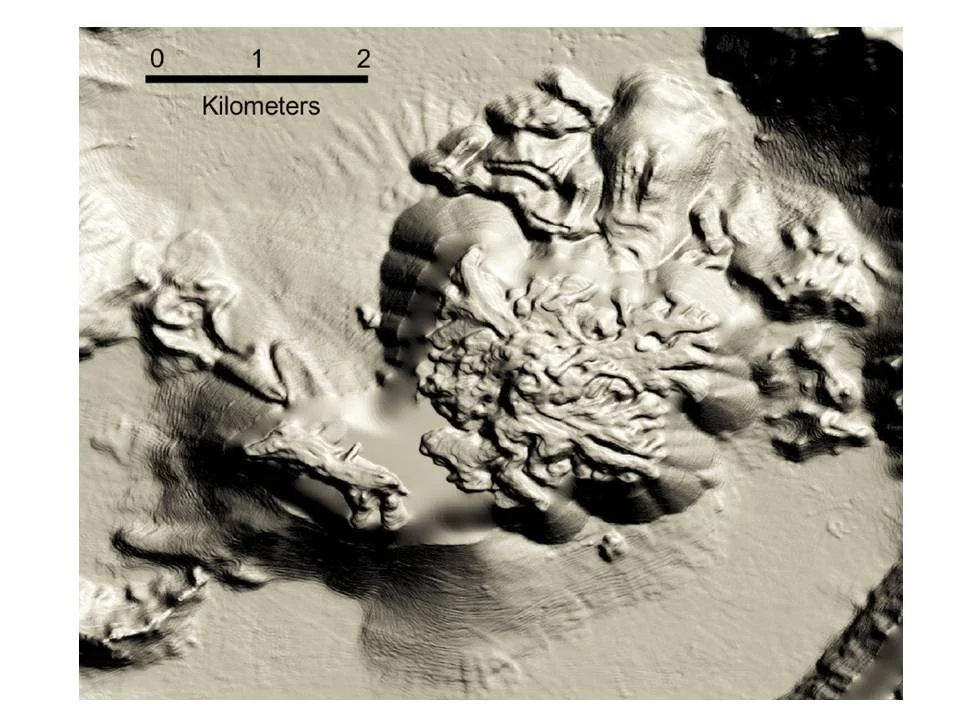
A new paper, published in the journal GeoResJ, reveals the intricate details of the volcanic Kameni islands that lie in the flooded caldera of Santorini, Greece. The Kameni islands started growing shortly after the explosive eruption that formed much of the present day caldera. For the past 3500 years or so these islands have grown …[Read More]
Imaggeo on Mondays: Winter waterfalls reveal their secrets
Cyril Mayaud is kicking of this week’s Imaggeo on Mondays with an insight into what waterfalls in winter can tell us about their local hydrology… The picture below shows the lower Peričnik waterfall during winter season. This cascade system is composed of two successive waterfalls that stretch some 16 metres (upper fall) and 52 metres …[Read More]
Field Research in Guatemala (5) – Photo Diary
After 2 months based in Guatemala undertaking hazards research, I am soon to return home. I will be continuing this series of posts over the next few months, reflecting on aspects of conducting research overseas and thinking through results. Guatemala is a stunningly beautiful country, with a dynamism reflected in everything from the landscapes to the …[Read More]
Join Google Earth Engine at EGU 2014
This year, in addition to having an exhibit booth at European Geosciences Union General Assembly (EGU GA), Google Inc will be hosting a side event on Google technologies for working with geophysical data. A special workshop themed Google Geo for Research and Higher Education Workshop, will be held in Vienna during the week of the annual EGU GA. This free …[Read More]
Monday paper: Biological and physical influences on soil 14CO2 seasonal dynamics in a temperate hardwood forest
Phillips, C. L., McFarlane, K. J., Risk, D., and Desai, A. R. 2013. Biological and physical influences on soil 14CO2 seasonal dynamics in a temperate hardwood forest. Biogeosciences, 10, 7999-8012. DOI: 10.5194/bg-10-7999-2013. Abstract While radiocarbon (14C) abundances in standing stocks of soil carbon have been used to evaluate rates of soil carbon turnover on timescales of several years to centuries, soil-respired 14CO2 measurements are an important tool …[Read More]
Tolbachik – a mineralogist’s paradise
Tolbachik is a basaltic volcanic massif lying at the southern end of the Kliuchevskoi group in Kamchatka, Russia. It comprises two overlapping cones: Plosky Tolbachik, a Holocene shield volcano extending to 3 km in diameter; and the older (Pleistocene) Ostry Tolbachik, a sharp-topped stratovolcano reaching some 3,700 m in height.
Is Torosaurus Triceratops? The debate rages on!
For some time now, there has been much debate about whether our beloved dinosaur, Triceratops, is a distinct species, or a younger version of a bigger ceratopsian, Torosaurus – the great Toroceratops’ debate. Proponents of both sides of the argument have made detailed quantitative and qualitative points, and there doesn’t really seem to have been …[Read More]