
by Viktor Bruckmana and Klaus Katzensteinerb aCommission for Interdisciplinary Ecological Studies, Austrian Academy of Sciences, Vienna; bInstitute for Forest Ecology, University of Natural Resources and Life Sciences (BOKU), Vienna Options for Integrated Forest Management in the Gaurishankar Conservation Area is the title of one of our ongoing projects with collaborating partners from Nepal, China and Austria. …[Read More]
Latest posts
First International Conference of the Arabian Geosciences Union
The Arabian Geosciences Union announced the First International Conference of the Arabian Geosciences Union and general assembly to be held in Algiers, Algeria, February 17th and 18th, 2016. For full info is available on Brochure: http://www.uia.org/sites/uia.org/files/misc_pdfs/other_news/FirstCircular_AIC-1_2016_Algiers.pdf Information taken from: http://www.uia.org/other-news/7436 This initiative aims to promote Geosciences in both North Africa and the Middle East. Hopes are …[Read More]
GeoEd: I’m a Geoscientist 2015

Imagine a talent show where contestants get voted off depending on their skills in their area of choice. Then imagine that this talent show is populated by geoscientists with school students voting them off based on the scientist’s ability to communicate their research well. This is the basis of an educational initiative called I’m a …[Read More]
Earth Sciences: ‘Rocks for Jocks’, or hard science?
According to some Republicans in the US, Earth Sciences cannot be regarded as one of the ‘pure sciences’, or hard science. Is Earth Sciences simply Rocks for Jocks, or do the earth sciences actually encompass some fundamental work here? Suggestions have been made that NASA should steer its focus away from Earth Sciences and more …[Read More]
Can cloud formations predict earthquakes?
UPDATE: 28th May 2015 A new paper on this subject has recently been published on Natural Hazards and Earth System Sciences. The scientists examine the 2012 M 6.0 earthquake in the Po Valley of northern Italy. From inspection of 4 years of satellite images they find numerous examples of linear-cloud formations over Italy. A simple test shows no obvious …[Read More]
Ice Nomads: The iSTAR traverse of Pine Island Glacier, West Antarctica
It’s the 2nd December 2013 and I find myself in one of those rare occasions in life where I feel I need to pinch myself to see if I’m dreaming. Why? Somehow I’m in control of a British Antarctic Survey De Havilland Twin Otter aircraft flying over the white featureless expanse of the West Antarctic …[Read More]
Words on Wednesday: Cobalt, chromium and nickel contents in soils and plants from a serpentinite quarry
Words on Wednesday aims at promoting interesting/fun/exciting publications on topics related to Energy, Resources and the Environment. If you would like to be featured on WoW, please send us a link of the paper, or your own post, at ERE.Matters@gmail.com. *** Lago-Vila, M., Arenas-Lago, D., Rodríguez-Seijo, A., Andrade Couce, M. L., and Vega, F. A., 2015. Cobalt, chromium and nickel contents in soils and plants …[Read More]
Imaggeo on Mondays: A fold belt within a grain
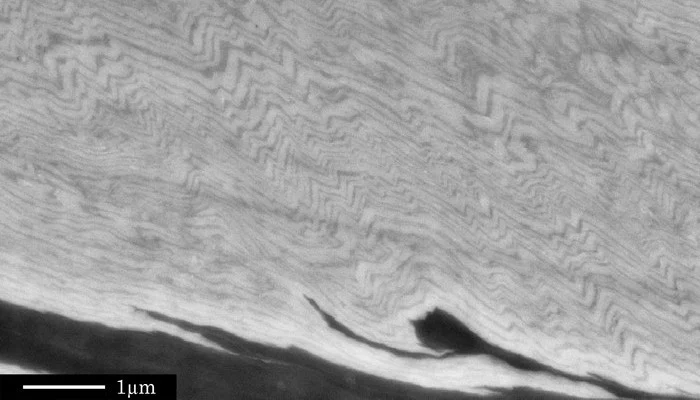
Tiny crinkly folds form the main basis of today’s Imaggeo on Mondays. Folding can occur on a number of scales; studying folds at all scales can reveal critical information about how rocks behave when they are squeeze and pinched, as described by Sina Marti, from the University of Basel. Although many geoscientists have seen such …[Read More]
ERE Division Outstanding Young Scientist Award: who would you nominate?
Every year the EGU rewards outstanding young or early career scientists with the Arne Richter Outstanding Young Scientist Award (OYSA), or one of the Division Outstanding Young Scientist Awards. These awards are granted for an outstanding research contribution in the Earth, planetary and space sciences, and are intended to identify the awardees as role models …[Read More]
The Sound of Climate Change: ‘Planetary Bands, Warming World’ by Daniel Crawford
For scientists, it can often be challenging to convert all our numbers and figures into something that is understandable for laymen. How can you make all these findings and knowledge we have tangible, speaking to people’s emotions? Daniel Crawford from the University of Minnesota translated NASA‘s climate change data to a musical composition. Each of the …[Read More]