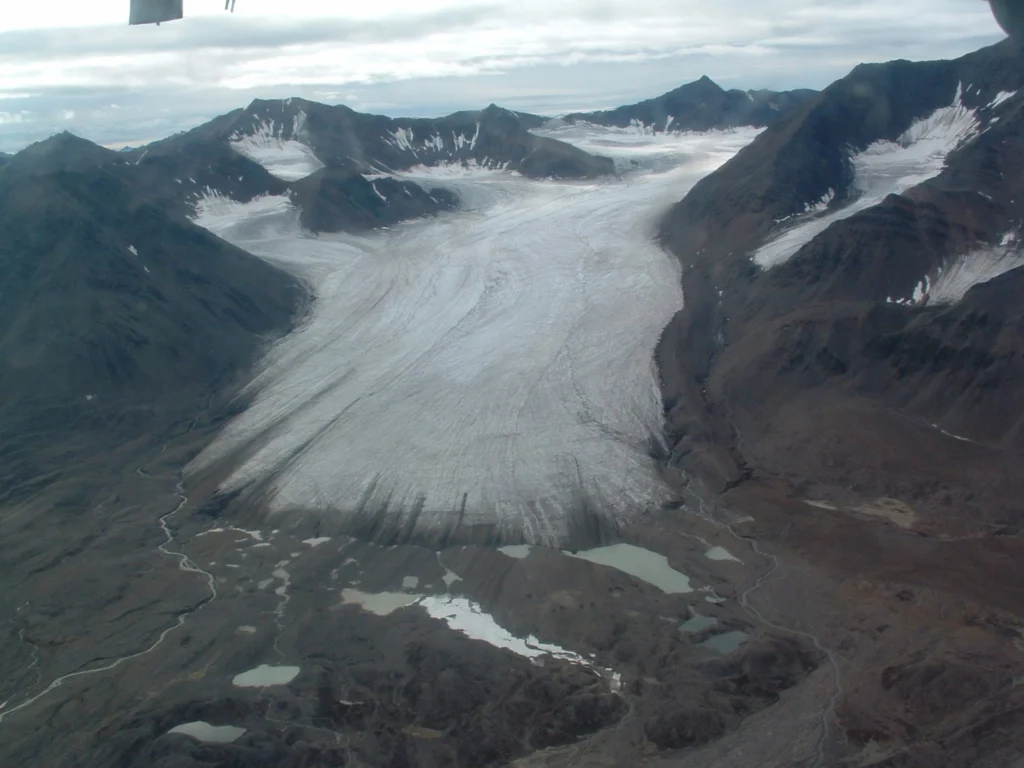
The Arctic is changing rapidly and nothing indicates a slowdown of these changes in the current context. The Snow, Water, Ice and Permafrost in the Arctic (SWIPA) report published by the Arctic Monitoring and Assessment Program (AMAP) describes the present situation and the future evolution of the Arctic, the local and global implications, and mitigation and adaptation measures. The report is base ...[Read More]
GeoLog
Geosciences Column: The hunt for Antarctica’s oldest time capsule
The thick packs of ice that pepper high peak of the world’s mountains and stretch far across the poles make an unusual time capsule. As it forms, air bubbles are trapped in the ice, allowing scientists to peer into the composition of the Earth’s atmosphere long ago. Today’s Geosciences Column is brought to you by PhD researcher Ruth Amey, who writes about recently published resea ...[Read More]
Biogeosciences
abstract submission
We are sorry to hear that people are experiencing difficulties submitting their last-minute #EGU18 abstracts & paying the APCs. If this is the case for you, you will be able to submit your abstract later today
GeoLog
Communicating Antarctic science…in the Antarctic
Communicating the fragility of one of Earth’s remotest environments is hugely difficult, precisely due to the location of the poles. Jon Fuhrmann, a freelance science writer and guide on Antarctic cruises, discusses the potential benefits of taking tourists to these once inaccessible locations, especially when it comes to making members of the public aware of the challenges faced by the Eart ...[Read More]
Geodynamics
From hot to cold – 7 peculiar planets around the star TRAPPIST-1
Apart from Earth, there are a lot of Peculiar Planets out there! Every 8 weeks, give or take, we look at a planetary body or system worthy of our geodynamic attention. When the discovery of additional Earth-sized planets within the TRAPPIST-1 system was revealed last year, bringing the total to 7 planets, it captured the minds of audiences far and wide. This week, two of the authors from a 2017 Na ...[Read More]
Natural Hazards
Our first Interview is ready!
Today we are happy to post our first interview and to thank our first interviewee, Paola Crippa for her contribution. The topic focuses on mortality from high concentration of particulate matter generated from widespread wildfires. This topic wants to be just the starting point to address another and broader theme: dealing with lack-of-data for research purposes in developing countries. This will ...[Read More]
Earth and Space Science Informatics
Good practice in the evaluation of researchers
A new statement on good practice in the evaluation of researchers and research programmes has been posted by three national academies (Académie des Sciences, Leopoldina and Royal Society). It states that “the use of bibliometric indicators for early career scientists must in particular be avoided. Such use will tend to push scientists who are building their career into wellestablished/fashio ...[Read More]
GeoLog
Imaggeo on Mondays: The best of imaggeo in 2017
Imaggeo, our open access image repository, is packed with beautiful images showcasing the best of the Earth, space and planetary sciences. Throughout the year we use the photographs submitted to the repository to illustrate our social media and blog posts. For the past few years we’ve celebrated the end of the year by rounding-up some of the best Imaggeo images. But it’s no easy task to pick which ...[Read More]
Seismology
New Early Career Scientist representatives wanted
The EGU seismology division is looking to elect a new enthusiastic team of early career scientist (ECS) representatives from the beginning of May. If you are a PhD or Postdoc, why not consider taking up this role? Why should you consider becoming an ECS representative? Producing innovative science is the first and foremost task of any early career scientist. However, this work is embedded in the s ...[Read More]
Geology for Global Development
Bárbara Zambelli Azevedo: Phosphorus Crisis – A Food Crisis?
Take a look and try to identify anything around you that has phosphorus as a component. Phosphorus – the P element – is critical for life, like oxygen, nitrogen and carbon, being present in every plant, animal and bacteria. It constitutes cell walls, DNA, RNA and ATP, which transports energy to the brain. Our bones and teeth include phosphorus. Now look again and you might see that pho ...[Read More]