
Heather Britton is one of our new writers, today reporting on a summary of this paper by Andrew J Apostoli and William A Gough, covering the difficulties of pursuing reduced greenhouse gas emissions whilst fuelling one of the largest populations on the planet – India. The actions of this country are contributing to the eventual achievement of UN Sustainable Development Goals 7 and 13 – Affordable ...[Read More]
EGU15 – Natural Hazards Education and Communications
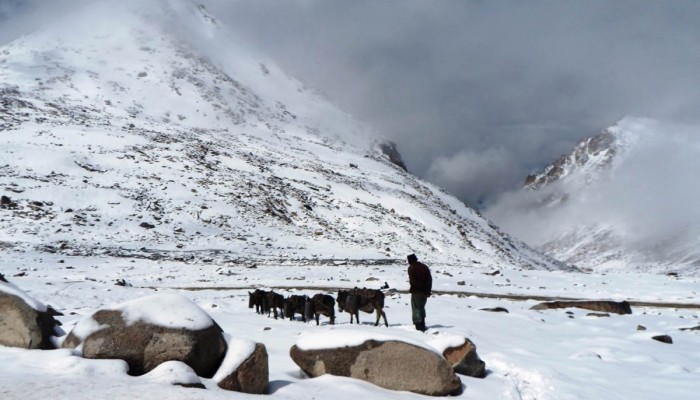
Figure 1: A man herds his livestock in remote, high altitude, snowy conditions in Ladakh. This post first appeared on GeoEd Trek (AGU Blogs) on December 22nd 2014. It has been slightly modified below, given the deadline for EGU Abstracts has now passed, to include the latest information available about this session. Ladakh is a remote and beautiful Himalayan region in the north of India (Figure ...[Read More]
Event: The Lost World of Ladakh: Reclaiming the Past, Sustaining the Future
THE LOST WORLD OF LADAKH: RECLAIMING THE PAST, SUSTAINING THE FUTURE Venue: The Geological Society, Burlington House, Piccadilly, London W1J 0BG. 24 October 2014, 5.30pm – 8.30pm www.geolsoc.org.uk/Lost-world-of-Ladakh The Geological Society recently co-organised an international conference in Leh, the capital of the historic Himalayan kingdom of Ladakh. Sustainable Resource Development in ...[Read More]
Guest Blog: Reflections on the Students’ Education Program, Ladakh, June 2014
Celia Willoughby is an undergraduate geography student at University College London. In June 2014 she joined the GfGD team in Ladakh (India) to support the ‘Sustainable Resource Development in the Himalayas’ work – focusing on the hazards education course. Here she shares her reflections on the experience… Ladakh is a beautiful and remote region in Jammu and Kashmir State, ...[Read More]
Friday Photo (126) – Nyoma Residential School (Ladakh)
GfGD, IERT (University of Jammu), and Teachers/Students from Nyoma Residential School A post-teaching photograph in the heart of the Indian Himalayas, with the Indus River in the background. Students had recently undertaken a one-day course on glaciers and climate change, landslides and earthquakes. Read more about the project in a collection of posts with this tag. Credit: Geology for Global Deve ...[Read More]
Guest Blog: Groundwater Quality Management in Rural Uttar Pradesh, India
Donald John MacAllister, serves on the Executive Committee of Geology for Global Development. He is currently leading the Hazard Factsheet project. Donald John is a PhD student at Imperial College London and is researching the application of self-potential monitoring to seawater intrusion problems in coastal aquifers. He has a BSc in Geophysics from the University of Edinburgh and an MSc in Commun ...[Read More]
Help us Teach Hazards in the Himalayas
Geology for Global Development are involved in an international project on Sustainable Resource Development of the Himalaya (see www.gfgd.org/projects/himalayas2014), which will cumulate in the delivery of a students’ programme in Ladakh, India, in June 2014. The programme will include lessons on resources, climate, earthquakes and landslides. GfGD have particular responsibility for delivering the ...[Read More]
Guest Blog: The Influence of Himalayan Geology
Amber Madden-Nadeau is studying Geology at Imperial College London. Amber recently wrote a report on the geology of the Himalayas, with a focus on the Ladakh region, as part of our hazards education project. Here, Amber summarises the important aspects of Himalayan geology and the influence they have on people’s lives. The Himalaya mountain range stretches over 2500km, influencing th ...[Read More]
Friday Photo (109): Souvenir Rocks
Himalayan rocks are peddled to tourists in Leh, Ladakh. Credit: Rosalie Tostevin, Geology for Global Development Leh, Ladakh, 2013
Friday Photo (108): Damage from Cloudburst
The 2010 cloudburst in Leh, Ladakh, brought large amounts of mud, gravel and boulders into settlements on flood plains in Leh. The debris has still not been fully cleared, and here a house has been buried above window height in debris. Credit: Rosalie Tostevin, Geology for Global Development Leh, Ladakh, 2013