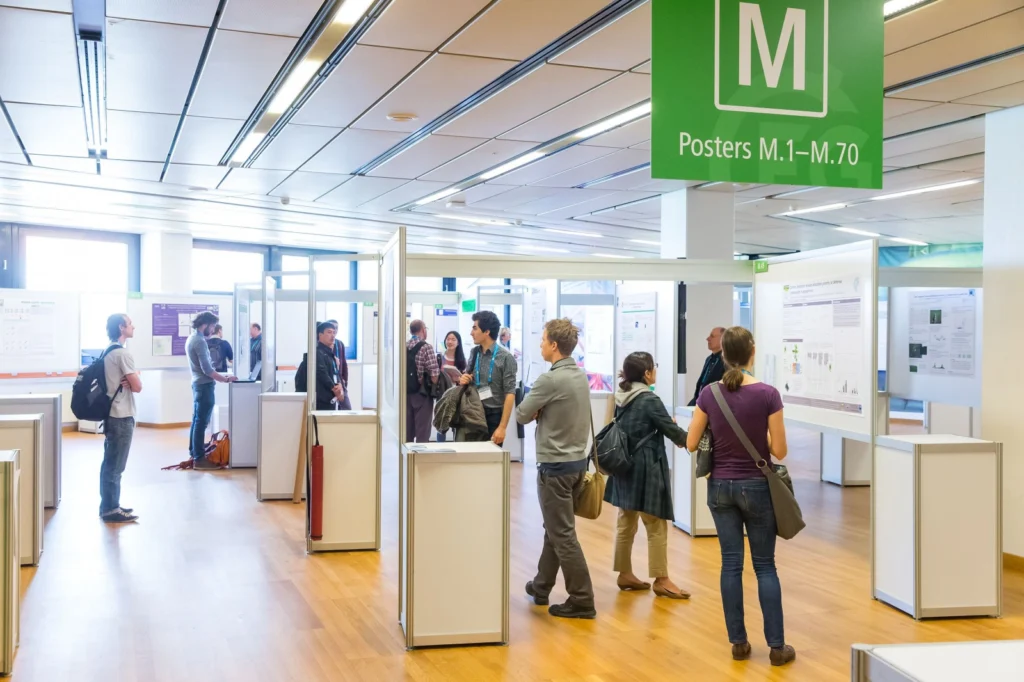
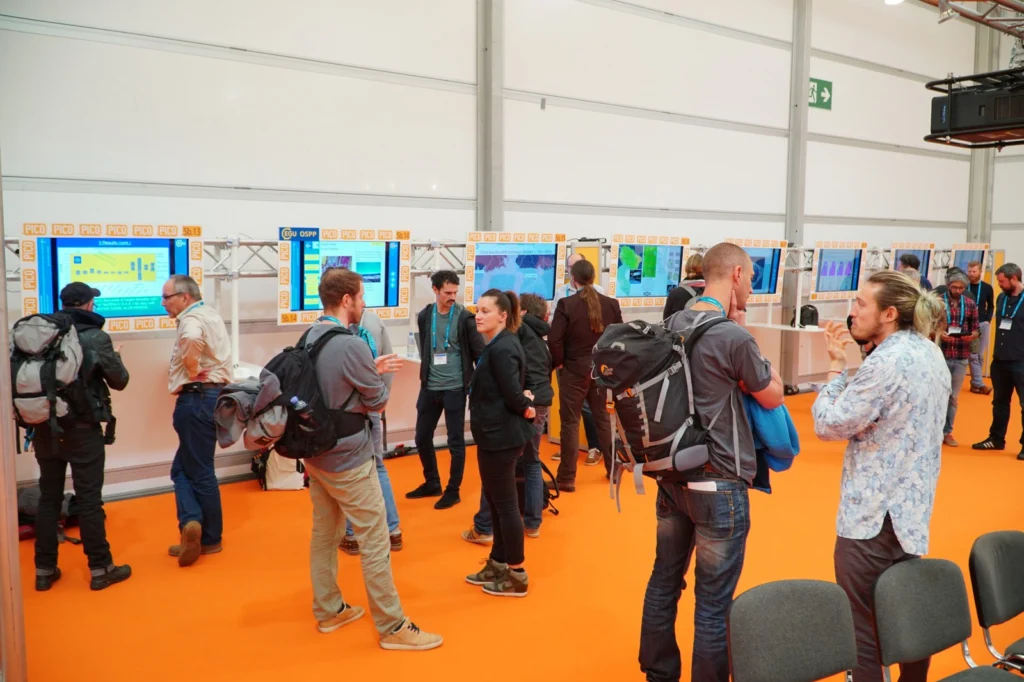
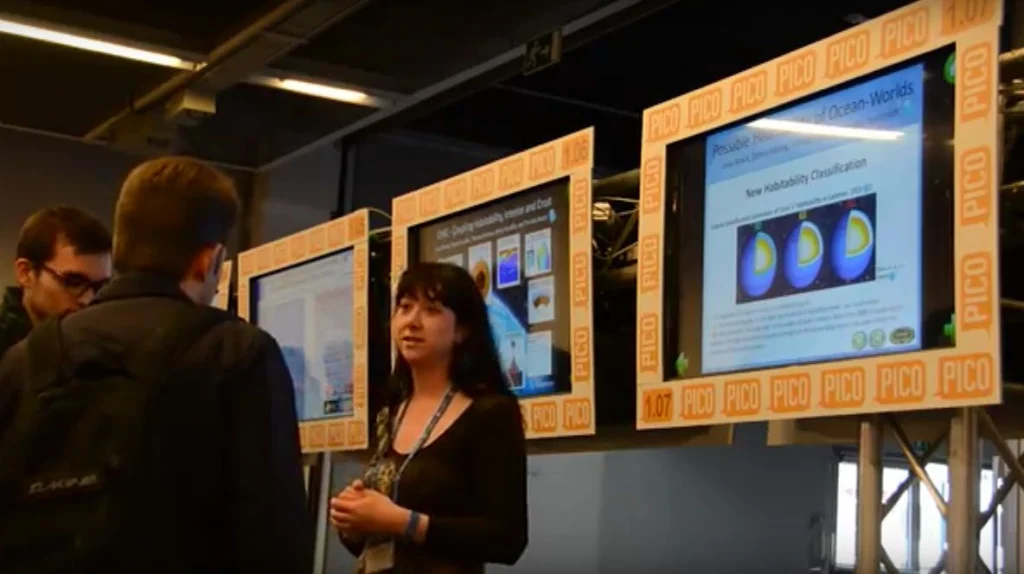
The schedule is out, presentation slots have been assigned and it’s time to start thinking about putting yours together. Whether you have an oral, poster or PICO slot, we have a suite of simple guidelines to get you ready for the conference! Orals The guidelines for oral presentations are online. All oral presentations should have the dimensions 16:9 or 4:3 …[Read More]
General Assembly
GeoTalk: How will large Icelandic eruptions affect us and our environment?
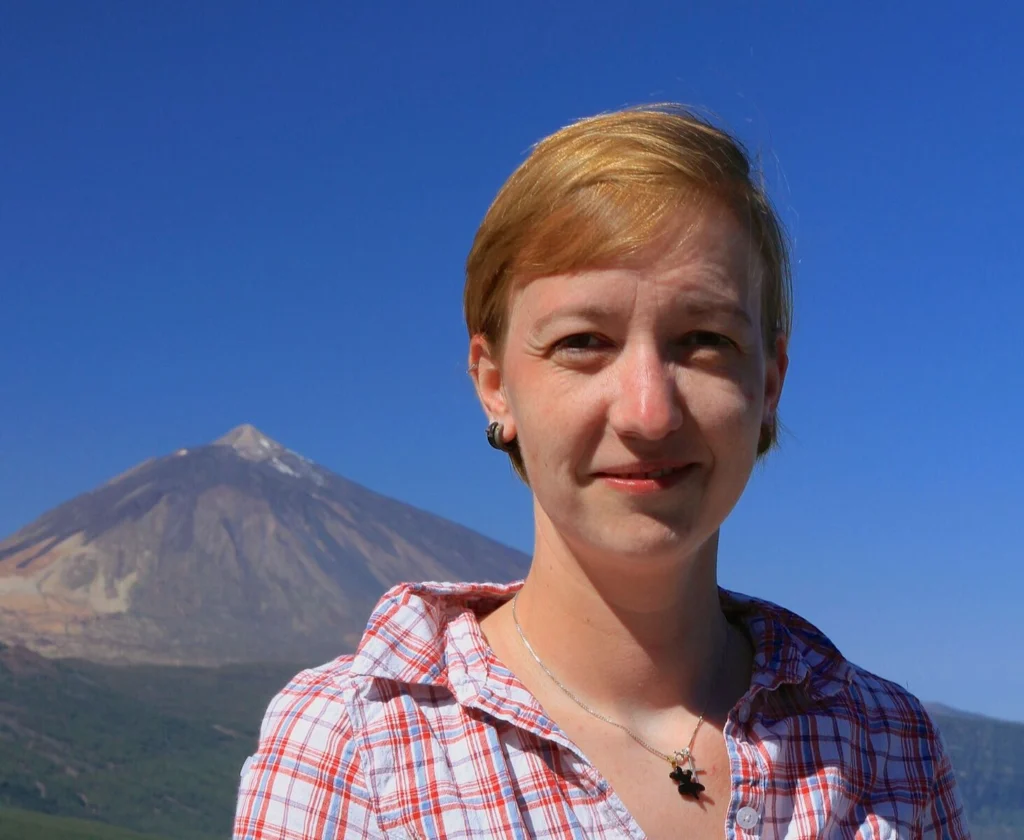
Geotalk is a regular feature highlighting early career researchers and their work. In this interview we speak to Anja Schmidt, an interdisciplinary researcher at the University of Cambridge who draws from atmospheric science, climate modelling, and volcanology to better understand the environmental impact of volcanic eruptions. She is also the winner of a 2018 Arne …[Read More]
EGU 2018: Getting to Vienna, getting to sleep and getting to know the city
With the conference only a few weeks away here is a brief, and by no means comprehensive, introduction of how to get to Vienna and what to do when you’re there! Getting here Vienna’s International Airport is served by many of the major European airlines. If you would like to consider overland you’ll find more information on …[Read More]
Short courses at EGU 2018
At this year’s General Assembly there are loads of short courses to choose from for broadening your expertise. You can supercharge your scientific skills, broaden your base in science communication and pick up tips on how to boost your career – be it in academia or outside. There is also a course aimed at making your …[Read More]
Making a poster or PICO presentation: top tips from the Outstanding Student Poster and PICO (OSPP) Award judges
Every year at the General Assembly hundreds of students present their research at the conference with a lot of time and effort going into preparing these presentations. With the aim to further improve the overall quality of poster presentations and more importantly, to encourage early career scientists to present their work in the form of …[Read More]
What’s new for the 2018 General Assembly?
Along with our conference organisers, Copernicus, we aim to improve the experience of General Assembly attendees year on year. Following feedback from participants in 2017, we’ll introduce some changes we hope will make the 2018 edition of our meeting even better! This post highlights a few of the changes that returning participants will notice at …[Read More]
Try something different at EGU 2018– choose a PICO session!
Some of the sessions scheduled for the upcoming EGU General Assembly are PICO only sessions. This means that, rather than being oral or poster format, they involve Presenting Interactive COntent (PICO). The aim of these presentations is to highlight the essence of a particular research area – just enough to get the audience excited about …[Read More]
GeoPolicy: What’s next for the IPCC & how can early career scientists get involved? An interview with Valérie Masson-Delmotte
This month’s GeoPolicy post is an interview with the newly-appointed co-chair of the Intergovernmental Panel on Climate Change (IPCC) Working Group 1 (WG1): Valérie Masson-Delmotte. Valérie is also a Principle Investigator at the Laboratoire des Sciences du Climat et de l’Environnement, Paris. In this interview she discusses how she balances her two roles, what the …[Read More]
GeoPolicy: How to communicate science to policy officials – tips and tricks from the experts
The EGU General Assembly was bigger than ever this year. Over 16,500 people attended more than 500 sessions. Although many sessions featured policy-relevant science, the short course entitled ‘Working at the science policy interface‘ focused purely on the role of scientists within the policy landscape. For those of you that couldn’t attend, this month’s GeoPolicy post …[Read More]
Imaggeo on Mondays: a big thank you from the EGU
Outside EGU General Assembly 2016. Credit: Kai Boggild/EGU (distributed via imaggeo.egu.eu) The past week in Vienna was a busy one! Hordes of Earth, ocean and planetary scientists came together to present, share and discuss their most recent scientific findings at the 2016 General Assembly. The conference was a great success, with over 4800 oral and …[Read More]