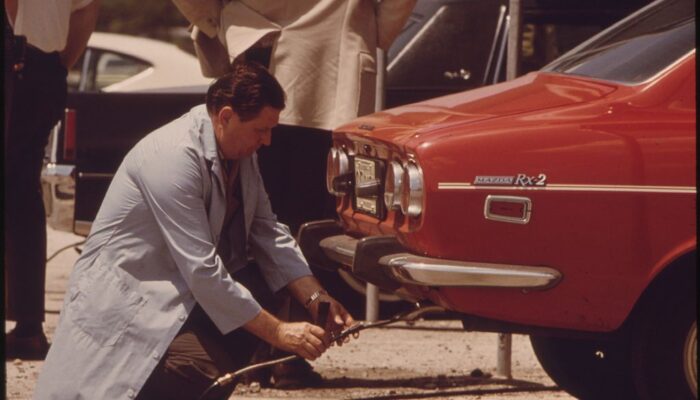
When I was thirteen years old, my family and I almost lost our lives due to a carbon monoxide (CO) leak. I never stopped thinking about that incident even though it happened over twenty years ago. Not only because it was a premature realisation of my own mortality, but also because of how sneaky it was: We did not smell it, see it, hear it, or feel it. It was a subtle and slow killer that could ha ...[Read More]
GeoPolicy: What can we expect from COP26?
The 26th session of the Conference of the Parties (COP26) to the United Nations Framework Convention on Climate Change (UNFCCC) will take place from 31 October to 12 November 2021, in Glasgow, Scotland. With the exception of 2020, COPs are held annually and provide a space for world leaders to negotiate climate policies, targets, and the next steps that need to be take to reduce global emissions. ...[Read More]
GeoPolicy: What does the IPCC’s 6th Assessment Report tell us about the future?
The Intergovernmental Panel on Climate Change (IPCC) prepares and publishes extensive Assessment Reports on the scientific, technical and socio-economic knowledge on climate change, including its impacts, future risks, and likely scenarios based on the actions that humanity takes. In their sixth Assessment Report (AR6), the IPCC’s certainty and warnings were clearer than ever. This month’s GeoPoli ...[Read More]
Can the EU become carbon neutral by 2050? A new strategy from the EU!
On Wednesday 28 November 2018, the European Commission adopted a strategic long-term vision for a climate neutral economy (net-zero emissions) by 2050! A Clean Planet for All, tactically released ahead of the 24th Conference of the Parties (COP 24), which will be hosted in Katowice, Poland from 2-14 December, describes seven overarching areas that require action and eight different scenarios that ...[Read More]
GeoPolicy: A new vehicle emissions test to be introduced, say EU’s top scientists
Last year the European Commission appointed a panel of world leading scientists to advise on key science policy issues. In November, the panel issued their first recommendation report focusing on CO2 vehicle emissions. The month’s GeoPolicy post takes a closer look at this high-level advisory panel and the recommendations they have published. In 2015, the Scientific Advice Mechanism (SAM) w ...[Read More]
Imaggeo on Mondays: A Bubbling Cauldron
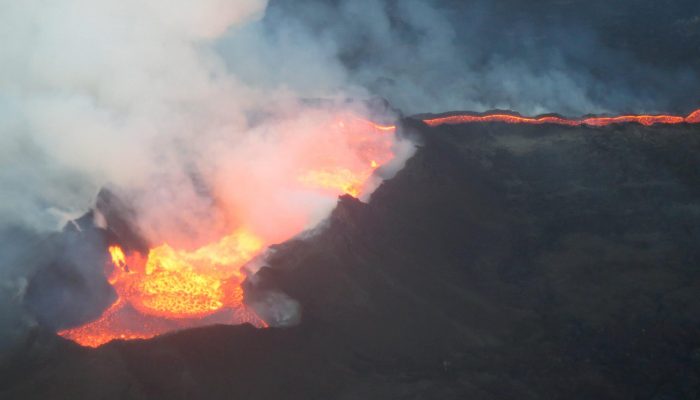
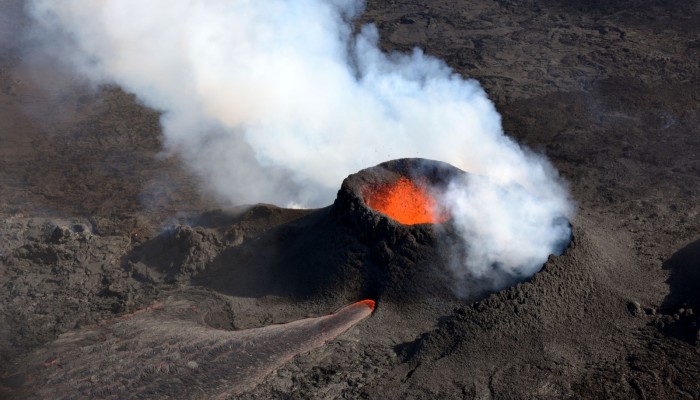
Despite being a natural hazard which requires careful management, there is no doubt that there is something awe inspiring about volcanic eruptions. To see an erupting volcano up close, even fly through the plume, is the thing of dreams. That’s exactly what Jamie Farquharson, a researcher at Université de Strasbourg (France) managed to do during the eruption of the Icelandic volcano Bárðarbunga. R ...[Read More]
GeoPolicy: EGU sciences on debate at the European Parliament
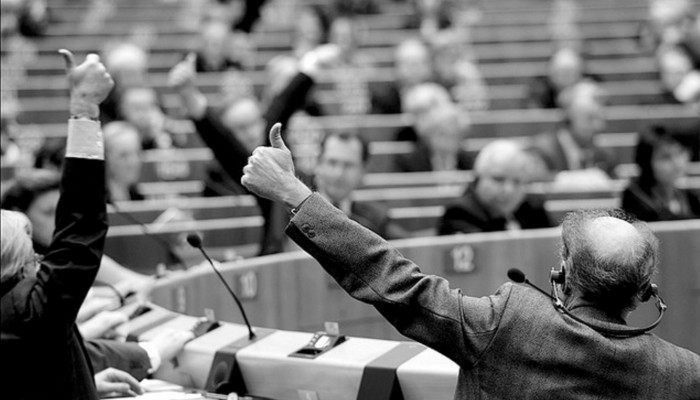
The adoption of legislation within the European Union (EU) is a complex process involving many steps. In my first blog post in this GeoPolicy series I highlighted an example of this process. Several draft legislation pieces are currently being assessed within the European Parliament (EP) and Council of Ministers (Council) that have been influenced by EGU-related science. This blog post summarises ...[Read More]
Iceland’s Bárðarbunga-Holuhraun: a remarkable volcanic eruption
A six month long eruption accompanied by caldera subsidence and huge amounts of emitted gasses and extruded lavas; there is no doubt that the eruption of the Icelandic volcano in late 2014 and early 2015 was truly remarkable. In a press conference, (you can live stream it here), which took place during the recent EGU General Assembly, scientists reported on the latest from the volcano. Seismic act ...[Read More]
Geosciences Column: Fire in ice – the history of boreal forest fires told by Greenland ice cores.
Burning of biomass contributes a significant amount of greenhouses gases to the atmosphere, which in turn influences regional air quality and global climate. Since the advent of humans, there has been a significant increase in the amount of biomass burning, particularly after the industrial revolution. What might not be immediately obvious is that, (naturally occurring) fires also play a part in e ...[Read More]
Geosciences Column: Is it possible to quantify the effect of natural emissions on climate?
The air we breathe is full of tiny particles that can have a big impact on our climate. Industrial activities have greatly increased the number of these particles, cooling the climate and potentially offsetting some of the warming due to greenhouse gases. In this post Kirsty Pringle introduces new research that suggests that it might not be possible to quantify the effect of industrial emissions o ...[Read More]