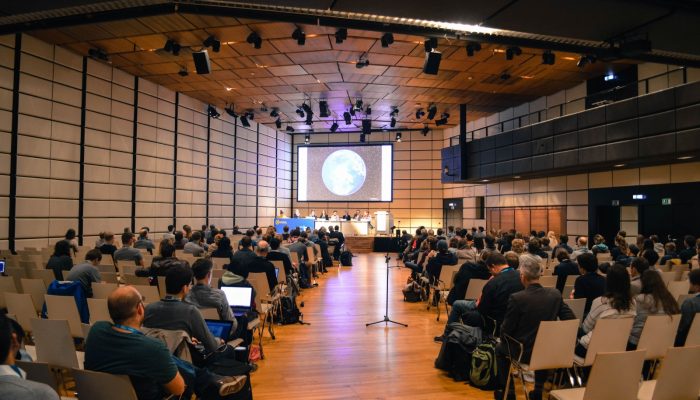
From supercharging your scientific skills, to boarding your base in science communication or picking up tips on how to boost your career – be it in academia or outside – short courses can be one of the highlights of the General Assembly programme. But, did you know that any EGU member (you!) can propose a short course? You’ve got until 8 September 2017 to complete the application. This quick guide ...[Read More]
GeoPolicy: What are European Commission Consultations and how can scientists contribute?
The European Commission requires both expert advice and an understanding of public opinion to steer policy and draft new EU legislation proposals that will be introduced to both the Council and the EU Parliament to debate. The EU Commission regularly hosts hearings, workshops, expert groups and consultations to gain valuable insights, prompt discussion and help draft policy. These forums may be r ...[Read More]
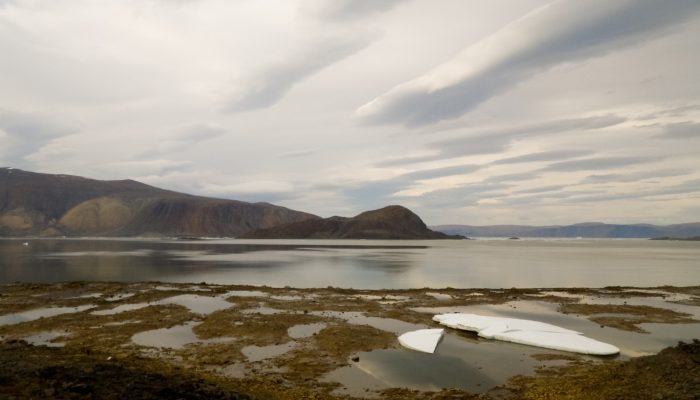
Imaggeo on Mondays: Low tide at Alexandra Fjord
Today’s post takes us to the far northern reaches of our planet, to a desert like nothing you’ve seen before. This picture is a view to the north across Alexandra Fjord, on the east coast of Ellesmere Island, in the Canadian High Arctic, with Sphynx island in the middle of the fjord. The south shore of Alexandra Fjord includes a polar oasis, an area of tundra vegetation and relatively mild climati ...[Read More]
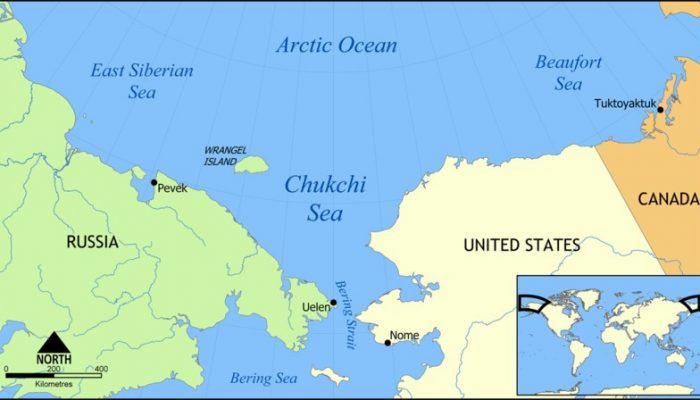
GeoSciences Column: When could humans last walk, on land, between Asia & America?
Though now submerged under 53 m of ocean waters, there once was a land bridge which connected North America with Asia, allowing the passage of species, including early humans, between the two continents. A new study, published in the EGU’s open access journal Climate of the Past, explores when the land bridge was last inundated, cutting off the link between the two landmasses. The Bering Strait, a ...[Read More]
Help shape the conference programme: Interdisciplinary Events at the 2018 General Assembly
Do you enjoy the EGU’s annual General Assembly but wish you could play a more active role in shaping the scientific programme? Now is your chance! But hurry, the session submission deadline is fast approaching. You’ve got until September 8th to propose changes. As well as the standard scientific sessions, subdivided by Programme Groups, EGU coordinates Interdisciplinary Events (IE) at the conferen ...[Read More]
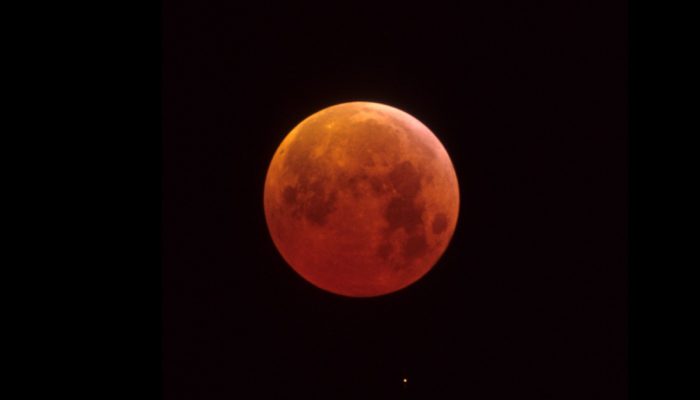
Imaggeo on Mondays: A total eclipse of the Moon
Today, all eyes are turned to the sky; at least in North America, where the region will be treated to an eclipse of the sun. The online hype is hard to miss and its hardly surprising, opportunities to see the moon completely cover the Sun, where you are, are rare*. According to NASA, the same spot on Earth only gets to see a solar eclipse for a few minutes about every 375 years! If like us, you ca ...[Read More]
Imaggeo on Mondays: The wonderful home of pink flamingos
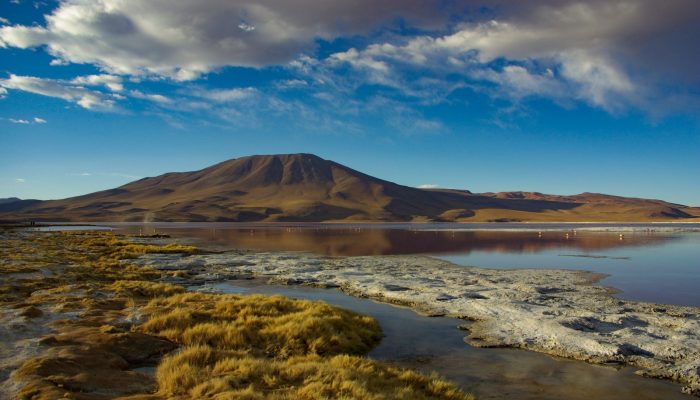
This stunning photograph is another of the fabulous finalists of the 2017 imaggeo photo contest. Imaggeo is the EGU’s open access image repository. It’s a great place to showcase your photographs; so whether you are stuck in the lab this summer, frantically typing away at a paper, or are lucky enough to be in the field, be sure to submit your photographs for all EGU members to see. You never know, ...[Read More]
GeoTalk: Meet the EGU’s President, Jonathan Bamber
GeoTalk interviews usually feature the work of early career researchers, but this month we deviate from the standard format to speak to Jonathan Bamber, the EGU’s President. Jonathan has a long-standing involvement with the Union, stretching back almost 20 years. Following a year as vice-president, Jonathan was appointed President at this year’s General Assembly in Vienna. Here we talk ...[Read More]
New Dimensions for Natural Hazards in Asia: the first AOGS–EGU Joint Conference
Asia is one of the most natural disaster-prone regions on the globe. Overpopulation and limited resources mean that natural hazards hit local populations particularly hard. “It doesn’t matter which index or evaluation method you use, Asia will always unfortunately come out on top when it comes to fatalities and damage from natural hazard events,” explains Dr. Adam Switzer, a member of the conferen ...[Read More]
Imaggeo on Mondays: A dramatic avalanche from Annapurna South
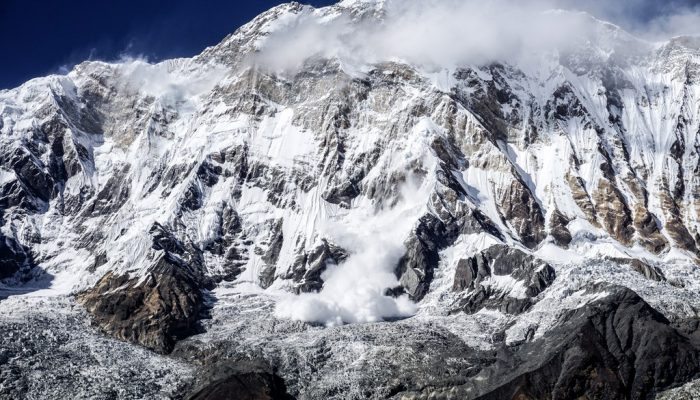
The Annapurna massif is located in an imposing 55 km long collection of peaks in the Himalayas, which behave as a single structural block. Composed of one peak (Annapurna I Main) in excess of 8000 m, a further thirteen peaks over 7000 m and sixteen more of over 6000 m, the massif forms a striking structure within the Himalayas. Annapurna South (pictured in today’s featured image), the 101st talles ...[Read More]