Your research deserves recognition beyond your peer-reviewed paper. While academia is often considered the hallmark for knowledge generation, the dissemination of your work should take further steps so that your scientific research can reach the people it is meant to help. Because your audience may not always be experts in your field and may require …[Read More]
Science Communication
Looking for answers towards the stars: stone tools and nuclides unveil the earliest solid evidence of humans in Europe
When stars explode, supernova-style, the explosion sets off streams of high energy particles across the universe, mainly protons and alpha particles, that after millions of years reach us here on Earth. Secondary cosmic rays pass through our bodies and almost everything around us, and they penetrate a few meters into the ground where they interact …[Read More]
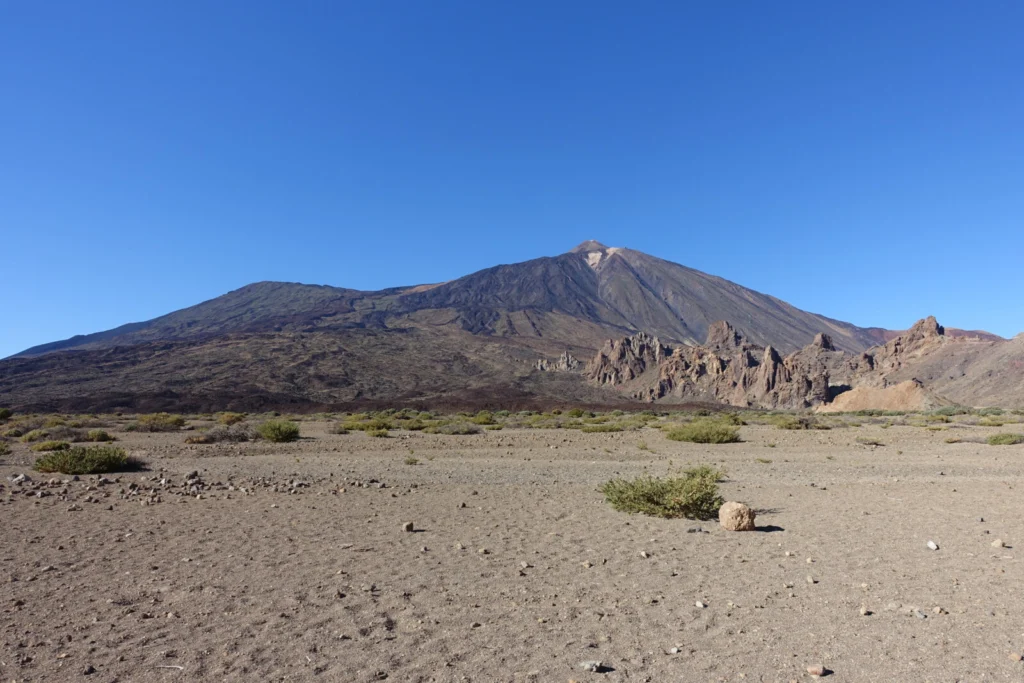
What’s beneath Tenerife? Innovative Monitoring Techniques Reveal the Island’s Volcanic Activity
Tenerife, the largest active volcanic island in the Canarian archipelago, encompasses a diverse landscape shaped by volcanic activity. This picturesque island of the Mediterranean not only boasts stunning vistas but also harbours a dynamic volcanic system that requires diligent monitoring. In recent years, an international team of researchers from Instituto Volcanológico de Canarias (INVOLCAN), Instituto …[Read More]
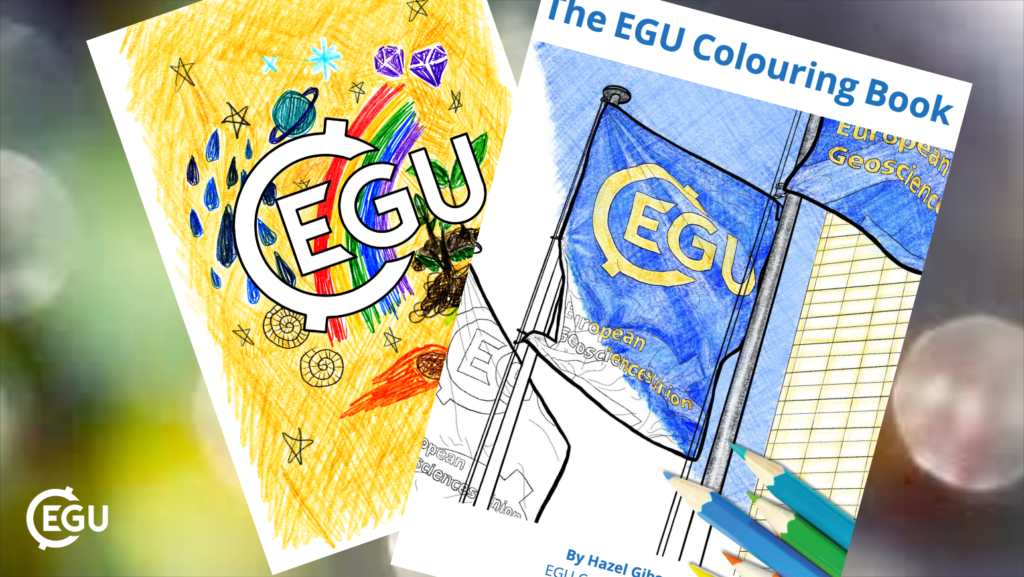
The new EGU colouring books!
Every year EGU tries to provide more ways for people to interact with us and in 2021 we were delighted when one of our Artists in Residence Kelly Stanford, working together with members of our EDI Committee created a free colouring book! It was so popular that we decided to make two more, one with …[Read More]
There’s something for everyone at EGU24: Education, Outreach and Science Communication sessions
Science is a bit like posting a letter – once you’ve written the letter it needs to be delivered to the right people and in the right way. At EGU24 attendees are invited to participate in the numerous and diverse selection of sessions which aim to improve how you deliver your research, how you understand …[Read More]
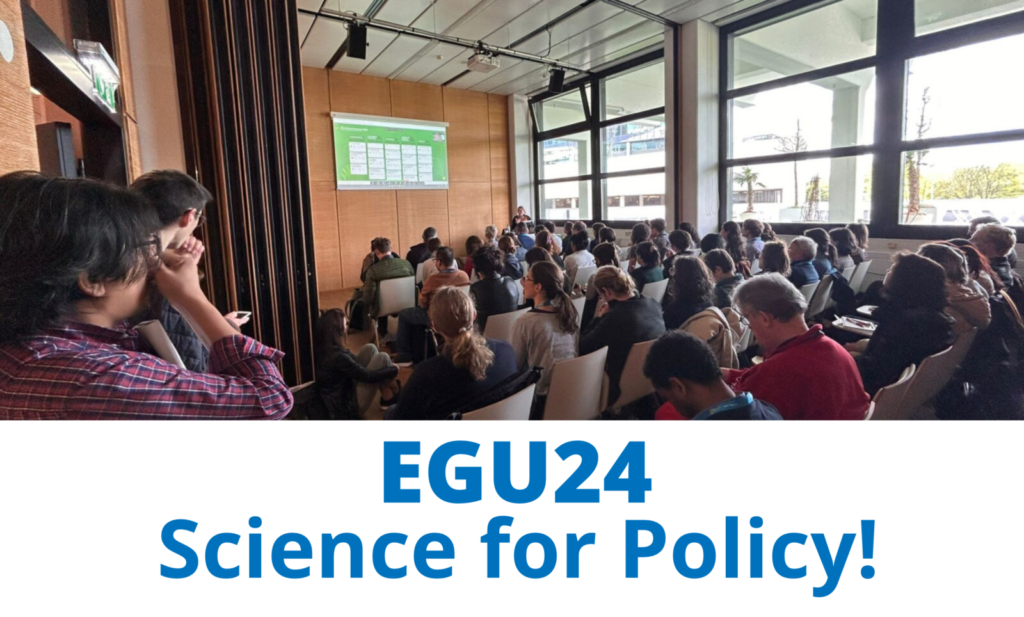
GeoPolicy: Dive into science for policy at EGU24
Each year, the EGU General Assembly hosts a wide range of scientific and skills-based sessions as that you can participate in to learn about new research, expand your network, diversify your expertise, and develop new skills! This includes an array of sessions that focus on science for policy, outlining how researchers can start engaging in …[Read More]
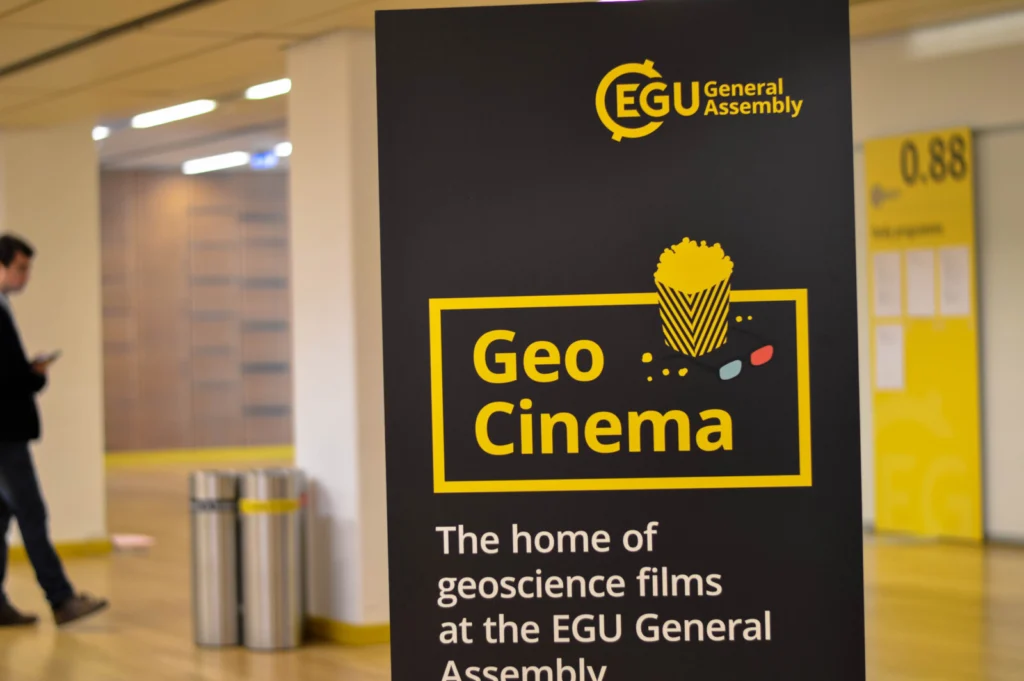
EGU24: The return of GeoCinema!
After a six year hiatus, GeoCinema is back for EGU24! As many of you know, doing science is very rarely just about the research, but also involves sharing that research in several forms and formats. For many talented researchers this means using films. Either working with a film-maker or creating something themselves, several of our …[Read More]
How to make your EGU24 presentation accessible!
Most people spend a lot of time and effort making their presentation engaging and impactful, but how much time to you spend making sure it is accessible!? An accessible presentation takes into account the diverse backgrounds and abilities of the audience, to support a better understanding and of the message and information you are trying …[Read More]
First time at an EGU General Assembly? We got you covered!
Europe’s biggest geoscience conference, EGU24, is only one month away! Each year, the EGU General Assembly brings together over 17,000 researchers, scientists, academics and journalists to discuss and share the latest developments in planetary exploration, Earth observation, polar science, climate change, natural hazards, and much more. And it is held at the Austria Centre Vienna …[Read More]
An end to the ‘manel’? 3 things you can do to help reduce the existence of all-male-panels.
I am pretty sure that everyone has had this experience at one time or another. You attend a meeting or conference and, despite the diversity of people in the audience, the people on the podium invited to speak are uniformly men. If you come from the same part of the world as I do (Western …[Read More]