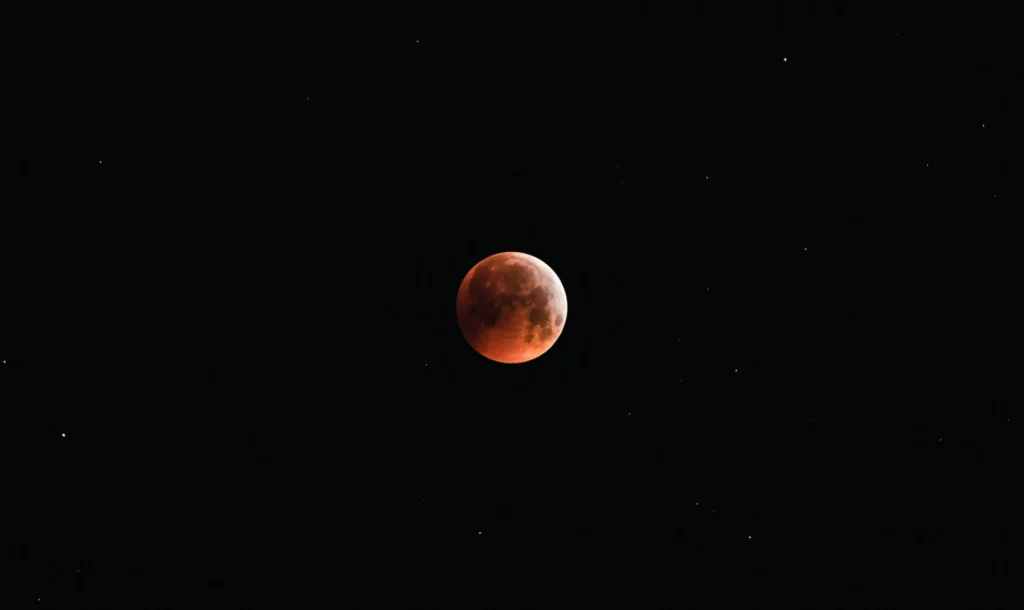
A blood moon occurs during a total lunar eclipse. The sunlight falling through the air layers of the Earth’s atmosphere is refracted inwards, whereby especially the short-wave blue components are weakened by scattering. The long-wave red components, on the other hand, still reach the moon, which leads to the red colouring. Photo by Simon Fuhrmann shared on imaggeo.egu.eu. Imagg ...[Read More]
Imaggeo
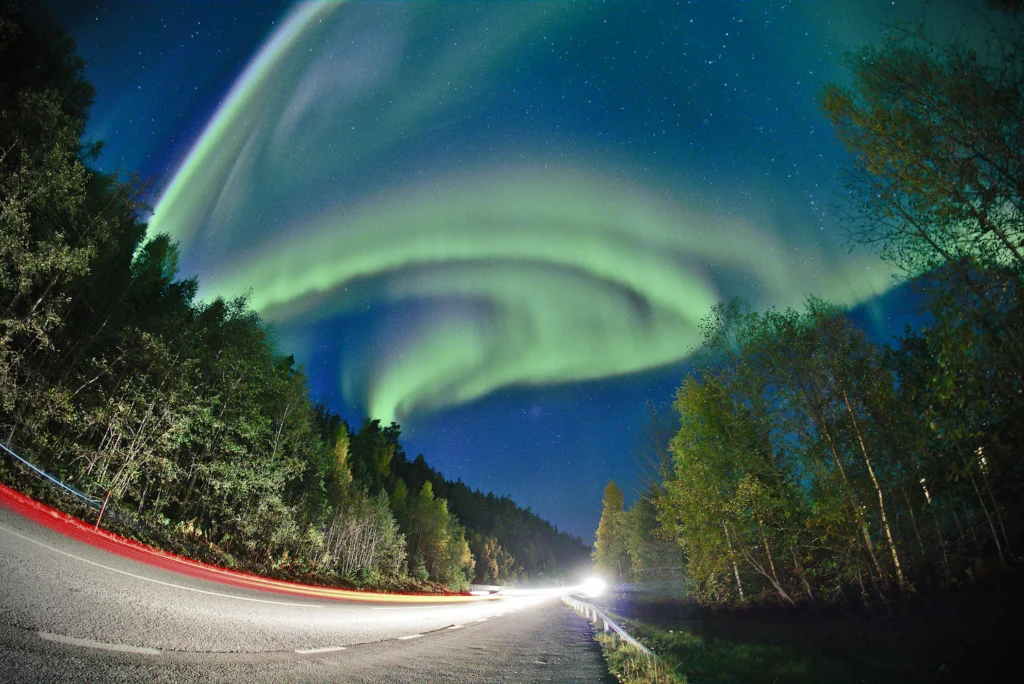
Imaggeo On Monday: Aurora show on the road
In Sweden a beautiful Northern Lights show proceeds unnoticed by the busy drivers passing by. The Northern Lights or Aurora Borealis are spectacular lights created as a result of disturbances in the Earth’s magnetosphere caused by solar winds. They are visible at both polar regions and or often seen as veils or lines of greenish-blue light. Photo by Junbin Zhao shared on imaggeo.egu.eu. &nbs ...[Read More]
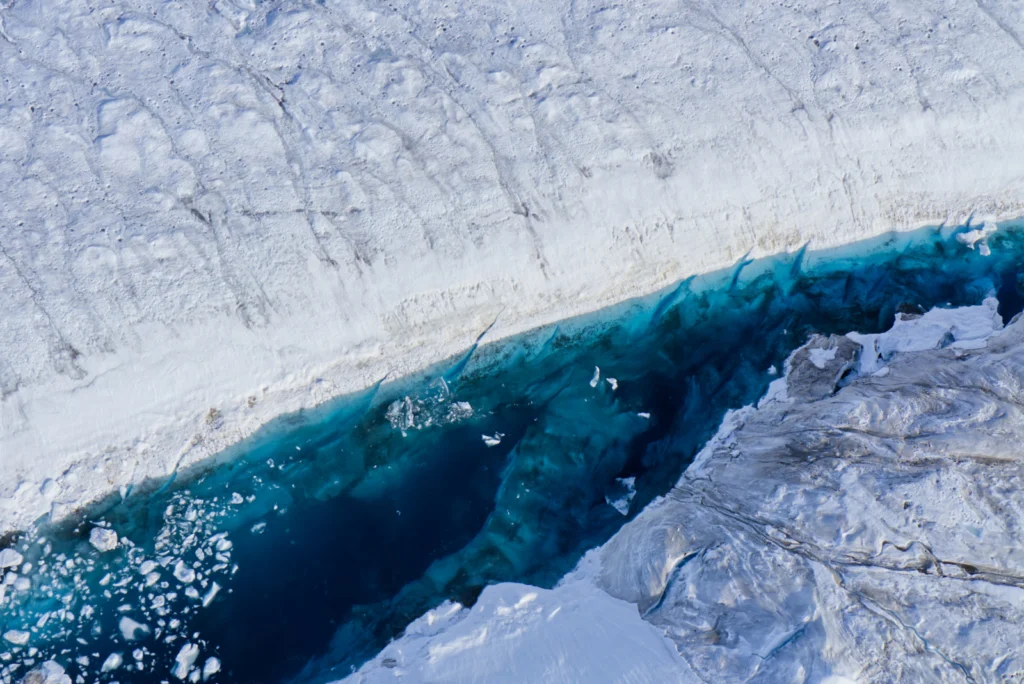
Imaggeo On Monday: Melt water lake on 79°N Glacier in Greenland
Melt water lakes are an impressive and beautiful consequence of warm summer temperatures on Greenlands glaciers. This photo of such a lake with clear blue water was taken from a helicopter on the 79°N Glacier in northeast Greenland during an expedition in July 2018. Supraglacial melt water runs along the surface slope into depressions where the water is accumulating until it refreezes or drains. P ...[Read More]
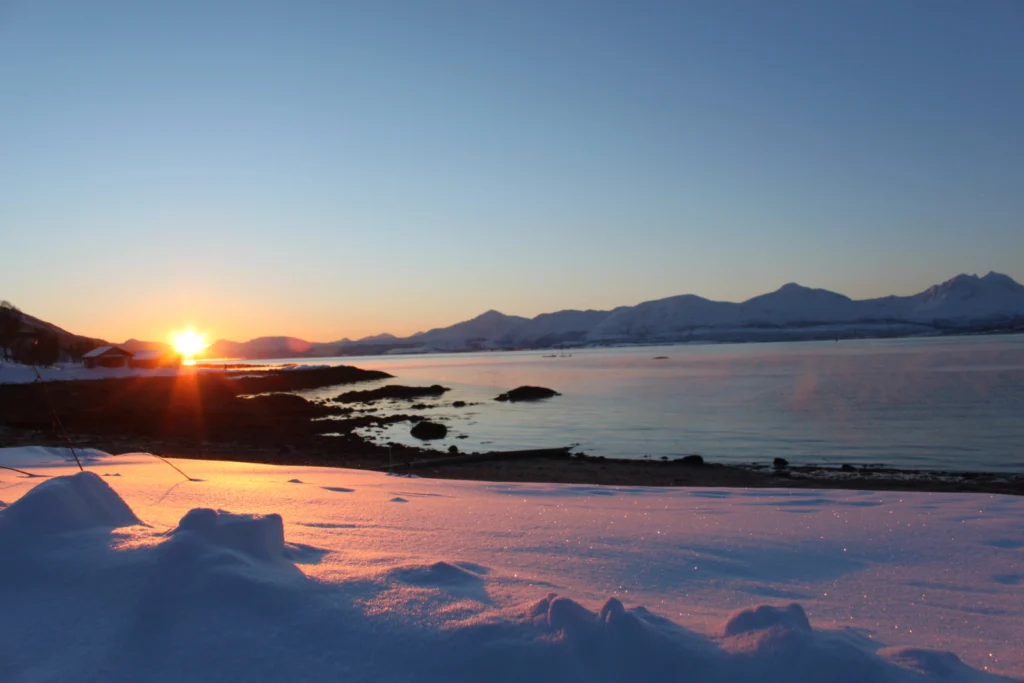
Imaggeo On Monday: Arctic Winter Sun in Tromsø
During parts of the dark Arctic winter, the sun only as much as touches the horizons, melting sunrise into sunset in a dramatic flash of red light. Photo by Maria Scheel, description from imaggeo.egu.eu. Imaggeo is the EGU’s online open access geosciences image repository. All geoscientists (and others) can submit their photographs and videos to this repository and, since it is open access, ...[Read More]
Imaggeo On Monday: Scale model of Doñana marshes
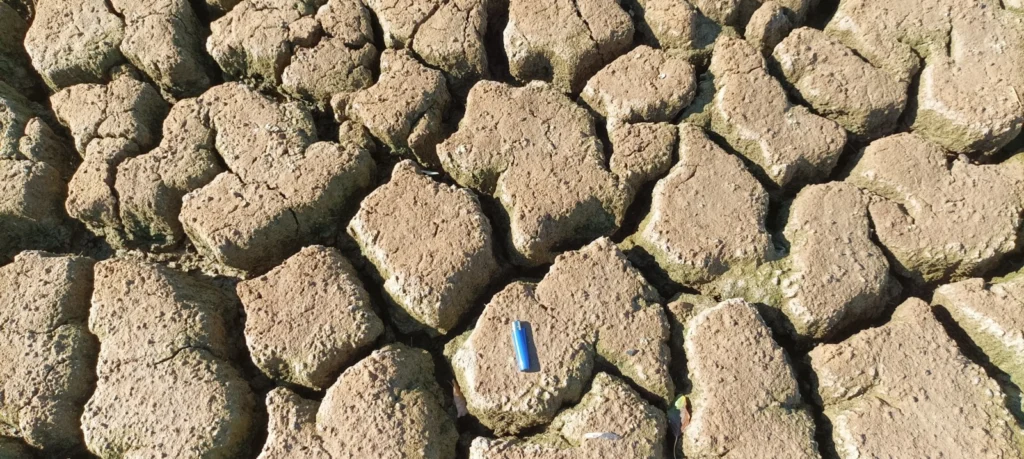
First, in English: Bottom of a dry lagoon in the Cañada de Los Pájaros (Birds Dale) in the surroundings of the Doñana National Park (Huelva, SW Spain). After an exceptionally long, hot, and dry summer, the area’s lagoon system has dried up. The bottom, clayey and silty, contracts to form a network of columnar aggregates separated by small valleys (cracks). The resulting appearance is that of ...[Read More]
Imaggeo On Monday: S-C mylonite in the Calamita Schists (Island of Elba, Italy)
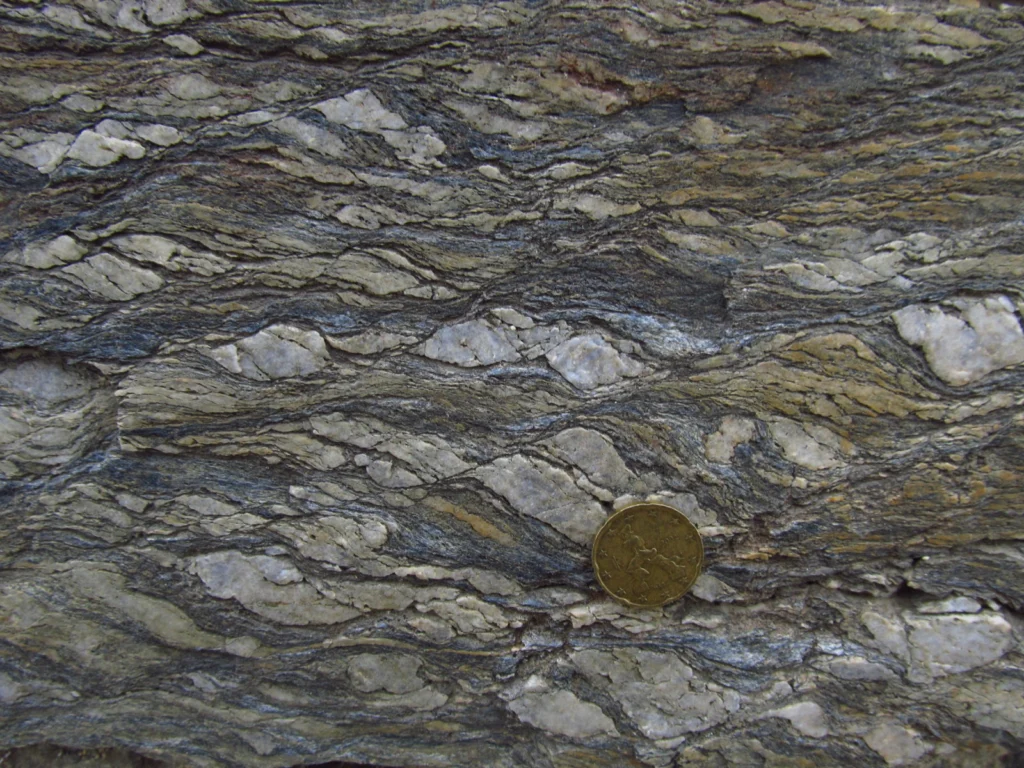
S-C mylonites developed in andalusite-cordierite micaschist (Calamita Schists) in the contact aureole of the Porto Azzurro pluton. The white layers are made of quartz, while the brown layers consist predominantly of white mica and biotite. Top-to-left (East) sense of shear. Read more: Papeschi et al (2017). Heterogeneous brittle-ductile deformation at shallow crustal levels under high thermal cond ...[Read More]
Imaggeo On Monday: Computing for a blank globe
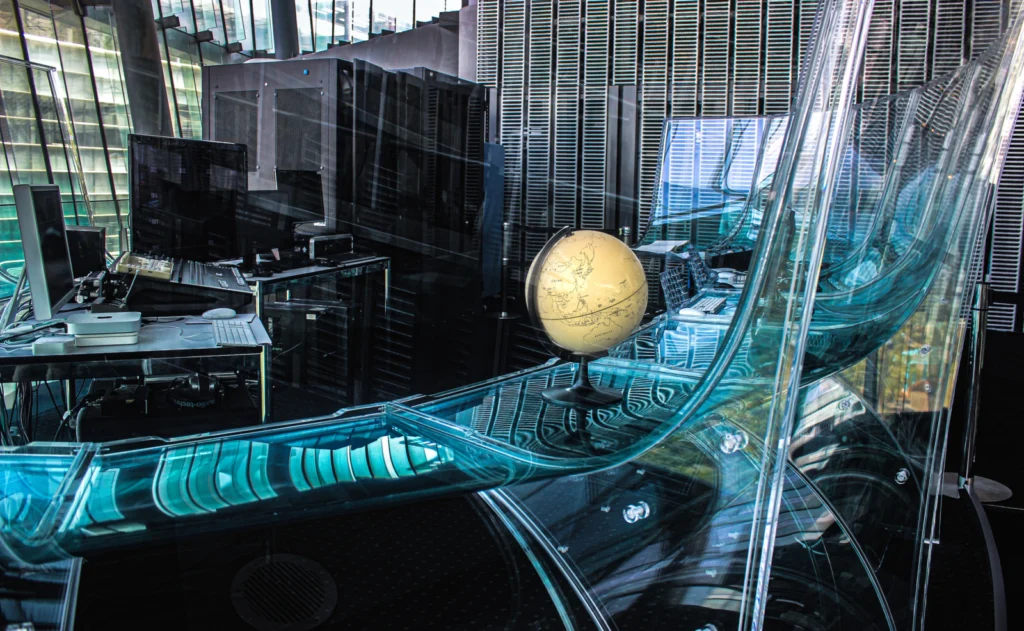
A tribute to the computational geosciences. A mix of computer infrastructure, a modern workstation, and a simple globe with coastlines. Found this scene at the back of room at Miraikan – the National Museum of Emerging Science and Innovation in Tokyo, Japan. The computers, screens, and globe are behind a plexi-glass and while not intended as part of an exhibition it almost becomes an art-mee ...[Read More]
Imaggeo On Monday: Mud extrusion, Gobustan, Azerbaijan
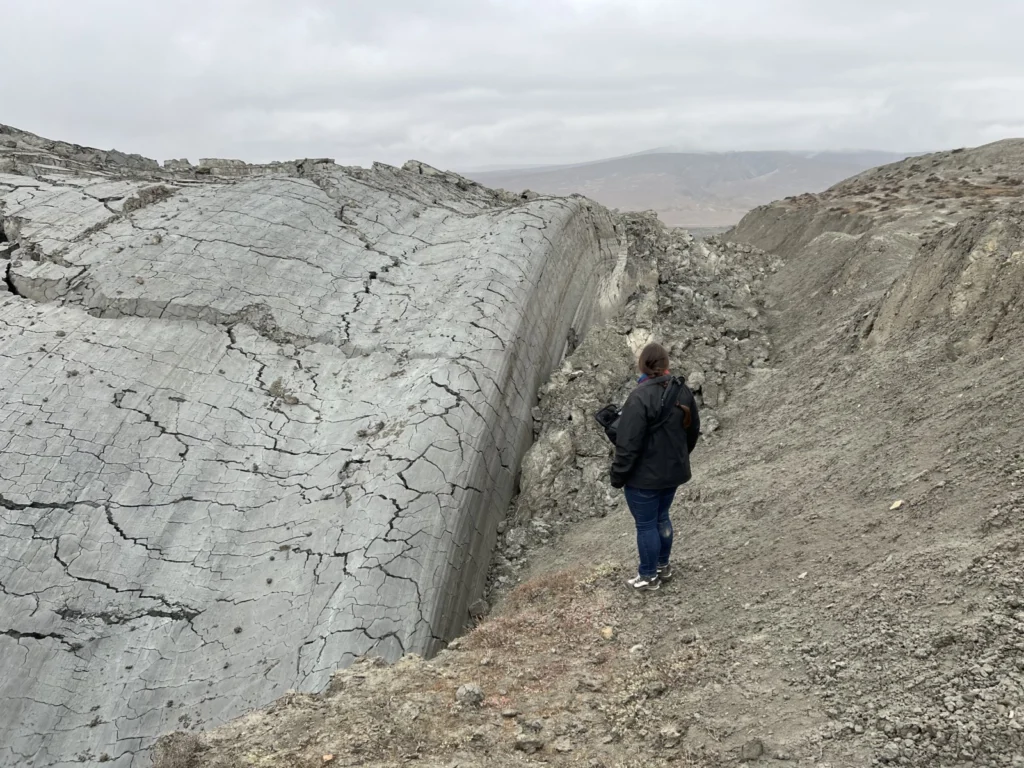
In Gobustan, Azerbaïdjan, gases such as methane or carbon dioxide are emitted in the underground. They lower the density of the overlying sediments which are pushed upwards by buoyancy. Fingering instabilities occur, where more mobile and lighter sediments form vents and mud volcanoes with upwards moving material. Many small scale cones are deposited when the conduits reach the surface, depositing ...[Read More]
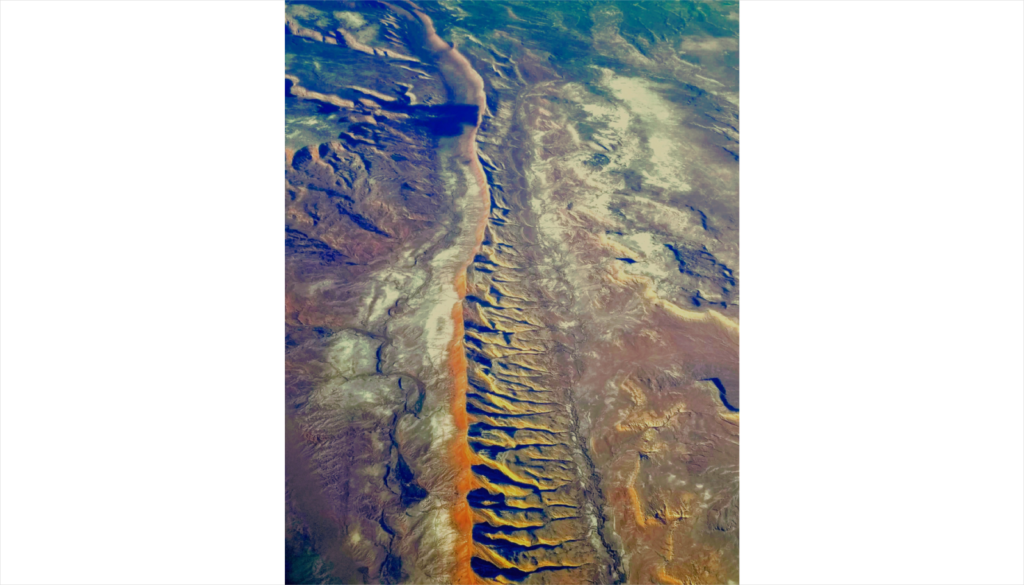
Imaggeo On Monday: Comb through the mysteries of Comb Ridge, Utah
Scientists have combed through the mysteries offered by this ridge for a long time. This is an aerial image of the linear north-south ridge in South-Eastern Utah. First mapped by modern geoscientists in the late 19th century, the ridge is home to numerous Puebloan cliff dwellings and petroglyphs. It is a National Natural landmark and home to the only fossils of a mammal-sized cynodonts (tritylodon ...[Read More]
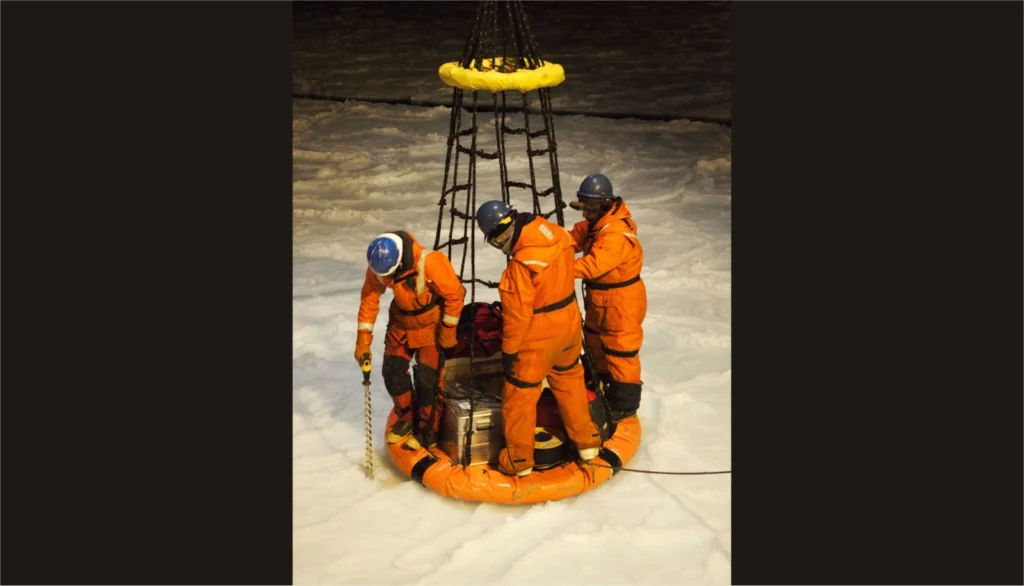
Imaggeo On Monday: Scary sea ice drilling in the antarctic darkness!
This picture was taken from the N.B. Palmer ice breaker during the PIPERS expedition in the austral winter of 2017. Two researchers and a marine technician were drilling cores in the sea ice of the Ross Sea. The ice was too thin and started to crack (see the fault in the background), so the team had to drill from the basket. Photo by Célia Julia Sapart, description from imaggeo.egu.eu. Imag ...[Read More]