GeoLog

EGU Scientific Divisions

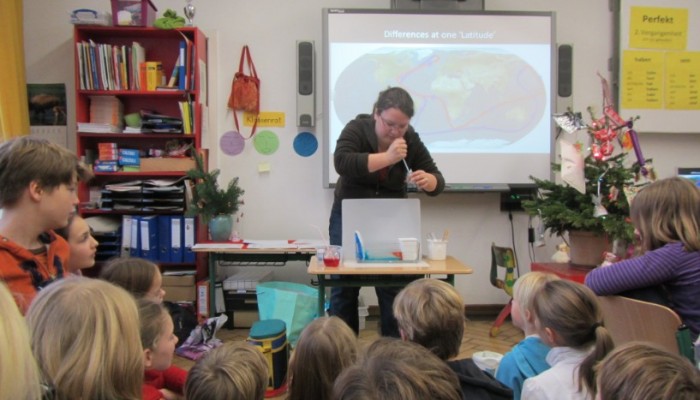
GeoTalk: Nadine Gabriel, creator of #AreYouSiO2? and Assistant Curator of Fossil Mammals.

GeoTalk: Nadine Gabriel, creator of #AreYouSiO2? and Assistant Curator of Fossil Mammals.

Hi Nadine, thanks for speaking with us today, can you tell us a little bit about your background and how you got to where you are now? Thank you for inviting me! I’m a geologist and the Assistant Curator of Fossil Mammals at the Natural History Museum, London. I studied MSci Geology at University College London and I absolutely enjoyed the subject. It was really interesting to learn about the geol ...[Read More]

Imaggeo On Monday: Condensation drop on sulphur

Imaggeo On Monday: Condensation drop on sulphur

Mineralogy, as a subject, often has a hard time. Despite it’s place at the core of the traditional geological sciences, and its importance in a huge variety of other subjects, mineralogy sometimes has a reputation of being complicated and inaccessible and, well, some people have even called it boring. This is also related to the way that minerals are often hugely misunderstood by non-geoscie ...[Read More]

Imaggeo On Monday: The kidneys of the Planet

Imaggeo On Monday: The kidneys of the Planet

In the past, humans considered wetlands as morbid environments where it was difficult, if not impossible, to live. Wetlands, instead, are vital to the health of wildlife and humans, as the Ramsar convention stated in 1971. Wetlands regulate the water flow, buffering droughts as well as floods, and also contribute to the provision of clean water. In addition to water flow regulations and to the pro ...[Read More]

Don’t leaf it to the trees: Amazonian soils also work to store carbon.

Don’t leaf it to the trees: Amazonian soils also work to store carbon.

The Amazon rainforest covers an area of 5.5 million km² and is well known for being an invaluable global resource for carbon storage. But it’s not just the trees and vegetation of the Amazonian rainforest that lock in and store carbon – the very soil in these forests can do the same thing, according to research published in EGU’s journal SOIL earlier this year. In this study Carlos Alberto Quesada ...[Read More]