
Inspired by a post on Lifehacker on what your average geologist carries in their rucksack/backpack, we’ve put together a few blog posts showcasing what a range of our EGU members carry in their bags whilst in the field! Beautiful, eyrie, the land where fire meets ice: Iceland. An Earth scientist’ dream, complete with lava, volcanoes, earthquakes, impossible landscapes, ice, snow, the ocean…Iceland ...[Read More]
Imaggeo on Mondays: what corals can tell us about past climate change
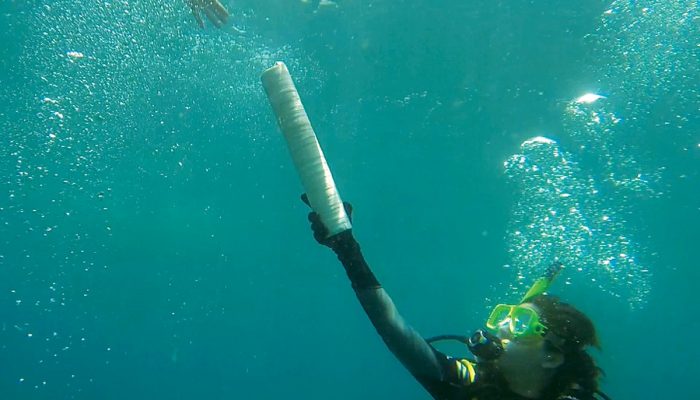
Using Coral as a Proxy of Past Climate . Credit: Isaac Kerlow (distributed via imaggeo.egu.eu)
Reconstructing past climates is a tricky task at the best of times. It requires an ample data set and a good understanding of proxies. Add into the mix some underwater fieldwork and the challenge got a whole lot harder! In today’s Imaggeo on Monday’s post, Isaac Kerlow explains how information locked in corals can tell the story of past climates and how important it is, not only to carry out the r ...[Read More]
Geosciences Column: A new rock outcrop map and area estimation for the entire Antarctic continent
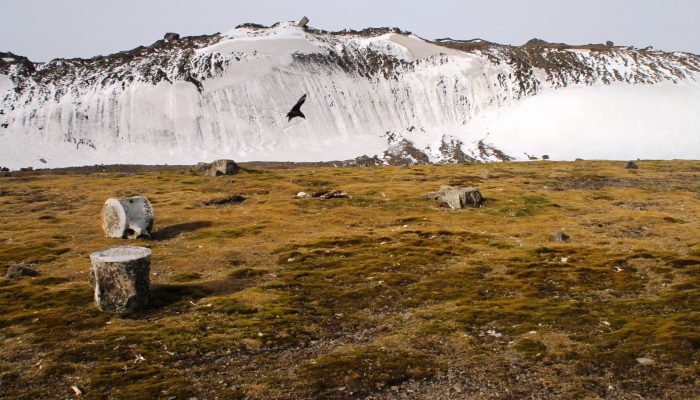
Whale bones, raised beaches and moraine, Byers Peninsula, Antarctica . Credit: Marc Oliva (distributed via imaggeo.egu.eu)
Antarctica has been known as “the frozen continent” for almost as long as we have known of its existence. It may be the only place on Earth where, instead of information on the extent of glaciers or ice caps, there exists a dataset of all non-icy areas compiled from satellite imagery. However, this repository is far from perfect: while satellite resolution and coverage have been steadily improving ...[Read More]
GeoTalk: Raffaele Albano, Early Career Scientist Representative
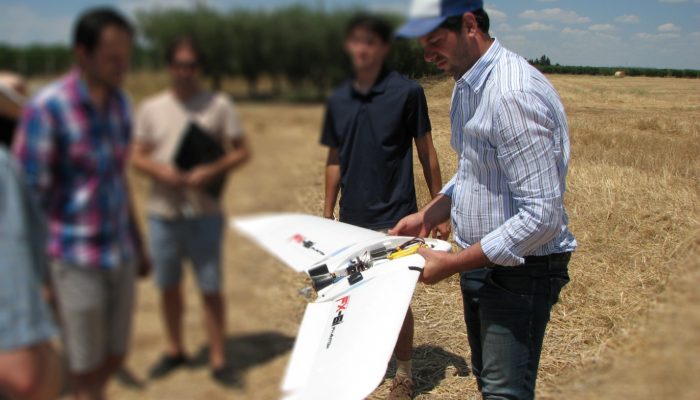
Meet Raffaele Albano, ECS Representative for the Natural Hazard Division
In addition to the usual GeoTalk interviews, were we highlight the work and achievements of early career researchers, over the next few months we’ll be introducing the Division early career scientist representatives (ECS). They are responsible for ensuring that the voice of EGU ECS membership is heard. From organising short courses during the General Assembly, through to running Division Blogs and ...[Read More]