Applications are open until 19 January 2027 for a grant of up to 10,000 euros from the European Geosciences Union (EGU) to host the 2027 EGU Geoscience Day public event(s). You can review the announcement on the EGU Geoscience Day 2027 and submit your application. In this blog, I had the pleasure to interview last year’s EGU Geoscience Day awardees about their events that took place across Finland this year. Continue reading to learn more about their initiatives!
Hello Stephany and thank you so much for your time today! First things first, what inspired you to bring this year’s event to Finland?
I love bringing science to people and connecting people that would not normally meet. But I also see science engagement as fundamental in maintaining good governance. A science literate society means we are better equipped to handle misinformation, require evidence-based policies, and promote curiosity and wonder, which is beautiful but can lead to new generations of scientists or innovators. I truly believe this, and have a TEDx talk about it from 2017 and another similar talk in 2018.
So when I saw the call for Geoscience Day, I saw it as a perfect opportunity to take it to different audiences. The common thread was Imagining.
We can only create good futures if we imagine them first.
I remember shortly after new years thinking about the application, and waking up with the idea for simulating a futures scenario for good governance. I got out of bed and started typing. I have worked in science for policy, and I am extremely interested in futures studies and foresight, so this was an attempt to experiment with the topic. I immediately thought of Mira Hulkkonen, my former colleague and IPCC representative. She would be the ideal person to bring not only the quality of work but the gravitas of talking an exercise into real policy discussion tables.
The escape room is the craziest, most fun of the ideas. I have worked on immersive science-art projects and developed a card game before, but this would be another level. And again, there was only Ana who could lead this. She is absolutely a creative genius and has so much experience developing immersive experiences for children, like theatre and lab workshops. She has led her own projects too, which would be important in handling a big design event like this. I’m so lucky she said yes. I had also recently met a game designer who worked on experiential serious game projects, including escape rooms, and he agreed to join the team as a consultant. I wanted us to build the foundation based on actual expertise or theory. An idea can be great, but its the people in the team that not only make it happen, but make it great. And this is a clear example.
Finally Lahti, the event on environmental data for city services climate and planetary action. I am fascinated by the networks of European environmental research infrastructures and the wealth of data we have, which could, however, be used more broadly. For example, I co-organised an Arctic data hackathon and was amazed at the creativity from the projects that came out after 48 hrs using environmental data, science mentors, and excitement. So again, the importance of facilitating science and data to society is so important to me. It could mean more inclusive designs of services from a broader user community. I took on this city lead simply because I would like to continue exploring open data and public service design at some point.
So, Mira, Ana, and Steph, I am curious about something: From immersive games for schools to multi-stakeholder workshops on data and indigenous knowledge, your project spans different formats. How did you tailor your engagement approach for each audience, and what thread ties all three events together?
Our Geoscience Day spanned 3 cities: Helsinki, Lahti, and Kuopio, for 3 target audiences, with the common thread of Imagining.
(Ana) Helsinki: Imagining education through play and storytelling
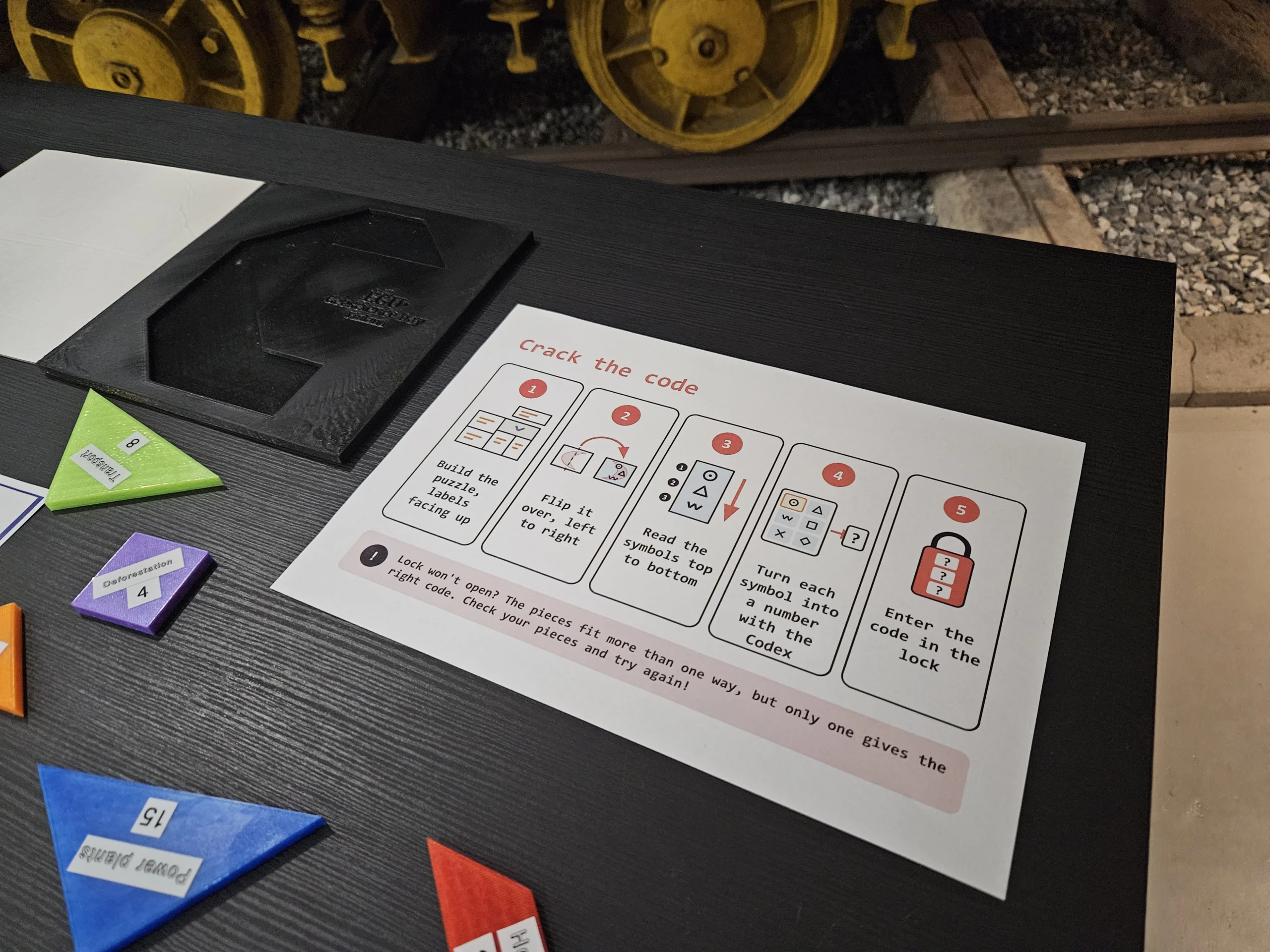
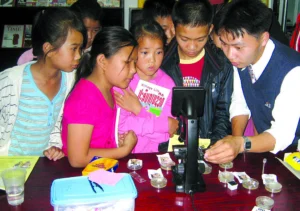
Photo from the Helsinki escape room. Photo source: the 2026 Geosience Day awardees.
When we think of imagining, it’s easy to connect it to the stage of our lives when imagination is at its most natural, unleashed and raw: childhood. From the very first minute, imagination, play and storytelling seemed seamlessly woven together. As someone drawn to science education and outreach, I saw it as the perfect opportunity to challenge myself with a new topic and format: an escape room about the carbon cycle.
The carbon cycle and the greenhouse effect are at the core of climate change education. Even though they are among the most basic concepts, we felt an escape room would let us convey the foundational ideas without an information dump. Instead, we could turn them into a mystery whose answer would be the scientific knowledge participants take home. Along the way, they would discover for themselves the answers to questions such as: Which human activities emit carbon dioxide? What is the relationship between the amount of CO2 and atmospheric temperature? What are the main sinks of anthropogenic CO2? By the end, they would have all the pieces needed to decide whether the planet is in balance in terms of CO2, and hopefully make this knowledge part of their own scientific toolkit.
Designing the escape room was extremely fun. We were lucky to have an excellent game-design advisor, who gave us the tools to build an experience that was both engaging and informative. To give participants some distance from the problem (the carbon problem) and to avoid assuming any prior knowledge, our narrative (again, storytelling was essential) revolved around a crew of aliens visiting Earth on a mission to assess what is going on with its carbon. They had to track how “carbonitos” (our scaled CO2 units) move from one sphere to another. On their journey, they travelled to the Geosphere to track emissions, to the Atmosphere to analyse the relationship between CO2 concentration and temperature, and to Space to observe and quantify CO2 sinks. Each challenge contained a puzzle or task, and only the right answer would unlock the next stage.
(Steph) Lahti: Imagining inclusive, data-driven service design for a resilient city.
For Lahti, we joined forces with City of Lahti including urban planners, Business Lahti networks, students and researchers to discuss what is needed to design Lahti’s city offering of data-driven services. I reached out to multimedia artist Josefina Nelimarkka who integrates open atmospheric data into her art installations. She’s wonderful. She is not only using science as a muse, but she gives data meaning and a visual interpretation. She agreed to give a keynote for this event, on her approach to make sense of data. We had some exchange on the workshop questions that would incite the participants to be exploratory rather than too factual.
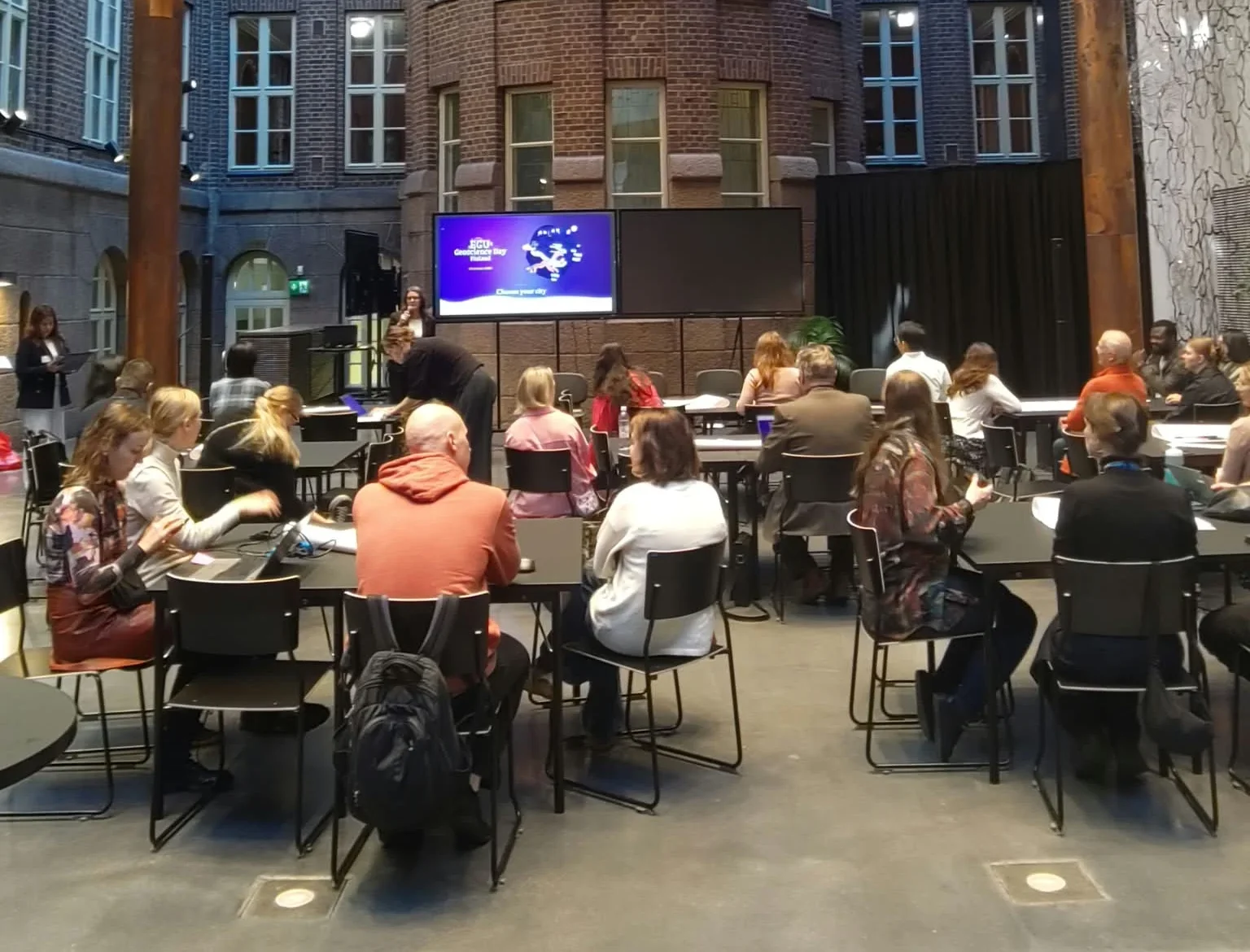
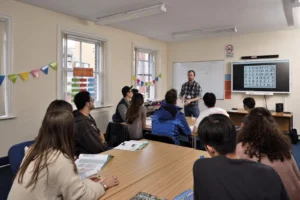
Photo from the Lahti Geoscience Day 2026 Finland. Image source: Awardees of the 2026 EGU Geoscience Day grant.
I had several co-design meetings with City of Lahti to understand their challenges, for example in the context of planetary or one health action. These issues are tricky because they cross expert domains, such as environment, societal, economic, and health, and require data from different sources, formats, and even include sensitive data. Additionally, there is the question of technology readiness, for example, for having very detailed modelling outputs. So our workshop had 8 different tables of mixed stakeholders discussing what are the challenges, the bottlenecks, data availability, technology readiness and to identify how each stakeholder could contribute to solving the bottleneck. I’m extremely happy to report an event outcome is the “Data and cake meetings”: the Modelling research group and the City of Lahti agreed to meet regularly to co-develop projects. Their next meeting was scheduled for the end of November.
(Mira) Kuopio: Imagining Arctic futures: knowledge plurality for good governance.
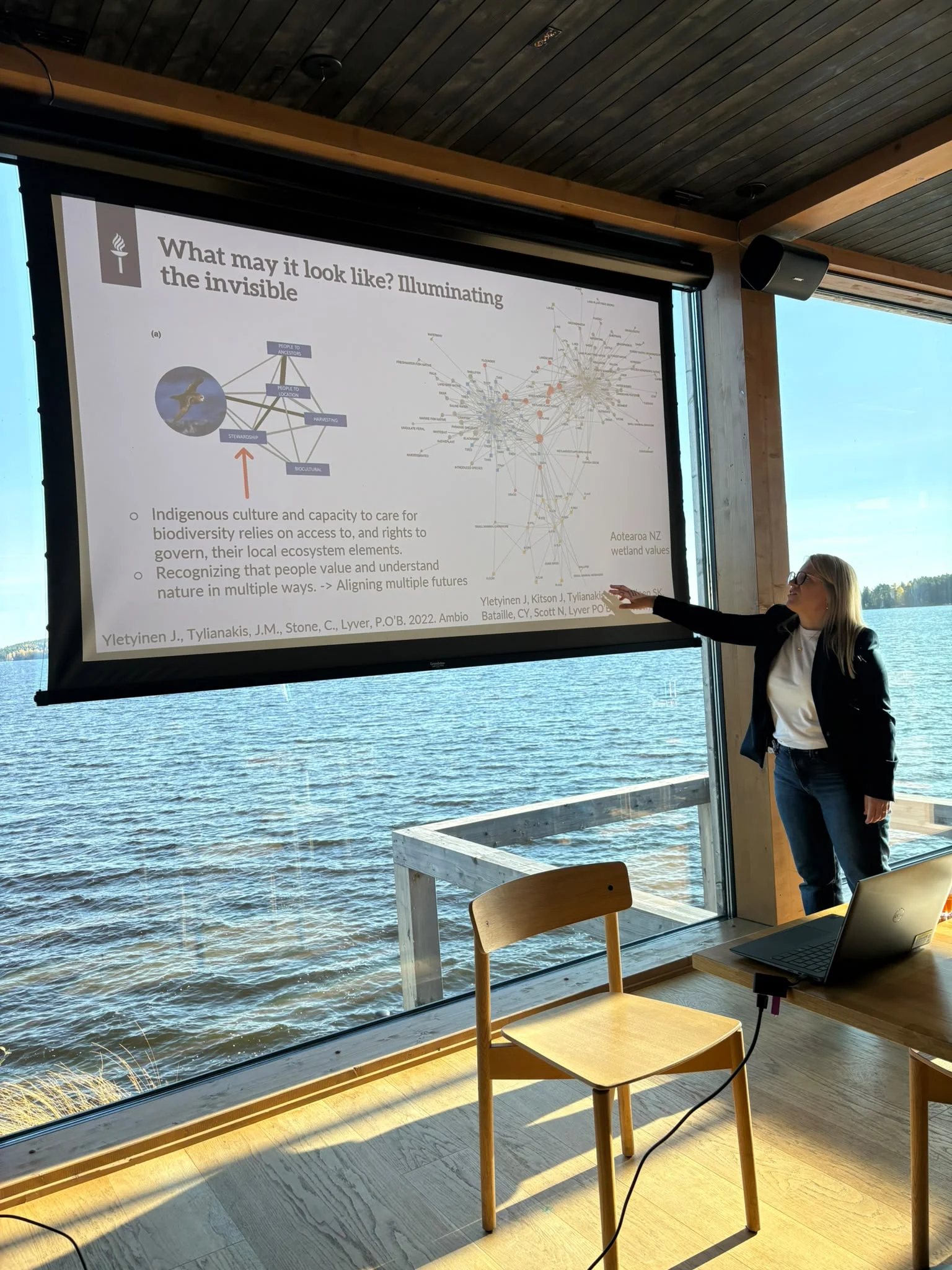
Image from the Kuopio Geoscience Day. Image source: Awardees of the EGU 2026 Geoscience Day grant.
The event asked how alternative futures can be envisioned in a changing climate, and whose knowledge gets heard in future-oriented decision-making. Four expert presentations opened the event: from the perspectives of climate science and the Intergovernmental Panel on Climate Change (IPCC; City Lead/FMI researcher), indigenous knowledge (Finnish Institute for Health and Welfare and the Saami Climate Council); local communities (Human-Environment Complexity Lab of University of Jyv ̈askyl ̈a); and the youth (Finland’s UN Youth Climate Delegate). It was followed by a futures fishbowl of the year 2050, where experts and participants jointly explored futures built on different values, including questions on the inclusion of sources of knowledge and demographic groups, and who needs to do what to improve the intake of plurality of knowledge and community perspectives in climate-relevant decision-making. The event closed with a reverse roadmap envisioning an inclusive, future-oriented governance. We conclude that diversity is needed for knowledge-based decision-making. These conclusions will be reported at the Saami Climate Council and the IPCC (that is updating its Principles and Procedures).
From your perspectives as grant recipients, why are flagship public events like EGU Geoscience Day crucial for bridging the gap between academic research and public climate literacy?
Steph: Thankfully, though amazing efforts like Dora and CoARA we are now giving public engagement the value it has within the academic system. I remember as a Ph.D. student around 2016 a colleague told me to “stop wasting my time” doing science communication and to focus on my real work. It is better but it is not yet fully there. And as I mentioned in the beginning, I truly believe that science literacy is vital for good governance; we have seen how one government leader gagging climate science and literacy can impact global climate action.
Ana: I totally agree with Steph that public engagement events supported by trustworthy organizations like EGU are critical. On the one hand, they show that the scientific community and the research “system” recognize this work is not a waste of time, but a mission to carry science and research forward to future generations. On the other hand, having the EGU “stamp” on these initiatives gives us credibility with audiences less familiar with how science is made, and that helps us build trust in science and scientific knowledge.
Wonderful thank you all so much! Now, let’s move on to the bit I found most exciting, the escape rooms! Translating atmospheric chemistry, carbon sinks, and global emissions into tangible, hands-on puzzles can be a huge challenge. Could you share a peek behind the scenes at how you designed a specific puzzle to teach a key scientific concept?
To be honest, it wasn’t easy! For each challenge, we had to distill the scientific concept or message we wanted to explore, match it with the narrative, and find a practical way to turn it into an interactive puzzle. In the end, we relied on the classic staples of an escape room: physical puzzles, hidden information, encrypted codes, locks and boxes. And it worked!
In the first challenge, participants had to work out the total yearly CO2 emissions from anthropogenic sources (in our made-up scaled units, “carbonitos”). They were given tangram pieces, each representing an emission source and its amount, and had to assemble them into a C shape (for carbonitos). Once the pieces were in the right order, the back of the puzzle revealed a code in the alien language. Decoded into numbers, this code gave the total emissions and the combination for the lock at the end of the challenge.
In the second challenge, we wanted participants to experience for themselves the effect of CO2 concentration on atmospheric temperature. This was the most lab-experiment-like challenge. We mimicked Earth’s atmosphere with a styrofoam box lit by a lamp, and added more or fewer plastic discs on top to represent CO2. Participants tracked the temperature and worked out the relationship between the two quantities by themselves. Again, the right answer gave them the key to unlock their path to the last challenge.
In the last challenge, the team observed Earth from space and had to find all the natural CO2 sinks in a dimmed room. The sinks were invisible to the naked eye and only appeared under UV light, so participants could then add them up to get the total amount of carbon absorbed.
Offering the event in Finnish, English, and Arabic makes this event quite inclusive. Why was tri-lingual accessibility a priority for you, and what did the translation process look like in practice?
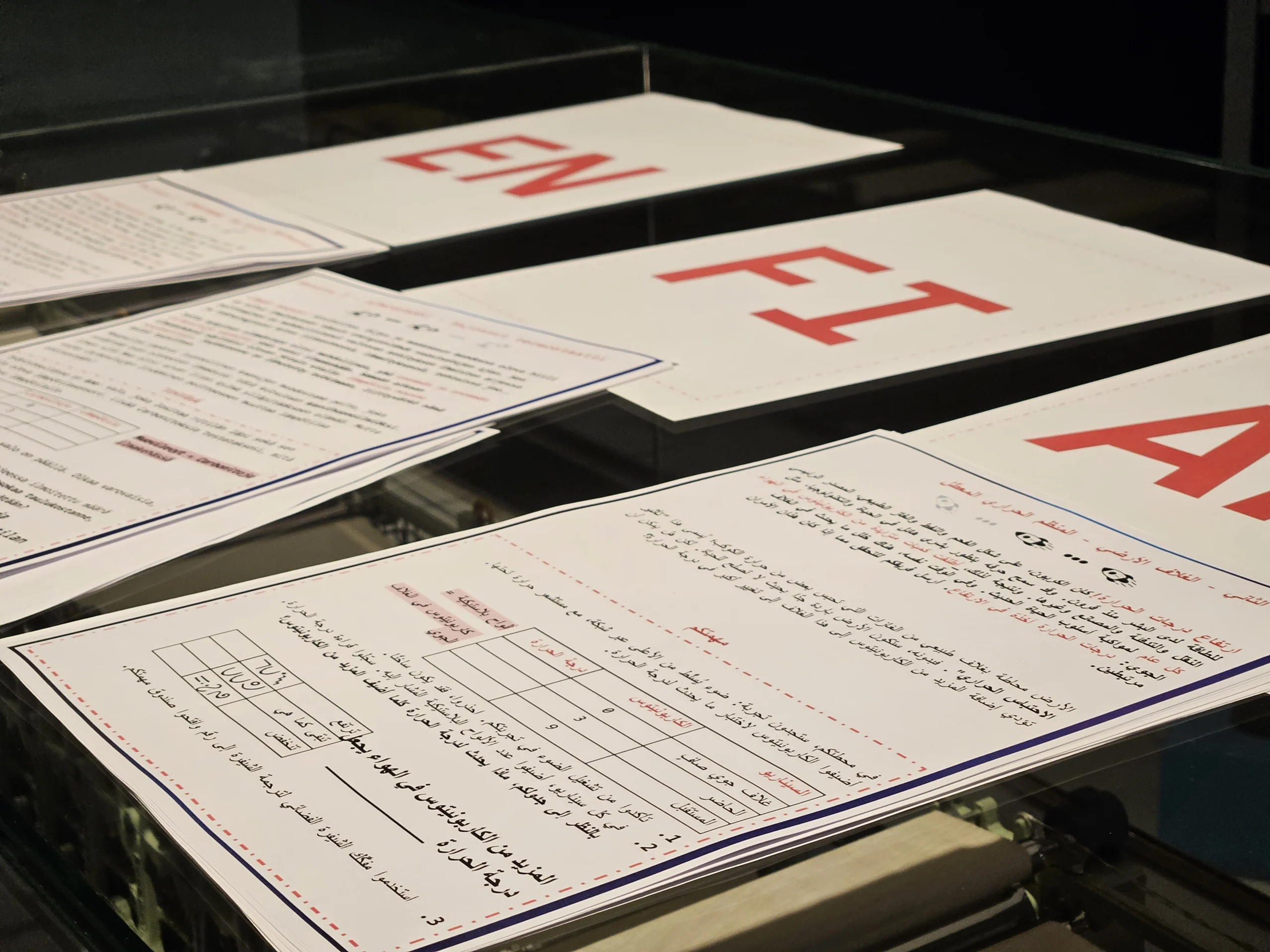
Photo displaying the use of three languages during the Geoscience Day in Finland. Image source: Awardees of the EGU 2026 Geoscience Day grant.
Multilingualism was a design choice from the beginning. We are used to developing and running materials and activities in different languages, so it came naturally. The escape room was first designed in English. The materials were then translated into Finnish with the help of the Museum of Technology’s education team, and into Arabic with our collaborators Dina Alfaouri and Omar Al-Jaghbeer (University of Helsinki).
When participants solve the final puzzle and decipher the secret code, what is the biggest takeaway about CO₂ emissions you hope they walk away with?
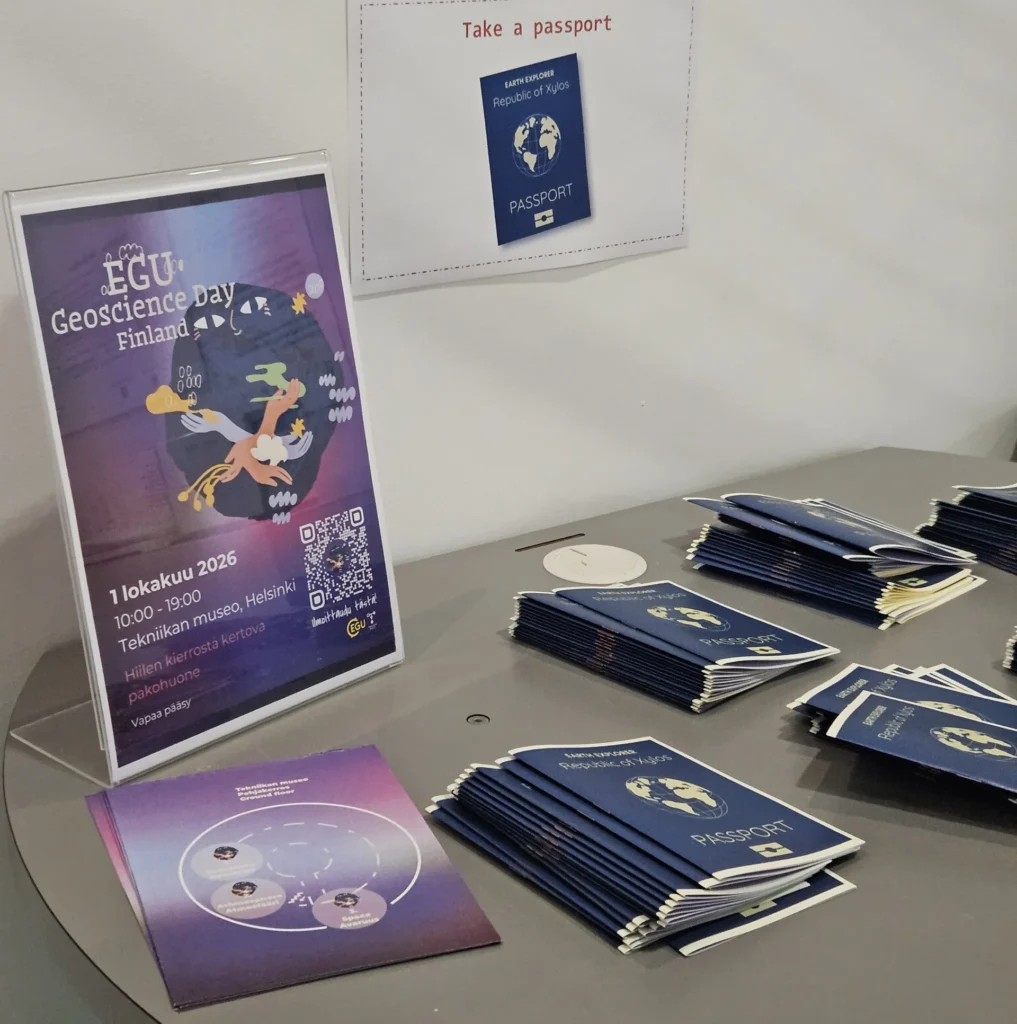
The main take-home message is that atmospheric carbon is out of balance: we are emitting more than natural sinks can absorb. Participants take this message home in their Earth Explorer passport, together with a set of tips for Earthlings on how to tackle their carbon “problem”.
Having watched student groups step into the room and tackle the challenge, what was the most memorable or surprising reaction you witnessed from the young “Earth Explorers”?
As participants go through the escape room, the most memorable moment is seeing them open the physical locks with the right code after each challenge. You can see the satisfaction and sense of achievement on their faces!
Thank you so much! Now, the last question I have is, what advice would you give to fellow geoscientists thinking about applying for an EGU grant or turning complex scientific research into interactive, immersive community experiences?
Steph: If you are thinking about it, do it 🙂 There is always a way, and now so many tools are free and very accessible, the main resource is your enthusiasm. We need more science, curiosity and laughter in these times. And I’m always happy to have a chat if you need encouragement or help brainstorming! Just send me a message.
Ana: Go for it! Find a nice team to do it with, and enjoy the process of creating something unique and important. Reach out to the audiences that resonate with you. In the end, it’s about sharing your fascination with science with people you feel a natural connection with.
Thank you all so much for your time! It’s been a pleasure!