As we left EGU26 behind with record participation, it was amazing to see increased interest in science-policy sessions from the scientific community. Thanks to all panellists who contributed to the stimulating discussions, and to all participants for igniting them!
Below is a look into some of the key themes emerged from the #science4policy sessions at EGU26.
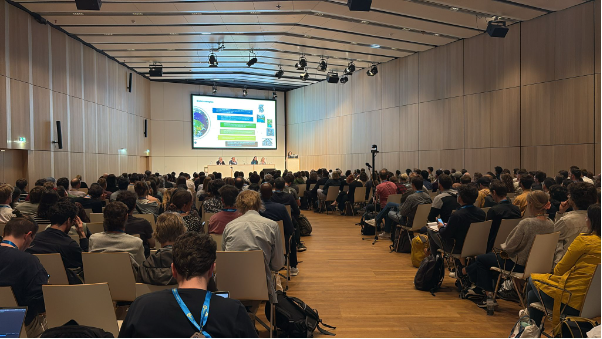
The Geoengineering Great Debate
Innovation and emerging technologies
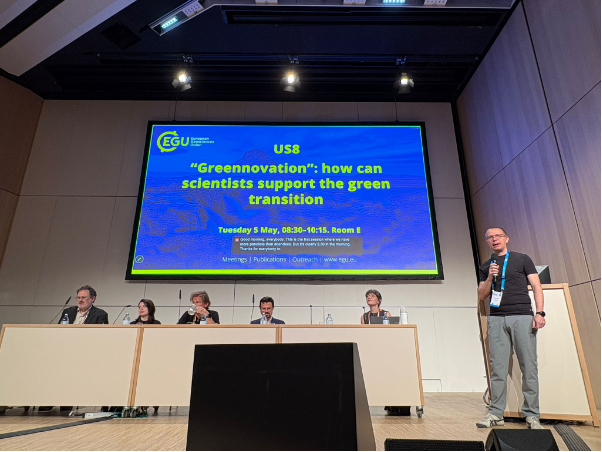
A central theme of EGU26 was the urgent need to tackle the climate crisis. These discussions not only encompassed a huge variety of research, policy, and mitigation strategies, but also innovation and technology. In the light of the European Green Deal and the 2040 Climate Target, the Union Symposium Greennovation”: how can scientists support the green transition drew on diverse perspectives from science, policy, and industry. The panellists conceptualised the green transition as both the engine behind clean economic growth and as a matter of sovereignty and competitiveness for Europe amid growing geopolitical tensions. The discussions emphasised the need to equip scientists with the necessary skills to engage in policymaking and the importance of putting financial mechanisms in place, which is also discussed below.
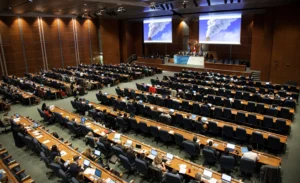
Reaching the plenary room’s full capacity, the Geoengineering – Overarching Great Debate was one of the most attended sessions of the week. Focusing on Solar Radiation Management (SRM) and Marine Carbon Dioxide Removal (mCDR), the panellists of the session questioned the extent to which these geoengineering methods fit into existing policy frameworks and discussed whether these “technological fixes” undermine current emission mitigation efforts by diverting attention away from them. The panellists highlighted the potential risks of deploying such technologies without adequate research as well as ethical concerns in piloting them, especially in parts of the world where indigenous communities live.
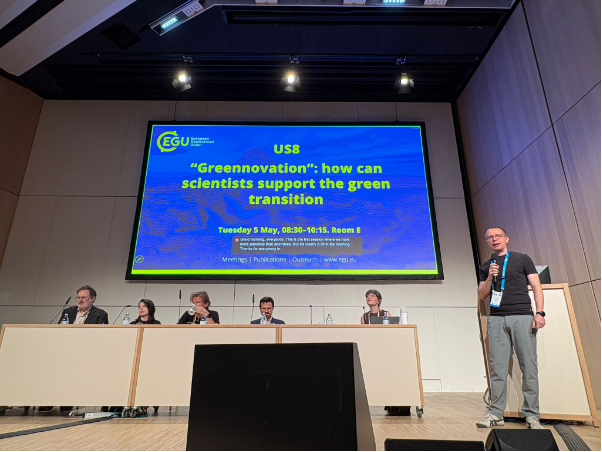
Union Symposium “Greennovation”
Policy for science
It’s not only vital for scientists to engage in policymaking to provide science advice, but also to support the institutional structures that enable them to participate and for evidence to be effectively integrated into policymaking. These institutional structures are across local, national and international levels and interconnected, making them relevant for the whole scientific community.
As underlined during the Great Debate “From Honest Brokers to Lobbyists: What Could Be the Role of Scientists in Different Contexts and Countries?”, Policy for Science refers to the rules, funding mechanisms, strategies and plans that influence how scientific research is conducted. The panellists in this session discussed different roles that scientists could play in science-policy interface, with the potential to influence both Policy for Science and Science for Policy.
While most of EGU26’s science for policy sessions outlined some form of challenges, the Short Course “New Toolkits – the destabilisation of science and what we can do about it” had the difficult job of addressing the shifting geopolitical pressures, political polarisation, misinformation, and risk of declining public trust. The panellists shared personal anecdotes, gave insights into how misinformation is spread, provided effective techniques for minimising its impact, and introduced tips and various support mechanisms designed to help scientists when they or their institution is impacted.
Creating policy impact
The importance of being able to measure recognise and reward our science for policy engagement was mentioned throughout the week’s discussions. Numerous panellists highlighted the need to recognise the work of knowledge brokers and researchers on the science-policy interface. The panellists in the Soil System Sciences policy session, “Facing the last policy challenges in the EU: How soil scientists can contribute to the demands for scientific evidence to support EU policies” specifically drew on the challenges in soil science to also emphasise the need for the academic institutions to recognise policy engagement beyond traditional academic metrics.
These discussions cumulated into the Friday Splinter Meeting “Measuring and valuing science for policy and engagement impact”. During this session, methods of measuring policy impact were presented followed by a panel discussion which highlighted the importance of planning for impact and using qualitative and narrative metrics.
EGU26 also welcomed the first recipients of the EGU’s Science for Policy Award, which was created to recognise and reward those working on the science-policy interface. Science for Policy Team at the Finnish Academy of Science and Letters shared their award-winning work on different knowledge synthesis methodologies, their science for policy resources for researchers, and their knowledge broker network.
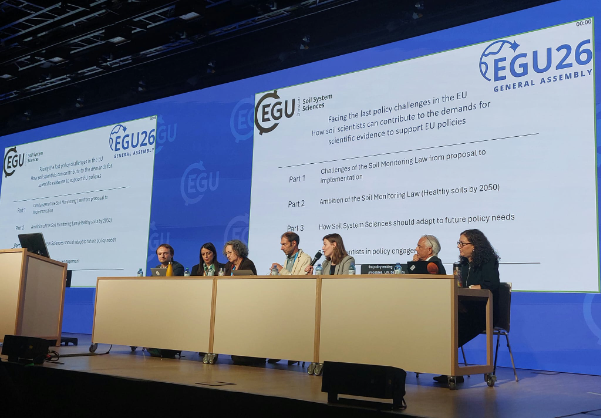
The Soil System Sciences session Facing the last policy challenges in the EU: How soil scientists can contribute to the demands for scientific evidence to support EU policies
Science Communication and New Narratives
Science communication is about how scientists transform technical knowledge into digestible insights; which in turn influences the narratives about societal transformation in public. Climate change is a prime example of this, where geoscientist can engage in a multitude of roles across the science-policy spectrum from modelling to providing science-advice to engaging in climate advocacy.
The panellists of the Union Symposium “Climate change, morals, values and policies” explored how individuals’ different priorities and perceptions shape their attitudes towards climate change. The conversation recognised the necessity of adopting new narratives to resonate more deeply with the public. The speakers emphasised a whole-of-society approach to engage a broader range of stakeholders in both communicating the issues and co-creating solutions.
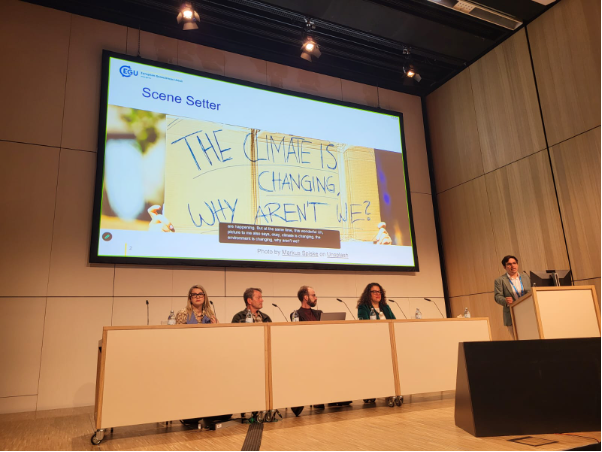
Union Symposium “Climate change, morals, values and policies”
Skills and career paths for scientists
As usual, the Short Courses and Splinter Meetings aimed to showcase the multitude of roles that scientists could play in science-policy interface and to upskill scientists who are interested in engaging with policy!
The Splinter Meeting “Shaping Your Science-Policy Career: Pathways and Opportunities” convened speakers from policymaker and researcher roles who shared challenging and rewarding aspects of their roles, and highlighted relevant skills that could help scientists in their career paths. The Short Course “Meet the Austrian Public Administration and Parliament Science for Policy Staff” featured four panellists from different public institutions in Austria that illustrated how these institutions engage with scientific knowledge, providing a glimpse of different career opportunities for scientists.
While the Short Course “Instruments and Initiatives for Policy Engagement” provided the foundations of policy engagement and important tips from a panel of experts, as well as various toolkits and training opportunities; “Science Diplomacy: What is it and how to engage” showcased the synergies between the skills that geoscientists have and the skills needed in diplomatic engagement.
The Splinter Meeting “Pitch your research to a policymaker” featured presentations by four researchers who got feedback from a panel of experts on how to tailor their scientific knowledge into policy-relevant insights; “How to submit evidence to help inform policy decisions” provided participants with information using examples at the EU level and different national policy contexts. And, as the last science for policy session of the EGU26, “How to write a policy brief” provided participants with useful tips and tools on this important method of communicating scientific knowledge.
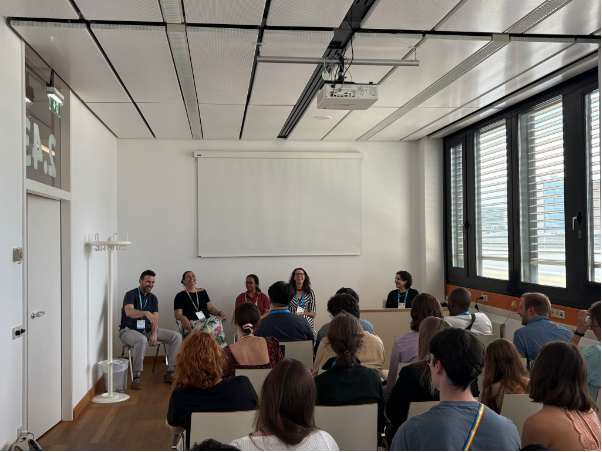
Splinter Meeting “Shaping Your Science-Policy Career: Pathways and Opportunities”
Conclusion
While each of EGU26’s science for policy sessions had their own focus, it was great to see key themes emerging across them throughout the week.
If you want to revisit the stimulating EGU26 week, you can watch the recordings of the Great Debates, Union Symposia and Award and Medal Lectures on the EGU26 platform. You can also find the speaker presentations and additional session materials linked on the individual #Science4Policy Short Course descriptions.
If you have more ideas about science for policy topics for EGU27 sessions, feel free to comment below, reach out to us at policy@egu.eu, or submit your own session!