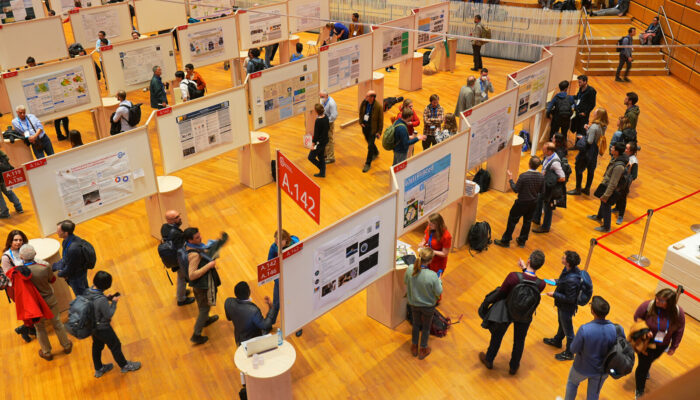
This blog compiles information that may help be helpful to neurodivergent individuals attending the EGU General Assembly. Produced by the EGU Neurodiversity Network, the blog provides general tips and tricks for attending conferences as well as information specific to General Assembly, such as the location of quiet rooms, relevant sessions and contact points.
For more information about the EGU Neurodiversity Network, please contact edi@egu.eu.
What is neurodiversity?
Neurodiversity is the concept that individuals experience the world, process information, function and communicate in diverse ways; there is no “default” way of thinking. As a framework it supports the self-advocacy of people who face obstacles due to their needs not being considered in the design of environments and systems. Such individuals think and experience the world in ways that do not conform with societal norms and are often referred to as neurodivergent, and includes (but is not limited to) autistic, ADHD, dyslexic, and dyspraxic individuals.
Large conferences and meetings pose additional and specific challenges for neurodivergent attendees due to, for example, heightened sensory sensitivities, as well as executive function and communication challenges. About 15-20% of the global population is estimated to be neurodivergent; if we assume that 20,000 people attend the EGU General Assembly, then about 3000-4000 participants may be neurodivergent.
This blog is organised as follows:
- Guidelines and resources for inclusivity and accessibility
- How to build a programme that works for you
- How to network
- Sensory overload and how to manage it
- Tips from previous neurodivergent attendees
- EGU support and services,
- Sessions of interest for neurodivergent attendees
Who to contact if you need support
Before we dive in, EGU General Assemblies and other meetings are meant to be inclusive and safe spaces, as described in the Code of Conduct. If you need help, or encounter inappropriate behaviour, please contact an EGU Person of Trust at conduct@egu.eu or by asking for them at the EGU help desk after the entrance of the conference centre.
Guidelines and resources for inclusivity and accessibility
This sections highlights a few accessibility tips in order to improve the assembly experience for yourself and others EGU26.
Using inclusive language
Some people might feel uncomfortable when they are addressed according to in a way that is not considerate of their identity.
- Use gender-neutral language. Instead of “manned” or “mankind”, use “crewed” or “humanity”, for example.
- Respect people’s pronouns. Pronouns are printed on the conference centre name badges. Please check a person’s pronouns on their name badge, and add you own on the EGU26 profile before printing off your badge. If you make a mistake, simply correct yourself and move on.
- Do not use mental health terms inappropriately. Avoid using mental illness as a metaphor, such as by describing behaviors as “OCD” or “bipolar”, for example.
- Avoid describing disabled people as victims or as abnormal. Do not say someone “suffers from” a disability or is “confined” to a wheelchair, or refer to abled people as “normal”.
- Be generous with other people’s language ability. English is the most common language used at the General Assembly, but for many attendees it is not their first language. Additionally, many neurodivergent folk may have communication challenges. As such, we ask that you be patient and understanding in conversation with people.
More information on inclusive language is available in EGU’s Promoting inclusive language: an incomplete guide.
Visual and audio accessibility
- Use large font sizes. Presenters should use font sizes that are large enough to be easily read on a laptop screen or from the back of a room in a presentation room. This should also apply to labels on figure axes.
- Keep fonts simple. Avoid fonts that are decorative, italicised and have serifs, as they are harder to read by people with visual impairments. Fonts should be san serif and have distinct letters, such as Open Sans.
- Avoid using too many colours. Colour is another way to communicate information; avoid using random or too many colours as it may distract from or obscure what you are trying to say. Use a limited colour palette (for example, use a maximum of four colours in a presentation) and avoid using rainbow scales; scientific palettes are available here.
- Use colour-blind friendly palettes. Ensure your presentations is understandable by people who are colour-blind or visually impaired; do not just use colour as an indicator, but consider shape, pattern and structure too. Check that your presentation is accessible by using tools like Coblis.
- Practice using closed captions. EGU26 will feature AI-based closed captioning for all presentations, which attempts to capture a wide range of speaking styles. Improve your own captions and practice speaking slow and steady.
- Use a microphone. Microphones are not there to just project your voice, but are also used to produce live-captions and avoid echoes.
Information on inclusion and accessibility at the EGU26 General Assembly is available here.
More tips how to make your presentation accessible and impactful is available on EGU’s webinar: SciComm101: how to present at a scientific conference.
How to build a programme that works for you
The EGU General Assembly is a huge conference, with dozens of sessions occurring simultaneosuly, from 8:30 in the morning until 20:00 in the evening (and beyond if you account for social events, dinners with colleagues, etc). There is so much going on all at once that it’s impossible to attend everything we are interested in. Take this to heart as you build a programme:
- Prepare your schedule in advance. Check the programme before the General Assembly begins, start making your plans and add activities to your calendar. You can always adjust them during the conference week, but at least you will have a strong foundation to build on.
- Make your schedule for the entire week. Knowing your activity for the entire week will help you identify where you could take longer breaks. It is especially important to include lighter days to balance out those that are packed full.
- Schedule your breaks and recovery time. Keep some evenings free to have time to relax and recover, especially after some of the most busier days. Have at least one half-a-day free in the whole week to give you some time to recover.
- Prioritise with an the optimistic schedule. Create a programme with everything you want to see – even if that would require you being in multiple places at once. Use this to prioritise sessions you want to attend, select those you will not attend, or identify what can be skipped if you need a break. Similarly, give yourself free time to explore and discover the conference.
- Schedule informal events. Many events will happen out of the conference formal schedule, especially in the evening, such as dinner with colleagues, which you should keep in mind when building your programme. Many informal, community-led events can be posted discovered on the pop-up networking programme.
- Include buffer periods for presenting and convening. Identify when you will be presenting or convening sessions, and make sure your schedule is less busy around these times to allow for preparation and recovery.
- Build your schedule so it works to your own rhythm. Some people are early-birds, others are night-owls, and others need a nap in the afternoon or a longer break for lunch. Consider skipping sessions that are not at the top of your priority list and which conflict with your usual rest time.
- Attend sessions remotely. Even as an on-site participant, you can still join the oral sessions online! Consider joining sessions online if you are feeling overwhelmed by the crowded rooms.
- Be flexible. Do not try to attend everything or feel like you have to commit wholly to your programme. If your body needs to rest, then take a break without feeling guilty.
You can build your personal programme here.
How to network
Engaging in social interaction can be of cause social discomfort for many neurodivergent people, who may feel overwhelmed by the conference environment and the effort required to interpret social cues. Additionally, what networking is may be unclear: it is generally portrayed as a skill, and sometimes misapprehended as speed-socializing or about engaging with as many individuals as possible.
Networking is about establishing personal connections with others. Even small interactions, such as sharing a space, can lead to potential friendships or collaborations. Networking can occur anywhere, whether at a mixer, a poster session, or during a coffee break.
- Focus on quality over quantity. Try to engage in one-on-one conversations that allow you to deepen your connection, instead of trying to talk to as many people as possible.
- Warm-up with small-talk. Small-talk works as a social lubrication – it helps people to become familiar and at ease with one another, providing a base for richer conversation. If you unsure of what to say, you can try remarking on common, positive experiences at the conference or extend a compliment – avoid complimenting on appearance, and instead compliment something the recipient has control over such as their research and or presentation, and make sure they are always genuine. Remarking topics close to their work also means it is easier to segway into conversation about collaboration.
- Prepare a script. Be ready to describe what you do and why you are passionate about it, using clear and simple language so that is easily comprehensible to those not familiar with your area of expertise. Keep this pitch under under 3-minutes and, ideally, also have a 1-minute pitch ready for busier periods. You can learn how to deliver an elevator pitch at the EGU26 short course.
- Select an environment that works for you. Focus on authentic, structured, and low-pressure approaches; whatever makes you feel more comfortable. If you meet someone in a busy, overwhelming environment then request that you meet again in a more suitable place and time. If it makes you more comfortable, attend events with a friend or colleague.
- Connect online. Always end conversations with a route for people to contact with you for future discussions, such as by exchanging your email addresses or connecting on LinkedIn. This can help sustain a connection if you want to take a break from socializing.
- Follow-up on your connections. It is a common truth that most people won’t contact each other after exchanging contact details, so do not assume they will contact you and take the initiative. When initiating a conversation, always include a short reminder of the circumstance in which you met (for example, the date, time and name of the event ) and a topic you had discussed.
Keep an eye out for the EGU26 blog on how to network in the coming weeks!
Sensory overload and how to manage it
Sensory overload is when an environment causes an individual to experience uncomfortable or distressing sensations such as heightened levels of stress, anxiety, a sensation of paralysis, a failure to focus, or higher levels of irritation. Physically, one may feel dizzy, increased blood pressure, nausea, shaking, trembling, loss of eyesight, sweating, tighten feeling in the chest, and sometimes even blackouts.
Participating in large conferences can lead to different levels of sensory overload, due to having to navigate large crowds, being in noisy and unfamiliar environments, artificial lighting, etc.
In the following paragraphs, we will share some tips on how to manage sensory overload, including strategies to plan for and manage sensory overload.
The core principle to regulating yourself is to plan ahead, minimize exposure to triggers, and prioritize your comfort and well-being throughout the conference.
Plan ahead
Identify spaces which could be used to retreat from the conference environment, such as:
- Accessing quiet rooms are available on the Purple (Level -2) of the conference center.
- Leaving the conference centre and go to one of the nearby parks, such as Donau Park.
- Listening to the calming EGU Quiet Room Spotify playlist.
- A private space close to the conference centre, such as your hotel room.
Bring items which help to reduce sensory overload, such as:
- Earplugs, available at the EGU Help Desk near the main entrance on Yellow Level (Floor 0)
- Sunglasses and or blue-light glasses
- Small, discrete items that help with stimming and self-soothing.
Minimize exposure to triggers
- Sound: Use noise-cancelling headphones or earplugs. Filtered earplugs can reduce background noise while still allowing conversation – this is especially useful or poster sessions. Be aware of possible sudden loud or high-pitched sounds during talks.
- Light: Sunglasses or blue-light glasses can reduce discomfort from bright lighting. Gradual transitions between lighting conditions may help manage sensitivity.
- Touch: Wear comfortable clothing and avoid irritating fabrics. Choose supportive shoes, as conferences involve significant walking and standing. Be mindful of crowded areas (entrances, transport, cafés) and plan to avoid peak times where possible. Busy areas include:
-
- Near the conference centre entrance just before and just after sessions,
- Kaisermühlen-VIC metro station in the morning, at lunch time and at the end of the conference day. Entering the metro at the other end of the platform (e.g. front carriage when coming from the city centre) can help avoid the worst of the crowd.
- Refreshment stations and the conference centre cafe during the breaks,
- During lunch breaks, popular shops include Billa supermarket (Leonard-Bernstein-Straße 4), Hofer supermarket (lower level, Donau-City-Straße 9), Ströck bakery (upper level, Donau-City-Straße 9).
-
- Taste: Stick to familiar “safe foods” that suit your preferences (such as pasta, bread, carrots, crackers, mild cheeses, etc.). Plan meals in advance, buy groceries outside of busy times such as lunch, check menus, and consider bringing snacks to ensure suitable options.
- Smell: Wearing a face mask may help reduce exposure to strong smells. Avoid areas with concentrated food odors when possible, and avoid strong perfumes. Discouraging attendees to use perfumes is already common practice in a number of events and placess.
Personal Space & Boundaries (Deliberate touch)
Cultural differences may include varying norms around physical touch. If you feel uncomfortable, communicate your boundaries or step away from the interaction. If they are inappropriate, please seek help a the EGU Help Desk just after the entrance of the conference centre or contact an EGU Person of Trust at conduct@egu.eu.
Prioritize your well-being
Conferences can be overwhelming. Prioritize your well-being by:
- Planning regular breaks and shorter days,
- Focusing on high priority sessions,
- Scheduling your rest time,
- Taking spontaneous breaks as required, even if they conflict with your original schedule,
- Leaving environments when feeling overwhelmed,
- Using quieter or outdoor spaces (e.g. walking in the park or along the riverside) to reset.
Breathing Techniques
Breathing exercises can help manage stress and sensory overload. While some of these techniques are subtle, some would require private spaces. Examples include:
- Box breathing (inhale–hold–exhale–hold for equal counts)
- 3-3-3 breathing
- Deep diaphragmatic breathing
- Extended exhales (longer exhale than inhale)
- Visualization techniques (e.g., imagining a balloon expanding and deflating)
Stimming & Self-Soothing
Stimming (short-hand for self-stimulatory behaviour) refers to repetitive movements or actions that help regulate the nervous system and manage stress or sensory overload. While often associated with autistic individuals, it is a common self-regulation strategy used by many people.
Stimming can take different forms, including physical movements (e.g., tapping fingers, rocking), interaction with objects (e.g., fidget tools), or subtle behaviors like toe movement or quiet humming.
Allowing yourself to stim can help reduce tension and maintain focus during the conference. Consider:
- Bringing small, discreet items for self-soothing
- Identifying quieter spaces where you feel comfortable engaging in these behaviours.
- Use subtle alternatives to partially stim, if visible stimming feels uncomfortable.
General tips from previous neurodivergent attendees
Scheduling and the programme:
- Use a silent alarm to keep you on time;
- Include *everything* in your calendar and have notifications on;
- Schedule time not just to pause but also (in addition) to reflect and observe your emotions and what your nervous system is doing;
- Schedule breaks so you take them;
- Schedule eating/drinking breaks. The conference can get so busy and engaging that you might forget taking care of basic needs.
- Don’t try to see everything – keynote events
- which you might not want to miss, such as Great Debates and Union Symposia, will be available online after the conference anyway.
Self-regulation and management:
- Have a notes app ready on your phone’s first screen to easily add things before you forget/to help get repeating thoughts out of your brain – or use a notebook and pen to signal to your brain to move on;
- Bring a refillable bottle and some SOS snacks.
- Plan time to recover. That can be alone time, a call with your partner or a friend, a meditating time, doing something that is resourcing to you (maybe a creative activity you can have easily with you, watching a movie in the evening, spending time outside in a park or the river border). EGU is a marathon, be careful to not burn yourself by overdoing the first couple days.
- You don’t have to go to the dinner with everybody. If you prefer a chill dinner alone or with people you know, it’s alright.
- Adjust settings: for example consider moving outdoors for a networking discussion, if indoors is too crowded.
EGU26 services and features
EGU badge & transport ticket
Local transportation ticket is included in the registration fee, and is valid Sunday–Saturday, 3–9 May 2026, within the core zone of Vienna (formerly zone 100). This ticket does not cover the transportation to and from the airport. The transportation ticket is location on the back of your name badge.
Sunflower Lanyards
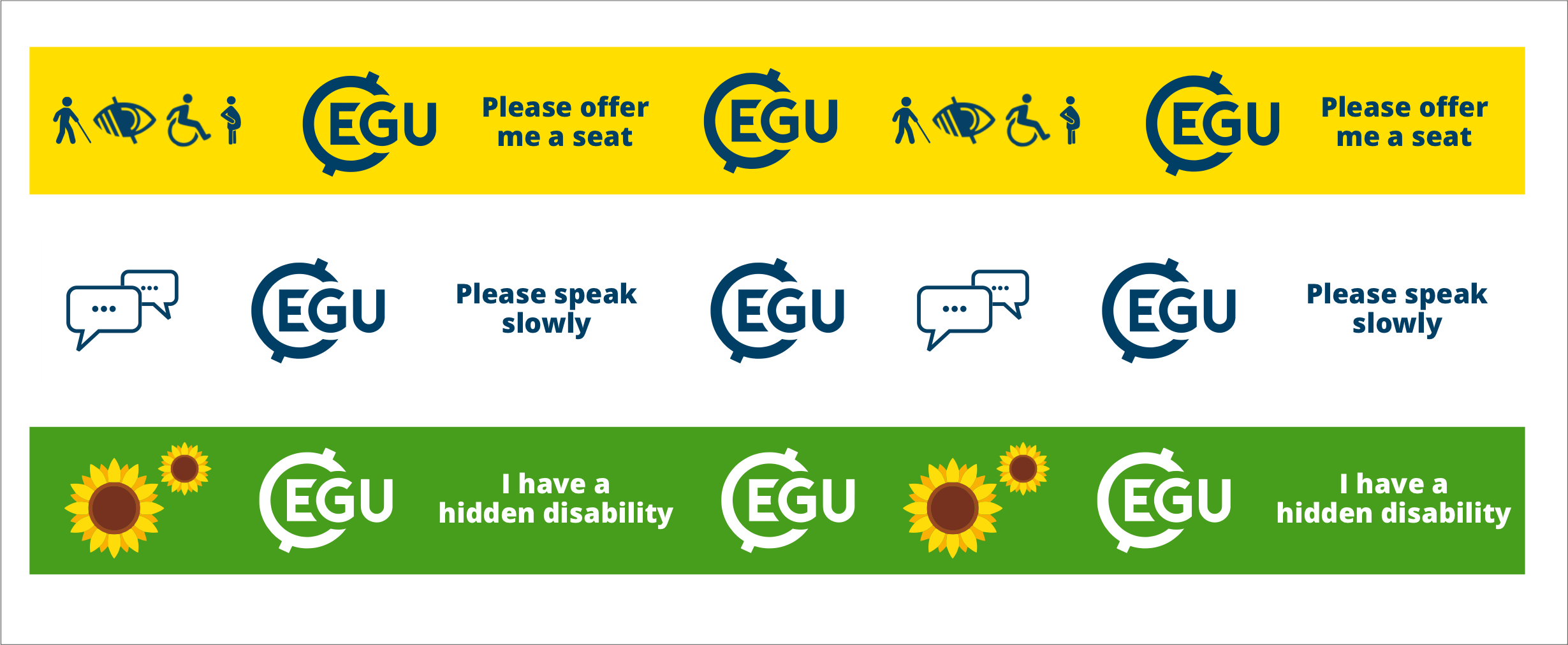
To make interaction easier EGU are offering a range of alternative lanyards that you can choose to use if you prefer, that indicate your need to be offered a seat, a need for people to talk more slowly with you, or indicating that you have a hidden disability.
No disclosure is required for you to have one of these lanyards, you just have to go to the EGU booth in Hall X2, Purple Level (Floor -2), and exchange your regular EGU lanyard for the lanyard of your choice.
All new EGU lanyards (including the new designs) will also be adjustable, so you can set them to a comfortable length for you to wear and for others to read.
Quiet Rooms
Family rooms, quiet rooms and multi-faith prayer rooms available for those who need to step away from the hustle and bustle of the meeting.
For when you are participating in the meeting on-site there are space to take a moment of calm and get away from crowds:
- Quiet rooms on the purple level (-2),
- Outdoor terraces on the purple level (-2) and the blue level (3),
- Donau Park, which is only a 5-10 min walk in the direction opposite to the U-bahn station.
EGU also provided a calming Quiet Rooms Playlist.
EDI Booth
The members of the EGU EDI Committee have a dedicated booth in Hall X2, Purple Level (Floor -2), opposite the EGU Booth. Here you can learn more about the initiatives implemented by the EGU to raise awareness of the diverse challenges faced by geoscientists in their careers, as well as provide feedback.
Sessions of interest for neurodivergent attendees
- How to navigate EGU: tips and tricks
- How to navigate EGU as a neurodivergent participant
- Scared, but prepared: Present with confidence
- Psychological tricks to preserving mental health while navigating the challenges of a research career
- Games for Geoscience
- Creating safe spaces in academia: recognizing and responding to harassment
- 10th anniversary of the session Promoting and supporting inclusive excellence in the geoscience
- What’s next for EDI in these turbulent times?
- Redefining excellence and academic career pathways in the geosciences
- How Are Postdocs Doing? Rethinking the Postdoctoral Experience in Geosciences